The Turkish-Russian relationship has changed dramatically in recent years, though. Today, Russia is Turkey's largest trading partner, with trade between the two countries expected to reach $38 billion this year, up from $27 billion the year before. Russia also supplies close to half of Turkey's crude oil and 65 percent of its natural gas, used both to heat Turkish home and to run many of the country's power plants. But following the invasion of Georgia, Turkey is suddenly facing the prospect of a resurgent Russian presence near its border. "There is a dilemma which Turkey faces," says Ihsan Dagi, a professor of international relations at Ankara's Middle East Technical University. "Georgia is indispensable to Turkey's overall Caucasian and Central Asian strategy, and is central to its claim to being an energy corridor." On the other hand, he says, "Russia is mostly indispensable for the Turkish economy. What is at stake is Turkey's economic stability." - Eurasianet (emphasis mine)
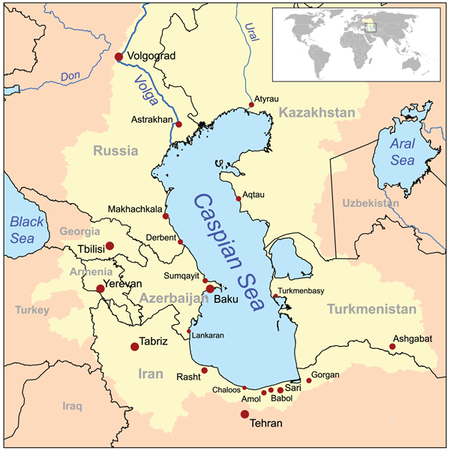
The presidents of Turkey and Armenia held talks and watched a World Cup qualifier soccer match together during an encounter they said could help herald a new beginning in ties and aid regional security. Their foreign ministers would now work to build on what was achieved during Gul's one-day visit.(...)"The Georgia war was a great cover for Turkey to move forward on Armenia," said Hugh Pope, an author on Turkey and Central Asia and analyst for the International Crisis Group. "Armenia really needs a way out too. It has a lot to gain."(...) If Turkey and Armenia can move beyond the symbolism to re-establish normal relations, that could have huge significance for Turkey's role as a regional power, for energy flows from the Caspian Sea and for Western influence in the South Caucasus region.(...) Landlocked Armenia, a Soviet republic until 1991, could also derive enormous benefits from the opening of the frontier with its large neighbour and the restoration of a rail link. Western-backed pipelines shipping oil and gas from the Caspian Sea to Turkey's Mediterranean coast bypass Armenia and bend north instead to go through Georgia. With that route looking vulnerable after the Russian intervention, Armenia could be an attractive alternative. Reuters (emphasis mine)
A small minority of Turks, 3 percent, said Turkey should act together with the United States on international matters. The largest percentage of Turks (48 percent) said Turkey should act alone, compared with 20 percent who felt it should act with the countries of the European Union and 11 percent who felt it should act with the countries of the Middle East. Only 1 percent supported Turkey acting together with Russia. The poll also revealed that the Turkish respondents continued to have the most critical views of US and EU leadership in world affairs. Only 8 percent of respondents viewed US leadership as "desirable," and 22 percent viewed EU leadership as "desirable." Today's Zaman - Turkey (emphasis mine)
David Seaton's News Links
If you read the excerpts above and ruminate a bit, you will see that the Russian reputation as chess masters is entirely deserved.
Let's look again at these points:
In this case Turkey then would hold the key to Europe lessening it's dependence on Russian energy.
Turkey, if the polls are correct would use that key with great independence...
Except that Russia is Turkey's greatest trading partner and energy supplier.
Summing up: Turkey holds the key for Europe and Russia holds the key for Turkey, so... Russia holds the key for Europe.
Checkmate, eh mate? DS
If you read the excerpts above and ruminate a bit, you will see that the Russian reputation as chess masters is entirely deserved.
Let's look again at these points:
- Russia is Turkey's largest trading partner, with trade between the two countries expected to reach $38 billion this year, up from $27 billion the year before. Russia also supplies close to half of Turkey's crude oil and 65 percent of its natural gas
- Western-backed pipelines shipping oil and gas from the Caspian Sea to Turkey's Mediterranean coast bypass Armenia and bend north instead to go through Georgia. With that route looking vulnerable after the Russian intervention, Armenia could be an attractive alternative.
- A small minority of Turks, 3 percent, said Turkey should act together with the United States on international matters. The largest percentage of Turks (48 percent) said Turkey should act alone, compared with 20 percent who felt it should act with the countries of the European Union
In this case Turkey then would hold the key to Europe lessening it's dependence on Russian energy.
Turkey, if the polls are correct would use that key with great independence...
Except that Russia is Turkey's greatest trading partner and energy supplier.
Summing up: Turkey holds the key for Europe and Russia holds the key for Turkey, so... Russia holds the key for Europe.
Checkmate, eh mate? DS


Precisely at the moment that the Turkish army is about to invade Iraqi Kurdistan and terminally destabilize whatever might be left of Iraq, the Senate passes this "Armenian genocide" resolution. This could literally put in jeopordy the lives of thousands of American soldiers... (not to speak of millions of Iraqis).
Between the Jewish, Cuban and now the Armenian (???), lobbies, any idea of a coherent US Foreign policy is literally collapsing. Any American pretense at world leadership dissolves in this endless nonsense. Quelle bordelle! DS
Armenian sway over US lawmakers - BBC
Abstract: Despite a direct appeal by US President George W Bush, lawmakers in the US have backed a description of the mass killings of Armenians by Ottoman Turks after 1915 as genocide. While Armenia welcomed the vote by a panel in the US House of Representatives, Turkey condemned it as "unacceptable" and has recalled its ambassador to Washington for "consultations". (...) Ahead of the vote, senior administration officials warned that if the resolution passed, Turkey could cut access to military bases needed for US operations in Iraq and Afghanistan. Its passage "would do great harm to our relations with a key ally in Nato and in the global war on terror", Mr Bush said from the White House Rose Garden. Nonetheless, the non-binding resolution passed the House Foreign Affairs Committee by 27 to 21, a first step towards holding a full vote in the House of Representatives. Given that Armenians represent only about 1.5m of America's 300m population, what has won them such influence over the US Congress - and perhaps the nation's foreign policy? Part of the answer lies in the organisation and determination of the Armenian-American lobby groups, says Dr Svante Cornell, of the Central Asia-Caucasus Institute at Johns Hopkins University. The Armenian National Committee of America (ANCA) and the Armenian Assembly of America (AAA) are among the most powerful. Another factor is that the Armenian-American community is largely concentrated in important states such as California, Michigan and Massachusetts, Dr Cornell said. "You have basically a number of places where the Armenian issue is very important in local politics - especially for anybody wanting to get elected in California," he said. "The Turkish lobby is much less organised and much less rooted in an electorate than the Armenian lobby." READ IT ALL