(T)he force most responsible for creating the nightmare in which we now find ourselves wide awake: neoliberalism. That worldview – fully embodied by Hillary Clinton and her machine – is no match for Trump-style extremism. The decision to run one against the other is what sealed our fate. If we learn nothing else, can we please learn from that mistake? Naomi Klein - The Guardian
Many of history's great moments are written by such details; as this famous poem illustrates:
For want of a nail the shoe was lost.
For want of a shoe the horse was lost.
For want of a horse the rider was lost.
For want of a rider the message was lost.
For want of a message the battle was lost.
For want of a battle the kingdom was lost.
And all for the want of a nail.
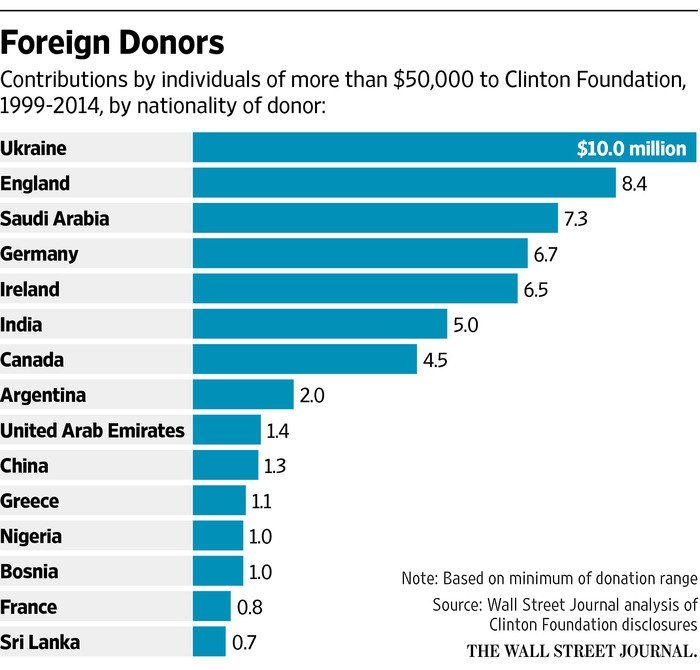
And it turns out that the good news is truer than the bad news. Look at the graph below:
Not a Trump landslide, but rather a Hillary collapse hat@jonathanwebber
Looking at the graph it's obvious that probably any other Republican could have defeated Hillary Clinton and that any other Democrat (certainly Bernie Sanders) could have defeated Trump.
This means that, thanks to the Clinton machine's insistence on Hillary's entitlement, the absurd face of Donald Trump will someday grace a postage stamp, but more importantly, this also means that the Democratic party is either going to move more to the social-democratic left or disappear... and that is really good news.
And now for a question:
Is globalization dead or does it just smell that way?
If you are an American living abroad, as I do, you are naturally very conscious of the world's opinion of the USA. The question now sometimes asked directly and often implied is: How can a country of over 300 million people, the richest and most powerful in the history of the world, one that, once upon a time, produced Jefferson, Lincoln, the two Roosevelts... even Truman, Eisenhower and LBJ, end up having nothing better to choose from now than Trump and Hillary?
Donald Trump appears like a nightmare product of a poorly digested meal... I find myself much more worried by the masses of people who would support him enthusiastically than by the Donald himself. When he has gone back to his golf courses these people will remain and perhaps, someone more subtle and even more evil than Trump will find many more effective ways to exploit them.
That leaves Hillary
I don't like Hillary Clinton, I never have... or Bill for that matter, although he may have been the most naturally gifted politician ever to sit in the White House, he may have also been the cheesiest too. That odor of ripe Camembert follows the Clintons wherever they go.
Obama too has been quite a disappointment for me, I agree with Cornell West, that he is a "Rockefeller Republican", having said that, he and his family have had a very beneficial effect on America's image around the world. "Elegant" is the best word to describe Barack and Michelle Obama. As to his "legacy", he will probably be remembered as much for what he hasn't done, like not sending ground troops back to the Middle East, as for achievements like Obamacare, which is pitiful when compared to any European country's public health system.
For me the choice between Trump and Hillary is clear
Hillary Clinton may reek of Camembert, but Trump reeks of sulfur.
The biggest danger now is that many of the supporters of Bernie Sanders, among whom I am numbered, dislike (loathe) Hillary even more than Trump supporters do and if, as is nearly certain, she is the Democratic candidate, many Sanderistas may either stay home on election day, or go out and vote for a third party candidate or... even vote for Trump. In sufficient numbers this fugitive vote might end up putting a renegade villain escaped from a Marvel Comic into the White House.
The third-party option is the one that worries me most. Remember: this sort of bickering leading to Ralph Nader's votes in Florida was what brought us George W. Bush... and next to Trump, Dubya, is Joan of Arc.
The American system has been so constructed as to be very resistant to change and it is a two party system. At this moment the Republican Party seems about to commit suicide and it would be a shame if the Bernie supporters did anything to impede their Trump-led, self-destruction. After the Republicans destroy themselves in November and the Democrats take back both houses of Congress... then would be the time to split the Democratic party to left and right, not now. DS
Is a dream a lie if it don't come true, or is itsomething worse?
"The River" - Bruce Springsteen
The failure of the economy to deliver real progress to middle-class and working-class Americans over the past 15 years is the most fundamental source of public anger and disaffection in the US. BBC News
Forty years of hurt has driven some people to answer Springsteen's question, that the American dream is something worse than a lie, and from that bleak answer they are looking for a political leader who echoes their anger. So my answer to presenters' questions whether Trump can win, is now and was before the primaries started: "Yes." Michael Goldfarb - BBC
As of Today
In this the strangest of presidential election years, a poorly flushed Donald Trump pops up out of the backed up drains of the American psyche and the only thing standing between him and the Republican nomination is Senator Ted Cruz, who could pass as Boris Karloff's baby brother.
Republican debate has now moved from the size of Mr Trump's penis to whether the evangelical Mr Cruz sleeps around. And this, far from hurting Trump, is fattening his lead in the polls
Mr Trump has succeeded in breaking down the boundaries of political debate. He has drained all civility from politics and licensed a discourse that elides bigotry with patriotism, is derisive of women, scornful of minorities and permissive of racism. The Republican primaries have become a contest in which it is acceptable to throw a punch at those who happen to disagree, to threaten to muzzle the freedom of the press and to make jokes about those with disabilities. Mr Trump has tossed overboard any idea that politics and public service can serve a moral purpose. Philip Stephens - Financial Times
If The Donald wins the nomination, which as of today, seems probable, he will, unless a kind providence intervenes, end up facing the most soiled politician in America... except for her husband, of course: Hillary Clinton.
For no one, not even Ronald Reagan or George W. Bush, has objectively done more to turn Bruce Springsteen's dream into a lie than the Clintons.
After the bursting of the dot-com bubble in 2000, the corporate scandals of the Enron period, and the collapse of the real estate racket, our view of the prosperous Nineties has changed quite a bit. Now we remember that it was Bill Clinton’s administration that deregulated derivatives, that deregulated telecom, and that put our country’s only strong banking laws in the grave. He’s the one who rammed the North American Free Trade Agreement (NAFTA) through Congress and who taught the world that the way you respond to a recession is by paying off the federal deficit. Mass incarceration and the repeal of welfare, two of Clinton’s other major achievements, are the pillars of the disciplinary state that has made life so miserable for Americans in the lower reaches of society. He would have put a huge dent in Social Security, too, had the Monica Lewinsky sex scandal not stopped him. If we take inequality as our measure, the Clinton administration looks not heroic but odious. Thomas Frank - Salon
The Skinny
Assuming, as now appears most likely, that Hillary Clinton will win the Democratic nomination and that either Donald Trump or Ted Cruz becomes the Republican nominee, the general-election ballot is set to feature a choice between two candidates more negatively viewed than any major-party nominee in the history of polling. Ruth Marcus - Washington Post
The only thing standing between such a nightmare choice for American voters is Bernie Sanders.
No two human beings could be more different than Bernie Sanders and Donald Trump and the most fundamental difference between them is that Trump is a very bad man and Bernie is a very good man,
However what they both have in common is that their campaigns are both propelled by the passionate anger that so many Americans feel at the failure of the "American Dream" and their mounting distrust of the "Establishment", Wall Street, the media and of course the government itself.
Hillary Clinton's basic problem is that no one incarnates that Establishment so much as she does.
If it's Hillary versus Trump, America and a watching world will be treated to probably the dirtiest, most depressing campaign imaginable and with the probable, massive abstention of grossed out voters of both the left and traditional conservatives too and therefore with a result infinitely more unpredictable than anyone can now imagine.
However if Bernie Sanders manages to pull off an upset and the race is between him and Trump, the world will be treated to an all-American, Hollywood-esque spectacle of good versus evil, Batman pitted against The Joker, Saint George kicking the dragon's ass.
Not only would it change America and the world, it would be tremendous fun.
Probably the most fascinating, indeed endearing thing about the USA is the "let it all hang out" transparency of such a huge beast. What is missing today, unfortunately, is someone like Upton Sinclair, Sinclair Lewis or Norman Mailer to write about all of this. DS
What is the best reason for supporting Bernie Sanders?
How about: "the future of humanity is at stake"?
Exaggeration? Not really.
To get right to the point: in at most a generation, or perhaps much sooner, science, in the form of robotics and Artificial Intelligence, will have led humanity to a fork in the road. A clear choice between a dream utopia and utter dystopia lies before us... it reads like science fiction, but it isn't.
One path we could take holds the possibility of leading us to an amazing and paradisaical utopia of infinite possibilities for a full and enriched quality of life, an end to poverty and even alienation... for everyone... everywhere.
And the other path - the one we are traveling today - would eventually lead the immense majority of humanity, including most of today's middle class Americans, to live in conditions that would make the legendary slums of present day Calcutta look like Disneyland by comparison.
Here is how the situation stands now, with the present technology... in the opinion of none other than Martin Wolf, someone who nobody could consider "radical". Here the prestigious, chief economist of The Financial Times says.
(T)here is anxiety over rising inequality and economic insecurity. Perhaps the most fundamental cause is a growing sense that elites are corrupt, complacent and incompetent. Martin Wolf - Financial Times
And remember, that is with present technology.
Now meet Hod Lipson:
Hod Lipson (born 1967 in Haifa, Israel) is an American robotics engineer. He is the director of Cornell University's Creative Machines Lab (CCML), formerly known as Computational Synthesis Lab (CCSL), at the Sibley School of Mechanical and Aerospace Engineering. Lipson's work focuses on evolutionary robotics, design automation, rapid prototyping, artificial life, and creating machines that can demonstrate some aspects of human creativity. His publications have been cited close to 10,000 times, and he has an h-index of 50, as of November 8, 2015. Wikipedia
Professor Lipson is very worried.
Hod Lipson’s vision of the future is one in which machines and software possess abilities that were unthinkable until recently. But he has begun worrying about something else that would have been unimaginable to him a few years ago. Could the rapid advances in automation and digital technology provoke social upheaval by eliminating the livelihoods of many people, even as they produce great wealth for others? (...) Are we at the beginning of an economic transformation that is unique in history, wonderful for what it could do in bringing us better medicine, services, and products, but devastating for those not in a position to reap the financial benefits? Will robots and software replace most human workers?(...) A prevailing view among economists is that many people simply don’t have the training and education required for the increasing number of well-paying jobs requiring sophisticated technology skills. At the same time, software and digital technologies have displaced many types of jobs involving routine tasks such as those in accounting, payroll, and clerical work, forcing many of those workers to take more poorly paid positions or simply abandon the workforce. Add to that the increasing automation of manufacturing, which has eliminated many middle-class jobs over the past decades, and you begin to see why much of the workforce is feeling squeezed.(...) Whoever owns the capital will benefit as robots and AI inevitably replace many jobs. If the rewards of new technologies go largely to the very richest, as has been the trend in recent decades, then dystopian visions could become reality. (emphasis mine) - Who will own the Robots - MIT Technology Review
Newslinks Thought for the Day: If the word "democracy" has its origins in the Greek words demos, meaning "people," and kratia, meaning "power"; then what happens to democracy, when the demos don't "add value"?... "Not adding value" being a bland technicism that means people are not needed for much of anything anymore. Therefore power-less?
Some people and organizations who are paid to think are busy thinking about all this. One of them is the Brookings Institute.
The Brookings Institution is an American think tank based on Embassy Row in Washington, D.C., USA. One of Washington's oldest think tanks, Brookings conducts research and education in the social sciences, primarily in economics, metropolitan policy, governance, foreign policy, and global economy and development. In the University of Pennsylvania's 2014 Global Go To Think Tanks Report, Brookings is ranked the most influential think tank in the world
This is how they see the problem and possible practical solutions to it.
While emerging technologies can improve the speed, quality, and cost of available goods and services, they may also displace large numbers of workers. This possibility challenges the traditional benefits model of tying health care and retirement savings to jobs. In an economy that employs dramatically fewer workers, we need to think about how to deliver benefits to displaced workers.
Darrell M. West proposes striking economic changes in order to restructure how our society delivers on the social contract, such as:
Separating the dispersion of health care, disability, and pension benefits outside of employment, offering workers with limited skills social benefits on a universal basis.
Mandating a basic income guarantee for a reasonable standard of living to combat persistent unemployment or underemployment posed by the automation economy.
Revamping the Earned Income Tax Credit (EITC) to allow the benefit to support households in the grips of high unemployment.
Providing activity accounts for lifetime learning and job retraining to motivate the workforce to keep pace with innovation.
Offering incentives for volunteerism—beneficial for many people who in the future may not be able to provide for their families through regular employment but may still wish enrich their communities.
Encouraging corporate profit sharing to spread the benefits of improved productivity to the broader workforce.
Reforming the education curriculum to reflect the high premium STEM skills will offer employees in the future.
Expanding arts and culture for leisure time, ensuring that reduction in work will not eliminate chances for cultural pursuits.
"There needs to be ways for people to live fulfilling lives even if society needs relatively few workers," West writes. Taking steps now in anticipation of the exciting new future that awaits will help people adapt to new economic realities.(emphasis mine) "What happens if robots take the jobs?" - Darrell M. West
If West's agenda could be realized, what might it look like?
Software and digital technologies have displaced many types of jobs involving routine tasks such as those in accounting, payroll, and clerical work, forcing many of those workers to take more poorly paid positions or simply abandon the workforce.
The disappearance of paper pushing jobs doesn't have to be a tragedy. Read this from the philosopher,Erich Fromm:
Marx did not foresee the extent to which alienation was to become the fate of the vast majority of people, especially of the ever increasing segment of the population which manipulate symbols and men, rather than machines. If anything, the clerk, the salesman, the executive, are even more alienated today than the skilled manual worker. The latter's functioning still depends on the expression of certain personal qualities like skill, reliability, etc., and he is not forced to sell his "personality," his smile, his opinions in the bargain; the symbol manipulators are hired not only for their skill, but for all those personality qualities which make them "attractive personality packages," easy to handle and to manipulate.Erich Fromm
So if, thanks to AI and robots, it is no longer possible to "earn" a living, but the rights to "life itself, + liberty + the pursuit of happiness", are still maintained, then offering West's menu of "Incentives for volunteerism—beneficial for many people who in the future may not be able to provide for their families through regular employment but may still wish enrich their communities." or "Expanding arts and culture for leisure time, ensuring that reduction in work will not eliminate chances for cultural pursuits.", while making sure everyone, everywhere, has decent health care, education etc, would, in short, mean a recipe for heaven on earth.
Of course the money for all of this would have to come from taxing the only ones who would still have any money... the one-percent.
Now stop for a moment and think a bit... Can you imagine the "one-percent" buying into any of Darell West's agenda? For example: the Koch brothers... or Sheldon Adelson or the right-wing think tanks, like The Heritage Foundation, The American Enterprise Institute, Standford's Hoover Institution, etc, etc,etc, all the "greed is good" crowd, Ayn Rand'sObjectivists,
or any of their political errand boys: Cruz, Trump, Christie, Rubio,
Bush... and the endless lobbyists and their hordes of parasitical
congress-persons and assorted senators or governors. Can you imagine
them swallowing West's program without the assistance of a nationwide,
massive, political, "Great Awakening", to "help" them gag it down.
Facing
such hard, ruthless, well-funded and organized opposition, those who
call themselves "realists", those possibilists said to "living in the
real-world"; in other words, those settling for small "realistic", incremental gains, would be putty in the hands, of such brutal opponents .
It will be a long hard fight and very different from the old-fashioned labor battles... because with robots doing everything and the one-percent owning the robots... who could go on strike? In the meantime, until all the robots arrive, the one-percent is moving more and more manufacturing to China: a one-party dictatorship where strikes are illegal.
The fight
Below I have included a classic political fight song, "Which Side Are You On?", sung by the iconic folk singer, Pete Seeger, in social-democratic Sweden, in the no less iconic year, 1968. It's about a coal miner's strike in Kentucky.... It is a wonderful song, wonderfully sung, but coal's going out these days and so are strikes... so only the title makes much sense today... and one single phrase in the song... which sums up why I believe that anyone who thinks that Darell M. West's agenda is worth fighting for, should support Bernie Sanders.
The single phrase?
You guessed it! It's, "Us workers haven't got a chance, unless we organize." Recite that as a liberating mantra.
This brings us to Bernie
When Sanders says — as he does in every speech — that he’s seeking to build “a revolution,”
that’s not just rhetoric. What Sanders understands in his bones is
that every period of progressive reform in U.S. history has come as a
result of massive street heat, of energized movements that push
policymaking elites to the left. Abolitionists pressured the Lincoln
Republicans toward a policy of emancipation. Militant workers and a
socialist left, whose general strikes
shut down several major cities in 1934, prompted Franklin D.
Roosevelt’s Democrats to legalize collective bargaining and create
Social Security in 1935. The civil rights movement enabled the
Kennedy-Johnson Democrats to pass the landmark legislation of the ’60s.
Progressive reform doesn’t happen absent a large and vibrant left. Harold Meyerson - Washington Post
NowRobert Reich, the brilliantAtom Ant of left-wing, economists and agitators, describes how it was done before and how it could be done again.
Teddy Roosevelt got a progressive income tax, limits on corporate campaign contributions, regulation of foods and drugs, and the dissolution of giant trusts – not because he was a great dealmaker but because he added fuel to growing public demands for such changes.(...) "The real world we’re living in” right now won’t allow fundamental change of the sort we need. It takes a movement. Such a movement is at the heart of the Sanders campaign. The passion that’s fueling it isn’t really about Bernie Sanders. Had Elizabeth Warren run, the same passion would be there for her. It’s about standing up to the moneyed interests and restoring our democracy. It Takes a Movement, Like the One at the Heart of Bernie Sanders’ Campaign, to Change the World - Robert Reich
Reich makes a very, very important point... This is not really about Bernie himself, it is about the people themselves, the Demos and their Kratia.
Bernie Sanders is simply the only one who has had the guts to rise to the occasion. The only "mouse" brave enough to volunteer to "bell the cat"... Bernie Sanders + enough voters = Mighty Mouse
And finally Bernie speaks for himself:
As he looked ahead to carrying on the fight in New Hampshire, he used many of his favorite lines. “It is just too late for establishment politics and establishment economics.” “We do not represent the interests of the billionaire class, Wall Street, or corporate America. We don’t want their money.” “The American people are saying no to a rigged economy.” “We are going to create an economy that works for working families, not just the billionaire class.” - Bernie Sanders Just Changed the Democratic Party - The New Yorker
You could say it louder, but it would be hard to say it more clearly.
Moral of the story: It has happened before and it can happen again and God help us if it doesn't. DS
PS: Here is the Brookings document in full to download:
"The crisis consists precisely in the fact that the old is dying and the new cannot be born; in this interregnum a great variety of morbid symptoms appear." Antonio Gramsci
“Hegel remarks somewhere that all great, world-historical facts and personages occur, as it were, twice. He has forgotten to add: the first time as tragedy, the second as farce.” Karl Marx, The Eighteenth Brumaire of Louis Bonaparte
Most newsaholics tend to limit their reading to people they agree with... I think that is a big mistake, especially for anyone who is trying to make a serious analysis of reality. Why? Because it's always interesting, instructive... and creatively disturbing when you find that someone you detest is saying something that makes a lot of sense.
“We have been doing this for a dozen years. We invaded Afghanistan. We invaded Iraq. Has that made us safer? Has that made the world safer? It seems like we’re more worried about it now than we were then, so we need to examine these strategies.” (...) “I’ve studied revolutionaries a lot,” he says. “Mao said that the people are the sea in which the revolutionary swims. Not that we don’t need to defend ourselves and have better intelligence and all that, but how do we create an unfriendly sea for the terrorists in the Muslim communities? We haven’t done a good job of that.” With about 1.6bn Muslims worldwide “in country after country. What,” he asks, “are we going to do: go bomb each one of them?". Lunch with Charles Koch - Financial Times
Koch quotes Chairman Mao! How is that for chutzpah?
In an odd sort of way Koch practices what he preaches; for example by trying to create an "unfriendly sea" for ecologists and climate scientists in America's mainstream media and the US Congress. Having said that, what he affirms in the quote above is one of the most sensible thing that I can remember having read about America's "War on Terror". It will be interesting to see how the Koch brothers, with all their oil interests, will react if Muslim-baiter, Donald Trump, is finally the Republican nominee.
Three of the biggest US banks revealed the damage wrought by a plunging oil price this week, disclosing big jumps in costs for bad energy loans and fears of contagion in other portfolios. Financial Times
Cleaning up the aftermath of financial mistakes — a depressingly familiar experience — is just a part of the challenge the world confronts. Equally important is finding a powerful new engine of demand as old ones splutter and die. It is not at all obvious where this is to be found. But the rest of the world is hoping, probably over-optimistically, that the US will provide what it seeks. Unfortunately, it will not do so. Martin Wolf - Financial Times
We seem to have come to a dead end.
There has always been a tension at the heart of capitalism. (...) Its self-regulating properties, contrary to the efforts of generations of economists trying to prove otherwise, are weak.(...) A low oil price historically presages economic good times. Instead, the markets are panicking. They are panicking because what is driving the lower oil price is global disorder, which capitalism is powerless to correct. Indeed, it is capitalism running amok that is one of the reasons for the disorder. Profits as a share of national income in Britain and the US touch all-time highs; wages touch an all-time low as the power of organized labor diminishes and the gig economy of short-term contracts takes hold.(...) All this requires a new generation of political leaders prepared to throw off the categories in which thinking has been cast since 1980(...). Will Hutton - The Guardian
The Unborn
Another commentator who is often worth reading, despite being even further to the right than the Koch brothers is Pat Buchanan. He is a paleolithic-conservative, pre-conciliar Catholic and the adviser behind Nixon's "Southern Strategy", which has probably been the most noxiously successful and sinister political ploy since the disenfranchisement of African-Americans ending Reconstruction.
This is how Pat Buchanan sums up the present situation:
Everyone sees clearly now the de-industrialization of America, the cost in blood and treasure from decade-long wars in Afghanistan and Iraq, and the pervasive presence of illegal immigrants. (...) (W)hen you see Bernie Sanders running neck and neck with Hillary Clinton in Iowa and New Hampshire and Trump and Ted Cruz with a majority of Republican voters. Not to put too fine a point on it, the revolution is at hand. Pat Buchanan - Washington Post
Donald J. Trump
@realDonaldTrump
Pat Buchanan gave a fantastic interview this morning on @CNN - way to go Pat, way ahead of your time!
How is that for chutzpah?
What is interesting for me in the Buchanan quote above is that he groups both Sanders and Trump as "revolutionaries". The old is dying and the new is yet unborn.
Lets hear from Bernie:
“If poverty is increasing and if wages are going down, I don’t know why we need millions of people to be coming into this country as guest workers who will work for lower wages than American workers and drive wages down even lower than they are now,” Sanders said in a television interview in June 2007. But in his current campaign for president, Sanders has been unequivocally in favor of a path to citizenship for undocumented immigrants, and he has spoken passionately on protecting families from deportation. Many immigration activists note that Sanders’ plan is more detailed than Hillary Clinton’s.Time Magazine
What we see here from Sanders is nuance: recognizing that massive third world immigration is a huge problem for underpaid American workers and at the same time compassion and practical solutions for the problems of the immigrants already in the USA, who are also helpless, innocent, victims of the globalization process.
And now here's Trump's official position on immigration:
When politicians talk about “immigration reform” they mean: amnesty, cheap labor and open borders. The Schumer-Rubio immigration bill was nothing more than a giveaway to the corporate patrons who run both parties. Real immigration reform puts the needs of working people first – not wealthy globetrotting donors. We are the only country in the world whose immigration system puts the needs of other nations ahead of our own. Donald Trump's official webpage
Notice all the dog-whistle words: "amnesty", "cheap labor", "wealthy globetrotting donors" ("rootless cosmopolitans"?), "needs of other nations". That vocabulary and not the actual content is the real message
Now Sanders on China:
One of Bernie’s key goals is to end our disastrous trade policies with China which force American workers to compete against low-wage labor, which serves largely to benefit already wealthy corporations. Feel the Bern
Now Trump:
We have been too afraid to protect and advance American interests and to challenge China to live up to its obligations. We need smart negotiators who will serve the interests of American workers – not Wall Street insiders that want to move U.S. manufacturing and investment offshore. Donald Trump's official webpage
Again, notice the word choice: "afraid", "protect", "challenge", "live up to", "smart", "insiders", "offshore", etc.
Repetition?
At the top of the page I put: "History repeats itself, first as tragedy, then as farce" and "The old is dying and the new cannot be born". Those two quotes could well define the historical period we live in.
Where Buchanan may be on to something is in calling both Trump and Sanders "revolutionaries"; revolutionaries in the same sense that both Adolf Hitler and Franklin D. Roosevelt were revolutionaries in the context of the 1930s,.
FDR changed the classic capitalism practiced by the Republicans beyond recognition and saved America from the sort of turbulence that tore Europe apart.
Hitler, on the other hand rode that turbulence to power and literally destroyed Germany and most of Europe with it.
"The faith in a strong man; the love of the exceptional character of one nation above all others; the selection of a helpless group to be hated, who can be blamed for feelings of national humiliation. He didn’t invent these arguments. He adapted them"
Sound familiar? It should, it is being used every day and not just by Donald Trump, even nominal liberals have invoked "American exceptionalism" in recent memory to justify interfering in the internal affairs of other countries or even voting in favor of "wars of choice".
Rhyme or farce?
Back in the 1930s the Republican party's laissez faire, hands off, version of capitalism was finished (for the moment). The choice of a way forward then was between Hitler/Mussolini, Joseph Stalin... or FDR.
Now the Nazis and the fascisti are long gone and Stalin's Marxist-Leninism is on the ash heap.
Today the categories of "ists" and "isms" are different: Now Russia's ruling ideology is Putinist-Hands-in-the-cookie-jar-ism, while China is following Friedmanist-Leninism and apparently is entering into some kind of a shitstorm with it.
Meanwhile the United States and all who sail in her seem to be experiencing a terminal crisis in the economic policies that have been in favor since the 1980s, which we might call Reaganist-Thatcherism or Clintonist-Blairist-Bushism.
However, this not the 1930s, Pope Francis is not Pius XII, Stalin is gone, with no one to follow. Donald Trump is a Monty Python parody of Adolph Hitler or Benito Mussolini, Hillary Clinton is not Herbert Hoover and Bernie Sanders is not (yet) Franklin Delano Roosevelt.
But, as Mark Twain said,"History does not repeat itself, but it often rhymes". This is the interregnum that Gramsci spoke of, with all its morbid symptoms, the old is dying... and the new, whatever that might be... Can it be born? DS