Showing posts with label EU. Show all posts

Friday, June 24, 2016

Brexit or the wages of frivolous stupidity

What an irony it would be if the Leave vote led the U.K. to break up before the E.U. does. But after a remarkable night and morning, that didn’t seem beyond the bounds of possibility. Very little did. John Cassidy - The New Yorker
British Prime Minister, David Cameron's totally gratuitous decision to convoke a referendum on Britain's remaining in the European Union, Brexit, is a perfectly amazing example of the effects of frivolous stupidity. The rest of us are to be helpless witnesses and perhaps direct victims of his decision for years to come. 
David Cameron, the British prime minister, has no one to blame but himself. In 2013, besieged by the increasingly assertive anti-European Union wing of his own Conservative Party, Mr. Cameron made a promise intended to keep a short-term peace among the Tories before the 2015 general election: If re-elected, he would hold an in-or-out referendum on continued British membership in the bloc. But what seemed then like a relatively low-risk ploy to deal with a short-term political problem has metastasized into an issue that could badly damage Britain’s economy, influence the country’s direction for generations — and determine Mr. Cameron’s political fate.  New York Times
If you like reading history, you'll come across many examples of such frivolity and stupidity doing massive harm to millions of people.  George W. Bush's decision to invade Iraq is a textbook example. Millions of people have lost their homes or lives and one of the world's most critical regions is in the process of disintegrating.  

Could Cameron's Brexit have an effect in any way comparable to Bush's opening the gates of hell in the Middle East? 

Knock-on effects are about cascading disasters. The world's economy is still shaky after the crash of 2008 and in today's globalized finance everything is interconnected. How could Brexit set off a chain of disasters?

An example: UK capital, London, is today the world's most important financial center:
London has swapped places with New York to become the world’s leading financial centre, according to a detailed study of 86 cities. Financial Times
It is axiomatic that money hates uncertainty:
One of the only things we can say for sure after the Brexit decision is that the U.K. and Europe are entering a period of great uncertainty. The New Yorker 
It is easy to imagine the knock-on effects of a major disruption of the intricate and intertwined activities of a place where the good and the great of the entire world go to trade currencies, bonds, shares, privileged information, launder and store their money, you name it. 
One likely outcome of negotiations is that banks and financial firms in the City of London will be stripped of their lucrative EU “passports” that allow them to sell services to the rest of the EU. The Guardian
You can't imagine the knock-on effects of disrupting such a place? Think Lehman Brothers just for starters. If one major financial institution starts to unravel, the entire shaky recovery of the world economy could collapse.

Leaving Financial Armageddon behind, the ordinary human effects of  Britain's leaving Europe are worth describing: British young people will now find it difficult to reside or work in EU countries or study in their universities and talented young Europeans will find it difficult to do the same in the UK. This will have significantly negative effects on generations to come.

The future of  Britain's young people is finally the greatest victim of Brexit, but not just the young.

Here is an example of the sort of micro-tragedies that can befall elderly British people here in Spain, where I live. Thousands of British pensioners on retiring have sold their homes in grey and rainy Britain and with their life savings bought homes on the coasts of Sunny Spain, where as members (till now) of the EU, they have a right to residency, socialized medical care and even get to vote in municipal elections. Imagine their distress as they watch all of these rights disappear and even the value of their investment sink.

All this disruption because of what the President of the European Parliament Martin Schultz, calls "a whole continent (being) taken hostage because of an internal fight in the Tory party”. DS

Wednesday, May 14, 2014

What is really behind the Ukraine crisis

Russia's reaction to the move to overthrow Ukraine's government, take it into the EU and from there, probably into NATO was the most predictable thing in the world, just the sort of thing that George H.W. Bush, Kohl, Mitterrand and yes, even Margaret Thatcher wanted to avoid. In American terms imagine Washington's reaction if a Panamanian Hugo Chavez allied Panama with Cuba, filled the Canal Zone with Cuban advisers and threatened to close it... the marines would be there the next day. That is more or less what the Ukraine means to Russia. So Putin reacted in a totally predictable way. History is full of great wars that began with less cause. It is logical to think that the result we have before was calculated to benefit someone. Why deliberately take the risk of cornering a major atomic power in its traditional space?

Why would anyone else but Russia take such enormous risks for such a broken, corrupt, mess as Ukraine?

When you want to understand a major international crisis, or almost anything else for that matter, one of the first things to do is to take a step back and try to fit it into the "big picture". 

In international affairs, that is best done by reading history and studying maps.

The Ukrainian crisis is splitting Europe apart and turning Russia into an "enemy" again.

When I step back and look at maps and history, I come to the conclusion that Ukraine is merely a handy tool in a much larger operation, which is to interrupt and foil any and all efforts by the Chinese, Russians and the Europeans to create a Euro-Asian "prosperity sphere", bringing fluid movement of goods to and from China, by land from Europe across Russia and Asia. Think of all the synergies of European added value, brands and know how, combined with Russia's natural resources and technology all plugged into China's enormous markets and efficient mass, low-cost manufacturing.

The only real obstacles to this flow, Asia/Europe/Asia are political and even during the Cold War it went on quite a bit. For example, in the 1960s, before cheap flights, many Japanese students who wanted to visit Europe, used to take the boat from Japan to Vladivostok, from there the Tran-Siberian Express to Moscow, thence to Warsaw and finally Paris. In those same years a Canadian friend of mine made his first trip to India in a Volkswagen minibus.

It worked like this: a German fellow used to buy second hand minibuses in Stuttgart, load them up with hippies to pay the gas and then drive all the way to India, sell the bus (it was illegal to import them into India and he sold them for an enormous profit) and then he'd fly back to Germany and start the process all over again. 

The bus full of hippies drove through the Shah's Iran, from there though Afghanistan, where, before the CIA invented the Taliban and Al Qaeda, Kabul was filled with girls in miniskirts and cheap opium and hashish (hippy paradise) and from there across Pakistan and into India.

Off and on going back to Marco Polo and beyond, that is how the world more or less worked; interrupted by an occasional crusade now and then: caravans buying and selling across frontiers, languages and cultures, for hundreds and hundreds of years.

Analyzing how and why that is no longer possible would teach you volumes about modern history and its mechanisms.  The idea of fluid communication and trade Europe/Asia/Europe is nothing new, it is like the law of gravity... What is abnormal are the obstacles: they are all political.

With that in mind let us look at China's "New Silk Road" initiative, which, with all the hoohah in Ukraine, is getting very little coverage in the press these days. Some of my readers will only know "Silk Road" as a website where drugs can be acquired  anonymously, but the original Silk Road story is a bit more interesting than that. You can read up on the original version in Wikipedia.

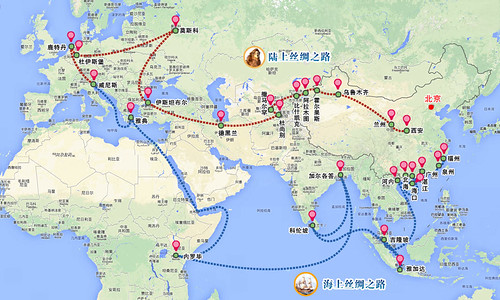
Below you'll find Xinhua's map of China's "New Silk Road" project.

The new "Silk Road"
Before going on it would be well to remember that the World Bank expects China to become the world's largest economy sometime in 2014:
Many economists expect China to eclipse the U.S. as the world's largest economy sometime in the next few decades, but new World Bank data suggests that the transition could come much sooner. Is China ready now to assume its spot as the world's No. 1 economy? If so, what does it mean for the U.S., investors, and you? Motley Fool
With that in mind read the following:
The maps of the two Silk Roads drive home the enormous scale of the project: the Silk Road and Maritime Silk Road combined will create a massive loop linking three continents. If any single image conveys China’s ambitions to reclaim its place as the “Middle Kingdom,” linked to the world by trade and cultural exchanges, the Xinhua map is it. Even the name of the project, the Silk Road, is inextricably linked to China’s past as a source of goods and information for the rest of the world. The Diplomat
Here is how it connects to Europe:
DUSSELDORF, Germany, March 29 (Xinhua) -- Chinese President Xi Jinping Saturday called on China and Germany to work together to build the Silk Road economic belt. Xi made the remarks during a visit to Port of Duisburg, the world's biggest inland harbor and a transport and logistics hub of Europe. He said China's proposal of building the Silk Road economic belt, based on the idea of common development and prosperity, aims to better connect the Asian and European markets, will enrich the idea of the Silk Road with a new meaning, and benefit all the people along the belt. China and Germany, at the opposite ends of the belt, are two major economies that serve as the driving engines for economic growth respectively in Asia and Europe, Xi noted.
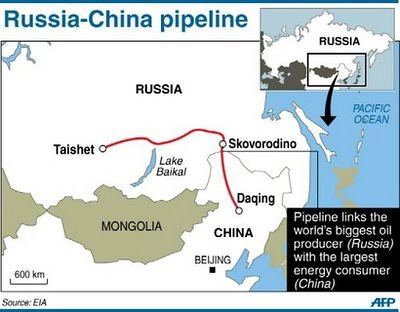
How does Russia fit into this? Now look at this map:


What or who is missing in all these maps and snippets?

The United States of America, that's what. 

The USA is nowhere in this picture... out of the loop... We can't have that can we?

What to do?

Double, double toil and trouble; fire burn, and caldron bubble. That's what. DS

Saturday, March 22, 2014

How isolated is Russia?

With Russia facing sanctions from the US and some other countries after it annexed Crimea from Ukraine, India on Wednesday made it clear that it will not support any "unilateral measures" against Russian government. Times of India

Based on the fact that Russia and Ukraine have deep cultural, historical and economic connections, it is time for Western powers to abandon their Cold War thinking, stop trying to exclude Russia from the political crisis they failed to mediate, and respect Russia's unique role in mapping out the future of Ukraine. Xinhua
I have very little time for carefully constructed posts at the moment, so just a few lines hastily put together. 

Reading the news about American and EU sanctions against Russia, I am beginning to suspect that there is something more cooking here than the "story" we are being fed by the MSM. 

It might be noted that in his big speech, Putin thanked both China and India for their support... Can we say that Russia is "isolated" from the "international community" with 1/2 of humanity on their side?... DS