A few months ago, I took a pause in blogging. The appearance of Donald Trump as President of the United States took the wind out of my sails, not so much Trump himself, horrid as he is, but Trump as a symptom and a symbol of ruinous decadence. It was like seeing an old friend suddenly getting horribly thin, or finding a loved one suddenly lost in depression, no longer taking care of their appearance, not washing, not changing their clothes.
One sure thing has come to me from from all of this. I am grateful that I have no children and thus leave no innocent grandchildren to face the world that is coming. I realize that those of us born right after World War Two, in either the USA or Western Europe, have lived to be elderly in a truly Golden Age of peace, prosperity and health that is more than probably going to disappear forever.
In the following weeks and months, I hope to write some sort of coherent analysis of some of the facets of this descent into chaos. For the moment I am collecting articles that my instinct tells me are relevant and that may help me to write something useful in the future. I am posting them to my twitter account. @David_Seaton, if you care to read them and draw your own conclusions.
In the meantime, the only way I can fully express the dread I feel is in poetry.
Today I leave you with this sample:
Futurology
The old and toothless of our tribe
Tell the tale
That before the beginning of time
Even before the mountains began to glow in
the dark
On April 4th, 1968, the day when Martin Luther King Jr. was shot down in Memphis Tennessee, the American left lost its way. Less than a year before he was murdered, King set out to channel the energy and power of the Civil Rights movement toward ending poverty among all the races in the world's richest country. This metamorphosis of the civil rights struggle was called the "Poor People's Campaign".
Income and housing were the main goals of the Poor People’s Campaign. The campaign would help the poor by dramatizing their needs, uniting all races under the commonality of hardship and presenting a plan to start to a solution. Under the "economic bill of rights," the Poor People's Campaign asked for the federal government to prioritize helping the poor with a $30 billion anti-poverty package that included a commitment to full employment, a guaranteed annual income measure and more low-income housing. The Poor People’s Campaign was part of the second phase of the civil rights movement. Wikipedia
It is difficult not to believe that his murder was a direct result of this change of course. Certainly no movement has arisen since to replace or replicate the Poor People's Campaign. And it certainly is not for any lack of poor people:
Another 2.6 million people slipped into poverty in the United States last year, the Census Bureau reported Tuesday, and the number of Americans living below the official poverty line, 46.2 million people, was the highest number in the 52 years the bureau has been publishing figures on it. New York Times -09/15/2011
What Dr. King was initiating was an evangelical "Liberation Theology" and if allowed to continue it could have electrified the United States. If begun again it could electrify it today.
America's first Nobel prize for literature, Sinclair Lewis once said that, "when fascism comes to America, it will come wrapped in the flag and carrying the cross". I would go a bit farther and say that any rebellion in the USA would have those characteristics to begin with.
To paraphrase the demon Rumsfeld, you have to go with the working class you have and not the one you might like to have.
Many progressives have problems with all of this, they are repelled by what they consider the gross superstition of creationism, for example. As to evolution, however, if progressives ever hope to win over working class white people and black people, they had better not put evolution at the center of their program. Poor people never have liked Darwinism very much... think about it. What does "survival of the fittest" hold for them? What is their role in "the devil take the hindmost"?
Why are so many of the poor of America, white and black, socially conservative?
Because without a welfare state, the only institutions that offer any comfort or protection are the church and the family. The family is the first welfare state. In the USA there is no welfare state and the family is also under heavy pressure from the system. Single parent families are increasingly common, The United States has the highest percentage of single-parent families (34% in 1998) among developed countries. The United States has one of the highest divorce rates in the world, twice that of Denmark, Canada, or the United Kingdom. The divorce rate is highest among lower income couples. With reason, poor people in America are terrified: frightened people take comfort where they can. A divorced waitress with two kids who has to take them to an emergency room to treat their asthma can't be criticized for being a "Left Behind" enthusiast: she and her kids fly up to heaven and the stingy tippers go to hell.
She and her children will be saved, taken directly up to heaven and all the people who have ever treated them so shabbily here on earth will suffer indescribable torment and humiliation, which the chosen will be able to watch from heaven. This is a form of sedition... it goes against everything that the Tea Party, the Cato Institute and the Club for Growth stand for.
Imagine how the following text would sit with Ayn Rand or the Koch Brothers, in fact, can you imagine it being spoken at a Tea Party event?
'Depart from me, you who are cursed, into the eternal fire prepared for the devil and his angels. For I was hungry and you gave me nothing to eat, I was thirsty and you gave me nothing to drink, I was a stranger and you did not invite me in, I needed clothes and you did not clothe me, I was sick and in prison and you did not look after me.' They also will answer, 'Lord, when did we see you hungry or thirsty or a stranger or needing clothes or sick or in prison, and did not help you?' He will reply, 'I tell you the truth, whatever you did not do for one of the least among you, you did not do for me.' Matthew 25:41-45
Trying to make the Teabaggers square their program with the Holy Bible might short circuit the whole business. A text like this, and others like them from the world's great religions, are the earliest expressions of the universal human hatred of oppression and thirst for social justice. As such they help give shape and a common, deeply rooted, electrifying language to express a growing consciousness that things are not as they should be. That is the language with which Dr. King chose to clothe his message and this is how Martin Luther King wished to be remembered:
I'd like somebody to mention that day that Martin Luther King Jr. tried to give his life serving others. I'd like for somebody to say that day that Martin Luther King Jr. tried to love somebody. I want you to say that day that I tried to be right on the war question. I want you to be able to say that day that I did try to feed the hungry. I want you to be able to say that day that I did try in my life to clothe those who were naked. I want you to say on that day that I did try in my life to visit those who were in prison. And I want you to say that I tried to love and serve humanity. Wikipedia
All of this is about building consciousness and directing it into positive and effective channels. That is the political task facing progressives today. I am not totally pessimistic that this is impossible because all the materials are there ready to be taken up and put to use, however the only political figure in America that ever brought all the positive threads of American culture and its ancient roots together in one package was Dr. King and surely that is why they took his life.
Dr. King's legacy is why I think that some sort of "liberation theology" which makes full resonant use of the American people's most powerful cultural baggage, is finally going to be the only idea or movement that is going to truly change America. We have to take up the struggle precisely where Martin Luther King Jr. was on April 4th, 1968. DS
There is an idea prevalent among many commentators that the "markets" are something immutable, some God-given law of nature, like the law of gravity. This is part of the "end of history", pensée unique, business. In fact the markets are just human social constructions like any other... that is to say they are political. What human beings have arranged, human beings can rearrange.
Admittedly the human animal can continue to flourish in conditions where any other self-respecting mammal would stop breeding and go extinct, but even so, if you oppress them enough, they turn and bite. That is what is about to happen shortly, certainly in countries with long traditions of taking things to the streets.
The welfare state is not socialism, but rather something created to stem the rise of socialism. The whole skimmed milk, social democracy business was concocted in the first place by the middle class (Bismark created the pension system, Roosevelt created Social Security, remember) to protect itself from violent revolutionary movements.
The reason we even had the recent subprime mortgage crisis in the first place was because a political decision had been made to make home owning possible for the savings-less working poor through easy credit -- by giving away money -- because the real incomes of everyone but the rich had either stagnated or had been in decline for decades.
Home ownership is considered socially stabilizing, the entry point to the prudent middle class. Politically it was thought positive to get poor people (NINJAs) into houses they thought they owned, even if they really didn't and could never have afforded, if the lenders had been using traditional credit evaluation procedures.
Thus a fiction of prosperity was created through politics. The increasing inequality and impoverishment of the lower middle class and working class, brought on by decades of Friedman-Reagan-Thatcher-ism was papered over by easy credit and now the money is being shut off. Changing metaphors, root canal work begins after the anesthetic wears off.
So making endless cash available was a political decision to defuse social tension, but now it has been decided that politics must bow to the markets... we are expected to believe that the markets will decide the fate of nations, will decimate health care, education, pensions... and everybody is just going to resign themselves to that and say "Amen". People who believe this should take their eyes off the Bloomberg screen for a moment and read some history.
We have finally come to a major debt crisis because it has never been politically possible in democracy to ask people to resign themselves to poverty. It still isn't. They tend to rebel, especially when they see that those who are telling them to "live within their means" are drawing huge salaries and bonuses. Any ruler should know that if there is nothing left in the larder to throw to the "wolves", they will break inside and feed at will.
What is being cooked now is a huge social conflict... like 1968, but this time without the background of full employment; less festive, more "bread and butter", more widespread and more violent.
Koch Industries, a huge privately-owned US company dominated by oil and chemical interests, is plowing millions of dollars into campaigns to discredit climate science and clean energy policies, a report alleged Tuesday. Between 2005 and 2008, the Kansas-based conglomerate that "most Americans have never heard of" spent nearly 25 million dollars to fund "organizations of the 'climate denial machine,'" environmental protection group Greenpeace said in the report.(...)Between 2006 and 2009, Koch Industries and the family that founded and still controls the conglomerate spent 37.9 million dollars on direct lobbying on oil and energy issues.(...) "The combination of foundation-funded front-groups, big lobbying budgets, political action campaign donations and direct campaign contributions makes Koch Industries and the Koch brothers among the most formidable obstacles to advancing clean energy and climate policy in the US," Greenpeace said. AFP
From 1950 to 1963--even under that radical Republican President Dwight Eisenhower--the federal tax rate on personal income over $400,000 never dropped below 91 percent. Between 1936 and 1980 it never dropped below 70 percent. But today, the top personal income tax rate after the 2001 Bush tax cut is just 35 percent(...) The tax rate on capital gains--which most benefits those in the highest income brackets--dropped to 15 percent in 2003, down from as high as 39.9 percent in 1977.(...) Check out these stunning stats: Between 1960 to 2004, the top 0.1 percent of U.S. taxpayers have seen the share of their income paid in total federal taxes drop from 60 to 33.6 percent. The top 400 income-earners have seen the share of their income they pay in federal income tax alone plummet from 51.2 percent in 1955 to 16.6 percent in 2007. In 2007, if the top 0.1 percent of taxpayers had paid total federal taxes at the same rate as they paid in 1960, the federal treasury would have collected an additional $281.2 billion. If the top 400 had paid the same rate as it did in 1955 it would have meant an additional $47.7 billion in revenue. (The incomes of the top 400 have multiplied by 27 times--adjusted for inflation--since 1955, yet back then they paid over three times more of their incomes in federal income tax.) Katrina Vanden Heuvel - The Nation
The crash of 2008 should surely have taught us that many of the profits reaped by Wall Street are pure rent seeking, the extraction of value from others' economic activities by disrupting ordinary business relations without providing anything economically worthwhile in return. Martin Hutchinson - The Prudent Bear
David Seaton's News Links
I think that there is a general misconception that the so called "Third World" countries are intrinsically poor. This is often not the case. In many instances these countries are in fact enormously rich in natural resources of every kind, with fertile soil and large, youthful populations.
However frequently these resource rich "Third World" countries have certain common characteristics: poor public education and services, a small, weak, or nonexistent middle class and a very powerful, if tiny and parasitical,rentier, minority that possesses practically all the wealth of the country and controls its politics and dwells surrounded by bodyguards, isolated from the general run of the population.
You would be mistaken if you thought that because their countries are considered "poor", because most people of those countries live in miserable poverty, that the rich of those countries are less wealthy than their "First World" counterparts.
The Mexican magnate's rising fortune has caused a controversy because it has been amassed in a developing country where per capita income does not surpass $14,500 a year, and nearly 17% of the population lives in poverty. Critics claim that Slim is a monopolist, pointing to Telmex's control of 90% of the Mexican landline telephone market. Slim's wealth is the equivalent of roughly 2% of Mexico's annual economic output. Telmex, which is 49.1% owned by Slim and his family, charges among the highest usage fees in the world, according to the Organisation for Economic Co-operation and Development. According to Professor Celso Garrido, an economist at the Universidad Nacional Autónoma de México, Slim's domination of his country's conglomerates chokes off growth of smaller companies, resulting in a shortage of good jobs and driving many Mexicans to seek better lives north of the Rio Grande.
If you look at the quotes at the top of this post, you'll probably be able to see what I am driving at. The United States is also a a country endowed with immense natural wealth and a youthful population, with a very weak social net, whose public education system has deteriorated notably, whose once world-leading middle class is being gradually degraded. A country of egalitarian republican traditions, now burdened with huge and growing inequality gap, whose politics and media are manipulated by a tiny minority of its super rich.
Stop and think about the Greenpeace report quoted at the top of the page: only two men, the Koch (that's pronounced "koʊk" not "cock") brothers, are able to manipulate the national global warming debate of the world's greatest producer of carbon dioxide, thereby endangering the very future of life on our planet for all its inhabitants, everywhere. We call this "democracy" and we call this "freedom".
That is the key characteristic of the "Third World" countries I have described: there is little or no pretense that all of the citizens are engaged in a common project or are in any way equal, the impoverished majority simply being a mass of servants, cannon fodder, prostitutes or stoop labor at the beck and call of a tiny group of people who might as well belong to another species for all the concern they feel for the plight of those around them.
The direction the United States is taking is clear though, and certainly in some areas it has already achieved the squalor we associate with the third world. The recent accident in the West Virginia coal mine bears this out.
The owner of that mine or the Koch brothers are no more affected by the condition of their fellow citizens than Carlos Slim is affected by the poverty of most of his fellow Mexicans.
If, in fact, we really see Liberty as the true path to Equality and Fraternity. if we truly believe that every human being has a right to health, education and peace, then, instead of lecturing others on democracy, we had better mind our knitting. DS
David Seaton's News Links In today's New York Times David Brooks lays out the cards face up:
"The new Democratic president would be faced with Bill Clinton’s Robert Rubin vs. Robert Reich choice: either scale back priorities for the sake of fiscal discipline or blow through all known deficit records for the sake of bigger programs. Choose the former, and the new president would further outrage the left. Choose the latter and lose the financial establishment and the political center. This is the debate that Democrats have been quietly rearguing during the entire Bush presidency. The left wing of the party is absolutely committed to winning it this time. It will likely demand the clean energy subsidies and the education spending, the expensive health care coverage and subsides to address middle-class anxiety. But no Democratic president can afford to offend independent voters with runaway spending. No president can easily ignore the think tank establishment, which is rightfully exercised about the nation’s long-term fiscal health. It would be another brutal choice."
A brutal choice indeed.
Brooks's bottom line is very simple,
"clean energy subsidies and the education spending, the expensive health care coverage and subsides to address middle-class anxiety"
must be sacrificed for military spending. Next will come Medicare, pensions and the "entitlements".
Spanish friends who travel regularly to the United States on business comment on the deterioration of America's infrastructure, roads, bridges, etcetera. There is no money for them either. Here is Chalmers Johnson precise description:
"There are three broad aspects to our debt crisis. First, in the current fiscal year (2008) we are spending insane amounts of money on "defense" projects that bear no relationship to the national security of the United States. Simultaneously, we are keeping the income tax burdens on the richest segments of the American population at strikingly low levels.(...) in our devotion to militarism (despite our limited resources), we are failing to invest in our social infrastructure and other requirements for the long-term health of our country. These are what economists call "opportunity costs," things not done because we spent our money on something else. Our public education system has deteriorated alarmingly. We have failed to provide health care to all our citizens and neglected our responsibilities as the world's number one polluter. Most important, we have lost our competitiveness as a manufacturer for civilian needs -- an infinitely more efficient use of scarce resources than arms manufacturing.(...) Our excessive military expenditures did not occur over just a few short years or simply because of the Bush administration's policies. They have been going on for a very long time in accordance with a superficially plausible ideology and have now become entrenched in our democratic political system where they are starting to wreak havoc. This ideology I call "military Keynesianism" -- the determination to maintain a permanent war economy and to treat military output as an ordinary economic product, even though it makes no contribution to either production or consumption." Chalmers Johnson
When we talk about money for infrastructure and especially money for the education and for the health of children, we are talking about "seed corn". We are eating our seed corn. When it's gone, the real ride down the steep slope of decadence begins in earnest.
However Brooks in his inimitable, smarmy, sadistic, way is right. If elected, a Democratic president will be faced with all these choices. I have no doubt that be it Hillary or be it Obama, he or she will fudge... The "system", as Brooks points out, is the system. There has never been a system like it.
Both Hillary and Obama are dues paying, card carrying, members of that system.
The climb down would be less humiliating for Hillary as she could probably wheel and deal some kind of health care package in exchange for staying in Iraq and waltzing Kyoto... Hillary doesn't pretend to be a "movement". She is "Mrs. Possible".
However, at some point, Obama will be asked to prove his supernatural powers, to walk on water, to raise the dead and bring sight to the blind and when the fat, old thing just lies there looking at him, a lot of folks are going to be real disappointed.
And that, friends and neighbors, is when a real movement, one that actually moves, might get moving.
My human heart cringes, but my inner Lenin laughs and laughs. DS
David Brooks: When Reality Bites - New York Times Abstract: When you think about it, the Democratic policy unity is a mirage. If the Democrats actually win the White House, the tensions would resurface with a vengeance. The first big rift would involve Iraq. Both Senators Hillary Clinton and Barack Obama have seductively hinted that they would withdraw almost all U.S. troops within 12 to 16 months. But if either of them actually did that, he or she would instantly make Iraq the consuming partisan fight of their presidency. There would be private but powerful opposition from Arab leaders, who would fear a return to 2006 chaos. There would be irate opposition from important sections of the military, who would feel that the U.S. was squandering the gains of the previous year. A Democratic president with few military credentials would confront outraged and highly photogenic colonels screaming betrayal. There would be important criticism from nonpartisan military experts. In his latest report, the much-cited Anthony Cordesman describes an improving Iraqi security situation that still requires “strategic patience” and another five years to become self-sustaining.(...) All dreams of changing the tone in Washington would be gone. All of Obama’s unity hopes would evaporate. And if the situation did deteriorate after a quick withdrawal, as the National Intelligence Estimate warns, the bloodshed would be on the new president’s head. Therefore, when a new Democratic administration considered all these possibilities, its members would part ways. A certain number of centrists would conclude that rapid withdrawal is a mistake. They would say that the situation had changed and would call for a strategic review. They’d recommend a long, slow conditions-based withdrawal — constant, small troop reductions, and a lot of regional diplomacy, while maintaining tens of thousands of troops in Iraq for the remainder of the term. The left wing of the party would go into immediate uproar. They’d scream: This was a central issue of the campaign! All the troops must get out now! The president would have to make a terrible decision. Which brings us to second looming Democratic divide: domestic spending. Both campaigns now promise fiscal discipline, as well as ambitious new programs. These kinds of have-your-cake-and-eat-it-too vows were merely laughable last year when the federal deficit was running at a manageable $163 billion a year. But the economic slowdown, the hangover from the Bush years and the growing bite of entitlements mean that the federal deficit will almost certainly top $400 billion by 2009. The accumulated national debt will be in shouting distance of the $10 trillion mark. With that much red ink, the primary-season spending plans are simply ridiculous. It’d be 1993 all over again. The new Democratic president would be faced with Bill Clinton’s Robert Rubin vs. Robert Reich choice: either scale back priorities for the sake of fiscal discipline or blow through all known deficit records for the sake of bigger programs. Choose the former, and the new president would further outrage the left. Choose the latter and lose the financial establishment and the political center. This is the debate that Democrats have been quietly rearguing during the entire Bush presidency. The left wing of the party is absolutely committed to winning it this time. It will likely demand the clean energy subsidies and the education spending, the expensive health care coverage and subsides to address middle-class anxiety. But no Democratic president can afford to offend independent voters with runaway spending. No president can easily ignore the think tank establishment, which is rightfully exercised about the nation’s long-term fiscal health. It would be another brutal choice. READ IT ALL
David Seaton's News Links When you are confronted by events like the Virginia Tech massacre and the universal broadcasting of the killer's delirious "manifesto", followed by the massive conservative defense of the convenience of students carrying concealed firearms... and then you read this article from the McClatchy Newspapers about growing "severe" poverty in the world's wealthiest country, then, like a puppy having its nose rubbed in its mess, you are forced to confront Lenin's terrible question: "Freedom - yes, but for whom? To do what?"
Certainly if "freedom", as interpreted by America's conservatives and libertarian fundamentalists, finally comes to stand for insanity, violent death and poverty, more and more people all over the world, but eventually even in America itself, will be ready to "make other plans" and there will never be a lack of people to "help" them. We are witnessing the baby of liberty being thrown out with the bathwater of freedom. DS
U.S. economy leaving record numbers in severe poverty - McClatchy Newspapers Abstract: The percentage of poor Americans who are living in severe poverty has reached a 32-year high, millions of working Americans are falling closer to the poverty line and the gulf between the nation's "haves" and "have-nots" continues to widen. A McClatchy Newspapers analysis of 2005 census figures, the latest available, found that nearly 16 million Americans are living in deep or severe poverty. A family of four with two children and an annual income of less than $9,903 - half the federal poverty line - was considered severely poor in 2005. So were individuals who made less than $5,080 a year. The McClatchy analysis found that the number of severely poor Americans grew by 26 percent from 2000 to 2005. That's 56 percent faster than the overall poverty population grew in the same period. McClatchy's review also found statistically significant increases in the percentage of the population in severe poverty in 65 of 215 large U.S. counties, and similar increases in 28 states. The review also suggested that the rise in severely poor residents isn't confined to large urban counties but extends to suburban and rural areas. The plight of the severely poor is a distressing sidebar to an unusual economic expansion. Worker productivity has increased dramatically since the brief recession of 2001, but wages and job growth have lagged behind. At the same time, the share of national income going to corporate profits has dwarfed the amount going to wages and salaries. That helps explain why the median household income of working-age families, adjusted for inflation, has fallen for five straight years. These and other factors have helped push 43 percent of the nation's 37 million poor people into deep poverty - the highest rate since at least 1975. The share of poor Americans in deep poverty has climbed slowly but steadily over the last three decades. But since 2000, the number of severely poor has grown "more than any other segment of the population," according to a recent study in the American Journal of Preventive Medicine.(...) Over the last two decades, America has had the highest or near-highest poverty rates for children, individual adults and families among 31 developed countries, according to the Luxembourg Income Study, a 23-year project that compares poverty and income data from 31 industrial nations. "It's shameful," said Timothy Smeeding, the former director of the study and the current head of the Center for Policy Research at Syracuse University. "We've been the worst performer every year since we've been doing this study." With the exception of Mexico and Russia, the U.S. devotes the smallest portion of its gross domestic product to federal anti-poverty programs, and those programs are among the least effective at reducing poverty, the study found. Again, only Russia and Mexico do worse jobs. One in three Americans will experience a full year of extreme poverty at some point in his or her adult life, according to long-term research by Mark Rank, a professor of social welfare at the Washington University in St. Louis. An estimated 58 percent of Americans between the ages of 20 and 75 will spend at least a year in poverty, Rank said. Two of three will use a public assistance program between ages 20 and 65, and 40 percent will do so for five years or more. These estimates apply only to non-immigrants. If illegal immigrants were factored in, the numbers would be worse, Rank said. "It would appear that for most Americans the question is no longer if, but rather when, they will experience poverty. In short, poverty has become a routine and unfortunate part of the American life course," Rank wrote in a recent study. "Whether these patterns will continue throughout the first decade of 2000 and beyond is difficult to say ... but there is little reason to think that this trend will reverse itself any time soon." READ IT ALL
Harold Meyerson has exposed one of what Marxists like to call the "contradictions" of the right: talking up the sanctity of the family while simultaneously destroying it.
Certainly the stability of the family is at the center of any traditional conservative's value system... everything else radiates from it. And that family system is also the center of patriarchal repression and the model for all dictatorships and the obedience school for the citizens of such dictatorships.
Therefore a person of the left might be happy to see those bonds loosened. However the individual thus "freed" must find a replacement for the practical support that a traditional family or clan gives its members. That is where the welfare state comes in. Free child care, nurseries, subsidies, generous old age pensions etc. Anything else is social disintegration like we saw in Katrina.
American "conservatives" have created the worst of both worlds. They have destroyed the family and put nothing in its place. Katrina was only a color coded metaphor for America's working poor and how they are viewed by the de-cerebrated radicals that call themselves conservatives in the USA. DS
Meyerson: 'Family Values' Chutzpah - Washington Post Abstract: As conservatives tell the tale, the decline of the American family, the rise in divorce rates, the number of children born out of wedlock all can be traced to the pernicious influence of one decade in American history: the '60s. The conservatives are right that one decade, at least in its metaphoric significance, can encapsulate the causes for the family's decline. But they've misidentified the decade. It's not the permissive '60s. It's the Reagan '80s. In Saturday's Post, reporter Blaine Harden took a hard look at the erosion of what we have long taken to be the model American family -- married couples with children -- and discovered that while this decline hasn't really afflicted college-educated professionals, it is the curse of the working class. The percentage of households that are married couples with children has hit an all-time low (at least, the lowest since the Census Bureau started measuring such things): 23.7 percent. That's about half the level that marrieds-with-children constituted at the end of the Ozzie-and-Harriet '50s.(...) the Ozzie and Harriet family -- modified by feminism, since Harriet now holds down a job, too -- still rolls along within the upper-middle class but has become much harder to find in working-class America, where cohabitation without marriage has increasingly become the norm. Taking into account all households, married couples with children are twice as likely to be in the top 20 percent of incomes, Harden reported. Their incomes have increased 59 percent over the past 30 years, while households overall have experienced just a 44 percent increase. To be sure, the '60s, with its assaults on traditional authority, played some role in weakening the traditional family. But its message was sounded loudest and clearest on elite college campuses, whose graduates were nonetheless the group most likely to have stable marriages. Then again, they were also the group most likely to have stable careers. They enjoyed financial stability; they could plan for the future. Such was not the case for working-class Americans. Over the past 35 years, the massive changes in the U.S. economy have largely condemned American workers to lives of economic insecurity. No longer can the worker count on a steady job for a single employer who provides a paycheck and health and retirement benefits, too. Over the past three decades, workers' individual annual income fluctuations have consistently increased, while their aggregate income has stagnated. In the brave new economy of outsourced jobs and short-term gigs and on-again, off-again health coverage, American workers cannot rationally plan their economic futures. And with each passing year, as their level of economic security declines, so does their entry into marriage. Yet the very conservatives who marvel at the efficiency of our new, more mobile economy and extol the "flexibility" of our workforce decry the flexibility of the personal lives of American workers. The right-wing ideologues who have championed outsourcing, offshoring and union-busting, who have celebrated the same changes that have condemned American workers to lives of financial instability, piously lament the decline of family stability that has followed these economic changes as the night the day. American conservatism is a house divided against itself. It applauds the radicalism of the economic changes of the past four decades -- the dismantling, say, of the American steel industry (and the job and income security that it once provided) in the cause of greater efficiency. It decries the decline of social and familial stability over that time -- the traditional, married working-class families, say, that once filled all those churches in the hills and hollows in what is now the smaller, post-working-class Pittsburgh. READ IT ALL
If you have spent the last ten years or more of your precious life struggling with Microsoft products, trying to earn your living despite their glitches, "blue screens of death" and their huge security holes. If you have been angered by the way you were manipulated and "driven" from version to version; upgrade to upgrade and pray for the day when Google and Linux finally free you from this monster, nothing in the LA Times' exposé of the Gates Foundation will surprise you all that very much. If however, you worship the wealthy on general principle as so many Americans are prone to do, you may be shocked and disappointed by what you find. Relax, nothing is more fun than the unmasking of a pharisee: enjoy. DS
Dark cloud over good works of Gates Foundation - Los Angeles Times Abstract: An ink spot certified that he had been immunized against polio and measles, thanks to a vaccination drive supported by the Bill & Melinda Gates Foundation. But polio is not the only threat Justice faces. Almost since birth, he has had respiratory trouble. His neighbors call it "the cough." People blame fumes and soot spewing from flames that tower 300 feet into the air over a nearby oil plant. It is owned by the Italian petroleum giant Eni, whose investors include the Bill & Melinda Gates Foundation.(...) In Ebocha, where Justice lives, Dr. Elekwachi Okey, a local physician, says hundreds of flares at oil plants in the Niger Delta have caused an epidemic of bronchitis in adults, and asthma and blurred vision in children. (...) "We're all smokers here," Okey said, "but not with cigarettes."(...) The Gates Foundation has poured $218 million into polio and measles immunization and research worldwide, including in the Niger Delta. At the same time that the foundation is funding inoculations to protect health, The Times found, it has invested $423 million in Eni, Royal Dutch Shell, Exxon Mobil Corp., Chevron Corp. and Total of France — the companies responsible for most of the flares blanketing the delta with pollution, beyond anything permitted in the United States or Europe. (...) At the end of 2005, the Gates Foundation endowment stood at $35 billion, making it the largest in the world. (...) Warren E. Buffett, the world's second-richest man after Bill Gates, pledged to add about $31 billion in installments from his personal fortune. (...) the total is higher than the gross domestic products of 70% of the world's nations. Like most philanthropies, the Gates Foundation gives away at least 5% of its worth every year, to avoid paying most taxes. In 2005, it granted nearly $1.4 billion. It awards grants mainly in support of global health initiatives(...) It invests the other 95% of its worth. This endowment is managed by Bill Gates Investments, which handles Gates' personal fortune.(...) By comparing these investments with information from for-profit services that analyze corporate behavior for mutual funds, pension managers, government agencies and other foundations, The Times found that the Gates Foundation has holdings in many companies that have failed tests of social responsibility because of environmental lapses, employment discrimination, disregard for worker rights, or unethical practices.(...) Some critics say the foundation's failure to use its own investments "to promote ... public benefit in developing countries at reasonable cost" might trace back to the source of most of its money — Microsoft — which Bill Gates serves as chairman. Microsoft monopolies in computer operating systems and business software depend upon the same intellectual-property and trade-law approaches favored by drug companies. READ IT ALL
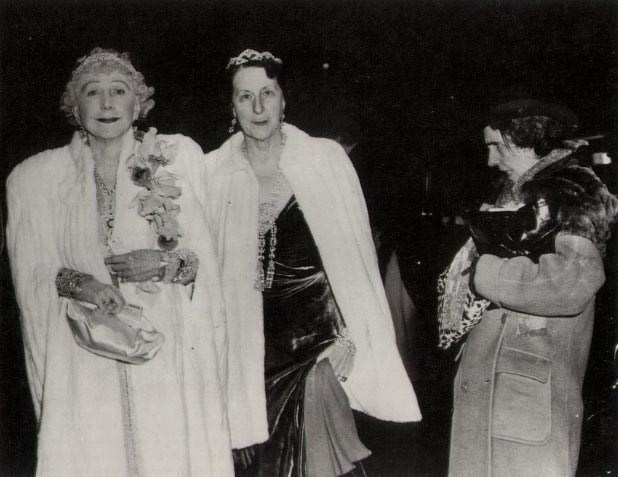
The classic Weegee photo is from the 1930s, but the news item is today's. Plus ca change, plus c'est la meme chose. Jesus wept. DS
Abstract from BBC News: The richest 2% of adults in the world own more than half of all household wealth, according to a new study by a United Nations research institute. The report, from the World Institute of Development Economics Research at the UN University, says that the poorer half of the world's population own barely 1% of global wealth. There have of course been many studies of worldwide inequality. But what is new about this report, the authors say, is its coverage. It deals with all countries in the world - either actual data or estimates based on statistical analysis - and it deals with wealth, where most previous research has looked at income. What they mean by wealth in this study is what people own, less what they owe - their debts. The assets include land, buildings, animals and financial assets. READ IT ALL