Showing posts with label Iowa. Show all posts

Wednesday, May 27, 2009

Trashing the American Dream... a dream at a time

Three Iowa farm boys about the time of the First World War.
(From left to right, the future superintendent of a large school district, a farm dog named, "Cap'n", the future Chief Operating Officer of Illinois Bell Telephone and my dad, "the babe" who went on to run a large chain of sporting goods stores and about twenty rug mills).
David Seaton's News Links
I read the following yesterday:

Here’s a staggering statistic: According to the Education Trust, the U.S. is the only industrialized country in which young people are less likely than their parents to graduate from high school. Bob Herbert - New York Times
I showed the paragraph to my German wife and she said, "that's the classic way of perpetuating a class structure in a traditional society." That, perpetuating a class structure, is, of course, precisely what the United State is not supposed to be about.

What is it supposed to be about?

Let me tell you a story.

With Obama's primary win there and the legalization of gay marriage a number of people may have been surprised to learn that Iowa is a "progressive" state.

It goes a lot farther back.

During the Civil War, a company of Iowa soldiers were captured by the Confederates. With the captured Iowans standing in formation, the rebel officer in charge ordered all the Iowans who knew how to read and write to take a step forward. The entire company took a step forward and the Confederates guarding them nearly panicked and shot them down, thinking that the Iowans were attacking them, because in a group of southern soldiers of that period, only perhaps ten out of a hundred would have stepped forward.

Iowa always has had good public schools. In a state of family farms and small businesses, education has always been seen as essential to prosperity and freedom.

An example from my family lore.

When my grandparents got married, they didn't have enough money saved to buy a farm, so my grandfather got a job running the dynamo at a gold mine in the jungles of Northern California named "The Sunny South".

As soon as they were married, my grandfather and his petite bride headed west. My two uncles were born in the mining camp. When my eldest uncle tried to find the mine in the 1950s, he and a local guide spent two weeks tramping around the dense temperate jungle of Placer County California using military maps and could find no more than some old wooden sluices hanging high in the trees.

Having made very good money for several years and with nowhere to spend it, my grandparents had saved up enough to buy a good farm. So with two baby boys in tow they went back to Iowa and bought the farm where my dad was born a few years later.

Happy ending? Not exactly.

For most Americans the great depression began in 1929, but for American farmers it had been going on for a long time. On my grandfather's farm there was a literal cornucopia of food: pork chops, bacon, corn on the cob, potatoes, tomatoes and gallons of strawberries drenched in fresh cream... but no cash money. My grandfather was lucky enough to stay out of debt, a dreamed of Christmas present for a little farm boy in those days might be a jackknife... with only one broken blade.

My father and my uncles went to a "little red schoolhouse", where they learned to memorize and recite speeches from Shakespeare and poems by Longfellow, to spell correctly and to do arithmetic. Later they went to the town high school and even learned Latin, a dead language, whose possibilities cannot be fully savored until you have heard it pronounced with an Iowa twang.

On graduating from high school they attended university at Iowa State in Ames.

This was all free.

Without going on and on, sufficient to say that my eldest uncle after graduating in electrical engineering was able to go on to be first, the financial vice president of Illinois Bell Telephone (when that was the only telephone company there was) and finally retire as the Chief Operating Officer of "Mother Bell". He also found time to be the president of Cook County Boy Scouts, (he was an Eagle Scout) and to found a small college.

If he had been born in Alabama, he probably would have ended up running a filling station and "speaking in tongues".

This, for me, is what America was supposed to be about.

How did America get where it is today? Spending half the taxes it collects on the military, fighting useless wars, while class divisions are hardening due to lack of education and health care.

During the primary campaign, Hillary Clinton made an interesting point when she said that Martin Luther King needed LBJ to change the face of America. What I don't remember her pointing out was that LBJ needed Martin Luther King just as much as King needed him.

LBJ was probably the only genuine social democrat to ever sit in the White House, but without the charisma of MLK and his struggle, Johnson could never have gotten wide enough support to pass his civil rights legislation, which he passed knowing that it would cost the Democrats the "solid South". We are talking about two men, King and Johnson, that had big, brass, balls. This is how change takes place, better believe it.

Many seem to think that voting for Barack Obama was "one stop shopping", Johnson and King rolled into one. That dog wont hunt.

Just for argument's sake, let us imagine that president Obama is as committed to helping the disadvantaged in America as Johnson was and willing to take the risks to do it that Johnson was: this requires a good imagination when talking about a "pragmatic centrist", but let's take it as given.

OK, so where is Obama's "Martin Luther King" to hold his feet to the fire, to build the public support in the street?

Without effective activism outside the party system, nothing is going to happen and stories like my uncle's will soon be like the tales of Daniel Boone or Johnny Appleseed. DS

Friday, January 04, 2008

"Huckenfreude" and "Huckaboom? How about "Huckafucked"?

"Huckabee understands how middle-class anxiety is really lived. Democrats talk about wages. But real middle-class families have more to fear economically from divorce than from a free trade pact. A person’s lifetime prospects will be threatened more by single parenting than by outsourcing. Huckabee understands that economic well-being is fused with social and moral well-being, and he talks about the inter-relationship in a way no other candidate has. In that sense, Huckabee’s victory is not a step into the past. It opens up the way for a new coalition." David Brooks - NYT

"I think sometimes the reason that our campaign is catching fire," Huckabee said in Burlington, "is because people had rather elect a president who reminds him of the guy they work with — not the guy that laid them off." USA Today
David Seaton's News Links
What impresses me about the Huckabee win is that the Huckabee campaign has come out of nowhere with no money. This is not the American Way (version - 2008). Hillary and Romney really have no message, only money and organization. Hillary, Obama and Romney are all bankrolled to the max, they are basically representing the money that grooms them. Money and organization have taken them this far. They have had to share the limelight with Huckabee, who up till now had nothing but message and personality.


Obama himself is his own message, a mixture of skin color and classy optimism: brown, upper middle-class. Both class and color could be winning advantages or crippling disadvantages; class could hurt him more than color if the economy continues to slide. Also, there is something not quite real about him, too perfect, too Sidney Poitier, and in a long campaign, reality has a nasty way of intruding.

Huckabee has come this far without money, only on message and personality. Having won Iowa this convincingly, Huckabee should start seeing some serious money. His campaign is being managed by the legendary Ed Rollins, National Campaign Director to Ronald Reagan in the 1984 presidential election where Reagan won 49 states, so that means that when he gets the money it will be well spent and the up till now activist based organization will get professionalized in a flash.

Many Democrats think that Huckabee would be a pushover in the final run for President. They are dead wrong. These are people that thought Kerry was "electable". In fact, they are living in a country that has repeatedly voted Ronald Reagan and George W. Bush into office.

Short of of something cosmic and message destroying like marital infidelity or a pedophilia scandal, Huckabee, with a bit more momentum and a lot more money, would be practically impossible to stop. People are really that fed up with the status quo.

A lot of commentators have fun making up new words, riffing on "Huckabee", like "Huckenfreud" and "Huckaboom, etc, How about "Huckafucked" for a neologism? DS


For Republicans, What a Difference Five Days Might Make - Washington Post
Abstract: As the presidential race shifts to New Hampshire, the Democratic candidates are continuing the intensive organizational battle that defined their race in Iowa. But the Republican candidates find themselves confronted with what amounts to an entirely different race, with a different slate of top contenders, a new set of issues and only five days to sort it all out. The Iowa GOP contest became, in effect, a two-person race between former Massachusetts governor Mitt Romney and former Arkansas governor Mike Huckabee, with Huckabee in the end overcoming his severe financial disadvantage to win easily. The race was dominated by the issue of immigration and the spectacle of a Baptist minister taking on a Mormon in a state with a large population of evangelical Christians. New Hampshire, however, presents a different two-man Republican showdown, this one between Romney and Sen. John McCain (Ariz.), who has focused most of his efforts in the state where he upset George W. Bush in 2000.(...) Obama, coming off a strong victory in Iowa, has not spent nearly as much time in New Hampshire, but his campaign has not stinted on its organization here. He has more than a dozen field offices, over 100 paid staffers, and a captain for every town and city ward. Obama has attempted innovative efforts to spread interest in a candidate that few in New Hampshire knew much about before he arrived in the state a year ago. The campaign organized book clubs for residents to discuss Obama's 1995 memoir and set up a statewide three-on-three basketball tournament in which residents could participate if they agreed to volunteer. The campaign also set up small groups of supporters organized not only by geography but by profession or interest -- lawyers, doctors, environmentalists -- and sent relevant surrogates to address them. Recently, the campaign has held meetings to train local volunteers on getting out the vote, and has been encouraged by the big turnouts in small towns. Added to this group will be a crush of out-of-state volunteers, including many students on break. Former senator John Edwards (N.C.), who in 2004 saw his campaign fade here, has invested more resources this time. He has 80 organizers in the state, but lacks the momentum he was hoping to build with an Iowa victory. Obama will be up against Sen. Hillary Rodham Clinton's rock-solid organization, which benefits from widespread support across much of the state's Democratic leadership, as well as from the ties that the Clintons formed here in the 1990s. READ IT ALL

Wednesday, January 02, 2008

Iowa on my mind

David Seaton's News Links
Awhile back I wrote:
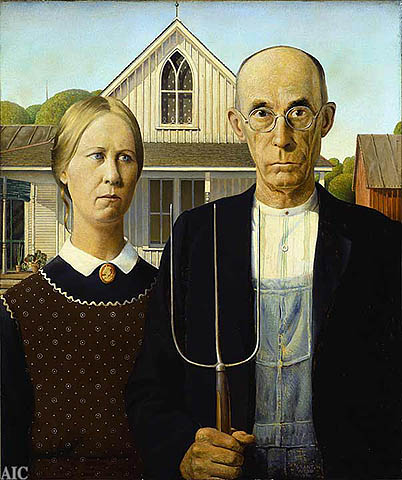
My grandfather was an Iowa farmer who lived on a farm almost exactly like the one in Grant Wood's famous painting and wore Levi bib overalls just like the ones in the picture and pitchforked the same stuff that the farmer in the picture presumably pitchforked with his pitchfork and...
Iowa is deep in my subconscious, I went out there hundreds of times when I was a boy to visit my grandmother who had sold the family farm and moved into Burlington
when my granddad died a couple of years before I was born. They're both buried out there and so is my dad... and so are all of my paternal relatives going back to before Iowa was a state. Great, great uncles and grandfathers of mine served in the Iowa regiments during the Civil War.

My father used to take me out to visit the farm, which was owned by then by the son of a family friend and we used to take the farm tractor and cruise around the fields while my dad told me stories about their life on the farm. The cold (which I have experienced) of the winters without central heating (which I haven't) and the steam heat of the summers near the big muddy. What it's like to plow with a blind Percheron named Jimmy and to clean the shit out from under forty cows at five o'clock on a minus ten morning, before walking through snow drifts to a little red school house.

The last time we went out there, the farm had been sold to an agribusiness and my dad could only locate the place where he was born with a compass taking his bearings from the CB&Q tracks which bordered the property. Nothing was left, not a tree, not a stone, nothing. This is the sort of thing that Europeans only experience because of war and even then they lovingly reconstruct the ruins, but I think most Americans over the age of fifty have a story like this... I've never been back... but I'd like to before I die.

I can live a million years in Europe, learn languages, work on the economy etc, marry a German girl (which is very traditionally middle western thing to do, come to think of it) and still be American down to the ground because of those Iowa roots (ruts). It is a place that leaves fingerprints that just never wash (warsh) off.

It makes me happy that every four years all the men and women who would like to be president have to traipse around Iowa's endless plains and talk to its citizens one by one and drag all the cameramen and journalists cursing the cold behind them. I'm proud that the ground that holds the bones of so much of my DNA is chosen to influence so mightily the history of the world. DS

Monday, November 20, 2006

Iowa feeds its hungry with venison - Wall Street Journal

David Seaton's News Links
Here is a real "only in America" story. Readers in Europe and Asia will probably find this as exotic as Americans would find Tibetan funeral rituals. What I find hard to understand is that over ten percent of the population of Iowa goes hungry. It has the best farmland in the world. Oh well, let them eat cake.DS
Abstract: (...) Iowa's Help Us Stop Hunger program targets two troubling trends: rising populations of deer with too much to eat, and hungry people with too little. Through HUSH, which was concocted by the state three years ago to control the exploding deer population, more than 250,000 pounds of venison are expected to be donated by hunters to local food banks. That should result in more than 1 million meals of chili, stew and sloppy Joes.(...) Last hunting season, Iowa hunters shot more than 210,000 deer and donated 5,608 to food banks. Reports from meat lockers and butcher shops indicate donations are increasing this year. "You can only eat so much deer," said Kevin Bradley.(...)Beef is rare at soup kitchens and pantries."We never get donated hamburger," says Ms. Bergen. So the Food Bank of Iowa in Des Moines collects venison recipes, some of which come from nutrition students at Iowa State University. (...)"In Iowa, there's so much food for the deer with all the corn," says Fred Haskins, executive director and legislative counsel of the Iowa Insurance Institute, an association of property-casualty companies. At the same time, the number of people in Iowa without enough food was also increasing. In 1999, about 7.6% of households couldn't afford to feed their families at some point during the year. In 2005, it was 10.9%, according to the U.S. Department of Agriculture. (emphasis mine) READ IT ALL

Saturday, November 18, 2006

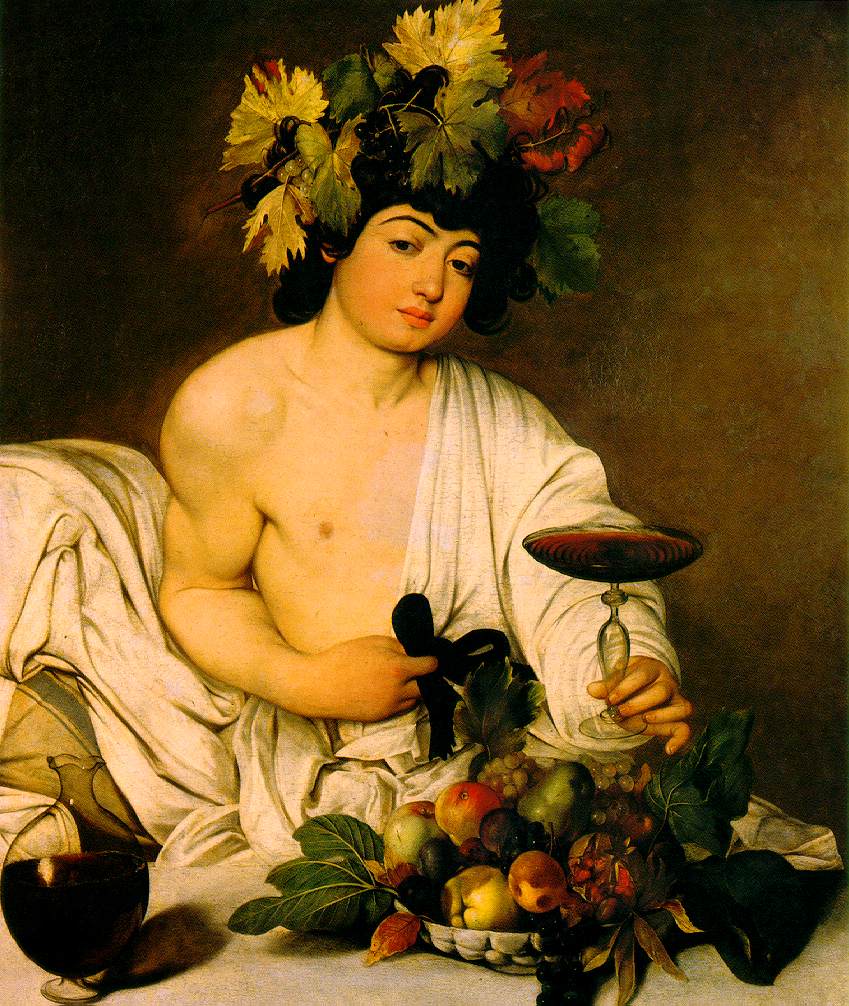
Iowa Finds Itself Deep in Heart of Wine Country - New York Times


David Seaton's News Links
My grandfather was an Iowa farmer who lived on a farm almost exactly like the one in Grant Wood's famous painting and wore Levi bib overalls just like the ones in the picture and pitchforked the same stuff that the farmer in the picture presumably pitchforked with his pitchfork and... I'm having trouble processing this story! DS
Abstract: Stan Olson used to grow corn and soybeans on hundreds of acres here on the Raccoon River west of Des Moines, but no more. These days, Mr. Olson’s empty grain silo is useful only as a rustic image to promote his new vineyard and tasting room.(...) “I will make as much selling grape plants off of two acres this year as I did many years on 1,000 acres of corn and raising 3,000 head of hogs,” said Mr. Olson, who makes much of his money selling cuttings to other aspiring vintners. “This year was a very good year,” he said. When wineries began popping up around the region in the 1970s — the first rebound of a local industry killed by Prohibition — many people thought it was a fad that would go the way of herbal diets and frozen yogurt stands. But across the Midwest, wineries are thriving, both as tourism magnets and profit-making businesses. Some are even producing quality wine, sommeliers say, made possible by French-American grape hybrids that are bred to thrive in cold climates. They have been so successful that more corn, soybean and tobacco farmers are clearing fields and planting grapes. In Iowa alone, a new winery has been licensed every two weeks for the past year, officials say. Now, more than 700 acres are devoted to grapes (compared with 15 in 2000) and there are close to 70 commercial wineries. Iowa has also just hired its first state enologist to help guide the novice winemakers. Other states in the Upper Midwest are also producing grapes, and uncorking more of the bottles they produce. In South Dakota, for instance, the number of wineries has more than doubled recently, to 11. In Indiana, the local wine industry has added $34 million to the economy annually. And Ohio is spending $900,000 to promote its local vintages, competing with more established regions in California, the Goliath of American wine. “We’re not afraid to take them on,” said Fred L. Dailey, director of the Ohio Department of Agriculture. Bragging about a recent West Coast competition where an Ohio riesling won an award, Mr. Dailey said dismissively, “We beat out all those over-oaked chardonnays over there.” In a region where independent farmers have suffered through hard times for decades, the prospect of Bacchus smiling down upon the fields has produced a kind of farm-based optimism rarely seen in these parts. “I go to sleep and wake up with a smile on my face,” said David Klodd, a native Iowan and an assistant winemaker at the Summerset Winery in Indianola, where sales have been increasing by about 20 percent a year. READ IT ALL