Showing posts with label decadence. Show all posts

Monday, October 30, 2017

To blog or not to blog, that is the question...

A few months ago, I took a pause in blogging. The appearance of Donald Trump as President of the United States took the wind out of my sails, not so much Trump himself, horrid as he is, but Trump as a symptom and a symbol of ruinous decadence. It was like seeing an old friend suddenly getting horribly thin, or finding a loved one suddenly lost in depression, no longer taking care of their appearance, not washing, not changing their clothes. 

One sure thing has come to me from from all of this. I am grateful that I have no children and thus leave no innocent grandchildren to face the world that is coming. I realize that those of us born right after World War Two, in either the USA or Western Europe, have lived to be elderly in a truly Golden Age of peace, prosperity and health that is more than probably going to disappear forever.

In the following weeks and months, I hope to write some sort of coherent analysis of some of the facets of this descent into chaos. For the moment I am collecting articles that my instinct tells me are relevant and that may help me to write something useful in the future. I am posting them to my twitter account. @David_Seaton, if you care to read them and draw your own conclusions.

In the meantime, the only way I can fully express the dread I feel is in poetry.

Today I leave you with this sample:

Futurology

The old and toothless of our tribe

Tell the tale

That before the beginning of time

Even before the mountains began to glow in the dark

An orange baboon ruled the world

And the legend has it

That our land of tears,

Of ashes,

And of dust

Was,

Once upon a time,

A land of hopes and dreams

DS

Sunday, November 03, 2013

USA: mature or overripe?

David Seaton's News Links
Apple
Among the casualties of the Snowden stories are an embarrassed and chastened White House, an American technology sector which has seen its own government tarnish its business model of a global, open internet and the strong US relationships with allies such as Germany. Financial Times
In English we make a clear difference between "mature" and "ripe".
We also distinguish between ripe and too ripe, with the word, "overripe", which is common enough a concept to have one whole, unhyphenated word all to itself.
ma·ture
adjective \mə-ˈtu̇r, -ˈtyu̇r also -ˈchu̇r\

: having or showing the mental and emotional qualities of an adult

: having a fully grown or developed body : grown to full size

: having reached a final or desired state
Merriam Webster

over·ripe
adjective \ˌō-və(r)-ˈrīp\

: grown or aged past the point of ripeness and beginning to decay : too ripe

: not new or young

: not fresh or original
Merriam Webster
We don't have a word for "over-mature", as being mature is thought to be good and it is hard to see how you can have too much of it, but ripe, which in itself is good, past a certain point can become bad.
I would maintain that history's most advanced and developed version of capitalism, the American version, instead of being mature is overripe.
The snippet from the Financial Times that tops this post reveals "the worm in the apple", the conflict or "contradiction" in the system, simple to identify, but whose resolution or synthesis is very difficult to predict.
The most creative and innovative sector of the American economy, the sector that most represents a future prosperity for American business, is symbolized by Google, a huge organization, whose business model is based on the free flow of information and especially on obtaining the personal data of everyone on an interconnected, frontier-less planet, in order to anticipate and satisfy their every want and desire by knowing even their unconscious needs and motivations. This obviously requires enormous quantities of trust on anyone who uses Google... as users confide to Google, knowingly or unknowingly, things that they would never confide even to their dearest friend or most loved and trusted family member. Trust, friendliness, goodwill then, are the central, essential qualities of Google's business proposition.

Google's antithesis is the NSA, who also wants access to the personal data of everyone and to know (and especially anticipate) their needs and desires, conscious and unconscious in order to dominate and control them. This organization's philosophy is not to trust anyone, not even ones closest friends. And whose process of knowledge to action might be symbolized by the drone strike. Certainly trust, friendliness, goodwill then, are NOT the central, essential qualities of NSA's "business proposition".

However the two "business propositions" are deeply entwined. It is hard to imagine a "Swiss" Google or anything as all-encompassing as Google in any country that did not physically control the Internet and set and enforce the world's rules of commerce and supply the world with its reserve currency, while physically controlling the seas and air all over the world with the greatest accumulation of military power in the history of our planet. And conversely it is hard to imagine an intelligence agency as "penetrant" as the NSA without access to the resources of Google, Yahoo and Facebook.

The same as mixing Clorox with gasoline will cause an explosion and it is vital to keep the two apart, so it is vital for America's new economy to keep the idea of the NSA as far away from the idea of Google as possible... I should say "was" because Snowden has let the cat out of the bag and like putting toothpaste back in the tube, all the king's horses and all the King's men will never put Humpty Dumpty back together again.

With the wisdom of hindsight this Achilles's heel of American power was obvious, but Edward Snowden, or whoever (if anyone) runs him has fired a deadly torpedo directly under America's waterline.

All that was needed was to find the right person at the right time and get him and his information where the United States could not prevent its dissemination.

Like taking candy from a baby.

Returning to the original metaphor, the connection NSA/new economy was (over) ripe for the plucking.

Some would say that when our economic system reached it's full worldwide potential and maturity such a conflict was bound to arise, others have been hoping and praying for such an event since the 19th century... we are "fortunate" enough to be here to witness how it plays out. DS

Thursday, October 02, 2008

A quote for today

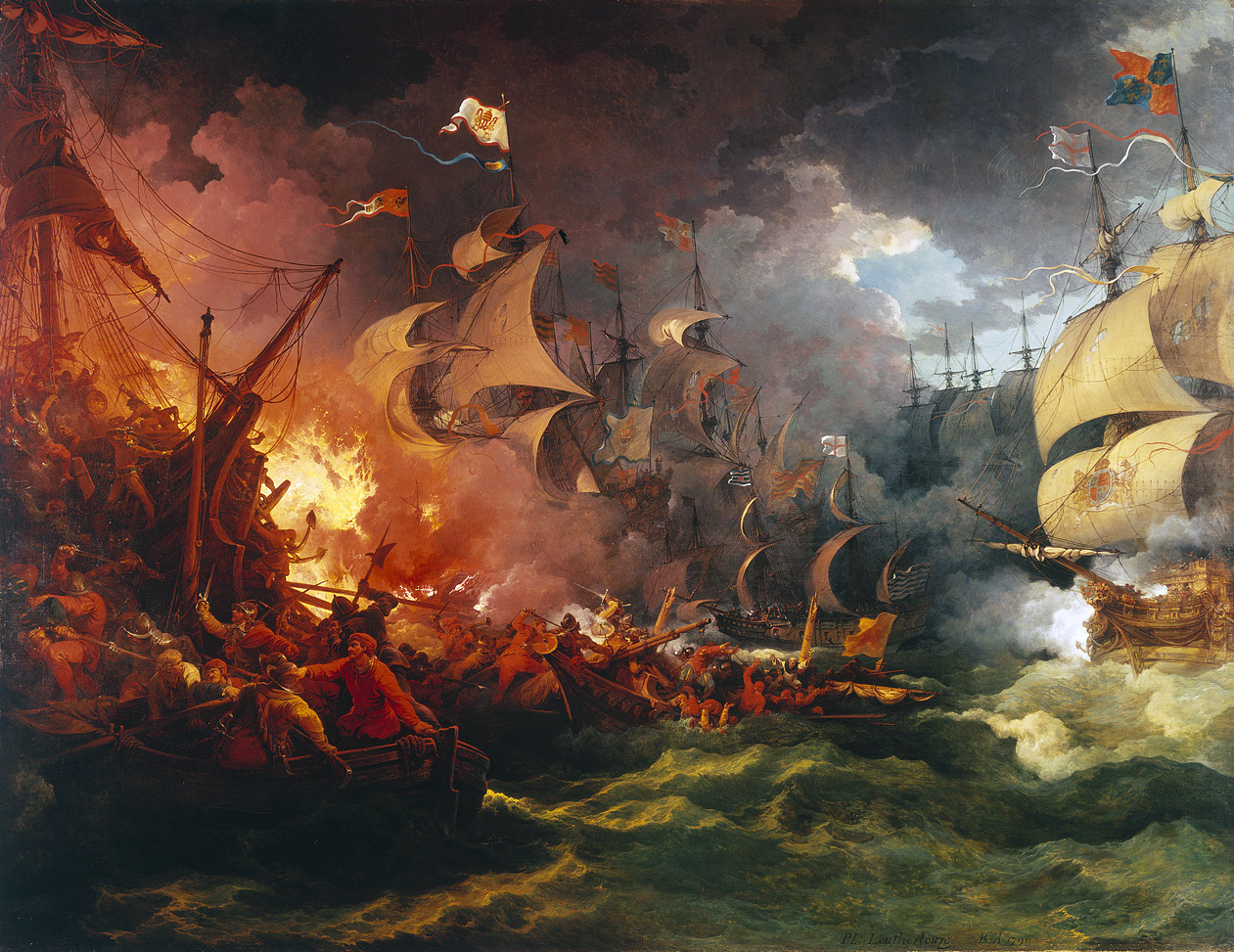
The 'Invincible' Armada*
(*Wall Street hadn't been invented yet)
This is no longer the muscular and arrogant United States the world knows, the superpower that sets the rules for everyone else and that considers its way of thinking and doing business to be the only road to success. A new America is on display, a country that no longer trusts its old values and its elites even less: the politicians, who failed to see the problems on the horizon, and the economic leaders, who tried to sell a fictitious world of prosperity to Americans. Der Spiegel
David Seaton's News Links
That is about as cold as it gets.

However, if it is any consolation, America, the land of superlatives, has managed to decline at a speed that will impress, fascinate and keep historians (Chinese) busy for centuries trying to figure it out.

I live in a country, Spain, which was the previous record holder for falling from the heights. A country, once the greatest empire in the world, that finally bottomed out in the blood-drunk orgy of its civil war and the hangover of four decades of moldy dictatorship. Everything is fine now, but it was a helluva ride to get here.

The USA seems to have telescoped what it took Spain centuries to achieve into only a few years.

The American 1950s might be compared to Spain's "Golden Age" (Siglo de Oro) and, stretching it a bit, today might be compared to the early 1930s. Think of it, 500 years of splendor and decline crammed into only six decades! ...With the best yet to come.

You go girl! DS

Wednesday, March 26, 2008

A timely reprint


David Seaton's News Links
I wrote the text below way back in November of 2006, forgive me for quoting myself, but I find it just as pertinent today... especially when I survey the three candidates that have risen to the top of no less than 300,000,000 people and have the nerve to offer to lead them in times like these.

This is what I mean when I say that Bush is not a cause, only a symptom.


History gives innumerable examples of fools and knaves, physical and mental degenerates, who find themselves ruling hereditary monarchies or inheriting a dictatorship from a murderous and suddenly deceased parent. This is not supposed to happen in a democracy or at least not happen twice: as the saying goes, "Fool me once, shame on -- shame on you. Fool me -- you can't get fooled again."

What is truly terrible and simply shameful and hopefully inexplicable is how a nation of 300M people, with strong democratic traditions, filled with universities and libraries, of legendary wealth and possibilities, could freely choose from among their enormous number a sinister, mean spirited fool and then seeing how he led them from disaster to disaster, choose him again.

The problem isn't Bush. The world is filled with knaves and fools. The question is how Bush got where he is and how got there again.

This is just as interesting a question as how an Austrian clochard and failed watercolorist once became the leader of Europe's most powerful country, the home of philosophers, poets, musicians and scientists.

It is a question that must be answered. So let's stop blaming Bush for being Bush and begin to blame the real culprits.


Who are the real culprits? If this is a democracy, we ourselves are, obviously. DS

Friday, March 14, 2008

Kouchner's call: the thrill has gone


Asked whether the United States could repair the damage it has suffered to its reputation during the Bush presidency and especially since the 2003 U.S.-led invasion of Iraq, Kouchner replied, "It will never be as it was before." "I think the magic is over," he continued, in what amounted to a sober assessment from one of the strongest supporters in France of the United States. Bernard Kouchner, French Foreign Minister
David Seaton's News Links
I've been living abroad for many years and have had a good opportunity to evaluate America's image in the world. I think it is important to note that, although Bush has aggravated the situation and hastened the deterioration of America's image, he was not a primary cause, only another symptom.


Symptom of what?


In one word, "decadence".

The general view is that the United States is a power in decline. Some are happy at this decline, while others are saddened by it, and still others, like the Israelis, are terrified by it, but all are in agreement that the USA is decadent.


What Bush has done is to cause a significant number of people to evaluate the USA in a Chomsky like manner. It could be said that Noam Chomsky's critique of American power is now mainstream. We owe that to Bush's clumsiness. A majority of people in the world (if we are to believe the polls) see America as the "problem", not the "solution". Its desire to project its power by any means is considered the prime destabilizing factor in the world.


To compare the foreign policies of Clinton to Bush II, would be like comparing two magicians: Clinton would be David Copperfield, brilliant, perfect execution, but only smoke and mirors in the end and Bush would be like a children's birthday magician that reaches in his top hat and instead of a rabbit, come up with only a handful of rabbit poop. Both are fakes, but one is a pro and the other is incompetent.


It would behoove the United States to not think about ordering and cleaning up other people's messes, but to engage with all its resources in cleaning up its own mess: health, education, infrastructure, governance, corruption, etcetera. It would be good if it reduced its military spending and reconstructed its manufacturing sector. The list is endless. In the meanwhile America's foreign policy should be minimalist, realist, and not engaged in Wilsonian tilting at windmills.

If Bernard Kouchner, who is one of the world's most enthusiastic "liberal interventionist", thinks the "magic" is gone, believe me that the magic is gone: gone to where, to use a Spanish expression, "the wind turns around to come back."
DS

Saturday, November 10, 2007

Decadence, like charity, begins at home


David Seaton's News Links
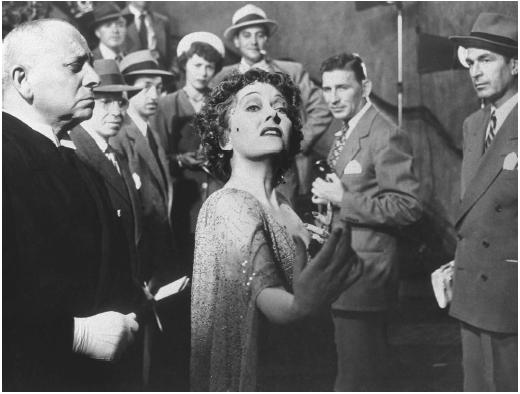
To be decadent is to do things a certain way because they have always been done that way, to endlessly repeat oneself until becoming a parody of oneself.

To be decadent is to turn what was once fresh and charming into a tic, into a mannerism, so that what once was seductive becomes grotesquely repellent.

Fatigue disguised as youthful energy, boredom disguised as fascination... Capped teeth exposed in an achingly wide smile under cold, watchful eyes that see nothing but surfaces.

F. Scott Fitzgerald said that there are no second acts in American lives... The question today is will there be a second act in America's life? DS

William Pfaff: What's Happened to Pakistan?

Abstract: American pressure on Musharraf has alienated a part of his army, spurred the rise of Islamic radicalism, inspired an enormous rise in anti-Americanism, and now, in manipulating the return of Benazir Bhutto as agent of American-desired political liberalization, Washington has precipitated Musharraf’s coup. Washington also wants Musharraf to be a democrat. The return to constitutional government and the empowerment of civil society now are blocked, even though elections are promised for February. It could end in the wreckage of still another Islamic nation – following Iraq, Afghanistan, the Palestine Authority and Somalia. In this case, it concerns a state possessing nuclear weapons. All are victims of history, their own. But to the extent that American intervention is involved, they also are victims of a colossal American ignorance of other people’s history, and indifference to the consequences of manipulating other societies.(...) It is easy to destroy. What follows is another matter. READ IT ALL

Friday, November 02, 2007

Hegemony, when it goes... "be a long time gone"

David Seaton's News Links
The definitive importance of what has been lost in Iraq is only just beginning to sink in. We are experiencing, at this very moment, the end of an era that began in 1945.

Western leaders feeling 'orphaned' gather and rally to Washington looking for leadership that no longer exists.

This vacuum will not be solved when a new president is elected, the vacuum is structural not personal. Bush is only a symptom, not a true cause, a symbol not the reality, the bad smell, not the mess itself.

Living so many years in Spain and studying its history has made me especially aware of the mechanisms of 'decline and fall'. Fewer people are better equipped by their history than the Spanish to understand how a brave, talented, energetic people can be led to ruin by a decadent, ruling elite. Spain also offers the example of how, even at great cost and at great pain, it is possible for a great country to finally leave aside prideful narcissism and learn the lessons that history happily teaches to those who attend her. DS

Philip Stephens: America is still indispensable but it must work with others - Financial Times
Abstract: Early next week George W. Bush will be greeting Recep Tayyip Erdogan, Turkey’s prime minister, at the White House. A day or so later France’s Nicolas Sarkozy will pitch up in Washington. By the weekend, Angela Merkel, Germany’s chancellor, will be sharing a hamburger with the US president at his ranch in Crawford, Texas. Lame-duck president he may be but Mr Bush does not lack for foreign visitors.(...) If American power is still indispensable, it is no longer sufficient. America’s choices condition, often decisively, the decisions of others. But their assent cannot be taken for granted.(...) During Mr Bush’s unilateralist first term, one US official told me a little while ago, the assumption had been that “first we decide and then we tell the rest of the world”. During the second term there had been a genuine attempt to “listen before we decide”. Crucially, though, the bit that had not changed was “we decide”.(...) The common thread that runs through both sets of campaigns, though, is an assumption that the US can somehow turn back the clock to the world before Iraq. Thus Mrs Clinton tells readers of Foreign Affairs that though American leadership has been “wanting”, it is still “wanted” by the rest of the world. Mr Obama has written in the same journal that: “The American moment is not over but it must be seized anew.” To the extent that the US will remain the pre-eminent power for some decades yet, they are right. But two things are missing: recognition that the rise of other powers – notably China and India – is already diminishing America’s relative strength, and anything more than the vaguest of senses of how the US might shape this landscape. There lies the purpose for American leadership: to begin to design, as it did for the west after the second world war, an international system that puts great power co-operation rather than competition at its core. Many will say that is too much to ask of today’s candidates for the White House. They may be right. But in that case we should prepare for the new global disorder. READ IT ALL

Thursday, October 04, 2007

God's country and how we blew it

David Seaton's News Links
The United States has always been a dream country, with its easily defensible borders, its navigable rivers, its fertile agriculture, its natural resources of every kind, its large, energetic and relatively well educated population.... You name it. As Chuck Berry sang, "Anything you want, we got right here in the U.S.A.".

So, what's the problem?

The problem is political. The people themselves know what to do, but the system cannot do it. And the system cannot deliver because of the way politics is financed.

William Pfaff, in the article below, gives the key; the problem is that the
"Supreme Court-imposed doctrine that money spent on television political advertising is constitutionally protected free speech, has created a presidential election industry concerned totally with profit and virtually nothing with principle."
As I like to say, future Chinese historians will find this fatal flaw a fascinating subject to study, a sure fire doctoral thesis, like learning that the Roman Empire collapsed because the lead pipe plumbing made the Roman matrons infertile and thus decimated the patrician class.

It reads a helluva lot better than it plays though. DS


William Pfaff: Dehumanizing America's Presidential Candidates
Abstract: Americans will soon near the end of the first year of the 2008 presidential campaign, which actually began before the congressional mid-term election of 2006. The candidates of both parties have already lost much if not most of their human recognizability and have increasingly come to resemble synthetic creatures uttering programmed opinions that relate to a virtual rather than real national and international society.(...) It is as if they might already be experiencing near-death out-of-body episodes, floating above the audiences or television studios and incredulously witnessing themselves answering the same meaningless questions for the millionth time, with a million more times to come before the campaign ends a year from November, and already near madness. The presidential campaign is an ordeal we should not inflict on sentient beings, even laboratory rats. It is a phenomenon of what Marx would not have recognized as post-modern capitalism, since this degree of dehumanization of individuals would have been unimaginable in a nineteenth century economic or political system. But today, the United States, under the Supreme Court-imposed doctrine that money spent on television political advertising is constitutionally protected free speech, has created a presidential election industry concerned totally with profit and virtually nothing with principle.(...) The process takes groups of originally diverse and intelligent individuals, imprudent or courageous enough to wish to become the Democratic candidate for the United States presidency (to take that party example), intending to represent an electorate that voted overwhelmingly in 2004 to end the Iraq war and withdrew from that country, and thereafter cease to meddle in the affairs of distant countries, and it remakes them. All these individuals at the start had individual convictions about how to accomplish such goals. The election industry with all but unvarying success turns them into people who say exactly the same things about everything,(...) On Iraq, each of those candidates whom the Washington press, and national editorialists, have (already) selected as electable, now says that the U.S. must stay in Iraq or the surrounding region with large military forces, not just after the 2008 election, but that of 2016 – beyond two more presidential terms – so as to “prevent chaos,” prevent Iraq from becoming “a terrorist hotbed and training ground,” foster democratic government, centralize (or decentralize) Iraq (the apparent disagreement on this is unimportant because it is a matter the Iraqis will eventually decide for themselves), foster the regional stability that the United States destroyed by invading Iraq, preserve America’s interests in Arab oil, and protect Israel from Iran, Syria, and perhaps eventually from the Palestinians. This is largely indistinguishable from the Bush administration program (probably leaving out the Bush people’s commitment to torture) because it is the consensus view of the American foreign policy community in Washington, and any deviation from this consensus is considered by the presidential election industry as disqualifying the candidate. The dissident will have revealed himself or herself as less than a strong leader, a policy irresponsible, and not presidential material. The problem in American foreign policy today is that an ideological orthodoxy has emerged within the intellectual and political community concerned with foreign relations, and this orthodoxy now is imposed upon everyone who wishes to shape national policy at the Washington political and media level. READ IT ALL

Thursday, February 15, 2007

Subject: decadence

How do you explain to the thousands of American troops now being poured into Baghdad that they will have to wait until the summer for the protective armor that could easily mean the difference between life and death?
Editorial - New York Times - 2006/2/15
David Seaton's News Links
To answer the above question from today's New York Times editorial, I suggest reading an article William Pfaff wrote nearly a year ago, excerpted below. It is entitled "Making Things", but it could be entitled, "The Decline and Fall of the American Empire".

Decadence is not just a bunch of shagged out Romans peeling grapes. It sometimes takes historians centuries to figure out all the factors that cause a powerful society to crumble. Losing the ability to do what made you powerful in the first place is one of the most common causes.

I'm sure you'll agree that decadence is a fascinating subject, but I'm sure you'll also agree that it sure as hell reads a lot better than it plays. DS

On the Ability to Make Things - William Pfaff - 2006/3/8
Abstract: Troops continue to complain that while available body armor may be adequate to protect against shrapnel it provides insufficient protection against the growing threat of snipers using rifles with optical sights and high-velocity ammunition aimed at the separations between armor plates in the existing American jackets.

Surely these should be trivial and quickly remedied problems for the most powerful military machine on earth? In 1940, as the second world war began in Europe, the United States Army consisted of 268 thousand men and women. The United States then had some 40% (132 million) of the population it has today. A year later, in 1941, the military draft was in place and training began for a projected force of two million soldiers. Then came Pearl Harbor. Four years later – just one year longer than the United States has already been in Iraq -- the army had eight million men under arms, with more than six million more serving in the navy, Marine Corps, and Army Air Force, all fully equipped. Tens of thousands of aircraft and tanks had been manufactured, thousands of ships, millions of weapons.

In October 1941, four months after Hitler invaded Russia, Franklin Roosevelt wrote to Joseph Stalin to promise to supply some 67 war-essential goods to Russia. This, he added, was just the start. He promised that the U.S. would immediately ship to Russia 5,600 military trucks, and in every subsequent month would ship 10 thousand more trucks. It would send one thousand tons of armor-plate monthly, 10 thousand tons of TNT monthly, and each month supply the Soviet army with 200 thousand pairs of army boots. The other items promised included aircraft and other kinds of vehicles. The United States armed and made mobile the Russian army while doing the same for itself. READ IT ALL