The worst is yet to come for the U.S. housing market.(...) The national median home price is poised for its first annual decline since the Great Depression(...) ``It's a blood bath,'' said Mark Kiesel, executive vice president of Pacific Investment Management Co. ``We're talking about a two- to three-year downturn that will take a whole host of characters with it, from job creation to consumer confidence. Eventually it will take the stock market and corporate profit.''(...) ``It's not just a housing recession anymore, it looks more and more like an economic recession,'' said Nouriel Roubini(...) ``When all these people see their mortgage payment and it's up 40 or 50 percent, they're going to say, `We can't stay in this house,''' Pimco's Kiesel said. ``And there are millions of people in this situation.'' BloombergDavid Seaton's News Links
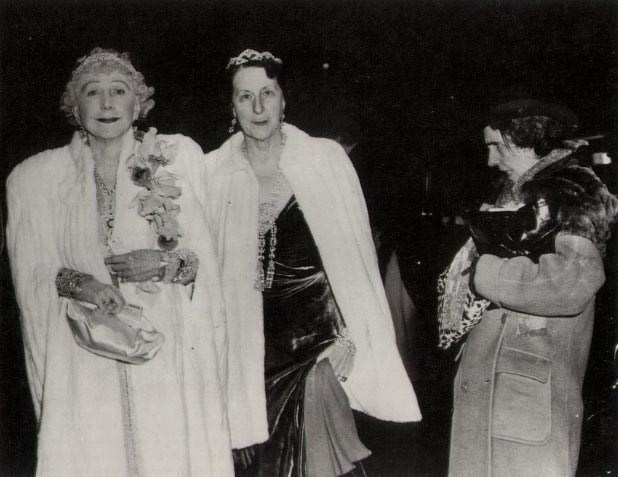
I can think of no more wrenching yet predictable political trend on the horizon than a general souring on the super rich. There is nothing especially new about it, quite the contrary, but like all the other "end of history" myths, the supposed end of "class struggle" is also about to hit the fan and after a long absence, the tensions that brought the social-democracy movement on stage in the first place, are eagerly waiting in the wings.
As interest rates rise and lending restrictions are put into place, millions of middle-middle class people who have been living in a dream world, thinking that were somehow part of the same universe as Bill Gates, are going to have to make drastic decisions about allocating their resources if they are not to lose their homes. They are going to re-discover why there was ever a universal demand for good, free public schools and universities or (in the countries lucky enough to have gotten that far) first class, free public health care in the first place. They will rediscover the nearness of the abyss of destitution and humiliation that terrified their parents and grandparents who lived through the Great Depression.
As much as an economic and political readjustment, it will be a cultural change, for never before in history have so many "normal" people identified with the wealthy and considered them harmless or even benevolent. DS
The rich must be penalised - Guardian
Abstract: (...) Equality is not a penalty-free condition. It increases rather than reduces the sum of freedom - giving millions more men and women the ability and the right to exercise the choices of a free society. But it reduces the purchasing power of the top earners, whose taxes are increased to pay for the improved pensions and health care. Every great leap forward towards redistribution has been accompanied by a frank acceptance of the price that the wealthy must pay, usually accompanied by an attack on their reluctance to meet the bill.
A hundred years ago, David Lloyd George - fearful that the House of Lords would reject his budget because of the introduction of a land tax to finance "provision for the aged and deserving poor" - mounted an attack on landlords in general and landowning dukes in particular. He told of a visit to a Welsh coalmine - "three-quarters of a mile of rock and shale above us" - to illustrate the infamy of the coal-owning classes.
"The prime minister and I knock on the doors of these great landlords and say to them, 'You know these poor fellows ... Some of them are old, they have survived the perils of the trade, they are broken and they can earn no more. Won't you give something towards keeping them out of the workhouse ...?' They retort, 'You thieves ...!' If this is the view taken by these great landlords of their responsibilities to the people who, at risk of life, create their wealth, the day of reckoning is at hand."
The rhetoric is as old-fashioned as the overt class antagonism, but the essential point remains. Lloyd George was not advising the coal owners to subscribe towards the cost of a pension in order to improve productivity. He was saying to the world that security in old age is a moral necessity and has to be financed by the wealthy. Politicians who run away from the underlying principle that greater economic equality penalises the rich will never have the nerve necessary to bring about economic equality. READ IT ALL
Abstract: (...) Equality is not a penalty-free condition. It increases rather than reduces the sum of freedom - giving millions more men and women the ability and the right to exercise the choices of a free society. But it reduces the purchasing power of the top earners, whose taxes are increased to pay for the improved pensions and health care. Every great leap forward towards redistribution has been accompanied by a frank acceptance of the price that the wealthy must pay, usually accompanied by an attack on their reluctance to meet the bill.
A hundred years ago, David Lloyd George - fearful that the House of Lords would reject his budget because of the introduction of a land tax to finance "provision for the aged and deserving poor" - mounted an attack on landlords in general and landowning dukes in particular. He told of a visit to a Welsh coalmine - "three-quarters of a mile of rock and shale above us" - to illustrate the infamy of the coal-owning classes.
"The prime minister and I knock on the doors of these great landlords and say to them, 'You know these poor fellows ... Some of them are old, they have survived the perils of the trade, they are broken and they can earn no more. Won't you give something towards keeping them out of the workhouse ...?' They retort, 'You thieves ...!' If this is the view taken by these great landlords of their responsibilities to the people who, at risk of life, create their wealth, the day of reckoning is at hand."
The rhetoric is as old-fashioned as the overt class antagonism, but the essential point remains. Lloyd George was not advising the coal owners to subscribe towards the cost of a pension in order to improve productivity. He was saying to the world that security in old age is a moral necessity and has to be financed by the wealthy. Politicians who run away from the underlying principle that greater economic equality penalises the rich will never have the nerve necessary to bring about economic equality. READ IT ALL


