Showing posts with label congress. Show all posts

Sunday, September 29, 2013

Abandon hope all ye who enter here...?

David Seaton's News Links
Dante's Inferno - Thieves
Dante's Inferno -  "The Thieves" - Gustavo Doré

"Many decades from now, a historian looking at where America lost its way could use This Town as a primary source."—Fareed Zakaria

And so we have arrived at the bizarre juncture where it makes more sense for Mr Obama to talk to the leader of Iran than to talk to Congress. Edward Luce - Financial Times

I mentioned in an earlier post that I had been reading Mark Leibovich's book, "This Town", which is a tragicomic, insider's trek around the astounding frivolity of Washington's wall to wall corruption. An extraordinary book: not a don't know whether to laugh or to cry kind of book, but more like a don't know whether to laugh or to vomit kind of book.
Since reading it, I have found myself facing some sort of "writer's block" when trying to comment on the day to day march of world affairs... this lack of enthusiasm is heightened daily while surveying the Tea Party led march to a budget Armageddon. This political "Dumb and Dumber" would be sad enough if it were occurring in today's Rome, for example (it is actually)  but in a place like Washington, which today wields more power than ancient Rome did, I'm reminded of Caligula making his horse a senator... actually I much more reminded of the corruption and dysfunction of the Gorbachev to Yeltsin period of  the dying USSR, where they proved out the ancient adage, "the bigger they are, the harder they fall".
In many countries, the level of political dysfunction of the American system would produce a coup d' état, something which would appear unthinkable in such a huge, complex structure as America's... I don't say it is impossible because of the USA's democratic traditions or institutions, witness the activities of the NSA, Guantanamo and drone warfare... No, it just seems too big a place to pull something like that off.
Really, the only hopeful sign I have seen lately that the USA might be able to regenerate itself has been the sudden, unexpected, spontaneous, all for one and one for all, mobilization of American public opinion, a people's revolt both on the left and on the right, over the heads of the lobbies, the heads of the gatekeepers and the heads of other managers of consensus, against any military involvement in Syria... perhaps such a wave of revulsion is building up around America's systemic political meltdown and the people will rise up as one to change it.
Someone who believes in democracy has a right to hope that Americans can reboot their country from the ground up... it certainly is never going to happen from the top down. DS

Friday, September 04, 2009

When "yes we can" could become "we thought we could".

Reaching out
“If the president says, ‘Here is what I need in the bill,’ and it doesn’t include the public option, there will be no other way to interpret it than it was a retreat,” added Weiner. “I speak for a lot of members who are allies of the president. We are prepared to take our lumps to get this important policy done. But I don’t like this sense of us charging up the hill, and not only is the president not leading us, but he is not on the hill with us.” Politico

There was a lot of talk last year about how Barack Obama would be a “transformational” president — but true transformation, it turns out, requires a lot more than electing one telegenic leader. Actually turning this country around is going to take years of siege warfare against deeply entrenched interests, defending a deeply dysfunctional political system. Paul Krugman
David Seaton's News Links
As readers of my blog know, I've often been mercilessly skeptical of Barack Obama.

I have long feared that he was merely taking progressives for a ride in order to further his private agenda, in much the same way that Bush took the evangelicals for a ride, simply redirecting their energy and discipline in order to lower taxes for the rich.

Back in November I wrote:
The left is about ideas, about facing reality bravely with full unblinking consciousness. An opportunity for the left to rebuild itself arose in the unlikely shape of George W. Bush and now it is about to be wasted.

Now after lengthy labor pains, with much moaning and groaning, the mountain has given birth to a mouse.

What makes me sad and angry is that the consciousness that has been raised during the Bush years is going to be sanitized and neutered as we tell ourselves another soothing bedtime story about ourselves to ourselves.
When Obama addresses congress next week on public health I'll definitely know if I was right or wrong.

If he comes out strongly for a public option, which is as close as the USA could probably come to a real "national health" program, I will happily eat plate after plate of humble pie with a generous side order of crow.

If he dumps the public option -- which at this moment seems very likely -- I will feel that all my skepticism has been amply vindicated.

Eliminating the public option would be a tragic prevarication; a travesty and a betrayal of all those who have placed their faith in this man and who worked tirelessly to get him elected. They will know they have been used and discarded like a Kleenex in the futile search for a moderate center that no longer exists.

Because, one of the keys to understanding contemporary US politics is that, after Ronald Reagan's revolution (I put no quotes around the word "revolution"), the American center has been destroyed.

As Paul Krugman recently pointed out:

Moderate Republicans, the sort of people with whom one might have been able to negotiate a health care deal, have either been driven out of the party or intimidated into silence. Whom are Democrats supposed to reach out to, when Senator Chuck Grassley of Iowa, who was supposed to be the linchpin of any deal, helped feed the “death panel” lies?
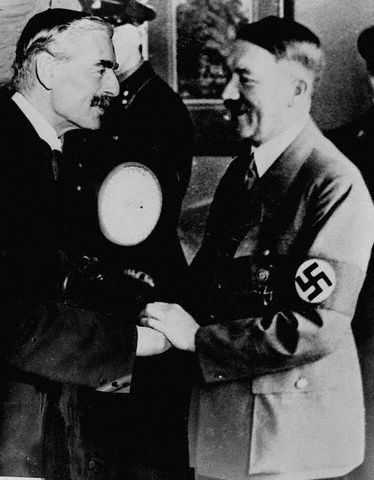
To use a favorite simile of the right, Obama is acting the part of Neville Chamberlain, thinking that he can cut deals with people who take no prisoners...

Obama has often been compared to Ronald Reagan, but except for their phenomenal communication skills, they have little or nothing in common.

Ronald Reagan was first and foremost an ideologue. Behind his amiable, folksy and slightly goofy exterior he was in his own way every bit as firmly entrenched in his extremist ideology as, say, Cambodia's Pol-Pot was in his... and as far removed from reality too.

Ronald Reagan was totally focused on moving the United States politics much farther to the right than its people actually were then, or are even today.

Reagan was able to redefine the parameters of American politics.

Barack Obama gives no sign of such focus or ambition of moving American back to where it was, much less of moving it to the left.

If Obama or anyone else really thinks that a Democratic president can "reach out" to the right and "unite", them behind him on anything, they are somewhere south of naive.

This a time to fight and this is good ground to fight on.

The chance to change American politics on a Reaganesque scale, to become the anti-Reagan, exists in the health care issue. Weakness here will cripple the Obama presidency: For all those that oppose him now or in the future will see the clear discontinuity between the hat and the cattle...

And make no mistake, Barack Obama's deadliest enemies are not in Tehran, the mountains of Afghanistan or Pakistan, much less in Beijing or Moscow, they are right there is Washington with him and they will show him no mercy if they are not brought to heel. DS

Thursday, January 24, 2008

William Pfaff: The Coup d'Etat against Bush


David Seaton's News Links
I can't think of a more important topic than this. This is not the rant of some blogger in pajamas. William Pfaff is one of the most respected political commentators writing today in the English language.

Careful readers will notice a thick forest of nuances in everything he says here. DS


William Pfaff: The Coup d'Etat against Bush
Abstract: The conspicuous irrelevance of George W. Bush’s tour of the Middle East to any of the real forces and interests of the region, as well as the spooky irrelevance of nearly everything he said there about the alleged menace of Iran, Israel-Palestine peace, his fancied notions of Iraq’s democratic development, and even about oil prices and the American economy, embarrassed his Arab hosts as well as the American officials and press accompanying him. The tour – his farewell to the Middle East? -- lent weight to the judgement many abroad have already reached, that he no longer governs the United States, and indeed does not even understand its present foreign relationships. It is widely felt that what amounts to a coup d’etat has taken place in the United States, removing George Bush, without his even recognizing this (or at least admitting that it has occurred) from control over the principal issues of war and peace. This coup has taken the form of what amounts to a mutiny of the professional foreign policy services of the U.S. government, acquiesced in by the new Secretary of Defense, the service chiefs, and Director of Central Intelligence Bush has himself appointed.(...) The pathetic and pusillanimous refusal of recent American Congresses – and we are not simply speaking about the Congress now in office, but of practically every Congress since the beginning of the cold war – to fulfill their constitutional responsibilities with respect to the declaration and financing of wars, has now generated its own rebuke from within the executive branch of government. Leaders in the executive branch are unwilling to act on presidential orders that do not carry with them the constitutionally mandated authority of the representative branch of government.(...) I am perhaps taking a romantic and unjustified view of what has happened. I hope not. I believe that only grave malfeasance in government and unconstitutional conduct justify an executive ‘coup d’etat’ – however ‘postmodern’ the form that it assumes, and however elevated its motives. However I would suggest that the present election campaign demonstrates that powerful forces in the Washington political and foreign policy communities, reinforced by financial and industrial interests, are committed to suppressing all challenge to policies that already have altered the political character of the United States. The American form of government itself needs to be defended. READ IT ALL

Tuesday, March 27, 2007

Howard Zinn: just like ringing a bell

We who protest the war are not politicians. We are citizens. Whatever politicians may do, let them first feel the full force of citizens who speak for what is right, not for what is winnable, in a shamefully timorous Congress. Howard Zinn

David Seaton's News Links
There is nothing I can add to this wonderful article by the author of, "A People's History of the United States," except to praise its clarity... especially its moral clarity. We are living in a potentially great moment in history... if we choose to make it great. DS


Howard Zinn: Are We Politicians or Citizens? - The Progressive

By Howard Zinn

May 2007 Issue

As I write this, Congress is debating timetables for withdrawal from Iraq. In response to the Bush Administration’s “surge” of troops, and the Republicans’ refusal to limit our occupation, the Democrats are behaving with their customary timidity, proposing withdrawal, but only after a year, or eighteen months. And it seems they expect the anti-war movement to support them.

That was suggested in a recent message from MoveOn, which polled its members on the Democrat proposal, saying that progressives in Congress, “like many of us, don’t think the bill goes far enough, but see it as the first concrete step to ending the war.”

Ironically, and shockingly, the same bill appropriates $124 billion in more funds to carry the war. It’s as if, before the Civil War, abolitionists agreed to postpone the emancipation of the slaves for a year, or two years, or five years, and coupled this with an appropriation of funds to enforce the Fugitive Slave Act.

When a social movement adopts the compromises of legislators, it has forgotten its role, which is to push and challenge the politicians, not to fall in meekly behind them.

We who protest the war are not politicians. We are citizens. Whatever politicians may do, let them first feel the full force of citizens who speak for what is right, not for what is winnable, in a shamefully timorous Congress.

Timetables for withdrawal are not only morally reprehensible in the case of a brutal occupation (would you give a thug who invaded your house, smashed everything in sight, and terrorized your children a timetable for withdrawal?) but logically nonsensical. If our troops are preventing civil war, helping people, controlling violence, then why withdraw at all? If they are in fact doing the opposite—provoking civil war, hurting people, perpetuating violence—they should withdraw as quickly as ships and planes can carry them home.

It is four years since the United States invaded Iraq with a ferocious bombardment, with “shock and awe.” That is enough time to decide if the presence of our troops is making the lives of the Iraqis better or worse. The evidence is overwhelming. Since the invasion, hundreds of thousands of Iraqis have died, and, according to the UN High Commissioner for Refugees, about two million Iraqis have left the country, and an almost equal number are internal refugees, forced out of their homes, seeking shelter elsewhere in the country.

Yes, Saddam Hussein was a brutal tyrant. But his capture and death have not made the lives of Iraqis better, as the U.S. occupation has created chaos: no clean water, rising rates of hunger, 50 percent unemployment, shortages of food, electricity, and fuel, a rise in child malnutrition and infant deaths. Has the U.S. presence diminished violence? On the contrary, by January 2007 the number of insurgent attacks has increased dramatically to 180 a day.

The response of the Bush Administration to four years of failure is to send more troops. To add more troops matches the definition of fanaticism: If you find you’re going in the wrong direction, redouble your speed. It reminds me of the physician in Europe in the early nineteenth century who decided that bloodletting would cure pneumonia. When that didn’t work, he concluded that not enough blood had been let.

The Congressional Democrats’ proposal is to give more funds to the war, and to set a timetable that will let the bloodletting go on for another year or more. It is necessary, they say, to compromise, and some anti-war people have been willing to go along. However, it is one thing to compromise when you are immediately given part of what you are demanding, if that can then be a springboard for getting more in the future. That is the situation described in the recent movie The Wind That Shakes The Barley, in which the Irish rebels against British rule are given a compromise solution—to have part of Ireland free, as the Irish Free State. In the movie, Irish brother fights against brother over whether to accept this compromise. But at least the acceptance of that compromise, however short of justice, created the Irish Free State. The withdrawal timetable proposed by the Democrats gets nothing tangible, only a promise, and leaves the fulfillment of that promise in the hands of the Bush Administration.

There have been similar dilemmas for the labor movement. Indeed, it is a common occurrence that unions, fighting for a new contract, must decide if they will accept an offer that gives them only part of what they have demanded. It’s always a difficult decision, but in almost all cases, whether the compromise can be considered a victory or a defeat, the workers have been given some thing palpable, improving their condition to some degree. If they were offered only a promise of something in the future, while continuing an unbearable situation in the present, it would not be considered a compromise, but a sellout. A union leader who said, “Take this, it’s the best we can get” (which is what the MoveOn people are saying about the Democrats’ resolution) would be hooted off the platform.

I am reminded of the situation at the 1964 Democratic National Convention in Atlantic City, when the black delegation from Mississippi asked to be seated, to represent the 40 percent black population of that state. They were offered a “compromise”—two nonvoting seats. “This is the best we can get,” some black leaders said. The Mississippians, led by Fannie Lou Hamer and Bob Moses, turned it down, and thus held on to their fighting spirit, which later brought them what they had asked for. That mantra—“the best we can get”—is a recipe for corruption.

It is not easy, in the corrupting atmosphere of Washington, D.C., to hold on firmly to the truth, to resist the temptation of capitulation that presents itself as compromise. A few manage to do so. I think of Barbara Lee, the one person in the House of Representatives who, in the hysterical atmosphere of the days following 9/11, voted against the resolution authorizing Bush to invade Afghanistan. Today, she is one of the few who refuse to fund the Iraq War, insist on a prompt end to the war, reject the dishonesty of a false compromise.

Except for the rare few, like Barbara Lee, Maxine Waters, Lynn Woolsey, and John Lewis, our representatives are politicians, and will surrender their integrity, claiming to be “realistic.”

We are not politicians, but citizens. We have no office to hold on to, only our consciences, which insist on telling the truth. That, history suggests, is the most realistic thing a citizen can do.

Howard Zinn is the author, most recently, of “A Power Governments Cannot Suppress.”

Tuesday, March 20, 2007

Patience for Iraq war waning, say congressional leaders

The patient ones
David Seaton's News Links
It is hard to read this article from "The Examiner" without wanting to scream obscenities and punch walls. These are the men and women who voted for the war talking. They have opened the gates of hell, pushed the people of Iraq through them and now they are "impatient" and would like to shut the gates and walk away. What is most sickening and unforgivable is the sanctimonious tone used... They probably say this stuff after one of those Washington "prayer breakfasts".

Of course the Americans should get out of Iraq, they should never have been there in the first place... but the United States should be paying war reparations to the people of Iraq for the next 50 years, at least, and the people who organized this war should be put on trial and imprisoned. DS


Patience for Iraq war waning, say leaders - The Examiner

Abstract: Four years into the Iraq war, all sides in the bitter debate agree that President Bush’s “troop surge” plan represents the final drop of American patience for the war. If Iraqis fail to control the violence, House Majority Leader Steny Hoyer said, “The American taxpayer has a reasonable expectation that we will bring our people home.” Senate Minority Leader Mitch McConnell, who has steadfastly supported the mission, said Republicans’ patience is nearly exhausted, too. “This is the last chance for the Iraqis,” the Kentucky Republican said in an interview with The Examiner. “The last chance for them to step up and demonstrate that they can do their part to save their country.”(...) Senate Minority Whip Trent Lott said(...) “At some point, you got to say to them, ‘Congratulations, Saddam is dead,’ ” Lott said. “We brought Baghdad under control. You folks got to decide whether you just want to kill each other forever or have a real government and peace and freedom and democracy.”(...) Anyway, Democrats say, Republicans send the same message to insurgents and Iraqis as timetables do when they say that their patience will run dry in months rather than years. “That may be,” Lott replied. “But at some point, they have to take control themselves.” READ IT ALL(barf bags not provided)

Saturday, December 16, 2006

What if terrorists destroy Washington? - Los Angeles Times

David Seaton's News Links
Americans love to frighten themselves, anything will serve for this purpose: cholesterol, spinach, Armageddon..you name it. This enjoyment of being worried sick about anything and everything is a famous, American national trait; like French women eating all they want and staying thin. So there is a tendency to discount American hysteria. But, in the case presented in the article quoted below, its author, Yale professor, Bruce Ackerman, is really on to something. Wiping out the US political class at one blow would be so devastating, would so surely lead to a military coup d'etat, that if Osama doesn't ever try it than HE is just another American neurosis. DS
Abstract: The news media, politicians and observers are scrambling to speculate on how Sen. Tim Johnson's (D-S.D.) medical emergency might change the composition of the Senate. But if the health of just 1% of one-half of one of the federal government's three branches can cause this much concern, what might happen in a real emergency? Specifically, imagine how the United States would react — or not — if terrorists succeeded in destroying Washington and, with it, all or most of the government. Chillingly, the Senate, which generated so much speculation this week, is actually in a better position to resume functioning than the other branches.(...) This isn't true of the House or the presidency. Under present House rules enacted in 2005, a tiny number of survivors could exercise power for months, even if they were formerly from the minority party. Moreover, their newly elected speaker could succeed to the presidency if an attack took both the president and vice president. Worse yet, the constitutional status of the speaker-turned-president would be problematic. The Constitution says a majority of each house "shall constitute a quorum to do business." It is a fair question whether the existing House rules, granting a rump the power to legislate after a terrorist attack, conform to this requirement. Under ordinary circumstances, we'd leave a question like that to the courts, but what if the Supreme Court were also swept away? Under existing law, the president has the power to give justices recess appointments that expire at the end of the congressional session. The acting president could well be in a position to pack the very court that would judge his or her own status. READ IT ALL

Thursday, December 14, 2006

Senator Tim Johnson: how history is made... "all for the want of a nail"

David Seaton's News Links
When Muslims say, "I'll see you tomorrow", they always add, "inshalla" and Spanish Catholics add, "si Díos quiere" to "hasta mañana". Both mean, "with God's permission." Bobby Burns famously said, ""The Best Laid Plans O' Mice and Men Gang Aft Aglay." Cut it any way you want, man proposes and God disposes. This is how history is written. A tiny blood vessel bursts and...
"For want of a nail the shoe was lost. For want of a shoe the horse was lost. For want of a horse the rider was lost. For want of a rider the battle was lost. For want of a battle the kingdom was lost. And all for the want of a nail." DS

Wednesday, November 29, 2006

Bush: the important question

From the New Yorker - Hendrik Hertzberg
Abstract: (...) In Hanoi, which under its nominally Communist rulers is more vibrantly capitalist than Ho Chi Minh City ever was when it was called Saigon, Bush was asked if the American experience in Vietnam offered any guidance about Iraq. “One lesson is that we tend to want there to be instant success in the world, and the task in Iraq is going to take a while,” he replied, and added, “We’ll succeed unless we quit.” What did he mean? That the peaceable, bustling, unthreatening (if unfree) Vietnam of today represents an American success, made possible by the fact that we didn’t quit until fifty-eight thousand Americans and three million Vietnamese were dead? Or that it represents an American failure, which would have been averted by another decade of war, another fifty-eight thousand, another three million? Who knows? And who knows, really, what this President has been taught by this month’s election? The present President Bush, after all, is a decider of decisions, not a learner of lessons. And he likes to decide that he was right all along. READ IT ALL
David Seaton's News Links
History gives innumerable examples of fools and knaves, physical and mental degenerates who find themselves ruling hereditary monarchies or inheriting a dictatorship from a murderous and suddenly deceased parent. This is not supposed to happen in a democracy or at least not happen twice: as the saying goes, "Fool me once, shame on -- shame on you. Fool me -- you can't get fooled again." What is truly terrible and simply shameful and hopefully inexplicable is how a nation of 300M people, with strong democratic traditions, filled with universities and libraries, of legendary wealth and possibilities, could freely choose from among their enormous number a sinister, mean spirited fool and then seeing how he led them from disaster to disaster, then choose him again. The problem isn't Bush. The world is filled with knaves and fools. The question is how Bush got where he is and how got there again. This is just as interesting a question as how an Austrian clochard and failed watercolorist once became the leader of Europe's most powerful country, the home of philosophers, poets, musicians and scientists. It is a question that must be answered. So let's stop blaming Bush for being Bush and begin to blame the real culprits. DS

Monday, November 20, 2006

Kucinich Calls for Cutting Off Iraq War Funds - Democracy Now

David Seaton's News Links
If the tooth fairy ever gave me three wishes, I think that one of them might be that Dennis Kucinich be taken seriously as a presidential candidate. DS

Abstract:"I want to say that there's one solution here, and it's not to engage in a debate with the President, who has taken us down a path of disaster in Iraq, but it's for Congress to assume the full power that it has under the Constitution to cut off funds. We don't need to keep indulging in this debate about what to do, because as long as we keep temporizing, the situation gets worse in Iraq. "We have to determine that the time has come to cut off funds. There’s enough money in the pipeline to achieve the orderly withdrawal that Senator McGovern is talking about. But cut off funds, we must. That's the ultimate power of the Congress, the power of the purse. That's how we'll end this war, and that’s the only way we’re going to end this war.(...) We have to take a whole new approach. We’re spending over $400 billion a year, money that's also needed for healthcare, for education, for job creation, for seniors. We have to take a new look at this. We need to be a strong country, but strength isn't only military. Strength is also the economic strength of the people, their chance to have good neighborhoods. We spend more money than all the countries of the world put together for the military. "It's time for us to start to shift our vision about who we are as a nation, because if we don't do that -- we’re borrowing money right now to wage the war in Iraq. We’re borrowing money from China. We’re not looking at our trade deficit. We’re not looking at conditions, where people are going bankrupt trying to pay their hospital bills. We need to shift our direction, and the direction has to be away from the continued militarization of the United States society." LISTEN TO THE INTERVIEW