Showing posts with label Spain. Show all posts

Wednesday, May 25, 2016

To Explain Spain: Madrid - 2


To begin with, I have come to believe that simply learning why Madrid is where it is, is the key to understanding thousands of things about Spain, the key to understanding the past, present and future of one of the European Union's most important countries, with deep ties, linguistic, cultural, political and financial to all of the United States of America's southern neighbors.

There are masses of "facts" about Spain on the Internet: just reading what Wikipedia has to say about it could keep you busy for quite awhile. I'm not going regurgitate all of that here. What I'd like to do, within my limited abilities, is to give you some sort of feel for the place, a point of view to take with you before you get immersed in all the multitude of facts and cliches about Spain's culture and history. So if and when you really do begin to study, all that you learn might fall more easily into place.

What do I mean by the "feel" of the place?

When Spanish people who are going to the States ask me what they should see or do there, I tell them that the USA is more or less like it appears in the movies (except there are no subtitles), that American food is the same junk you can get on practically any street corner of the world and that the only thing they can't get from the films or McDonald's is the feeling of America's unbelievable size and distances. What I tell them to do is to spend a week or two in a Greyhound bus crossing "fly over America". The fatigue in their back muscles and the pain in their nether regions, combined with the conversations they will have with their continuously changing and almost always chatty seat mates... while crossing the Great Plains, day after day, will teach them more about America than reading dozens of books, or more correctly, help them make some sense of all that they read.

This, their own private "road movie", will make them "feel" America.

Short of that sort of direct experience of Spain, my readers will have to make do with what follows:

Getting Started

In the first chapter of this series we looked at a map of the population density of Europe, where we saw that the greater part of Spain and nearly all of its center is as sparsely populated as the outback of Sweden or Finland or the forests and western Steppes of Russia... or the Alps.  And we saw that floating in that emptiness, like an asteroid, is a city of over three million people with a population density comparable to London or Paris.

To put that emptiness into physical context, lets look at a relief map of Spain. Madrid being the tiny, red, dot in the middle of it all.
Relief map of Spain - Madrid, the Red Dot in the Middle                   

Looking at the relief map, the sparse population of the center of Spain makes sense, what is hard to understand is why there is this huge city in the middle of what looks like a moonscape. 

Also going there by land is uphill all the way. 

Examine this list of European cities by elevation over sea level.

1-Kruševo, Macedonia 1,350 m (4,430 ft)
2-Andorra la Vella 1,023 m (3,356 ft)
3-Madrid 667 m (2,188 ft)
4-Pristina 652 m (2,139 ft)
5-Sofia 580 m (1,900 ft)
6-Bern 542 m (1,778 ft)
7-Munich 519 m (1,703 ft)
Wikipedia - List of European Cities by Elevation 

Today's Spain is crisscrossed with modern superhighways and high speed trains, but this is a very, very recent development, even as late as the 1970s getting to Madrid from abroad or even from the Spanish periphery by car or even express train... any way except by air was a tedious ordeal.

Imagine during the centuries of Spain's imperial splendor, with no navigable river in sight, what it was like getting to Madrid on horseback, by stage coach or even on foot!

So then, the question arises: why is a city of over three million people and the political, cultural, communication and financial capital of a country of over forty million people and once the capital of one of history's largest empires, so high up in the middle of nowhereDS

(To be continued)

Wednesday, May 18, 2016

To explain Spain: Madrid - I

I'm so sick of writing about Donald Trump that I've decided to write about the country where I live, Spain. I usually don't do this in my English language blog, because what knowledge of Spain I may have achieved by now is very long learned and intensely personal, with plenty of "skin in the game", and I would be loathe to do a superficial, touristy travelogue for English speaking day trippers; coyly loaded with bulls and flamenco and tips on where to dine, etc. That sort of thing makes me squirm.

However, I can imagine that I might have some things to say about Spain that someone genuinely curious to learn about one of Europe's oldest and most historically rich and important countries might find useful. 

To begin with, forget about all the classic cliches about Spain, from Bizet to Mérimée to Hemingway, and take a close look at this map:

European population density
You'll notice that most of the center of the Iberian Peninsula has a population density similar to the outback of Sweden or Finland or the forests and western Steppes of Russia... or the Alps... and you see that smack dab in the middle of that vast yellow emptiness on the map, floating like an asteroid, there is a blue star-shaped blob called Madrid (where I live). This is a city with a population of 3.165 million people.

According to the map's legend, the blue color of the blob shows that Madrid has a density of population similar to Paris or London. Spain has a total population of 46.77 million, while France has 66.03 million, Britain 64.1 million and Germany 81.1 million .

More or less one out of every 15 Spaniards lives in the blue blob in the middle of nowhere.

Madrid is not only the largest city in Spain, it is also the political, financial, cultural and communication capital of the country. To put this into an American context, try to imagine if Washington, New York and Los Angeles were all in one city... located somewhere in Montana.

If you now move your attention to the right toward the Mediterranean coast you'll see a large, long and narrow area with a brick-red color similar to most of Germany and the dynamic northern region of Italy around Milan.

At the top of the red patch sits Barcelona, the capital of the Catalonian region of Spain which produces some twenty percent of the Spanish GDP.

So without any knowledge of the history, culture and languages of the blue blob and red patch, separated as they are by a great expanse of yellow, it's easy to imagine the tension that might exist between the blob and the patch.

My next post on Spain will be about why the blue blob got to be where it is. DS


Wednesday, December 26, 2012

The Spanish Economic Crisis Explained

David Seaton's News Links
In case you are interested, this hour long documentary from the BBC gives a very workmanlike breakdown of how it all happened.
Spain is the canary in the coal mine for the world's top economies, because of its large size and its fragility. The story carries lessons for everyone, everywhere. What happens in Spain first can happen later in more robust economies.
Well made and clearly explained, in one hour with this video, you'll be up to speed. DS

Saturday, October 27, 2012

What are things like in Spain right now? Watch the video.

David Seaton's News Links

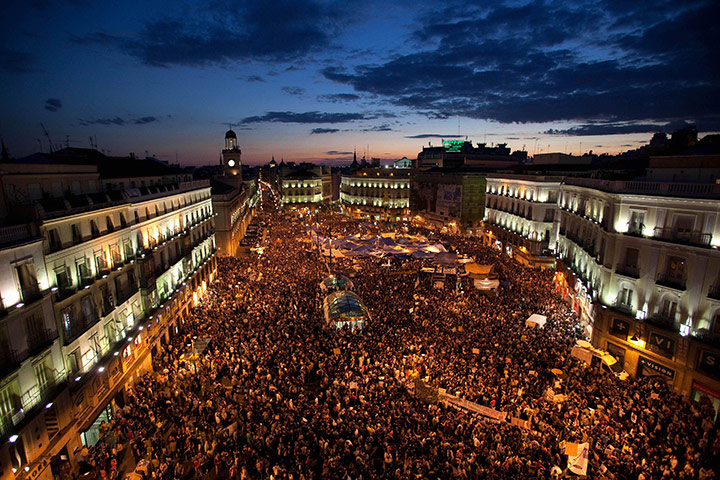
See SpongeBob SquarePants duke it out with Hello Kitty in Madrid’s Puerta del Sol… (where the “Indignados” camped out last year). DS

Friday, September 28, 2012

Spain could indicate the direction America is taking

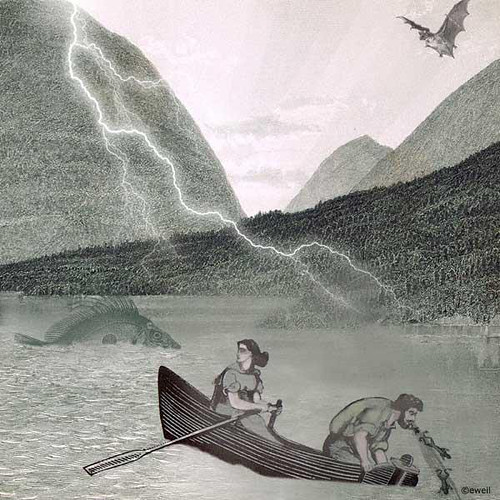
The Economy - Eleonore Weil
"The Economy"
Suddenly, Spain and Greece are being racked by strikes and huge demonstrations. The public in these countries is, in effect, saying that it has reached its limit: With unemployment at Great Depression levels and with erstwhile middle-class workers reduced to picking through garbage in search of food, austerity has already gone too far.  Paul Krugman - New York Times

What began as an economic storm has blown into a full-scale political crisis. Amid popular discontent and separatist protests, Spain has stumbled towards a crossroads: without decisive action by the government, the post-Franco democratic settlement is at risk. Financial Times
David Seaton's News Links
It is said that every historical phase carries within it the embryo of the next phase to be born in the future. If this is so, then someday we may come to consider the mountain of debt that threatens to crush our present system as an explanatory, broken condom.
One of the paradoxes here is that the enormous robustness of the United States, its size, population, its natural resources, military power and perhaps most of all, its ability to create money out of thin air to pay its debts, probably means that it would not see the total systemic crisis arriving until it was too late to really do anything about it.  
If Americans wonder where the world economic crisis is taking them, a look at what Spain is going through right now might give them some serviceable hints.
Spain is one of the world's oldest nation-states, with a population of 40M and a large economy somewhere in the world's top ten. Thus, unlike Greece, it is large enough and complex enough to serve Americans as a guinea pig.
Spain is infinitely more fragile and vulnerable than the USA, but for that very reason it is able to provide a valuable early warning for Americans... in much the same way that coal miners used to take little canary birds down into the mine to detect odorless, poisonous gases. Long before the burly miners noticed anything, the tiny bird would keel over in a faint from gas inhalation. When the canary passed out, the miners would run for the exit. Spain has just keeled over...
The distress signals coming from the American system are much more subtle than those emanating from Spain.
Here, for example is some socially ominous data:
Lower-paying jobs, with median hourly wages from $7.69 to $13.83, accounted for just 21% of the job losses during the recession. But they've made up about 58% of the job growth from the end of the recession in late 2009 through early 2012. Los Angeles Times
Whether people are actually "entitled" to "to health care, to food, to housing, to you name it" is open for discussion. But, the fact is that if enough of them don't have any plausible way of getting health care, food or housing, finally they are going to turn against any system that denies them these things. And if the number of the disgruntled is sufficient then, to maintain some sort of order and domestic tranquility, the system will have to give them health care, food and housing, whether they want to do so or not.
Probably the reason the American right wing has become so grotesquely strange and wacky of late is that the extremely lucid money financing all the zany craziness is aware that somewhere down the road, if the trends of growing middle class impoverishment continue, some sort of serious redistribution, strongly reminiscent of socialism, is going rear its head.
To me it is clear that the people who are willing to pay $50K to hear Romney talk over rubber chicken are trying to deny the declining middle class and the growing mass of working poor any kind of clarity of thought, if possible. If the Spanish crisis is any harbinger of things to come, it will be the people's stomachs however that will finally do the talking. DS


Tuesday, July 24, 2012

The pain in Spain and America's iron jaw

David Seaton's News Links
This remobilisation of Spanish society, lulled into comfort and complacency during the boom years, in some senses recalls the fevered political and street activity of the transition to democracy after the death of the dictator Francisco Franco in 1975. Yet it is more amorphous and experimental, bypassing politics and Spain’s increasingly tarnished institutions.(...) A salient feature of the present crisis – beyond the immediate drama of Spain’s cost of borrowing and the broader eurozone crisis – is the extent to which Spain’s institutions, the linchpins of the vibrant democracy Spaniards painstakingly built after Franco, have been battered. Financial Times
I don't usually like to blog here about Spain, where I live, because I would have to spend too much time explaining the context of a very complex reality to the majority of my readers, who probably come to that reality burdened with a multitude of cliches about Spain, cliches that I find too boring to clear away. I write about politics, I'm not a travel writer.
I'll make a bit of an exception now in order to explore the advantages that come wrapped in Spain's weakness and the disadvantages for the American people inherent in America's enormous natural strength.
Spain, unlike the USA, is by nature poor, with few natural resources, with practically no rivers of any commercial use, a dry, rocky, challenging terrain that has always made communication between its regions difficult. It is also an extraordinarily beautiful land, but as any farmer of Iowa's flat, boring landscape will tell you, "pretty land is bad land to farm". 
It is a landscape that breeds hardy, fibrous and energetic men and women. This ungenerous, hardscrabble, land is what drove the conquistadors to discover and conquer the Americas take its gold, and create what was then the world's largest empire.
When that empire fell apart Spain languished until Europe's post war prosperity lifted all the boats and finally provided Spain with the capital necessary to modernize its infrastructure and give opportunity for the Spanish people, called "the Prussians of the south", to express again their native energy by building Europe's fourth largest economy.
Today Spain is trying to dig itself out of the debris of an enormous real estate bubble created out of the euphoria of finally finding low interest money in their pockets after centuries of privation.
As the snippet from the Financial Times above indicates this has led to a massive questioning of the basic construction of the Spanish state. In other words, in the midst of disaster the Spanish people are discovering, in the words of Marx and Engels that,
"All that is solid melts into air, all that is holy is profaned, and man is at last compelled to face with sober senses, his real conditions of life, and his relations with his kind."
And I would maintain that such a facing with sober senses the real conditions of one's life and the relations with one's kind, is one of the most beneficial exercises a human being could undertake in the short time he or she is given to live. I think it was Socrates that said that an unexamined life wasn't worth living. And it is trying to imagine the American people en masse ever waking up to the extent that Spanish people are waking up now, that leads me to meditate on the advantages of weakness and the deadening, sluggish, tyranny of strength.
I have observed over the years that those who can drink large quantities of alcohol without showing its effects are the ones who die of cirrhosis, that the boxers that can't be knocked down, no matter how hard they are hit, are the ones that end up punchy and I wonder if this also applies to the living flesh of the common people of a country whose elites are the most wealthy and powerful and self satisfied in the history of our species.
The United States of America is so big, so populated, so rich, with such a smug and layered plutocracy, so tyrannized by endless interest groups that I cannot imagine the American people ever taking to the streets in a general strike or even more tragically, I cannot imagine that it would ever make any difference at all to their reality if they did. DS


Saturday, May 21, 2011

UPDATED: Protests in Spain: waiting till the fat lady sings


UPDATE:
The results of the election were exactly what the polls projected: the 15-M Movement appears to have had no affect on the voting... Whether this movement consolidates into something meaningful remains to be seen.

The Socialists got trounced because they applied neoliberal recipes and their voters deserted them, preferring the original to an imitation (Democrats take note).

What is most striking about Spain is that despite very high unemployment, the elections were quiet and without incidents. The protest movement has been non-violent and the atmosphere cheerful. This is due to Spain's society still being based on personal relationships and not just on the cash-nexus. As Dimitri Orlov says, when things get really bad, what you need are friends, friends being defined as people who will do things for you without asking for money in return. I shudder to think what the USA would be like with Spanish unemployment figures.

So yes, Spaniards still have their happy families, because if they didn't, with those levels of unemployment, the 15-M Movement would have been violent, not Gandhian. The United States could certainly benefit by studying the stability of Spanish society under stress.

As to bullfighting, the Mexican bullfighter, Ignacio Garibay, got gored badly in Madrid yesterday by a bull from the ranch of Pablo Romero that weighed 672 kgs. (nice Hemingway touch, nu?)


David Seaton's News Links
I am holding off writing about this till the votes are counted on Sunday's local elections, because till then, it will be difficult to extract any meaning from it except that, up till voting, what we have here is one of those wonderful, very Spanish, bring the family and spend the day, type of enormous fiestas, with lovely, 1960ish, hippy vibes, very well and spontaneously organized by the kids themselves. We went to the Puerta del Sol yesterday twice. Once in the morning and then later in the evening and it was beautiful... the kids are really lovable.

The rightwing is baying to have the riot police clear the square, but the government are behaving very intelligently... As I say, if this significantly affects the voting in any way. Then we we would be looking at a really meaningful protest.

It would seem logical that if people of the left wanted to send a message to the Socialists they would vote for Izquierda Unida, the Communist led coalition of the left,  which would force the Socialists to move more to the left. However, if everybody just stays home and doesn't vote, they will  have four years to regret so doing at their leisure, because the rightwing people always vote. They only win elections in Spain when there is big abstention. So lefties staying home would be cutting off their nose to spite their face. DS

If you'd like to follow all of this live, here below, is the video stream direct from the center of downtown Madrid.


Video clips at Ustream

Wednesday, December 22, 2010

The Wikileaks cables: the portrait of an empire

Not really the image that America would like to project at this moment


David Seaton's News Links
There are Wikileaks cables from almost every imaginable part of the world, but since I live in Spain, I'll fill you in on some of the dump's specific effects on Spanish political life.
Just yesterday we saw how the Wikileaks dump has made it impossible for Spanish politicians to pass a stiff law protecting intellectual property, which was one of the primary objects of US pressure on the Spanish government.
Communications from the U.S. State Department show the U.S. government threatened to blacklist Spain by putting it on its Special 301 list unless its government toughened its anti-piracy laws.  The cables were based on meetings between top Spanish economic ministers, industry representatives concerned about protecting their copyrights and U.S. officials. Spanish editorial writer Esperanza Hernandez wrote this week that Spanish officials “behaved in a way that was subservient in defending the interests of the United States to the detriment of the rights of Spanish citizens to access culture and knowledge through the Internet.” AHN News
It was never going to be an easy sell, Spain has 20% general unemployment and youth unemployment is estimated at around 40%.  Movie tickets are expensive, at around €8 ($10.50), a typical, legal CD might cost €18 ($25) and a legal DVD of a film  about the same. Bought from a sub-Saharan African street vendor,  operating in a market known as the "Top-Blankets", all these entertainment goods can be had for a fraction of those prices... and downloaded bootleg from the Internet, for the cost of the bandwidth and the virgin disk. An Internet connection sufficient to download films can he had for as little as €20/month. If you consider that average salaries for (employed) workers range from €12,000-€18,000/year, then you can see that legal entertainment is out of the reach of the average working class family, not to mention the unemployed.
Just doing a bit of math you can see that no  Spanish politician in his or her right mind would want to risk his career by  repressing pirate downloads without enormous pressure from the USA. The Minister of Culture was reported publicly wailing that "Obama is worried" about Spanish pirate downloads.
Below are a few more press clippings to give an idea of other ways that  the data-dump specifically affects Spain:
The US embassy in Madrid pressured Spain to shelve court cases against US government and military officials concerning incidents during the Iraq war and alleged torture at Guantanamo, according to WikiLeaks documents. Monsters and Critics

In what could be the first legal case to use filtered WikiLeaks documents as evidence, the family of a Spanish cameraman killed in 2003 by a US tank shell during the battle for Baghdad filed a complaint Monday. They seek to open an investigation into whether high-ranking officials here colluded with the US Embassy to stop charges being filed against three American soldiers, including a colonel. Christian Science Monitor
Heavy stuff.
The story of how the US embassy pressured the Spanish government and judiciary over the News cameraman killed in Iraq is especially galling to Spanish sensibilities:
Among the cables is one from May 14, 2007, authored by Eduardo Aguirre, a conservative Cuban-American banker appointed U.S. ambassador to Spain by George W. Bush. Aguirre wrote: "For our side, it will be important to continue to raise the Couso case, in which three U.S. servicemen face charges related to the 2003 death of Spanish cameraman Jose Couso during the battle for Baghdad." Jose Couso was a young cameraman with the Spanish TV network Telecinco. He was filming from the balcony of the Palestine Hotel in Baghdad on April 8, 2003, when a U.S. Army tank fired on the hotel packed with journalists, killing Couso and a Reuters cameraman. Ambassador Aguirre was trying to quash the lawsuit brought by the Couso family in Spain. The U.S. ambassador was also pressuring the Spanish government to drop a precedent-setting case against former Defense Secretary Donald Rumsfeld and other Bush administration officials. In that same memo, Aguirre writes, "The Deputy Justice Minister also said the GOS [government of Spain] strongly opposes a case brought against former Secretary Rumsfeld and will work to get it dismissed. The judge involved in that case has told us he has already started the process of dismissing the case." These revelations are rocking the Spanish government, as the cables clearly show U.S. attempts to disrupt the Spanish justice system. Ambassador Aguirre told Spain's El Pais newspaper several years ago, "I am George Bush's plumber, I will solve all the problems George gives me." Amy Goodman
At this writing, former ambassador Eduardo Aguirre is now on the board of Spanish bank operating in the USA.
For someone who is American born and bred, but who lives in Spain and will probably end up as a dual national over here, Wikileaks is very much a mixed bag.
On one hand, having lived abroad most of my life in several different countries, over several decades, I understand that, at least for the moment, the United States of America, with its diplomacy and with its military and economic presence, warts and all, devoid of any of its professed ideological transcendence or "exceptionalism", provides the world with what little real structure it presently possesses*. The leaked cables in their banality are the sound of the world being governed in much the way that the British ruled India. The Wikileaks cables show us clearly, if we ever doubted it, that we are the citizens of a de facto empire, the wilting "Pax Americana".
That is on one hand, and on the other hand, because of what the spam diploma mills of the Internet call "life experience", I am more aware than the majority of Americans that this "governance" of the world is applied mostly without the consent or, much of the time, without even the knowledge of those so "governed". Wikileaks has made official what most informed people have always suspected: the power is in constant use, but functioning under the law of diminishing returns.
We can feel the symptoms all around us: this empire is beginning to crumble and there doesn't seem to be much of anything to take its place. That crumbling sensation and the realization that the world has no "plan B", no viable substitute for the Pax-Americana is what, for me, defines our era. The Wikileaks data-dump has now made this situation clear for all to see.
In a sense this is like the world being told that it has an untreatable disease of uncertain prognosis. No coherent plan of action immediately presents itself. Perhaps ignorance and simply getting on with life would be the better option.  That may no longer be possible. DS
*The United Nations, in which many of us had placed our best hopes for a "world government" appears to have turned into a sort of travel agency for serial rapists.

Wednesday, February 18, 2009

Crisis: survival tips

Her Serene Majesty, the Tortilla de Patatas
David Seaton's News Links
Making it through the "lost decade" that appears to be waiting for us is surely going to be heavy going and in the hard scrabble of making ends meet, a person can work up a good appetite. Those who think they cannot live without large quantities of beef may look in their wallets and end up muttering, "yes we can".

How to eat well on a shoestring?

Today I'm going to introduce you to what is probably Spain's most popular dish, the "tortilla de patatas", which has nothing to to do with the Mexican cornmeal tortilla. "torta" means cake in Spanish and tortilla means "little cake" and patatas mean potatoes. So, we are talking about something cake-like made with potatoes and eggs and usually onions and sometimes green peppers or spicy, chorizo sausage, or even spinach. If you have ever eaten one, by now you are drooling all over your mouse.

This dish is simplicity itself, its success depends on the quality of the ingredients used and the care taken in preparing it. With practice a certain perfection can be obtained: moist, but not too moist, soft but not too soft, brown, but not too brown (sigh), which will astound you. How can something so cheap and so simple be so fine?

I have spent some time hunting around to find a decent tortilla de patatas recipe in English. Some of the American versions I came across were dead weird, with sour cream and ovens. But I finally came across the following orthodox Spanish tortilla recipe in Dean Derhak's page. With a few additions and subtractions of mine, here it is:

Ingredients:
1 cup olive oil
four large potatoes (peel and cut into small pieces about 2mm thick)
salt to taste
one large onion, thinly sliced
four large eggs.

Some people add thin slices of green pepper together with the onion. (or chorizo)

Heat the oil in a 9-inch skillet, add potato pieces, one slice at a time so that they don't stick. Alternate layers of potato and onion. COOK slowly, medium flame. DO NOT FRY!! Turn occasionally until potatoes are tender, but NOT brown. They must be loose, not "in a cake".

Beat eggs in a large bowl with a fork. Salt to taste. Drain potatoes. Add potatoes to beaten eggs, pressing them so that eggs cover them completely. Let sit for 15 minutes. Heat 2 tbsps of the oil in large skillet. Add potato-egg mixture, spreading quickly. Lower the heat to medium-high. Shake pan to prevent sticking (crucial step!!) When potatoes start to brown, put a plate on top skillet and flip to cook other side, adding another tbsp of oil. Brown on the other side. Can flip three or four times for better cooking. (Be careful to make sure that there is not too much hot oil left in the pan when you do the number of putting the plate on top of the skillet, turning the skillet upside down and then sliding the turned tortilla back into the skillet. If you are not careful the hot oil will roll right down your arm.)
This little miracle is usually eaten cold. It is great for breakfast with hot coffee or for lunch with red wine.

With the stomach thus taken care of, now for some music.

A few years back I discovered an online radio station that I dearly love, called "Jambalaya Jam", the creation of someone with the real down home name of Steven Polatnick, who provides round the clock music of all colors and kinds from the drowned city of New Orleans. I can listen to it for hours. It's free. Here is the link.

If you are short on cash to buy CDs and software, go visit the treasure house of search engine genius, Jimmy Ruska.

This is just a beginning. I hope readers will add to this short list of suggestions of how to get through hard times. DS

Saturday, February 07, 2009

Looking at the crisis from Spain


“Courage is grace under pressure.”
Ernest Hemingway

David Seaton's News Links
The most significant thing about the financial crisis, up till now, is that it is universal.

Something with its origins in the US financial sector has hit the entire world economy and the numbers are horrible everywhere. Millions of people are suffering from the effects of an economic philosophy and ideology that was hatched in America's nest, just as those same millions enjoyed the economic boom that nest and philosophy produced, until the bubble burst.


For the first time in history we are all sailing in the same leaky boat.

Spain in no exception. Their wish to be a major player and to end the long isolation Franco brought upon them has been amply granted, for good and for bad.

I have known the country in austere and dignified poverty and as out of the world as Tibet and now, only a few years later, its banks are considered the best run in the world, its film directors and actors win Oscars, and Spanish athletes like, Miguel Indurain, Rafa Nadal, Pau Gasol and the European champion national soccer team have lifted the self confidence and self esteem of all the younger generations.

The Spanish people have taken full advantage of the opportunities a fortunate economic and political context have brought their way and now the best nourished and best educated young people in Spain's history will face a crisis which pales in comparison with what their much less educated and less well nourished grandparents faced with such fierce stoicism in the 1930s.

Spain is not a continental power like the United States with its huge population and endless natural resources, but neither is it Iceland or the Ukraine: Spain is being hit hard, very hard. However I would argue that Spain is a country, a society, that as they say in boxing, can take a punch. I have personally seen Spain take quite a few.

I have seen three really bad recessions here: at the end of the 70s after Franco's death, with double digit inflation, in the late 80s when 50 banks had to be nationalized and at the beginning of the 90s with unemployment as high as 24%... and life went on just the same. I was living entirely on the local economy by then and the good humored "grace under pressure" and lack of self-dramatization of the average Spanish person in times of economic catastrophe made the deepest of impressions on me.

Looking for the formula I came to this, not terribly original conclusion: the Spanish extended family is probably the country's greatest resource in troubled times.

The closest friends of most adult Spaniards I know are their brothers, sisters and cousins, closely followed by people they went to grade school through university with. This correlates with the extreme reluctance most Spanish men and especially their wives, have for moving to another town, even if there are better jobs waiting for them there, since this would mean losing their family social network. If you marry a Spanish girl you can go and work anywhere in the world as long as she can eat lunch with her mother and sisters at least twice a week.


This lack of work force mobility creates several percentage points of normal Spanish unemployment. That is the downside, the upside is the strength of the social fabric.

Spanish social life is an endless round of weddings, baptisms, first communions, pub crawls with friends and late dinners with lively conversation into the small hours over the ruins of a copious, well irrigated, meal. High consumption of hard goods and services adds to the charms of this existence based on eating and drinking with family and friends you've known since childhood, but cutting back on it all doesn't affect the basic underpinnings of this extended family life.

There is just as much pain as anywhere else in Spain when jobs are lost and payments fall behind or mortgages are foreclosed, but in Spain there are many shoulders to cry on and helping hands to turn to. And if you haven't lost your job you are supposed to help family, through the cousins by the dozens, that have.

If we add to this social fabric a modern, universal health system of socialized medicine, where no one, adult or child lacks for a free family doctor, hospitalization, pediatrician etc, even if unemployed, then it is obvious that the stress levels of a Spanish recession are very different from those in the states or even socially advanced northern Europe, where, like the states, nuclear families or single parent families are the rule.

In short people here are not alone for a minute of their lives and not afraid of getting ill, they are usually surrounded, practically suffocated, by their family and childhood friends. I imagine that not a few of my readers could get a little wistful thinking that proposition over.

So, summing up: this recession is going to be hard on everyone, everywhere, for a long time. The traditional Spanish family and social values were developed for hard times: Spain, through its history has rarely known any others. Coming into this universal mess, Spaniards are healthier, better nourished and better educated than they ever were before.

In a universal recession/depression, where there is nowhere to run to, nowhere to hide, there are a lot worse places to ride it out than Spain. DS

Tuesday, July 01, 2008

A sweet, sweet moment in Spain


David Seaton's News Links

Today Spain is still one large hangover after the victory celebrations.

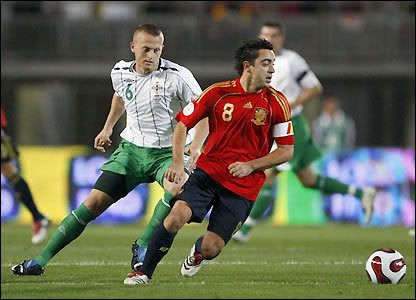
After 44 years, the country with the world's best soccer league finally won a major tournament: the European Nation's Cup.

But the best thing about it, and what Spaniards are happiest about was the way it was won, their national team's style of play.

Today's Spain plays a type of collective "all for one and one for all" football that is based on keeping possession of the ball, of moving it in intricate patterns until the opposing team is off balance and then striking. This requires enormous ball handling skills and vision of the game.

This is the natural form of Spanish play as Spanish footballers, in general, are shorter, slower and of lighter build than most of the other major soccer powers. However they have only started to play like this in recent years.

An old Spanish communist, a veteran of the civil war, who had returned to Spain from exile in Mexico during the 1980s, told me an interesting story once.

He said that in the days of the Spanish Republic, Spain played elegant, classy soccer but since most of the players and coaches were of working class origin (soccer is a working class game) and were naturally people of the left, when Franco won, they were all dead, in prison, or in exile.

Consequently at the end of the civil war there were almost no good trainers or skillful players around to teach the basic skills. Remember that there were none of the videos, which today allow little Swedish children to try their luck practicing Brazilian esoterica like the folha seca. In the 40s and 50s of the last century, if you couldn't actually see it in person, you simply couldn't learn it.

In answer to this the Franco regime invented the myth of the "furía española" a hotblooded fury that would carry all before it. Playing wildly, without skill became a symbol of hairy chested, fascist, machismo... and losing became a national pass time.

Because to be
shorter, slower and lighter of build than most of the other major soccer powers, and skill-less to boot ... and then, also to be "furious" is a sure recipe for disaster... and so it was.

So you can see that to finally recover Spain's old playing style has even a certain political significance. This explains Spanish Prime Minister, Zapatero's statement that winning the European National Football Championship, was the "end of the transition".

Thus, in this era of "Iron Men" and "Hulks" and "X-Men", nitzchean "super men" with super powers, an era of Nike, of Beckhams and Ronaldos, in days like these, a group of stubby, "boys next door", who when they get the ball, you never see it again until it is in your goal net: these smaller, lighter and slower young men have just skillfully won one of world sport's greatest prizes and may win a good deal more of them. DS

Sunday, February 03, 2008

Health: a Spanish lesson

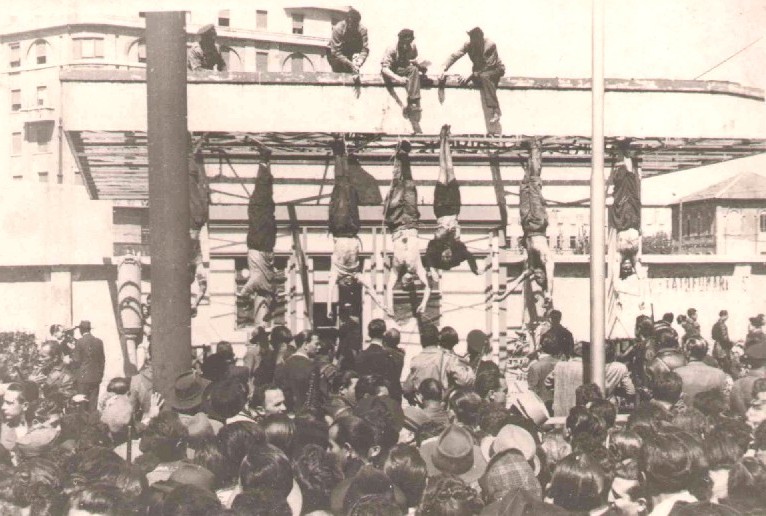
The picture that concentrated Franco's mind so wonderfully
David Seaton's News Links
An American reader familiar with Spain asked me what possible relation there could be between the American situation and the Spanish one, where, as she pointed out, public health care predates Democracy. I thought it such an interesting question that I decided to answer her here.

Many years ago I worked on a project for a large American, family owned corporation with manufacturing facilities in Spain. They wanted to close a factory and they were amazed at the penalties they would have to pay to shut the thing down. They demanded a detailed history of Spanish social legislation, which I helped to research.

I speak from memory, but I seem to recall that we discovered that almost all the Spanish welfare state dated from when it became obvious that Hitler was going to lose the war. The idea of the victorious allies charging over the Pyrenees and Nuremberging him concentrated Franco’s mind wonderfully.

Franco, brutal victor in the recent civil war was always a practical and expedient fellow, so he threw the defeated working class a fish. Providing health care, protecting jobs and paying the summer and Christmas bonuses helped the police state keep control of the defeated working class during those black years before prosperity arrived, with the tourists, in the 1960s.

Basically then, Spain had some sort of health system under Franco because he was afraid of hanging by his feet in a gas station like Mussolini.

Until the Socialists reformed it in the 80s it was a very, very half hearted, half assed system indeed. And it was the fear of Spain going Communist after the death of Franco that allowed the reformist Socialist government of Felipe González which had been previously "restructured" under the guidance of Willy Brandt's SPD to finally take power and, once they agreed to stay in NATO, receive the blessings of the US as the lesser of many possible evils.

In a sense the entire European welfare system was put in place because the elites were afraid of the working class going with the Communists in the late 40s and early 50s. In the democracies the pressure was expressed in the ballot box, in Spain by police informers relaying the mood of the population. What is necessary today in America is to produce that same unease at the top of the American system. The civil rights struggle shows that this is as possible in the USA as in Europe.

If the Republican Party and the American conservatives in general were still more or less normal, like they were under Eisenhower or even Nixon, they would probably do like Franco and throw the fish. They showed that sort of pragmatism when confronted with the reality of "burn baby burn". But I think the Ayn Randies, the Norquististas, the Cato Instituters and assorted Reaganites, are a bunch of real Talibans and will fight this thing to the death and that will be the transformational struggle. Just like during the civil rights movement, there have to be people in the streets and a change or heightening of consciousness to bring about this transformation.

There would be two good things in this: one, the people would finally get health care and two, the struggle itself would change their consciousness. Thus, the unyielding resistance of the American Reaganite conservatives to any state health care system is fundamental to the final transformational effect. If any of them were half as intelligent as Franco was there would be no transformation.

As Democrats are not really people of the left they don’t seem to understand that politics like the rest of life is a constant, shifting, conflict of contradictory entities with contradicting interests and that these different interests struggle continuously among themselves and that this struggle produces what the Hindus call "Maya” or what the rest of us call “reality”: something of only apparent solidity, something which is constantly in flux.

To transform reality it is important first to understand the dynamics of these contradictions and to know when it best to push one place or to not push on another. This dialectical approach is very foreign to American politics. It would be easier for an American psychotherapist to understand the dynamics of transforming political reality and the value of the process of transformation than for the average American political commentator. A therapist easily understands that the process of becoming is as important as, or more important than the becoming itself, since in fact, everything only exists in the act of becoming and never really finally becomes, except, perhaps, when it dies.

Health care obviously wouldn’t be “transformational“ for Spanish politics because health care already exists in Spain. It was precisely Franco's readiness to concede it that kept it from becoming transformational. To create such a system in the USA would transform America because health care doesn’t exist and, given the rigid ideological stance of American conservatives, it probably would take a huge struggle to get it to exist. Since there are 40,000,000 people without coverage, this would constitute a formidable army in this battle. The struggle is just as important as the final result or to put it another way, the struggle is the result. DS

Tuesday, July 24, 2007

Spain's Willy Sutton caught

David Seaton's News Links
It's probably unfair to America's legendary, master bank robber Willy Sutton to compare him to Spain's Jaime Jimenez Arbe, known until yesterday only as "El Solitario". Willy never harmed a hair on anybody's head and "The Loner" is a diagnosed paranoiac and an ice cold killer. You could only make the comparison because of the length of time he has been operating and the elaborate care Jimenez Arbe has taken in disguising himself. He made partial latex masks to disguise his eyebrows and cheeks, wore Scotch tape on his finger tips, carried a metal crutch to fool the metal detectors and wore a bullet proof vest to work. He pulled over thirty robberies since 1993 and once machine gunned two Guardia Civil traffic cops, who pulled him over... probably only because they saw him without a disguise.

He lives in nice house in an affluent suburb of Madrid and has a large collection of Eric Clapton records. Police think that he planned that the job in Portugal, where he was caught, to be his "farewell performance"... He was about to retire to Brazil where a Brazilian girlfriend is waiting for him. Spanish law is not very punitive, he'll probably be out in 12 years. DS

Spain's most wanted robber, "The Loner", arrested - Reuters
LISBON (Reuters) - Spain's most wanted robber, accused of killing three policemen and holding up more than 30 banks disguised in a false beard and a wig, was arrested on Monday in Portugal, Spanish and Portuguese police said. The man known until now only by his nickname "The Loner" was in disguise and armed with a submachinegun in preparation for another bank robbery when he was arrested in Figueira da Foz, a coastal city 200 km north of Lisbon, police said. "We're very pleased. He's the most wanted criminal in Spain, a very cruel criminal," Spanish Interior Minister Alfredo Rubalcaba told reporters in Lisbon. Police named The Loner as 51-year-old Jaime Jimenez Arbe. Rubalcaba said police had trailed him for weeks and Spain would request his extradition. The Loner, whose heavily disguised face has graced Spanish news bulletins for years thanks to footage from security cameras, would enter banks with a metal crutch and a submachinegun hidden under a bulky jacket. Despite a varying wardrobe of long, dark wigs, police had suspected that the man probably in his 40s, was bald and really lightly built underneath layers of clothing and a flak jacket.

Saturday, January 13, 2007

Terrorism returns to Spain

David Seaton's News Links
All over Spain today there are demonstrations against the Basque terrorist organization Eta, which blew up a Madrid airport parking garage on the 30th of December of 2006, killing two Ecuadorian immigrants who were sleeping in their cars while their relatives were upstairs waiting for the flight from Ecuador to arrive. Here, from the BBC, is a short history of Eta to bring you up to speed:
ETA TIMELINE
  • 1959: Eta founded
  • 1968: Eta kills San Sebastian secret police chief Meliton Manzanas, its first victim
  • 1973: PM Luis Carrero Blanco assassinated
  • 1978: Political wing Herri Batasuna formed
  • 1980: 118 people killed in bloodiest year
  • Sept 1998: Indefinite ceasefire
  • Nov 1999: End of ceasefire, followed by more bomb attacks in January and February 2000
  • Dec 2001: EU declares Eta a terrorist organisation
  • March 2003: Batasuna banned by Supreme Court
  • May 2003: Two police killed in Eta's last deadly attack
  • Nov 2005: 56 alleged Eta activists on trial in the largest prosecution of its kind
  • March 2006: Eta declares permanent ceasefire
This has been a steady part of Spanish life since before Franco died. Madrid, where I live, has been hit over and over again. The daughter of a friend lost an eye in an attack. I heard the machine guns fire and the hand grenade to finish him off, that killed an admiral, the Duke of Veragua the direct descendant of Christopher Columbus. Hundreds and hundreds of men, women and children have died since it began. Nobody here in all these years has ever suggested bombing Bilbao or San Sebastian... You get my drift. DS

Thursday, November 23, 2006

Pan’s Labyrinth - Financial Times

David Seaton's New Links
I just want to bring to your attention this wonderful film, "Pan Labyrinth". It is by far the best 'fantasy' film I have ever seen. It is also a neo-realist film, a historical-costume- political thriller. A surrealistic masterpiece and about a dozen more things. Even if you have to get in your car and drive through the snow to find the nearest movie theater where it's playing, don't miss it. Really, it is price/quality; for the price of one ticket it will haunt your dreams for weeks. If you don't believe me, read this critique by Nigel Andrews, the Financial Times film maven. DS
Pan’s Labyrinth, written and directed by Mexico’s Guillermo del Toro, is bewitchingly bonkers. Coming from anywhere but Spanish America it would be hospitalised with advanced whimsy. Critic-doctors would shake their heads at the Lewis Carroll-style plot set in 1940s post-Civil War Spain, in which a fascist officer’s stepdaughter (Ivana Baquero) meets a faun in a stone maze who sets her fantastical tests and tasks. The film’s blend of historical realism and dippy make-believe would be diagnosed as fatal. The patient would be taken off life support and the body burnt to prevent infection. But magical realism is the province of mad Latins. Del Toro made Cronos and The Devil’s Backbone, films that subjected reality to gothic aerobics and midnight mythopoeia. Pan’s Labyrinth is deadly earnest in its portrait of a time: the aftermath of war, when Franco’s soldiers pushed north to purge the last resistance. Captain Vidal (Sergi López) is a handsome sadist whose new wife, pregnant but ailing, and stepdaughter must get in step with the counter-rebellion. But little Ofelia, a virtual orphan riding into the storm, starts to live in her redeeming imagination and so do we. Here is the ruined labyrinth, here the garrulous faun. Go further to encounter the monster toad, the mazy challenges and the Pale Man, an albino humanoid with eyes set into his hands who presides over a banquet from which no one may eat. Del Toro, a lapsed Catholic, has hinted that this forbidden repast symbolises the Church. It does and doesn’t. The labyrinth does and doesn’t stand for the Spanish Civil War. And the girl does and doesn’t embody the dawn of a new Spain. As in dreams, the obvious interpretation is just the iceberg’s tip. A vast hull of mystery and poetry remains unsounded, unfathomed. What about the girl’s supernatural stick-insect guide, a dadaist Tinkerbell? Or the chalk outlines she draws in walls to create real passages and doorways? It could have been feyness, pure and simple-minded. But few other moviemakers have the talent to suggest there are many mansions in make-believe, or the nerve to twin the pantomimic with the implacable. There is a torture scene you want to watch only through your fingers. (Is that the meaning of those eye-implanted hands? “See no evil”, while allowing it to happen?) And there is a DIY lip-stitching, performed on himself by the injured Captain, that will put the heebie-jeebies into the squeamish. Yet that scene is another hint at the denial theme – “speak no evil” – in a magisterial movie that sees truth as the greatest challenge of all, the final mystery and mandate at the heart of the human maze. LINK