Showing posts with label military-industrial-complex. Show all posts

Tuesday, May 22, 2012

Why vote for Obama? Let me count the whys – 3

David Seaton's News Links
Military sShare of US Budgetmilitary-cost-pie
Mr. Obama concluded in his first year that the Bush-era dream of remaking Afghanistan was a fantasy, and that the far greater threat to the United States was an unstable, nuclear-armed Pakistan. So he narrowed the goals in Afghanistan, and narrowed them again, until he could make the case that America had achieved limited objectives in a war that was, in any traditional sense, unwinnable. (...) Out of the experience emerged Mr. Obama’s “light footprint” strategy, in which the United States strikes from a distance but does not engage in years-long, enervating occupations. .(...) Faced with an economic crisis at home and a fiscal crisis that Mr. Obama knew would eventually require deep limits on Pentagon spending, he was also shocked, they said, by what the war’s cost would be if the generals’ counterinsurgency plan were left on autopilot — $1 trillion over 10 years.  New York Times
His steep learning curve, basically, is "why" number three. The president seems to have quickly learned an important lesson that other presidents have taken much longer to learn or have never learned at all, that is: the Pentagon has the knack of spending endless money, while achieving little or no results, over unlimited time. In fact that process: (endless x little or no x unlimited) would seem to be the object of their existence.
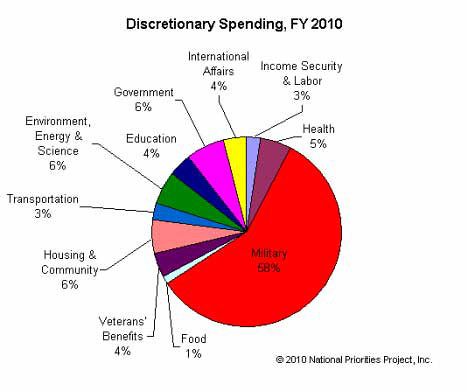
Over the decades since the end of the Second World War, much of American policy has evolved into "killing people and blowing things up", which is essentially the job description of the armed forces and America has the largest, most powerful, armed forces in the history of the world. Many careers have flourished, uncountable dollars have changed hands, hundreds of thousands of people have died and millions have been displaced in a chain of military disasters.  The United States famously spends more on its military than the next seventeen nations combined: if it could cut that down to say, more than the next five combined, then perhaps, while also raising taxes on the one percenters, the US economy, its infrastructure, its public schools and its safety net could be restored to health.
Obama is the first president to fully realize that most of this mayhem could be executed just as well, (with less casualties on either side, and much more cost-effectively), simply by using toy airplanes instead of thousands of over fed soldiers at the end of infinitely complex, wasteful, frightfully expensive and vulnerable supply lines.
Is all this blowing things up and killing people, even with toy airplanes necessary? The unpleasant truth is that "yes" it is. Why?
In its desire to micromanage the universe the USA has made many enemies over the decades, but the last batch they have made are the first to have ever hit the American "homeland" (sinisterly Teutonic term) and it turns out that although the USA packs the world's hardest punch, its jaw is made of glass.
No sooner did Al Qaeda manage to kill 3000 Americans in territorial USA, than the citizens of the United States were willing to lock the Bill of Rights in a drawer and misplace the key... nothing could be more cost effective than to make the Americans scrap their centuries old, "inalienable rights" using only 19 young Arabs carrying box cutters. The asymmetry between the cost and its effect means that it will be attempted again and again. Sooner or later one of these attempts is bound to succeed, it is just a matter of time
The reality is that any successful, new attack on US soil will spark a fresh wave of hysteria, which would probably destroy the presidency of whoever happened to be in the White House when it occurred. The steps the president has taken to keep another 9/11 from happening on his watch have probably taken more bloom off his rose than anything else. However that is the reality, politicians deal in reality and Obama is a politician.
The Financial Times compares Obama to Facebook's IPO:
Mr Obama’s frothy initial valuation offers parallels. Having marketed himself as the man who would transcend Washington’s cynical ways, Mr Obama’s brand was quickly tarnished. It was one thing to promise and fail to close Guantánamo Bay. It was quite another to produce a new rationale for indefinite detention without trial.
Without defusing the Middle East and with it the world of Islam, it is certain that American civil liberties will continue to be degraded, with this or any other administration.
As Al Qaeda draws much of its support and recruiting from America's tacit connivance with Israel's continuing oppression of the Palestinian people, no plan to end the threat of Al Qaeda to the USA can have any hope of success without solving the Palestinian question. Although it may not be enough, giving the Palestinians a state of their own, thus defining Israel's borders permanently, would do more to "drain the swamp" than having the Pentagon endlessly trying to re-engineer ancient cultures into American suburbs.
Solving the Palestinian question would require putting considerable pressure on the Israeli government. It is fair to doubt whether any US administration would have the chops to do that. Would Obama? I really don't know.  What I do know is that Mitt Romney is a close friend of Bibi Netanyahu and would consult him before doing anything in the Middle East...   So far, I hear nothing from the Republicans but attacking Iran, increasing military spending, cutting entitlements, supporting the Israeli right à outrance and lowering taxes for the wealthy.
So retuning to my leitmotiv of this "count the whys" series, I have no trouble at all imagining a better president than Barack Obama, but I cannot imagine that Mitt Romney, who is the only candidate with any chance of replacing him, would be that president. DS

Monday, September 03, 2007

Defeating militarism: America's secret weapon

David Seaton's News Links
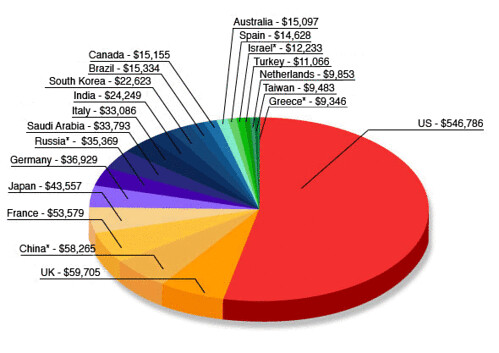
The idea behind the article that I am calling your attention to today is, that because of the cost of caring for the aging baby boomers, the United States will no long have enough money to rule the world and the solution is to cut the pensions and the Medicare of all these citizens who have spent their lives contributing with their work and tax money to keep the country afloat. I should make it clear that I am not in agreement with the author of this article as to the remedies for the problem that he correctly identifies. Who exactly is the country supposed to be for... if not for its own citizens? Is the military-industrial complex that has been devouring America's young for decades in Saturn-like fashion, now going to devour the aged too?

I am almost led to believe that the article is a satire similar to Jonathan Swift's "A modest proposal".
Probably Swift would have suggested boiling our senior citizens down for soup in order to feed the homeless schizophrenics and the prison population.

The problem with professor Haas's remedies is that older people are the segment of the population that abstains least in elections. They vote. So the cost of caring for an aging population will inevitably force America to cut back on its mastodontic military establishment. As long as America maintains some semblance of a democracy, (....?) its days as a hegemonic military power are limited.... And this article, while lamenting the burden of caring for the aged, does not even mention caring for America's decaying infrastructure which, if not repaired and restored soon will lead to a Minneapolis bridge a week in only a few years. Something has got to give. DS

America's golden years? - The Boston Globe (reprinted IHT)
Abstract: Although the aging crisis is less severe in the United States than in the other great powers, the challenges arising from this crisis are far from trivial. The Congressional Budget Office projects that by 2015, spending on the elderly in the United States will total almost $1.8 trillion - nearly half of the anticipated federal budget. For the United States, healthcare costs are the biggest problem presented by an aging population. America spends more than twice as much per capita in this area than any other industrialized state. By conservative estimates, absent reforms, the costs of Medicare alone will be at least $2.6 trillion in 2050 in today's dollars - roughly the size of the current U.S. federal budget. To pay for the massive fiscal costs associated with its aging population, the United States is likely to have to scale back its international policies. America will be less able in the future to dedicate significant resources to preventing the proliferation of weapons of mass destruction, financing nation-building, and engaging in humanitarian interventions. So at the same time that global aging will help prevent the rise of great power competitors, this phenomenon may jeopardize other vital U.S. international interests. To protect its international security, the United States needs to maintain its enviable demographic position. Specifically, it should reduce Social Security and Medicare payments to wealthier citizens, raise the retirement age to reflect increases in life expectancies, maintain largely open immigration policies, and, above all, restrain the rising costs of its healthcare system. A defining political question of the 21st century is whether American leaders have sufficient political will and wisdom to implement these and related policies. Failure to do so will significantly jeopardize future levels of America's global influence and safety. READ IT ALL

Tuesday, April 17, 2007

Swords into plowshares? Generals on global warming

David Seaton's News Links
A distinguished panel of retired generals and admirals have come to the conclusion that if something isn't done about global warming soon, it is going to lead to unheard of levels of worldwide instability producing endless conflict. If not arrested, the trend of climate change will lead to a multiplication of the sort of failed states that provide refuge for "non-state actors" (read Al Qaeda).

Dare we hope that this could be the beginning of some sort of miracle by which the military-industrial complex is "greened"? Are the soldiers going to be the ones to demand that the poor of the world have enough to eat and to drink? DS
Climate change 'a threat to security' - Financial Times
Abstract: Climate change threatens to prolong the war on terrorism and foster political instability that governments will be unable to cope with, an influential panel of 11 retired US generals has warned.(...) The new US military report, commissioned by the government-financed Center for Naval Analyses, lays out strong support for a link between climate change and terrorism. Admiral T. Joseph Lopez, the former commander-in-chief of US Naval Forces Europe and of Allied Forces, Southern Europe and a member of the panel, said: "Climate change can provide the conditions that will extend the war on terror. In the long term, we want to address the underlying conditions that terrorists seek to exploit, but climate change will prolong those conditions. It makes them worse." The report describes climate change as "a threat multiplier for instability in some of the most volatile regions of the world", which will "seriously exacerbate already marginal living standards in many Asian, African and Middle Eastern nations, causing widespread political instability and the likelihood of failed states". To make matters worse, the military experts warned climate change offered a challenge much more complex than conventional security threats because ofits potential to create "multiple chronic conditions, occurring globally within the same time frame".(...) "We will pay for this one way or another," said Anthony C. Zinni, former commander of US forcesin the Middle East. "We will pay to reduce greenhouse gas emissions today, and we'll have to take an economic hit of some kind. Or, we will pay the price later in military terms. And that will involve human lives. There will be a human toll." One of the recommendations of the military advisory panel was that "the US must commit to a stronger national and international role to help stabilise climate change at levels that will avoid significant disruption to global security and stability". READ IT ALL

Friday, February 16, 2007

All the time the Pentagon is thinking...

David Seaton's News Links
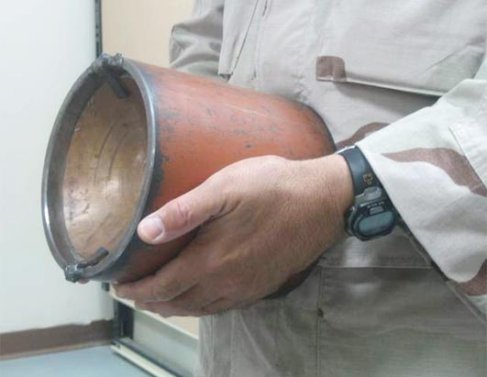
Andrew Cockburn's article about how a low-tech, explosive device that can be whipped up in a neighborhood machine shop for about twenty bucks has the entire R+D establishment of America's mastodontic military-industrial complex stymied, reminds me of of a famous boxing story.

Jack Dempsey, one of the greatest heavyweight champions in history fought another boxer who was supposedly very scientific. Dempsey recalled, "All the time he was boxing, he was thinking, and all the time he was thinking, I was hitting him."

Creating immensely complicated and astronomically expensive weapons systems, totally divorced from the reality of America's war fighting, would appear another sign of decadence. It reminds me of Swift's scientists that attempted to extract sunbeams from cucumbers.

I'd like to make it clear that I don't for a minute believe that the American people themselves are decadent: there are too many fresh, eager immigrants arriving every day for that to be true. But clearly dry rot seems to have set in at the top. DS


Andrew Cockburn: In Iraq, anyone can make a bomb - Los Angeles Times
Abstract: EFPs are simple to make for anyone who knows how to do it. Far from a sophisticated assembly operation that might require state supervision, all that is required is one of those disks, some high-powered explosive (which is easy to procure in Iraq) and a container, such as a piece of pipe. I asked a Pentagon analyst specializing in such devices how much each one would cost to make. "Twenty bucks," he answered after a brief calculation. "Thirty at most."(...) "You can do as much or more damage with a 5-pound EFP, which is aimed, as with a 200-pound conventional IED, where most of the energy is dissipated away from the target," the Pentagon analyst said. The U.S. has (belatedly) responded to the IED threat by "up-armoring" Humvees and other vulnerable vehicles, but EFPs can cleave through the very thickest armor "like butter," as one Iraq veteran told me. As of now, these weapons represent only a small fraction of the bombs used against U.S. forces. Last month, according to my Pentagon sources, out of 3,000 IEDs directed at occupation troops, only 2.5% were EFPs. But a further statistic explains why these particular weapons are so feared by soldiers encased in their armored vehicles: Despite the relatively tiny number deployed, since November they have accounted for fully 15% of U.S. bomb casualties, and that percentage is ticking up. Anyone pondering the implications of this trend need only look to the Israeli experience in Lebanon during the 1990s to see where it might end. "These bombs drove the Israelis out of Lebanon," a former Pentagon weapons-effects expert told me unequivocally.(...) Hezbollah's expertise with EFPs is one reason why the administration, despite minimal intelligence, has been quick to blame Hezbollah's Iranian allies for the proliferation of the devices in Iraq. But EFPs have a venerable history. The IRA used them with lethal effect against British troops in Northern Ireland, as did French resistance fighters against the Germans in World War II. It is only a question of time before someone shows the Taliban how to make them, and then NATO forces in Afghanistan will begin the same ordeal. Despite their known lethality, these weapons weren't taken into account by former Defense Secretary Donald H. Rumsfeld's program of military "transformation." Indeed, Rumsfeld bequeathed the Army the Future Combat Systems, a $168-billion extravaganza of computers, sensors and robots deemed by its proponents so deadly to a foe that armor on U.S. military vehicles might be dispensed with altogether. Once it became impossible to ignore the threat of all kinds of "home-made" bombs, and EFPs in particular, Rumsfeld responded in orthodox fashion by throwing money at the problem. A "joint IED defeat" task force was created to address the issue, and last year it was granted $3.32 billion, but with little result. True, each Humvee patrolling Iraqi roads now carries two specially designed jammers, costing $100,000 apiece, that jam radio signals detonating roadside bombs. The other side has simply switched to wire detonators or infrared systems. One hundred towers spouting remote cameras, at $12 million each, watch main roads for bomb planters, with no improvement in attack and casualty statistics. Rumsfeld's mentor, defense intellectual Andrew Marshall, marketed the phrase "revolution in military affairs" as a justification for high-tech programs such as Future Combat Systems. But those copper disks represent the real revolution in military affairs, and it is not in our favor. READ IT ALL