Showing posts with label militarism. Show all posts

Monday, September 03, 2007

Defeating militarism: America's secret weapon

David Seaton's News Links
The idea behind the article that I am calling your attention to today is, that because of the cost of caring for the aging baby boomers, the United States will no long have enough money to rule the world and the solution is to cut the pensions and the Medicare of all these citizens who have spent their lives contributing with their work and tax money to keep the country afloat. I should make it clear that I am not in agreement with the author of this article as to the remedies for the problem that he correctly identifies. Who exactly is the country supposed to be for... if not for its own citizens? Is the military-industrial complex that has been devouring America's young for decades in Saturn-like fashion, now going to devour the aged too?

I am almost led to believe that the article is a satire similar to Jonathan Swift's "A modest proposal".
Probably Swift would have suggested boiling our senior citizens down for soup in order to feed the homeless schizophrenics and the prison population.

The problem with professor Haas's remedies is that older people are the segment of the population that abstains least in elections. They vote. So the cost of caring for an aging population will inevitably force America to cut back on its mastodontic military establishment. As long as America maintains some semblance of a democracy, (....?) its days as a hegemonic military power are limited.... And this article, while lamenting the burden of caring for the aged, does not even mention caring for America's decaying infrastructure which, if not repaired and restored soon will lead to a Minneapolis bridge a week in only a few years. Something has got to give. DS

America's golden years? - The Boston Globe (reprinted IHT)
Abstract: Although the aging crisis is less severe in the United States than in the other great powers, the challenges arising from this crisis are far from trivial. The Congressional Budget Office projects that by 2015, spending on the elderly in the United States will total almost $1.8 trillion - nearly half of the anticipated federal budget. For the United States, healthcare costs are the biggest problem presented by an aging population. America spends more than twice as much per capita in this area than any other industrialized state. By conservative estimates, absent reforms, the costs of Medicare alone will be at least $2.6 trillion in 2050 in today's dollars - roughly the size of the current U.S. federal budget. To pay for the massive fiscal costs associated with its aging population, the United States is likely to have to scale back its international policies. America will be less able in the future to dedicate significant resources to preventing the proliferation of weapons of mass destruction, financing nation-building, and engaging in humanitarian interventions. So at the same time that global aging will help prevent the rise of great power competitors, this phenomenon may jeopardize other vital U.S. international interests. To protect its international security, the United States needs to maintain its enviable demographic position. Specifically, it should reduce Social Security and Medicare payments to wealthier citizens, raise the retirement age to reflect increases in life expectancies, maintain largely open immigration policies, and, above all, restrain the rising costs of its healthcare system. A defining political question of the 21st century is whether American leaders have sufficient political will and wisdom to implement these and related policies. Failure to do so will significantly jeopardize future levels of America's global influence and safety. READ IT ALL

Friday, February 16, 2007

All the time the Pentagon is thinking...

David Seaton's News Links
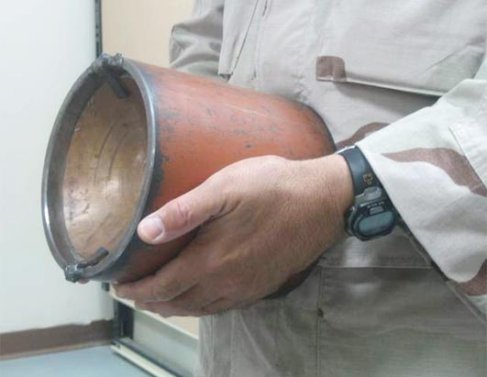
Andrew Cockburn's article about how a low-tech, explosive device that can be whipped up in a neighborhood machine shop for about twenty bucks has the entire R+D establishment of America's mastodontic military-industrial complex stymied, reminds me of of a famous boxing story.

Jack Dempsey, one of the greatest heavyweight champions in history fought another boxer who was supposedly very scientific. Dempsey recalled, "All the time he was boxing, he was thinking, and all the time he was thinking, I was hitting him."

Creating immensely complicated and astronomically expensive weapons systems, totally divorced from the reality of America's war fighting, would appear another sign of decadence. It reminds me of Swift's scientists that attempted to extract sunbeams from cucumbers.

I'd like to make it clear that I don't for a minute believe that the American people themselves are decadent: there are too many fresh, eager immigrants arriving every day for that to be true. But clearly dry rot seems to have set in at the top. DS


Andrew Cockburn: In Iraq, anyone can make a bomb - Los Angeles Times
Abstract: EFPs are simple to make for anyone who knows how to do it. Far from a sophisticated assembly operation that might require state supervision, all that is required is one of those disks, some high-powered explosive (which is easy to procure in Iraq) and a container, such as a piece of pipe. I asked a Pentagon analyst specializing in such devices how much each one would cost to make. "Twenty bucks," he answered after a brief calculation. "Thirty at most."(...) "You can do as much or more damage with a 5-pound EFP, which is aimed, as with a 200-pound conventional IED, where most of the energy is dissipated away from the target," the Pentagon analyst said. The U.S. has (belatedly) responded to the IED threat by "up-armoring" Humvees and other vulnerable vehicles, but EFPs can cleave through the very thickest armor "like butter," as one Iraq veteran told me. As of now, these weapons represent only a small fraction of the bombs used against U.S. forces. Last month, according to my Pentagon sources, out of 3,000 IEDs directed at occupation troops, only 2.5% were EFPs. But a further statistic explains why these particular weapons are so feared by soldiers encased in their armored vehicles: Despite the relatively tiny number deployed, since November they have accounted for fully 15% of U.S. bomb casualties, and that percentage is ticking up. Anyone pondering the implications of this trend need only look to the Israeli experience in Lebanon during the 1990s to see where it might end. "These bombs drove the Israelis out of Lebanon," a former Pentagon weapons-effects expert told me unequivocally.(...) Hezbollah's expertise with EFPs is one reason why the administration, despite minimal intelligence, has been quick to blame Hezbollah's Iranian allies for the proliferation of the devices in Iraq. But EFPs have a venerable history. The IRA used them with lethal effect against British troops in Northern Ireland, as did French resistance fighters against the Germans in World War II. It is only a question of time before someone shows the Taliban how to make them, and then NATO forces in Afghanistan will begin the same ordeal. Despite their known lethality, these weapons weren't taken into account by former Defense Secretary Donald H. Rumsfeld's program of military "transformation." Indeed, Rumsfeld bequeathed the Army the Future Combat Systems, a $168-billion extravaganza of computers, sensors and robots deemed by its proponents so deadly to a foe that armor on U.S. military vehicles might be dispensed with altogether. Once it became impossible to ignore the threat of all kinds of "home-made" bombs, and EFPs in particular, Rumsfeld responded in orthodox fashion by throwing money at the problem. A "joint IED defeat" task force was created to address the issue, and last year it was granted $3.32 billion, but with little result. True, each Humvee patrolling Iraqi roads now carries two specially designed jammers, costing $100,000 apiece, that jam radio signals detonating roadside bombs. The other side has simply switched to wire detonators or infrared systems. One hundred towers spouting remote cameras, at $12 million each, watch main roads for bomb planters, with no improvement in attack and casualty statistics. Rumsfeld's mentor, defense intellectual Andrew Marshall, marketed the phrase "revolution in military affairs" as a justification for high-tech programs such as Future Combat Systems. But those copper disks represent the real revolution in military affairs, and it is not in our favor. READ IT ALL

Thursday, February 08, 2007

Getting whupped in Afghanistan

Pashtun tribal Zone, Afghanistan, 2004

NATO -- a transatlantic alliance -- is gambling its future in Afghanistan. The prestigious London-based International Institute for Strategic Studies' latest report minced no words: success or failure in a country where everyone from Alexander the Great to the British empire to the Soviet empire met defeat will determine whether NATO lives -- or withers. - Arnaud De Borchgrave - UPI

David Seaton's News Links
Looking into the eyes of this darling, little Pashtun, valley girl, I am reminded of an old traditional melody from the American southland, which goes, "I gotta knife, I gotta gun, cut yez if yuh stand, shoot yez if yuh run."

I certainly would not like to get on the wrong side of this little hellion and much, much less, get on the wrong side of her daddy. Betting the future of NATO on whupping this little girl's daddy and her cousins doesn't seem to me such an intelligent proposition.

Certainly to think that with a hodge-podge of NATO's odds and sods you are going to succeed where Alexander the Great and Queen Victoria failed is the height of hubris, which I think is the classical Greek word for "dumb asshole".

Sensible old, William Pfaff, the anti-Thomas Friedman, explains why NATO is going to lose the war in Afghanistan. I love this quote, "
You might think the American political class and public is convinced that war is the road to national success, whereas the American experience of war, from the Korean ceasefire to the present day, proves the opposite. " Isn't it wonderful? DS

Afghanistan: Reenactment of Iraq and Vietnam - William Pfaff

Abstract: The Taliban in Afghanistan and Pakistan – “students of religion” – are a nationalist and populist movement of puritanical Islamic fundamentalism which grew up among the Pashtun tribal people of Northern Pakistan and neighboring Afghanistan in the early 1960s’s. The Pashtun tribal group is some 40-million strong, and has successfully resisted foreign domination since the time of Alexander the Great.(...) The Taliban eventually ruled Afghanistan between 1996 to 2001, eventually ousted by American bombing when they defied an American ultimatum to hand over Osama bin Laden, leader of al Qaeda, following the 9/11 attacks. Now 35 thousand NATO troops with a UN mandate are fighting to prevent them from returning to the Pashtun regions of Afghanistan.(...) General Pervez Musharraf, the president of Pakistan, is uneasily looking on; he is an intelligent man who knows that there will be 40 million Pashtuns in his part of the world long after NATO and the Americans have left.(...) The Afghanistan intervention now is moving steadily towards failure for the same reasons that produced American failure, humiliation and national discredit in Vietnam and Iraq. Washington in this case is being unwisely supported by NATO and endorsed by the European Union. The three cases are alike in the following respect. The intervention has been launched against a phenomenon of local political and social origin, misidentified out of ideological bias and political ignorance as a threat to the United States and the West. In Afghanistan-Pakistan the Taliban is a nationalist and religious movement of indigenous origin and strictly local horizons, ambitions, and reach. Afghanistan under Taliban rule would to a westerner seem a very unpleasant place to live, as it was before. However that would seem a problem for the Afghans themselves to settle. In Vietnam the target was the national Communist movement, fundamentally an upheaval against foreign domination, originally French and subsequently American. In Iraq the local phenomenon was an Arab nationalist dictatorship controlling immense oil reserves, originally supported by the United States (through the period of the 1980-1990 Iraq-Iran war). It was subsequently identified by the senior George Bush administration as a threat to American and Israeli interests in the region, the former mainly commercial and the latter security interests. In all three cases the United States’ objective was not simple military victory but to change the political nature of the society so as to make it a liberal democracy. A cynical observer would say that Washington wanted to turn each into a client state, but this was not entirely true. The United States wanted, as it always wants, a conversion of hearts. It nonetheless has become a profoundly militaristic nation, which it never was before 1941. It now conceives of international relations primarily in terms of military coercion and war. The Bush administration budget that has just gone to Congress would devote a higher percentage of national expenditure to war and war preparations than in any year since the Korean war 55 years ago: higher than during the Vietnam war, or the cold war. You might think the American political class and public is convinced that war is the road to national success, whereas the American experience of war, from the Korean ceasefire to the present day, proves the opposite. Vietnam was a decade of disaster, leaving the U.S. divided and weakened. U.S. Caribbean and Central American interventions (the Dominican Republic, the Bay of Pigs, Panama, Grenada, Nicaragua) made the country look overwrought and ridiculous. The Iraq intervention now is collapsing into horror. Is it necessary to repeat this in Afghanistan? READ IT ALL

Friday, December 22, 2006

Bacevich cuts to the bone

David Seaton's News Links
Professor Andrew Bacevich of Boston University, formerly Colonel Andrew Bacevich, US Army, is one of the most incisive political thinkers in America's intellectual panorama. The world of American think tanks has turned US geopolitical discourse into a massive, over-funded, Swiftian Academy of Lagado, where sunbeams are extracted from cucumbers and a quick journey to the heart of any matter would put a lot of scholars out of work. Bacevich, however, cuts to the bone. His book, "The New American Militarism: How Americans Are Seduced by War," is an absolute 'must read': an invaluable starting point for any serious discussion about the terrible situation that the US has created for itself. Obviously, without a keystone or linchpin, without finding the axis around which the problem revolves, we will never find our way out of the labyrinth. This article from The International Herald Tribune, which is quoted below, will give you some idea of Professor Bacevich's unerring instinct for constantly locating the center of gravity of these questions. DS
Bush's illusions - International Herald Tribune

Abstract:
The world's only superpower no longer acts; instead, it reacts, usually to whatever happens to be the latest bad news out of Baghdad. As events in Iraq slip out of his control, President George W. Bush's strategy for waging his "global war on terror" lies in ruins. He is navigating without a compass. It wasn't supposed to be this way. Recall that for the architects of Operation Iraqi Freedom, taking down Saddam Hussein never qualified as more than a preliminary objective. Baghdad was not Berlin. It was Normandy, the jumping-off point for a much larger enterprise.(...) Skeptics saw the Freedom Agenda as little more than eyewash. The real object of the exercise, they insisted, was to assert U.S. control over the oil-rich Gulf. The aim of the global war on terror was not to share the blessings of liberty but to expand the perimeter of the American empire. Whether the name of the game was liberation or dominion, Iraq was a crucial test case. Iraq's transformation into the first Arab democracy — or (depending on your point of view) its conversion into a compliant protectorate — promised to validate the Bush administration's concept of global war. Victory in Iraq would also affirm key assumptions underlying that concept: that U.S. forces are invincible and unstoppable; that preventive war works; that the concerns of other major powers or the absence of a UN Security Council mandate need not constrain American freedom of action. In short, Iraq constituted step one. Success there would pave the way for the Bush administration to proceed along similar lines to steps two, three and four. The disappointments and frustrations resulting from that first step now leave the entire project in a shambles. If the United States cannot democratize Iraq, then to imagine that democracy will emerge from the barrel of an American gun in Iran, Syria, Egypt or Saudi Arabia is simply fanciful. If U.S. troops cannot pacify Iraq, then only the truly deluded would court a further military showdown that could oblige American forces to pacify Iraq's neighbors as well. The United States already has too much war for too few soldiers.(...) As if tacitly acknowledging that they have spent all their ammunition strategically, Bush and his lieutenants now preoccupy themselves with operational matters that ought to fall within the purview of field commanders.(...) Fighting the Battle of Baghdad does not qualify as presidential business. Devising an effective response to the threat posed by Islamic radicalism does. On that score, however, the most pressing question is this: Does open-ended global war provide the proper framework for formulating that response? Or has global war, based on various illusions about American competence and American power, led to a dead end? READ IT ALL

Sunday, December 17, 2006

Grand strategies or delusions of grandeur

David Seaton's News Links
There is an interesting article in today's Washington Post by Professor Daniel W. Drezner of Tufts University where he outlines a series of "grand strategies" proposed by foreign policy analysts who he postulates as possible successors to George F. Kennan, the State Department analyst whose oft misinterpreted, but seminal article, "The Sources of Soviet Conduct" in the July 1947 issue of Foreign Affairs, was the foundational document of the US policy of "containment." On reading the article Drezner will take you on a quick tour of a series of well argued ideas for how the US should conduct itself in foreign affairs. Drezner's "original sin" is having the hubris to compare today's America with the America of the late 40s and early 50s when America's cold war strategies were formed and to believe that America, instead of being driven by events, in fact continues to have the power to actually decide what path it will finally take. George Will quoting author Bill Bryson in the November 26th Washington Post, describes the America of the 50s:
"In 1951, when the average American ate 50 percent more than the average European, Americans(...) controlled two-thirds of the world's productive capacity, owned 80 percent of the world's electrical goods, and produced more than 40 percent of its electricity, 60 percent of its oil and 66 percent of its steel. America's 5 percent of the world's population had more wealth than the other 95 percent, and Americans made almost all of what they consumed: 99.93 percent of new cars sold in this country in 1954 were U.S. brands. By the end of the '50s, GM was a bigger economic entity than Belgium, and Los Angeles had more cars than did Asia."
Obviously anyone who still sees American power in these terms, or the role of America that flowed from that power in these terms today is delusional. You only need to compare the Marshall Plan with the pitiful effort in Afghanistan to get an idea of the slide. The world has changed a lot since the 50s or even the 70s as Christian Reiermann wrote in Der Speigel apropos the falling value of the dollar,
"The perils of a currency crash are not nearly as great as they were in the days of the dollar's absolute dominance 30 or 40 years ago. Globalization has led to the development of a number of growth centers in the world economy which share the burden of turbulence. Gone are the days when an American finance minister could boast: "The dollar is our currency, but it's your problem."
This quote, as well as any, describes the general situation. What about military power? Isn't the US the unchallenged hegemon? Certainly nobody is crazy enough to think of invading the USA, the question for everybody else is rather if the United State is going to invade them. French demographer Emmanuel Todd describes recent US power projection in Grenada, Panama and Kosovo as "theatrical micromilitarism", a strategy that neocon Michael Ladeen describes as, "Every now and then America needs to pick up some shitty little country and throw it against the wall just to show that it can". Obviously Iraq has proved that the all volunteer Army simply doesn't have the numbers to occupy and control a large, hostile country after it has been "thrown against the wall." To change that would mean a return to the draft would be necessary, with US draftees and "draftettes" playing the role of Israeli soldiers on the West Bank all over the Middle East and beyond... For a "generation. Never say never, but a return to the draft doesn't really look very likely. That leaves air power. America is unchallenged in the air, right? Again the problem America's possible adversaries face is not having to invade US air space, but to prevent the USA from invading theirs. In the case of Iran, one of the most significant, but little discussed, developments has been Russia's delivery of the Tor antiaircraft system, to quote the Israeli DEBKAfile,
"a weapon widely regarded as the most advanced of its kind in the world. Some Iranian and Russian air defense experts say its full deployment at Iran’s nuclear installations will make them virtually invulnerable to American or Israeli attack in the foreseeable future."
Also little noticed, if Google searches are any yardstick, is the Russian development of the
Triumf anti-aircraft system, said to be the most advanced in the world. The Federation of American Scientist, FAS describes Trumf as,
"intended to detect and destroy airborne targets at a distance of up to 400 km (2- 2.5 times greater than the previous S-300PMU system). The Triumf system includes radars capable of detecting low-signature targets. And the anti-missile capability of the system has been increased to the limits established by the ABM Treaty demarcation agreements -- it can intercept targets with velocities of up to 4.8 km/sec, corresponding to a ballistic missile range of 3,500 km."
Then, of course there are China's advances in "passive radar" research and then even the invisible "stealth" technology that allows the USAF to bomb invulnerably around the world would be neutralized. "Theatrical micromilitarism" as a strategy of dominance would be finished. The United States would be as invulnerable to military attack by land sea or air as it always has, but would no longer be invulnerable or nearly invulnerable when attacking. At this point the American people might ask themselves, as many are doing already, the reason for spending so much of the US budget on "Full Spectrum Dominance" when some 40million of its citizens are without health insurance and the old-age pension system is said to be in danger of bankruptcy. DS

Friday, December 15, 2006

Imperial shelf life: paying the cost to be the boss

David Seaton's News Links
The window of American imperialism, militarism and hegemony is closing for the simplest of reasons. After the Second World War the returning American soldiers fathered many children. This phenomenon was known as the "war baby boom" and its children have come to be know as the "boomers". This massive generation whose consumer habits have driven the US economy since they were teenagers will, thanks to that frantic consumption, soon reach retirement age practically without savings. If defense spending continues as at present or, as will probably be the case, rises and Bush's tax cuts for the super rich are maintained, there will be no money for pensions and health care for the doddering (but voting) boomers. At that point something will have to give. As another name for the boomers is the "ME generation", it is very easy to imagine their passive enthusiasm for living in abject poverty in order to finance America's military hegemony. DS
E.J. Dionne Jr: A War Bush Wouldn't Pay For - Washington Post
Abstract: Until recently President Bush's refusal to scale back any of his tax cuts was discussed as the question of shared sacrifice: How could we ask so much from a courageous group of Americans fighting in Iraq and Afghanistan but not ask even the wealthiest of their fellow citizens to part with a few extra dollars to support an endeavor supposedly central to our nation's security? On the contrary, even after we committed to war in Iraq, the administration pushed for yet more tax cuts in dividends and capital gains. Now we know that the decision to put the war on a credit card is not simply a moral question. The administration's failure to acknowledge the real costs of the war -- and to pay them -- has put it in a corner. The president's options in Iraq are severely constrained because our military is too small for the foreign policy he is pursuing. Sending more troops would place even more excruciating burdens on members of our armed forces and their families. And the brass fears that an extended new commitment could, quite simply, break the Army. Yet, instead of building up our military for a long engagement and levying the taxes to pay for such an enterprise, the administration kept issuing merry reports of progress in Iraq. Right through Election Day this year, the president continued to condemn anyone who dared suggest that maybe, just maybe, we should raise taxes to pay for this war.(...) By my back-of-the-envelope calculations, since 2001 we've offered $2 in tax cuts for every $1 we have spent on the wars in Iraq and Afghanistan. And conservatives wonder why we have deficits. At least the libertarians, who are against both high taxes and an interventionist foreign policy, have their philosophical story (and their numbers) straight. It has always been true that the administration and its allies couldn't have it both ways. Their illogic has finally caught up with them. They claimed to be against big government so they could justify big tax cuts. But they were also for a big, activist foreign policy, especially after Sept. 11, 2001, which required a big military, and -- sorry to break it to you, guys -- a big military is a big part of big government. They were not willing to pay for a large enough military, and so now we, and especially our armed forces, are paying for their deficit in logic and courage. READ IT ALL