 9-11 - El Roto
 The Obama administration has proposed regulatory changes, but even their backers say they face a difficult road in Congress. For now, banks still sell and trade unregulated derivatives, despite their role in last fall’s chaos. Radical changes like pay caps or restrictions on bank size face overwhelming resistance. Even minor changes, like requiring banks to disclose more about the derivatives they own, are far from certain. New York Times(H)ealth care reform, while an overdue imperative, still is overshadowed in existential urgency by the legacies of the two devastating cataclysms of the Bush years, 9/11 and 9/15, both of whose anniversaries we now mark. The crucial matters left unresolved in the wake of New York’s two demolished capitalist icons, the World Trade Center and Lehman Brothers, are most likely to determine both this president’s and our country’s fate in the next few years. Both have been left to smolder in the silly summer of ’09. Frank Rich - New York Times
(T)here is still a mammoth, gaping hole at Ground Zero. Bureaucratic gridlock, partisan bickering, old-fashioned greed and failed leadership have all been blended together perfectly in one big pot to create a colossal, historic stew of inaction. Paul Rieckhoff - Huffington Post
President Obama made clear during last year's presidential campaign that Afghanistan would be his war if he was elected. Since being sworn in, true to his word, he has made the Afghan war a national security imperative because that's where al Qaeda is. At least, that's where Mr. Obama thinks it is. But nothing is less certain. Arnaud de Borchgrave - Washington Times
He has decided to expand the current system, not fix it. David Brooks - NYT
I have have held off commenting on the president's health care speech to congress in order to read the opinions of better qualified analysts: the general opinion seems to be that it was a very fine speech, but that no one is really that sure what he said. By now it seems pretty clear that whatever comes out of it this process will resemble what other developed western countries consider universal health coverage to the degree that a spavined camel resembles a racehorse.
As important as health care is (and what in a "serious" country could be more important?) the real story today is paralysis and this paralysis is, if nothing else, bipartisan. And it is bipartisan because it is systemic, something that has been brewing since the end of the Second World War and which now is coming to a head. Neither party has either the ideas nor the power to fix it and I am of the opinion that even if they fell into each other's arms and took a blood oath of mutual fealty; that even together, they wouldn't have either the ideas nor the power to fix it.
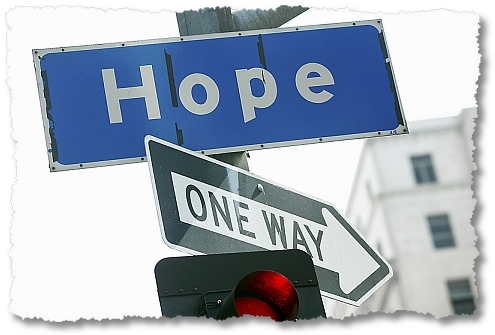
That is the reason why I was quite lukewarm about a Democrat -- any Democrat -- taking the White House at this moment. I have a very strong feeling that this president -- any president -- is set to preside over what many will see as the collapse of America's "empire" and whichever party is in the White House when this happens will take the blame for it... I would have preferred -- call me sentimental -- that the Republicans had taken the historic hit... I was hoping (not really believing) that the Democrats would be the ones to try to put Humpty Dumpty together again... it was not to be.
What will this collapse of "America's empire" look like?
It will look very similar to the collapse of Spain's empire and will feature some of the same players.
South America is going south... again.
The United States is so deeply entangled in and obsessed by the Middle East and Af-Pak that it has taken its eyes and energies off its proverbial back yard, Latin America. Because of its dependence on oil and the power of the Israel lobby it will find it impossible to refocus in time. There are simply not enough resources to control the Middle East and Southwest Asia and project power in South America at the same time. As professor Andrew Bacevich puts it, "we haven't got the money and we haven't got the troops".
Latin America gained its "first" independence at the beginning of the 19th century, when a prostrate Spain, exhausted from the Napoleonic wars, relaxed its grip. And now with a distracted and overburdened America relaxing its grip, Latin America is poised to gain its "second" and perhaps definitive independence.
Latin America and the United States have much in common, it is the proportions of the components that differ the most. All of us are great producers of raw materials and commodities, where not too much is manufactured (anymore). To understand the political mix of most of Latin America excluding lily white Argentina, Uruguay and Chile, known as the "Southern Cone," the USA will serve as a good model.
Imagine that instead of 12% and 1.5% of the population respectively, African and Native- Americans represented in varying proportions, 70 to 80+ percentage of the US population. Imagine that the distribution of wealth was similar to what it is right now. Here is how the sociology department of the University of Southern California, Santa Cruz describes it:
In the United States, wealth is highly concentrated in a relatively few hands. As of 2004, the top 1% of households (the upper class) owned 34.3% of all privately held wealth, and the next 19% (the managerial, professional, and small business stratum) had 50.3%, which means that just 20% of the people owned a remarkable 85%, leaving only 15% of the wealth for the bottom 80% (wage and salary workers). In terms of financial wealth (total net worth minus the value of one's home), the top 1% of households had an even greater share: 42.2%.Now imagine that all the people with the money were of European descent and all the people without money were of color (not too difficult, is it?) now imagine that a series of political figures that combined the qualities of Doctor Martin Luther King and Sitting Bull appeared... That is what is happening in Latin America right now, while the United States faces the wars of Iraq and Afghanistan and quite probably Iran and has no marines left over to send.
President Barack Obama -- it could have (sigh) been McCain -- will have the dubious privilege of sitting by helplessly while the United States of America gets ridden out of Latin America on a rail. DS








If he comes out strongly for a public option, which is as close as the USA could probably come to a real "national health" program, I will happily eat plate after plate of humble pie with a generous side order of crow.
If he dumps the public option -- which at this moment seems very likely -- I will feel that all my skepticism has been amply vindicated.
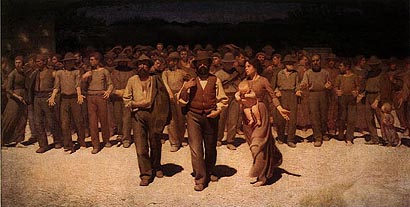
Eliminating the public option would be a tragic prevarication; a travesty and a betrayal of all those who have placed their faith in this man and who worked tirelessly to get him elected. They will know they have been used and discarded like a Kleenex in the futile search for a moderate center that no longer exists.
Because, one of the keys to understanding contemporary US politics is that, after Ronald Reagan's revolution (I put no quotes around the word "revolution"), the American center has been destroyed.
As Paul Krugman recently pointed out:
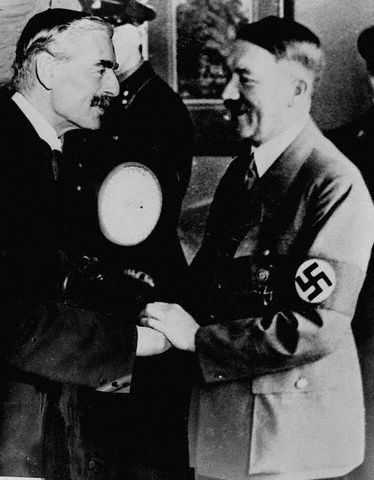
To use a favorite simile of the right, Obama is acting the part of Neville Chamberlain, thinking that he can cut deals with people who take no prisoners...Obama has often been compared to Ronald Reagan, but except for their phenomenal communication skills, they have little or nothing in common.
Ronald Reagan was first and foremost an ideologue. Behind his amiable, folksy and slightly goofy exterior he was in his own way every bit as firmly entrenched in his extremist ideology as, say, Cambodia's Pol-Pot was in his... and as far removed from reality too.
Ronald Reagan was totally focused on moving the United States politics much farther to the right than its people actually were then, or are even today.
Reagan was able to redefine the parameters of American politics.
Barack Obama gives no sign of such focus or ambition of moving American back to where it was, much less of moving it to the left.
If Obama or anyone else really thinks that a Democratic president can "reach out" to the right and "unite", them behind him on anything, they are somewhere south of naive.
This a time to fight and this is good ground to fight on.
The chance to change American politics on a Reaganesque scale, to become the anti-Reagan, exists in the health care issue. Weakness here will cripple the Obama presidency: For all those that oppose him now or in the future will see the clear discontinuity between the hat and the cattle...
And make no mistake, Barack Obama's deadliest enemies are not in Tehran, the mountains of Afghanistan or Pakistan, much less in Beijing or Moscow, they are right there is Washington with him and they will show him no mercy if they are not brought to heel. DS