 David Seaton's News Links
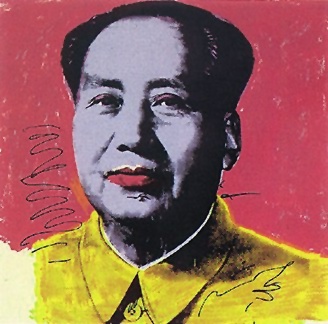
It is interesting that in Russia, both Lenin and even Stalin are still revered and that in China Mao Tse-Tung remains the symbol of the nation, its power and its unity.
Book after book has appeared in the west, year after year denouncing Lenin, Stalin and Mao: their crimes, sexual perversions and even in Mao's case the subject of his personal hygiene (the "great helmsman" was apparently allergic to soap and water), but still the people that suffered them most still revere their memory.
Americans refer to other nation's patriotism as "nationalism" and see that as a bad thing. Great American patriots and founders of the nation like Washington and Jefferson owned slaves and Jefferson's only descendants are black because he sexually exploited the slave girls at his mercy. Revisionist historians are now trying to prove that Abraham Lincoln was gay. Still Americans revere them for the same reason this article in the Los Angeles Times says that the Chinese revere Mao: because "he won the civil war and united China" and "he is remembered for uniting China and setting it on a course for prosperity". The lesson would be that, if you treasure your identity, with a little imagination you will understand that others treasure theirs too... even Iraqis. DS
Mao marches on - Los Angeles Times
Abstract: During a recent visit to Beijing, I was looking at the sky on a clear night when I was startled to see the ghost of Mao Tse-tung staring down at me. The legendary tyrant's mellow, moon-like visage sparkled above a spanking-new shopping center while a hidden PA system amplified his high-pitched Hunan accent: "The Chinese people have stood up!"(...) Mao's space at The Place is both ironic and dead serious. Mao, who branded China with a sharp and cutting anti-capitalist philosophy, is now a brand name in his own right, bestowed with the pride of place in an opulent urban mall, occupying center stage in a slick piece of visual propaganda drawn from archival footage. The Mao show, exalting the lineage of China's Communist Party leadership as an important party congress approaches, is sure to stir a flutter of reflexive pride in the casual passerby, well-heeled shopper and barefoot rag-picker alike. Deng Xiaoping, the late strongman who overturned Mao's legacy and put the workers' paradise on the road to being a shoppers' paradise, is conspicuous by his absence.(...) By and large, the Mao statues that were once so ubiquitous in Beijing are gone, but Mao never really went away. In fact, one can hardly make a purchase in China without seeing his dreamy visage, especially on the 100-yuan bill, the bill of all bills at a time when making money is truly the lifeblood of China.(...) There have been periodic bouts of nostalgia for Mao before, none more potent than the spontaneous popular uprising at Tiananmen in 1989. The demonstrators, despite their media-pleasing democratic rhetoric, had a decidedly Maoist cast. No one understood this better than Deng, the man who ordered the crackdown in fear of being deposed in a second Cultural Revolution. Both Jiang Zemin and Hu Jintao, though anointed by Deng for succession, have done much to stabilize and secure Mao's reputation, in no small part to bolster their own communistic legitimacy while freeing themselves from the Dengist straitjacket. Mao might have been a tyrant, as aloof as an emperor, but he won the civil war and united China, not unlike a ruthless predecessor he was said to admire. China's founding emperor, Qin Shihuangdi, was not a nice man by any reckoning, but he is remembered for uniting China and setting it on a course for prosperity. Every time we utter the word China -- "land of Qin" -- we inadvertently invoke the tyrant's legacy. And so too will Mao's legacy be invoked again and again, rough edges gradually smoothed out over time, reduced to a rounded pebble in a turbulent, ever-changing stream. READ IT ALL
Book after book has appeared in the west, year after year denouncing Lenin, Stalin and Mao: their crimes, sexual perversions and even in Mao's case the subject of his personal hygiene (the "great helmsman" was apparently allergic to soap and water), but still the people that suffered them most still revere their memory.
Americans refer to other nation's patriotism as "nationalism" and see that as a bad thing. Great American patriots and founders of the nation like Washington and Jefferson owned slaves and Jefferson's only descendants are black because he sexually exploited the slave girls at his mercy. Revisionist historians are now trying to prove that Abraham Lincoln was gay. Still Americans revere them for the same reason this article in the Los Angeles Times says that the Chinese revere Mao: because "he won the civil war and united China" and "he is remembered for uniting China and setting it on a course for prosperity". The lesson would be that, if you treasure your identity, with a little imagination you will understand that others treasure theirs too... even Iraqis. DS
Mao marches on - Los Angeles Times
Abstract: During a recent visit to Beijing, I was looking at the sky on a clear night when I was startled to see the ghost of Mao Tse-tung staring down at me. The legendary tyrant's mellow, moon-like visage sparkled above a spanking-new shopping center while a hidden PA system amplified his high-pitched Hunan accent: "The Chinese people have stood up!"(...) Mao's space at The Place is both ironic and dead serious. Mao, who branded China with a sharp and cutting anti-capitalist philosophy, is now a brand name in his own right, bestowed with the pride of place in an opulent urban mall, occupying center stage in a slick piece of visual propaganda drawn from archival footage. The Mao show, exalting the lineage of China's Communist Party leadership as an important party congress approaches, is sure to stir a flutter of reflexive pride in the casual passerby, well-heeled shopper and barefoot rag-picker alike. Deng Xiaoping, the late strongman who overturned Mao's legacy and put the workers' paradise on the road to being a shoppers' paradise, is conspicuous by his absence.(...) By and large, the Mao statues that were once so ubiquitous in Beijing are gone, but Mao never really went away. In fact, one can hardly make a purchase in China without seeing his dreamy visage, especially on the 100-yuan bill, the bill of all bills at a time when making money is truly the lifeblood of China.(...) There have been periodic bouts of nostalgia for Mao before, none more potent than the spontaneous popular uprising at Tiananmen in 1989. The demonstrators, despite their media-pleasing democratic rhetoric, had a decidedly Maoist cast. No one understood this better than Deng, the man who ordered the crackdown in fear of being deposed in a second Cultural Revolution. Both Jiang Zemin and Hu Jintao, though anointed by Deng for succession, have done much to stabilize and secure Mao's reputation, in no small part to bolster their own communistic legitimacy while freeing themselves from the Dengist straitjacket. Mao might have been a tyrant, as aloof as an emperor, but he won the civil war and united China, not unlike a ruthless predecessor he was said to admire. China's founding emperor, Qin Shihuangdi, was not a nice man by any reckoning, but he is remembered for uniting China and setting it on a course for prosperity. Every time we utter the word China -- "land of Qin" -- we inadvertently invoke the tyrant's legacy. And so too will Mao's legacy be invoked again and again, rough edges gradually smoothed out over time, reduced to a rounded pebble in a turbulent, ever-changing stream. READ IT ALL


