Saturday, May 19, 2007

Russia: things we did that we ought not to have done

David Seaton's News Links
Alongside the Iraq debacle, America's greatest strategic error since WWII has been its handling of the collapse of the Soviet Union and its naked exploitation of Russia's weakness in the 1990s, which Russians view (correctly, in my opinion) as kicking them when they were down.

Ironically at the same time that the US and its allies were doing everything they could to create a revanchist minded Russia, Europe became dependent on Russian energy. That is the basic contradiction and all the talk about "shared values" is so much narcissistic claptrap. Russia is suddenly a major power again and perhaps it is a greater power now than before because during the cold war Russia was not integrated into our system and the west had not come to depend on its infinite resources.

Suddenly Poland, the Baltic republics and the Ukraine are so many millstones around the European Union's neck. There is a very good chance that NATO will founder on this question as nobody in their right mind is going to go to war with Russia to defend Estonia and even the tensions within the European Union may become unbearable as German business's frustration grows at the obstacles that Poland continuously throws up to Germany's natural synergies with Russia. DS


Engaging an angry bear - The Boston Globe

Abstract:
Russians believe they have nothing to show for years of pro-U.S. policy, and instead have been rewarded with a policy of "neo-containment." Moscow sees the United States setting up ballistic missile defense interceptors and military bases on its borders, fomenting revolutions in neighboring states and supporting construction of oil and gas pipelines that circumvent Russia. Moscow views the status quo as enshrining its post-Cold War weakness, and the Kremlin is dead set on breaking out of that arrangement. Russia will likely seek to renegotiate arms control agreements and political arrangements that date from its time of troubles, the 1990s. The days of Moscow as Washington's junior partner are over. Doing business with this Russia won't be easy. But giving up on U.S.-Russian relations, a current predisposition among many elites in both capitals, won't serve either's interest. The world's leading power needs better ties with a Russia that is the leading producer of oil and gas, possesses thousands of nuclear warheads, is a key player in major crises (such as Iran) and - like it or not - will retain significant influence in its energy-rich(...) neighborhood.(...) the United States needs to fundamentally alter its conception of Russia. Moscow is resurgent on key diplomatic issues and Russian business is now influential across the globe. Washington should view Russia as a major nonaligned power - more like China or India than a poor second-tier disciple. READ IT ALL

Friday, May 18, 2007

Hit the road jack..... no mo', no mo', no mo', no mo'

"Everyone ran into the hallways and were clapping and hugging each other," said one employee who declined to be named. - Reuters
David Seaton's News Links

Whew!

DS

Thursday, May 17, 2007

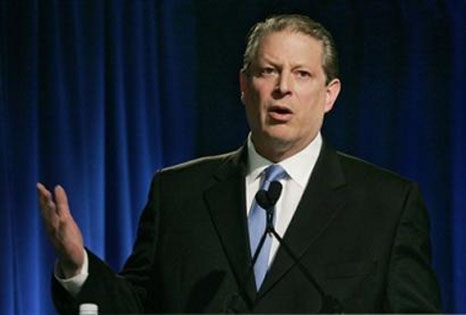
Is Al Gore America's last serious politician?

David Seaton's News Links
Is Al Gore America's last serious politician? Can any other major American politician ask the questions he asks in this Time article... in this manner... with a straight face?

Will America be finally forced to choose between Rudy Giuliani and Hillary Clinton?

Will history record that America's democracy died of terminal silliness? DS

Al Gore: The Assault on Reason - Time Magazine
Abstract: Not long before our nation launched the invasion of Iraq, our longest-serving Senator, Robert Byrd of West Virginia, stood on the Senate floor and said: "This chamber is, for the most part, silent—ominously, dreadfully silent. There is no debate, no discussion, no attempt to lay out for the nation the pros and cons of this particular war. There is nothing. We stand passively mute in the United States Senate." Why was the Senate silent? In describing the empty chamber the way he did, Byrd invited a specific version of the same general question millions of us have been asking: "Why do reason, logic and truth seem to play a sharply diminished role in the way America now makes important decisions?" The persistent and sustained reliance on falsehoods as the basis of policy, even in the face of massive and well-understood evidence to the contrary, seems to many Americans to have reached levels that were previously unimaginable. A large and growing number of Americans are asking out loud: "What has happened to our country?" People are trying to figure out what has gone wrong in our democracy, and how we can fix it. To take another example, for the first time in American history, the Executive Branch of our government has not only condoned but actively promoted the treatment of captives in wartime that clearly involves torture, thus overturning a prohibition established by General George Washington during the Revolutionary War. It is too easy—and too partisan—to simply place the blame on the policies of President George W. Bush. We are all responsible for the decisions our country makes. We have a Congress. We have an independent judiciary. We have checks and balances. We are a nation of laws. We have free speech. We have a free press. Have they all failed us? Why has America's public discourse become less focused and clear, less reasoned? Faith in the power of reason—the belief that free citizens can govern themselves wisely and fairly by resorting to logical debate on the basis of the best evidence available, instead of raw power—remains the central premise of American democracy. This premise is now under assault. READ IT ALL

Wednesday, May 16, 2007

Blair and Wolfie, a snapshot of Limbo

"There are moments when the injustice of having to leave your country, simply because an imbecile got it into his head to invade it, is overwhelming." 'Riverbend'

David Seaton's News Links
Occasionally political life produces delicious synchronicities. In the same week that Tony Blair threw in the towel, Paul Wolfowitz, one of the most influential promoters of the war in Iraq, the event most responsible for spoiling Blair's brilliant career, begged a stony faced board of the World Bank not to forcibly remove him from his post as its president. Both men have been brought low by a war that began over four years ago.

In Umberto Eco's bestseller "The Name of the Rose", those who tried to read Aristotle's "Book on Comedy", were poisoned by just touching the pages. Although many would like to move on, "turning the page" on Iraq is just as futile. Invading Iraq was a serious strategic error which Israel's legendary military guru, Martin VanCreveld considers, "the most foolish war since Emperor Augustus in 9 B.C sent his legions into Germany and lost them" and which others have gone so far as to compare with Hitler's suicidal invasion of Russia. One of the differences between a tactical error and a strategic error is that strategic errors don’t go away, paraphrasing an old advertising slogan, they are “the gift that keeps on giving”. Like Aristotle's "Book on Comedy," they simply don’t allow their pages to be turned.

Blair's predecessor, Harold Macmillan, envisioned Britain's relationship with America's rude "new Rome" as that of the wise and cultured Greeks, but in Iraq it fell to Tony Blair to fully explore the meanings of the word "Greek", because as the Israeli historian Avi Shlaim wrote in the Guardian, "Blair failed to understand that America's really special relationship is with Israel, not Britain. Every time that George Bush had to choose between Blair and Ariel Sharon, he chose the latter." In fact, for the neocons like Wolfowitz who promoted it, the invasion of Iraq was a success until Ariel Sharon lapsed into coma. In fact, a shattered, chaotic Arab world divided into fractious "reinos de Taifas" incapable of uniting against Israel and the subsequent devastation of Iran were the invasion's true objects. Only the brilliant Sharon could ever have hoped to navigate in such chaos: the "sorcerer's apprentices" like Bush and Ehud Olmert are lost in the wreckage and Blair's career is just another broken toy.

Blair and Wolfowitz can go home now and write their memoirs, but Bush, likewise paralyzed by Iraq's poisoned pages, has a year and a half of political limbo left in the White House. Albert R. Hunt, Bloomberg's Washington bureau wrote, "Almost two-thirds of Americans disapprove of Bush's job performance. Bush is reviled around much of the world and has precious little political capital at home. This has enormous implications for foreign policy, domestic politics and the legislative agenda for the next year and a half." The behavior of Iran, Russia and Venezuela bear out Bloomberg's analysis. DS

Tuesday, May 15, 2007

Bush DOA - Bloomberg

"Dead Duck" - Lucas Cranach
"Bloomberg is the leading global provider of data, news and analytics. The BLOOMBERG TERMINAL and Bloomberg's media services provide real-time and archived financial and market data, pricing, trading, news and communications tools in a single, integrated package to corporations, news organizations, financial and legal professionals and individuals around the world." About Bloomberg
David Seaton's News Links
The article below is from Bloomberg, not from the American left-wing's institution, Mother Jones and the author, Albert Hunt, is Bloomberg's Washington bureau chief and not Noam Chomsky. Money talks!

Bush's legacy will finally have been to have killed the "Conservative Revolution" that Barry Goldwater inaugurated in the 1960s. Bush seems to have opened the doors for something new and not just another Clinton-Blair "Third Way", reacting to conservative charisma by trying to dress in the clothes of Reagan and Thatcher. America is at the door of a period that may see conservative policies having to dress up as "liberal - progressive". In France Sarkozy has just offered cabinet posts to important socialists. If you think that Reagan began as a dyed in the wool New Deal Democrat, you can see that the old saying, "what goes around, comes around" is a profound political insight. DS

Republicans Shaken by Bush Presidency - Bloomberg
Abstract: There's a number that chills Republicans: 616. That's how many days remain in the Bush administration. Private conversations with Republicans throughout America reveal doom and gloom about a politically paralyzed presidency and party.(...) ``The country doesn't believe George W. Bush, it doesn't trust him, and with 19 months to go it's only going to get worse,'' predicts Ed Rollins, a Republican strategist who ran Ronald Reagan's 1984 presidential campaign. ``There is nothing the president can do to get his (poll) numbers back up.'' According to those polls, almost two-thirds of Americans disapprove of Bush's job performance; that is Richard Nixon territory. A majority of the public approved of the performance of the last two lame-duck presidents, Reagan and Bill Clinton, at this same stage in their administrations.(...) America is mired in a rudderless status quo. A new embarrassment or scandal -- Alberto Gonzales, Paul Wolfowitz, Karl Rove -- seems to surface daily; the only good news for the White House is that occasionally these stories overshadow the bad news coming out of Iraq. Bush is reviled around much of the world, has precious little political capital at home, and seems surrounded by hacks or the forgettable and faceless. Strikingly, perhaps the two most important members of the Cabinet -- Defense Secretary Robert Gates and Treasury Secretary Henry Paulson -- have little history with the president, and their greatest leverage is the havoc that would be wrought if they left. Each has served in the administration for less than a year.(...) This has enormous implications for foreign policy, domestic politics and the legislative agenda for the next year and a half. Bill Cohen, a Republican who served as defense secretary under Clinton, thinks Bush blew what may have been his last opportunity by failing to embrace the bipartisan recommendations by the Jim Baker-Lee Hamilton-led Iraq Study Group to gradually disengage from Iraq. Cohen, who travels the globe advising clients, says the president ``doesn't have much influence on anything,'' commanding little respect or fear around the world. That's why the notion that he may take military action against Iran -- for good or bad reasons -- is far-fetched. The American military, bogged down in Iraq, lacks the resources and the president lacks the credibility for such a huge step. Politically, there is a telling indicator: Count the number of times any Republican presidential candidate cites Bush in speeches, debates or interviews. You will need only one hand, if that. READ IT ALL

Monday, May 14, 2007

Tony Blair: carrying water for the golem

"Blair failed to understand that America's really special relationship is with Israel, not Britain.(...) The neoconservatives who drove American policy were interested in overthrowing Saddam Hussein and in nothing else." - Avi Shlaim
David Seaton's News Links
The quotes from Israeli historian Avi Shlaim above are the key to Tony Blair's ruin.

If you consider the influence that the philosopher Leo Strauss and his idea of "Noble Lies", has had on Neoconservatives things begin to fall alarmingly into place. The "Noble Lie" is a justification perfect for a secret elite of superior intellects, free to manipulate the lives of lesser mortals
"The ancient philosophers whom Strauss most cherished believed that the unwashed masses were not fit for either truth or liberty, and that giving them these sublime treasures would be like throwing pearls before swine. In contrast to modern political thinkers, the ancients denied that there is any natural right to liberty. Human beings are born neither free nor equal. The natural human condition, they held, is not one of freedom, but of subordination – and in Strauss’s estimation they were right in thinking so." Dr. Shadia Drury, author of "Leo Strauss and the American Right"

"Part of the charm of the regime-change argument (from the point of view of its supporters) is that it depends on premises and objectives that cannot, at least by the administration, be publicly avowed. Since Paul Wolfowitz is from the intellectual school of Leo Strauss—and appears in fictional guise as such in Saul Bellow's novel Ravelstein—one may even suppose that he enjoys this arcane and occluded aspect of the debate." Christopher Hitchens, Slate, Nov. 7, 2002
The harshest truth in world politics today is that the Israeli right, bereft and orphaned without Ariel Sharon, has always conceived of America and its power simply as a "golem", a word that has several meanings, but which in this case would take the meaning given here:
"Often in Ashkenazi Hasidic lore, the golem would come to life and serve his creators by doing tasks assigned to him. The most well-known story of the golem is connected to Rabbi Judah Loew ben Bezalel, the Maharal of Prague (1513-1609). It was said that he created a golem out of clay to protect the Jewish community from Blood Libel and to help out doing physical labor, since golems are very strong.(...) Sometimes, someone who is large but intellectually slow is called a golem." - The Jewish Virtual Library
In fact the war was a success, a shattered, divided and chaotic Middle East incapable of uniting against Israel was its object. For those who designed and pushed for the war, it was only "lost" when Ariel Sharon went into coma. Sharon was the only sorcerer who could have navigated in a shattered Middle East, the "sorcerer's apprentices" are lost in the wreckage. Blair's career is just another log on the fire. DS

Avi Shlaim: It is not only God that will be Blair's judge over Iraq - The Guardian
Abstract: Blair came to office with no experience of, and virtually no interest in, foreign affairs, and ended by taking this country to war five times. Blair boasts that his foreign policy was guided by the doctrine of liberal interventionism. But the war in Iraq is the antithesis of liberal intervention. It is an illegal, immoral and unnecessary war, a war undertaken on a false prospectus and without sanction from the UN. Blair's entire record in the Middle East is one of catastrophic failure. He used to portray Britain as a bridge between the two sides of the Atlantic. By siding with America against Europe on Iraq, however, he helped to destroy the bridge.(...) Blair failed to understand that America's really special relationship is with Israel, not Britain. Every time that George Bush had to choose between Blair and Ariel Sharon, he chose the latter. Blair's special relationship with Bush was a one-way street: Blair made all the concessions and got nothing tangible in return.(...) True, Blair was the driving force behind the "road map" that envisaged the emergence of an independent Palestinian state alongside Israel by the end of 2005. But Sharon wrecked the road map. In return for the unilateral withdrawal from Gaza, Sharon exacted a written American agreement to Israel's retention of the major settlement blocs on the West Bank. Blair publicly endorsed the nefarious Sharon-Bush pact. This was the most egregious British betrayal of the Palestinians since the Balfour declaration of 1917. Blair and Bush have also betrayed the Iraqi people. To begin with, there was much brave rhetoric about bringing democracy to Iraq and turning it into a model for the rest of the Arab world. But the rhetoric was empty. The neoconservatives who drove American policy were interested in overthrowing Saddam Hussein and in nothing else.(...) Blair has the audacity to say that God will be his judge over the Iraq war. This is a curious attitude for a democratic politician to adopt. History will surely pass a harsh judgment on Blair. He has the worst record on the Middle East of any British prime minister in the past century, infinitely worse than that of Anthony Eden, who at least had the decency to accept responsibility for the Suez debacle. READ IT ALL

Sunday, May 13, 2007

Sunday Treat - Fred Astaire


David Seaton's News Links
1936, when "Follow the Fleet" was made, was not a happy year and the thirties were not happy times, but the idea of "happy" fills this space. The belief in "happy" is alive here. Enjoy! DS

Saturday, May 12, 2007

Posada Carriles and the naked super power


David Seaton's News Links
One very positive thing that has come out of the aftermath of 9-11 and the disaster of Iraq is a thirst for truth, a great unmasking. The world, and for once that includes the American people too, is taking an accelerated, master-class in who and how and why. The thirst for truth is the first step on the path to wisdom and wisdom is the father and mother of peace.

The number of people who can make a Chomsky-like connection of the dots is growing exponentially. The "noble lies" of the followers of Leo Strauss wither in the heat and light of this environment.

To free the right-wing Cuban terrorist, Luis Posada Carriles while at the same time maintaining the Guantanamo prison, where suspected terrorists from all over the world are being held without recourse to due process of law simply leaves the world's most powerful country the United States of America and all who derive legitimacy from the United States, stark, mother naked.

As the new information technology seems to be essential for the economy that feeds the powerful, perhaps this thirst and search for truth will be allowed to continue. DS

To fry the smallest fish - The Guardian
Abstract: A man accused of blowing up an airliner and killing 73 people, who has already admitted to bombing hotels with fatal consequences and who has a conviction for a failed assassination attempt on a head of state, was freed on a technicality in a Texas court this week, and can look forward to a quiet retirement in Florida.(...) Luis Posada, a veteran anti-Castro militant and CIA operative under George Bush Sr, was told that he was free to go due to administrative errors in the case against him for entering the US illegally. Posada is wanted in Venezuela and Cuba for allegedly plotting to blow up a Cuban airliner in which 73 people died in 1976. The US authorities have already indicated that they will not extradite him to either country, and all the other states to which they have sought to deport Posada have refused him entry. No wonder his lawyer remarked, without apparent irony, that "he is very gratified that the system has worked".(...) The Posada case has caused concern inside the United States and outside. Last month a Boston Globe editorial noted that "the administration is treating this case with delicacy, perhaps because of the CIA connection. Who knows what dirty dealings he [Posada] might reveal? ... Yet justice for the deaths of 73 people should outweigh any concerns about ancient CIA revelations." The editorial also suggested that Posada should face trial on the murder charges either in Venezuela or the US. Under a 1971 international convention, a nation that refuses to extradite a suspect in an airliner attack is obliged to try the person in its own courts. The Non-Aligned Movement, which represents some 118 countries - whose support one would have thought the US would value in the "war on terror" - has also expressed its concern. Yesterday it issued a statement that called on America to fulfil its obligations under the United Nations charter that proscribes the harbouring of terrorists. READ IT ALL

Friday, May 11, 2007

The Blair farewell message to Britain: you been 'ad

Those yellow lights on Bayswater Road made you look Chinese to me./ Little Ming Foo, the pearl of the east, turned out to be you, you great hairy beast." "Those Yellow Lights on Bayswater Road" Marty Feldman and Barry Took
David Seaton's News Links
Yes, in fact for the last ten years the British people have been befooled, betrayed, cheated, confounded, confused, deceived, defrauded, deluded, diddled, duped, entangled, entraped, escamotered, fooled, gazumped, gulled, hoaxed, hoodwinked, illaqueated, insnared, lead astray, nobbled, played false, fleeced, sniggled, snowed, swindled, taken for a ride, tricked and generally have been given quite a fucking. DS
Courtesy of the English Synonym Dictionary

Geoffrey Wheatcroft: Bye-Bye, Blair - Slate

Abstract:
All through Blair's career, there has been a fascinating contrast, or dissonance, between appearance and reality, words and deeds, rhetoric and achievement. (...) We didn't laugh, or not immediately, when he said early on, "I would never do anything to harm the country or anything improper. I never have. I think people who've dealt with me think I'm a pretty straight sort of guy." Those memorable words were spoken in the wake of an episode—the rules against tobacco sponsorship of sport were waived after a large donation had been made to Blair's party—for which most of us didn't think straight was quite the word. Since then, there has been a long line of scandals with exotic names like Mittal and Hinduja, culminating in the baroque cash-for-peerages affair, and in the truly extraordinary moment last December when, for the first time in our history, a prime minister was questioned by the police at the official residence at 10 Downing Street. Straight sort of guy? He has been compared to Winston Churchill or to Margaret Thatcher, but the former prime minister he may best resemble is David Lloyd George, of whom historian Kenneth O. Morgan has written that, while Lloyd George's government had plenty of successes to its credit, what people disliked so much was "its tone as much as its policies, its atmosphere of intrigue and corruption." That fits the Blair years all too well. There is a connection between Blair's religion, with his antinomian sense that "to the pure all things are pure," reinforcing a conviction that anything he does must therefore be virtuous, and his conduct in office, the spinning and smearing, the dirty tricks and the cynical maneuvers. Above all, his departure is burdened by Iraq and the burning sense of anger and betrayal so many feel at the way we were taken to war by Blair pitching a false prospectus and selling us a bill of goods, all in his most exalted manner and for what he believed were good reasons. READ IT ALL

Thursday, May 10, 2007

The Blair Enigma

David Seaton's News Links
It occurs to me that Tony Blair defines the era we live in... the only problem being, I can't define Tony Blair. He is an ignis fatuus, a will o' the wisp.

Blair is a man who has no equal in his understanding of the politics of today. A man who can play the system's virtual reality like a Bach organist's toccata and fugue, but who has been utterly ruined by reality/reality in its ageless shape of war.

Perhaps this tells us more about our system's divorce from reality than it tells us about Tony Blair. DS

A Player Who Never Found His Stage - New York Times
Abstract: A little over a decade after he came in as the young hope of a New Britain, Tony Blair, who is expected to announce his resignation date today, is a figure vilified and loathed by his own party and disliked by people in Britain at large. There is, however, one good legacy he bequeaths us, and we should not be ungenerous in recognizing it. That is peace in Ireland. Both sides in the Northern Irish dispute hate the English, and both have good reason to do so. This hatred was a substantial reason successive British prime ministers, many of them doing their very best to undo the mistakes of the past, got nowhere with the Irish.(...) Mr. Blair, however, is a boundlessly superficial person, and he was perfectly happy to swim about in the weird world of Irish politics where words could mean anything you liked. Most of his sentences would be untranslatable. They were even delivered in quite different accents, as though he was more than one person, which in a way he is. This multifaceted quality was very useful in Ireland. He is a naturally pleasant, polite person. And he has courage. These qualities have been an essential ingredient in the Irish peace process. They have led to the Alice in Wonderland situation we now have, in which the government of Northern Ireland has been placed in the hands of two sworn enemies — the extreme Protestant minister Ian Paisley and the former I.R.A. guerrilla Martin McGuinness.(...) Iraq has been a fiasco, but I think he got involved in the calamity because, once again, he is superficial, decent and brave. The superficiality made him think it would be a quick and easy operation, like the military action in 2000 in Sierra Leone, where the British Army nipped in and out to remove a rogue warlord. Alas, his disregard for truth — indeed it seems very unlikely he even quite knows what truth is in this case — led him to think it did not matter what reason he gave for sending in the troops. You have to concede that he has been brave in his unwavering support for the war, but not so brave as the many people who have died as a result of his and President Bush’s calamitous mistake. READ IT ALL

Wednesday, May 09, 2007

The war in waiting

David Seaton's News Links
We may have been too busy watching the French elections or the US congress and the president haggling over the bill for Iraq to pay much attention to the possibility of war with Iran... The AIPAC and the neocons like professor Beres of Purdue (writing in the most moderate of newspapers) haven't lost their focus however.

People who might think that Bush, Cheney, the neocons and the Israeli right are incapable of doing anything worse, much, much worse than Iraq are intellectually challenged. DS


The case for strikes against Iran - Christian Science Monitor
Abstract: Iran's latest defiance of the International Atomic Energy Agency says it all: Further diplomacy has no chance of stopping Iran's nuclear program. Neither will UN sanctions have any effect. Unless there is a timely defensive first strike at pertinent elements of Iran's expanding nuclear infrastructures, it will acquire nuclear weapons. The consequences would be intolerable and unprecedented.(...) Ideally, a diplomatic settlement with Iran could be taken seriously. But in the real world, we must compare the price of prompt preemptive action against Iran with the costs of both: (1) inaction; and (2) delayed military action. To be sure, all available options are apt to be injurious. Iranian president Mahmoud Ahmadinejad maintains that his country's nuclear program is intended only to produce electricity, but there is no plausible argument or evidence to support this claim. Meanwhile, Mr. Ahmadinejad's genocidal intentions toward Israel are abundantly clear. Iran must be stopped immediately from acquiring atomic arms, and this can only be accomplished through "anticipatory self-defense." Precise defensive attacks against Iran's nuclear assets would be effective – and they would be entirely legal. They would be effective because the US has at its disposal the "McInerney Plan" (after Lt. Gen. Thomas McInerney, USAF/ret.). It calls, in part, for an immediate strike force to hit Iran's nuclear development facilities, command and control centers, integrated air defenses, selected Air Force and Navy units, and its Shahab-3 missiles, using more than 2,500 aim points. Operationally, the United States Air Force is best configured for such a complex task, but it would not necessarily be impossible for the Israeli Air Force to execute. It would be lawful because the US and/or Israel would be acting in appropriate self-defense. Both countries could act on behalf of the international community and could do so lawfully without wider approval. The right of self-defense by forestalling an attack has a long and authoritative history in international law. In the 1625 classic "On the Law of War and Peace," Hugo Grotius expresses the enduring principle: "It be lawful to kill him who is preparing to kill…." Today, some scholars say that Article 51 of the UN Charter overrides that right. But international law is not a suicide pact. READ IT ALL

Tuesday, May 08, 2007

Sarkozy... the human Rorschach test


David Seaton's News Links
At this point Sarkozy is like a Rorschach inkblot for foreign observers; what they say about him reveals more about the observer than the observed. So here is my Rorschach.

US media is touting him as America's new "best friend" and the UK is treating him like a new Thatcher. I think he's a Sarkozista first, a French nationalist second and that his neoliberal rhetoric is really just the normal middle class grumbling about having to pay taxes to support layabouts. He shows every sign of being protectionist... In my opinion his pro-American and his pro-Israel stance have been taken to gather media support, when he finally has what he wants... I think the honeymoon with the "Anglo-Saxons" may be very short indeed.

He owes his election in great part to the Le Pen voters, w
ho are anti-globalization and as far as I know it, certainly not exponents of any sort of John Birch or Cato Institute "rugged individualism". What they want is for Sarko to bash Arabs and keep out the immigrants of all kinds and colors.

The people who actually paid for Sarko's campaign need immigrants to clean their houses, to cook their meals, to walk their dogs, to wash their grand mere. They don't park their cars in the street, so they don't get burned when the Arabs riot. They want the unions broken in Thatcher fashion. The French unions are not going to sit still for that.

It seems to me that the scene is set for great unrest and division. Normally when a right wing demagogue wants to unite the people behind him he frightens them with a foreign enemy or a domestic enemy or both: the latter at the service of the former. And that is if the USA and Israel don't attack Iran. If that happens Sarkozy's love of the USA and Israel will be put to a sore test. Remember that the French have their aircraft carrier, the "Charles De Gaulle" in the Persian Gulf in support of the American fleet there. The only thing the French people admired about Chirac was how he stood up to the Americans on Iraq. The only credible foreign enemy for French people are the Bush/Americans and as I said Sarkozy is first of all a Sarkozista, and the French presidency is all powerful, but not "for life", so I imagine that under enough pressure Sarkozy will just reinvent himself, he may have to do it several times to survive. Never doubt that he will do anything, or say anything to survive. DS


Victory points to hardening social division - Financial Times

Abstract: Nicolas Sarkozy woke up on Monday with a decisive mandate to reform France – but the cars smouldering after election night violence were not the only sign of hardening social divisions.(...) Almost four-fifths of those voting for Mr Sarkozy said they did so because they wanted him to govern, according to exit polls conducted by Ipsos, while more than 40 per cent of Ségolène Royal’s supporters said their motivation was to block her rival. Yet the national result masked sharp differences between regions, age groups and occupations. Mr Sarkozy swept the board in the ex-industrial eastern regions and southern towns that in the past had been bastions of the far-right National Front of Jean-Marie Le Pen. While he won 57 per cent of rural votes, Mr Sarkozy and his rival were almost neck and neck in the biggest cities, with Paris split between the eastern quar­tiers populaires that favoured the Socialists and the bourgeois areas to the west. Ms Royal won her highest scores in the troubled suburbs of Seine-Saint Denis, showing Mr Sarkozy will have uphill work to convince the poor areas – which saw rioting in 2005 – of his unifying intentions. Mr Sarkozy, massively preferred by pensioners, may have benefited from the demographics of an ageing population sharing rightwing concerns over crime and security. Conversely, the Ipsos poll found he scored only 42 per cent with first-time voters, who were alienated by his tough language on delinquency. But his pledge to reward effort and merit, while shaking up established social protections, seems to have appealed to an ambitious young workforce, while worrying those nearing the end of their careers. He drew 57 per cent of voters aged between 25 and 34, but a majority of those in their 40s and 50s opted for Ms Royal.(...) Neither candidate gained a significant advantage from those who had supported the centrist François Bayrou in the first round. A quarter of Mr Le Pen’s nationalist supporters followed their leader’s call to abstain, but most came out to support a rightwing victory. READ IT ALL

Monday, May 07, 2007

Bonjour tristesse


David Seaton's News Links
The first big question about Sarkozy's victory for all of us who aren't French or don't live in France has to be: is it contagious? Because, don't kid yourselves, Sarkozy has taken us a giant step down the road to making racism respectable. He has dressed Le Penism in the clothes of Horatio Alger... to deafening applause.

Personally I can't get beyond the "Karcher" remark.
The question for me is if Sarkozy is really just a socially acceptable code word for Le Pen. I wonder if Josephine Baker (the beautiful lady in the collage above) would still feel comfortable in Sarkozy's Paris, or Richard Wright, or James Baldwin, or Sydney Bechet? Or moving away from African Americans for a moment, would Ernest Hemingway and F. Scott Fitzgerald still waste any time on France. Something very important has been lost for all of us.

Predictions?

Sarkozy is a total opportunist and aside from his hunger for power there is probably no fixed point for him, however, to get where he is he has made rather a devilish pact with two contradicting forces. On one hand the super rich and their "bobo" wannabes who are looking for a lowering of taxes and the cutting of entitlements and lots of immigrants to clean their houses and care for their children and on the other hand the Le Pen voters, many of them hardscrabble proletarians who once voted Communist. These are people who depend on the welfare state as much as any beure. They will resist any flexibilization of the labor market or any other loss of their entitlements. (Remember that Hitler called his movement "National Socialism", not "National Free for All Capitalism).

What Sarkozy is attempting isn't that original, it is a French version of Nixon's "Southern Strategy". Southern poor whites had voted Democratic since the civil war. They were called the "Solid South" and were prime receivers of the New Deal's largesse. When the Democrats supported the civil rights movement, Nixon (the American Sarkozy? Le Pen the French George Wallace?) was quick to discover that southern poor whites hated black people more than they loved themselves or even their own children. Being offered "states rights" (code word for legal racism) they voted Republican, thus denying themselves and their descendants health insurance, good public education etc.

I really doubt that Sarkozy could pull anything like that off. Southern poor whites have this crazy, "Apocolypse Now" (John of Patmos not Coppola) streak that makes them so treasured by lovers of the grotesque like Tennesee Williams, Flannery O ' Conner or John Kennedy Toole. Just trying to imagine your average pisse vinaigre French workman in a frothy "born again" hysteria is a real knee slapper. To imagine that Frenchman (or his wife... especially his wife) voting against his pocketbook is impossible.

Sarkozy might be able to keep all the balls in the air for a while if the world economy doesn't falter in the slightest, but there are lots of red flags and flashing lights from experts warning of a probable downturn. In that case it will be impossible to hold such a coalition together. The Bobos and the Po' Whites will part ways. Sparks will fly.

The caveats in this leading editorial from the FT below are interesting. "Now he must put populism behind him" says the FT. Is that possible?
The "Anglo-Saxon" press has tended to see Sarkozy as a reforming liberal, eager to Thatcherize France. But Sarkozy has taken the votes of Le Pen and these could prove a very heavy burden. Let us see how long the honeymoon lasts. DS

Sarkozy wins a mandate for change - Editorial - Financial Times
Abstract: The most disturbing aspect of Mr Sarkozy's campaign was his readiness to play on populist fears of excessive immigration and of unfair competition from globalisation in his drive to win voters from his right as well as his left. His attacks on the European Central Bank were ill-judged, in laying the blame for France's sluggish economic performance on outside forces, not excessive rigidity at home. Now he must put populism behind him. Immigration controls are not the answer to a failure of integration policies that has led to miserable ghettos in the suburbs. Improving education, creating more jobs and easing labour market flexibility will have far more positive effects. Hiding behind protectionist trade barriers and defending inefficient national champions are not the ways to make France more competitive. Reducing red tape and bureaucracy will do far more good. READ IT ALL

Saturday, May 05, 2007

Sunday Treat - Harold Lloyd


David Seaton's News Links
Harold Lloyd comes after Chaplin and Keaton in the trinity of silent comedy. Lloyd the artistic dimension that either Chaplin or Keaton had and so has not left the universal imprint they have. However, there has never been an acrobat on screen to even come close to the wild physical exuberance of his gags... maybe only Jackie Chan is in visual contact. This clip will give you an idea of what I'm talking about. Enjoy! DS
Ps. Scroll down for the Ségoléne Royal prayer circle

Ségolène's long weekend

"The Passion of Joan of Arc" - Carl Theodore Dreyer (1928)
David Seaton's News Links
It looks pretty grim for Ségolène right now. The only surprise would be if there is a "hidden" vote.

Imagine how difficult it would be for any poll taker to interview a statistically significant number of Arab corner boys... What if they all turn out to vote?

Win or lose Sarkozy may have created his own monster. Any cynical conservative (that is not an oxymoron) would probably be much happier to have young French Muslims riot periodically and burn a lot of parked cars (rich folks don't park in the street) than have les beur turn out en masse to vote as a block.

It is said that Muslims now make up 10% of the French population. French Muslims, their parents and grandparents come from many different countries of origin and speak many different dialects and come in many colors.
Giving a political focus to that demographic weight is not easy... However Sarkozy's referring to them as "scum" and promising to pressure hose them off the street like so much dog poop may have done the trick.

If they do feel the power of their vote now and in the coming legislative elections this summer, then the political map of France will have changed forever and so will Europe's relation to the Muslim world from here on out. DS

Friday, May 04, 2007

Mississippi: born under a bad sign

Two li'l darkies
Lyin' in bed
One was sick
An' the other most dead.
Went fo' de doctor
Doctor he said,
"Feed dem babies on shortnin' bread"
Shortnin' Bread (traditional)
______

Lord why was I born in Mississippi,
when it's so hard to get ahead
Why was I born in Mississippi,
when it's so hard to get ahead
Every black child born in Mississippi
you know the poor child is born dead

When he came into the world
the doctor spank him, the black baby cry
When he came into the world
the doctor spank him, the black baby cry
Everybody thought he had a life
and that's why the black baby died

He will never speak his language
the poor baby will never speak his mind
Lord he will never speak his language
the poor baby will never speak his mind
The poor child will never know his mind
why in the world he's so poor

Lord why was I born in Mississippi
when it's so hard to get ahead
Lord why was I born in Mississippi
when it's so hard to get ahead
Every black child born in Mississippi
you know the poor child was born dead
JB Lenoir
David Seaton's News Links
On a personal note: when I was a very small boy, at the end of the 1940s and the beginning of the 50s, my family spent a lot of time in Biloxi Mississippi, which at that time was a charming place and not the tacky nightmare it has since become.
All of that was blown away by Katrina I understand, but I'm sure it will be even worse when reconstructed.

Anyway, neighboring Keesler air force base was a tiny thing in that period and there were no casinos and all that goes with them either, just warm breezes off the Gulf of Mexico, Forrest Gumpy shrimp and oyster boats and soft-voiced people, young and old, white and black, that loved small children... nothing like Chicago.

Nearly every Friday we drove over to New Orleans to spend the weekend, and in those days, before expressways, that entailed a leisurely drive though the Mississippi Delta,
the area described in article below. That is where I saw the terrible after effects of slavery for the first time. And there I saw the decedents of the Slaves in their true historical context, not huddled around oil drum braziers on the freezing winter corners of Chicago's South Side... like creatures from another planet.

This was just before the mechanization of cotton which finally took place when the black people of Mississippi were allowed to vote, and thus before the black diaspora to the ghettos of the north that followed it. Those were the days before America's poor were sent to live in mobile homes and trailers and the black people of the Delta lived in amazingly rundown, unpainted, weatherbeaten shacks and dressed in rags... you could have been in Haiti, Salvador de Bahia, Jamaica, Cuba or Trinidad: anywhere where forcibly transported Africans were abandoned to their fate and stranded like rusting cars on blocks or busted washing machines rotting in the grass. Machines that no longer serve. The immense cruelty of slavery was impressed on me long before I was eight years old.

On lifelong reading and observation I came to the conclusion that African slavery and its aftermath form a pan-American nation and that Mississippi has more in common with the Dominican Republic than with Iowa and more in common with Haiti than Vermont. So I don't compare Cuba, for example, with Sweden, France, Lichtenstein or Canada. I compare it with Jamaica, Brazil and... Mississippi.

The article from the New York Times is about infant mortality among the poor blacks of the Mississippi Delta. In some counties in Mississippi it is as high as 20 deaths per thousand births, which is a little better than Albania, but not as good as Panama with 17 per 1000. The US average infant mortality rate for blacks in 2003 was 14 per 1000. The US global average is 6.50.... "Afro" Cuba, as black as Mississipi, has 6.33 per 1000! DS
In Turnabout, Infant Deaths Climb in South - New York Times
Abstract: For decades, Mississippi and neighboring states with large black populations and expanses of enduring poverty made steady progress in reducing infant death. But, in what health experts call an ominous portent, progress has stalled and in recent years the death rate has risen in Mississippi and several other states. The setbacks have raised questions about the impact of cuts in welfare and Medicaid and of poor access to doctors, and, many doctors say, the growing epidemics of obesity, diabetes and hypertension among potential mothers, some of whom tip the scales here at 300 to 400 pounds. “I don’t think the rise is a fluke, and it’s a disturbing trend, not only in Mississippi but throughout the Southeast,” said Dr. Christina Glick, a neonatologist in Jackson, Miss., and past president of the National Perinatal Association. To the shock of Mississippi officials, who in 2004 had seen the infant mortality rate — defined as deaths by the age of 1 year per thousand live births — fall to 9.7, the rate jumped sharply in 2005, to 11.4. The national average in 2003, the last year for which data have been compiled, was 6.9. Smaller rises also occurred in 2005 in Alabama, North Carolina and Tennessee. Louisiana and South Carolina saw rises in 2004 and have not yet reported on 2005. Whether the rises continue or not, federal officials say, rates have stagnated in the Deep South at levels well above the national average. Most striking, here and throughout the country, is the large racial disparity. In Mississippi, infant deaths among blacks rose to 17 per thousand births in 2005 from 14.2 per thousand in 2004, while those among whites rose to 6.6 per thousand from 6.1. (The national average in 2003 was 5.7 for whites and 14.0 for blacks.) The overall jump in Mississippi meant that 65 more babies died in 2005 than in the previous year, for a total of 481. READ IT ALL

Coming up empty

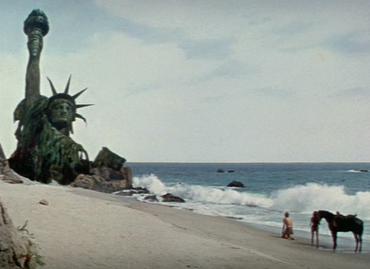
"I'm very sad to say that for very many people in the world, the symbol of America today is not the Statue of Liberty, which is one of the first things I saw as a child when approaching the shores of the U.S, but (the U.S. detention facility at) Guantanamo (Cuba). That legacy will take time to undo." Zbigniew Brzezinski - VOA
David Seaton's News Links
This is the first time since the pre-Voltaire/Rousseau days that the world is without any utopia at all... Let that sink in for a moment. What an immense and incalculable loss!

The Soviet Union stopped being a model or path to utopia, long before the Berlin wall came down. Most observers date its fall from grace back to 1956, a year that marked Khruschev's exposure of Stalin's crimes against humanity and the Soviet crushing of the Hungarian revolution. Certainly by the "Prague Spring" of 1968 the Soviet Union had ceased to be any one's idea of a desirable future. Now it is America's turn to let humanity down.

For better or worse, what distinguishes the USA from such dull, but user friendly countries like Canada and Australia, is its explosive mixture of the puritan ethic with the French ideas of the enlightenment. You could make an allegorical monument to the intellectual foundation of the United States of America by erecting a huge sculptural group with John Calvin embracing Jean Jacques Rousseau over the cadaver of an American Indian, with a prostrate African slave embracing their feet... on a ground littered with tools.

If you amputate
this intellectual legacy and stomp upon it as heavily as the Bush administration has done, you are committing a gross cultural crime and depriving humanity, including the Chinese and the Indians, of something that belongs to all of us... Just like Michelangelo's Pietá, Hiroshige's wood cuts or Bach's fugues... or clean air.

Having a prison which violates every norm of international law and every ancient tradition of English common law, precisely on a piece of land, Guantánamo, stolen from Cuba and then lecturing the Cubans as Bush has done on, I quote, "the importance for Cuba to be a free society, a society that respects human rights and human dignity, a society that honors the rule of law." is like taking a hammer and breaking off the marble noses of Jesus and the Virigin of La Pietá.

The problem with the USA at this moment is that, because of its power, it is still the belly button of the world... and everybody is staring at it, but America just can't seem to produce, can't cut the mustard... This decadence has worldwide repercussions, because
Europe seems completely neutered intellectually by now and the rising powers like India and China don't seem to have any ideological content or any project for the future other than raising the levels of carbon dioxide.

I find it a clear symptom of this emptiness, how little music, how few good films, books, paintings and essays are coming out of either Europe or the States at this point.... Compare the situation today to the fertility of 1960s and 70s.

There is a famous bird, whose name I have forgotten, that flies in ever decreasing, concentric circles, till at last it disappears up its own rectum... Is this the "black hole" we are facing? DS

Thursday, May 03, 2007

"Us" versus "Them"

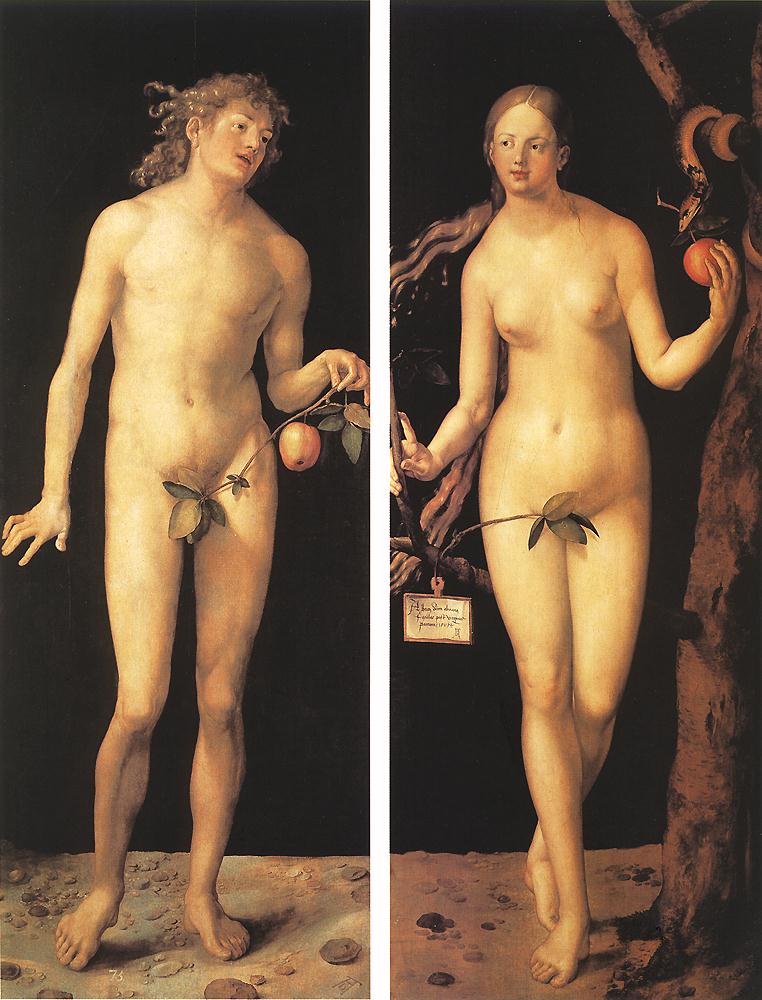
Mom and Pop - Albrecht Durer - 1507
David Seaton's News Links
A very wise man once said that there are only two kinds of people in the world: those that think that there are only two kinds of people in the world and those who don't.

The other day I posted an article by Gabriel Rachman from the Financial Times, dissecting neocon-über-guru Bernard Lewis's view of Islam.

Rachman said something very basic that I'd like to underline.
The tell-tale danger sign in Mr Lewis's argument is that he constantly refers to Muslims in Europe as "they" - an undifferentiated mass. (...) Once you start thinking of the more than 15m Muslims living in Europe as a single, hostile bloc, you close the door to understanding and open the door to racism.
This readiness to quickly divide the world into "us" and "them": this need to stimulate tribalism, is at the heart of right wing populism and the only difference between right wing populism and fascism is the degree of organized violence that they finally produce.

If you observe humanity closely it is hard to apply the word "them" to any mass of it. Perhaps only creatures from outer space could really be "them"... Humanity is "us". This is not to underestimate or obviate the cultural differences that exist. They exist because our species is unique in having memory, unique in its ability to accumulate
and tell stories about itself. And also unique in living under the shadow of death, which other species ignore until it is upon them. Geography, climate, memory, language and death are the origins of culture.

Under our important cultural differences we have a species that that is defined by living in society with its fellows. Different cultures facing different geography and climate have devised different strategies to make that possible, but all cultures have been faced with the same problem of integrating large groups of "us" into something manageable and productive enough to survive.

Most if not all of these strategies for social survival place value on such concepts as truth and peace and what the Chinese philosopher Mencius called, "human heartedness" or "innate goodness". His famous example (hat to Wikipedia) is called "The Four Beginnings" (benevolence, righteousness, respect and the capacity to distinguish right from wrong).. To show innate goodness, Mencius used the example of a child falling down a well. Witnesses of this event immediately feel:
  • Alarm and distress, not to gain friendship with the child's parents, nor to seek the praise of their neighbors and friends, nor because they dislike the reputation [of lack of humanity if they did not rescue the child]...
  • The feeling of commiseration is the beginning of humanity; the feeling of shame and dislike is the beginning of righteousness; the feeling of deference and compliance is the beginning of propriety; and the feeling of right and wrong is the beginning of wisdom.
  • Men have these Four Beginnings just as they have their four limbs. Having these Four Beginnings, but saying that they cannot develop them is to destroy themselves.
These values make it possible for human beings to live together, to eat, to breed and to buy and to sell... and to realize their humanity.

Mencius's Four Beginnings could probably be a practical starting point for a constructive dialog, leading to peaceful coexistence, between any groups of human beings who have ever inhabited this planet. The challenge today with globalization and the phenomenon of mass immigration is to simultaneously respect that climate, geography, memory and death have made us all "different" while our common humanness has made us all "the same". DS

Wednesday, May 02, 2007

What you can buy with $500 billion

"The Raft of the Medusa" - Théodore Géricault

David Seaton's News Links
If anything good at all comes out of this war it will be people really beginning to ask the important political questions. Who are we? Where are we going? Is there any alternative to what we are doing? First asking themselves, then asking the system. DS

Price tag for war in Iraq on track to top $500 billion - McClatchy Abstract: Congressional Democrats and Bush agree that they cannot let their dispute over a withdrawal timetable block the latest cash installment for Iraq. Once that political fight is resolved, Congress can focus on the president's request for $116 billion more for the war in the fiscal year that starts on Sept. 1. The combined spending requests would push the total for Iraq to $564 billion, according to the nonpartisan Congressional Research Service. What could that kind of money buy? A college education - tuition, fees, room and board at a public university - for about half of the nation's 17 million high-school-age teenagers. Pre-school for every 3- and 4-year-old in the country for the next eight years. A year's stay in an assisted-living facility for about half of the 35 million Americans age 65 or older. Not surprisingly, opinions about the cost of the war track opinions about the war itself. "If it's really vital, then whatever it costs, we should pay it. If it isn't, whatever we pay is too much," said Robert Hormats, author of "The Price of Liberty," a newly published book that examines the financing of America's wars. Before the war, administration officials confidently predicted that the conflict would cost about $50 billion. White House economic adviser Lawrence Lindsey lost his job after he offered a $200 billion estimate - a prediction that drew scorn from his administration colleagues. "They had no concept of what they were getting into in terms of lives or cost," said Winslow Wheeler, who monitors defense spending for the Center for Defense Information, a nonpartisan research institute. READ IT ALL

Tuesday, May 01, 2007

Bernard Lewis: the world view behind disaster

Bernard Lewis

David Seaton's News Links
The Turkish crisis is very complex and reveals as much or more about western contradictions in dealing with Islam as it does the Turkish or Muslim problems in dealing with the west.

Gideon Rachman of the Financial Times has written a very fine article about the present crisis which I've snipped for News Links. The part of Rachman's piece I most wanted to draw your attention to is Rachman's dissection of Bernard Lewis's view of Islam.

Possibly only Leo Strauss has had anywhere near Lewis's influence on the Neo-cons and probably Lewis has had a much more direct effect on the US Middle East policy disaster and the world view that drives it. This is the thinking behind where we find ourselves today. Understanding Lewis is essential and Rachman has "undressed" him in a half dozen lines. Brilliant. DS

Gideon Rachman: The Turkish paradox and the prophets of Eurabia - Financial Times
Abstract: Some of the same American conservatives who have argued passionately for Turkish membership of the EU are also now openly concerned that the character of western Europe is being changed by Muslim immigration. Europe, they shriek, is turning into "Eurabia". Yet one consequence of Turkish membership of the EU would be to grant 70m-plus Turks the right to emigrate anywhere they want in the EU. If you wanted radically to alter the demography of western Europe, admitting Turkey to the EU would be the best way of going about it. One of the world's leading experts on Turkish history is Bernard Lewis, a 90-year-old historian from Princeton University. But Mr Lewis is also a darling of the American neo-conservatives and perhaps the most eminent convert to the "Eurabia" thesis. Last month at the annual dinner of the American Enterprise Institute, an influential Washington think-tank, Mr Lewis accepted an award and gave a long, learned and rambling speech about the history of the "Muslim attack on Christendom". This, he argued, has gone through three phases and "the third wave of attack on Europe has clearly begun . . . This time it is taking different forms and two in particular: terror and migration." This is an extraordinary and dangerous argument. Mr Lewis was equating Osama bin Laden and Muslim immigrants. They are all part of the same attack on Europe. This seems a little rough on many of my neighbours in London. My local postman, hairdresser and convenience store owner are all Muslims. So are the schoolgirls who play football at my children's school - incongruously clad in headscarves and shorts. As far as I can tell, none of these people is intent on destroying western civilisation from within. The tell-tale danger sign in Mr Lewis's argument is that he constantly refers to Muslims in Europe as "they" - an undifferentiated mass. Near the end of his speech, he mused: "Is it third time lucky? It is not impossible. They have certain clear advantages. They have fervour and conviction, which in most western countries are either weak or lacking . . . " The problem with Mr Lewis's argument is that it fails to distinguish between a people and an ideology. Once you start thinking of the more than 15m Muslims living in Europe as a single, hostile bloc, you close the door to understanding and open the door to racism. Radical Islamism is a problem. Ordinary Muslims are not. READ IT ALL

A little thought for May Day

David Seaton's News Links
When George W. Bush talks about the problem of human rights in Cuba, perhaps he should begin with that part of Cuba that he controls, Guantanamo. Very possibly Fidel Castro's Cuban prisoners have more legal guarantees than George W. Bush's Cuban prisoners do. DS

Gitmo: still a 'legal black hole - Editorial - Los Angeles Times
Abstract: The Bush administration has a shameful record when it comes to detainees at Guantanamo Bay Naval Base who assert that they are wrongly being held as "enemy combatants." At first, the administration argued that detainees had no right to consult a lawyer, period. Later, it had to disavow a mean-spirited attack by a Pentagon official on lawyers who had dared to represent "terrorists." Now the administration is rightly being criticized for asking a federal court to scale back the detainees' access to their lawyers (only three visits once an attorney has been retained) and to place restrictions on attorney-client mail. The rationale for the crackdown is that lawyers have encouraged a hunger strike and other "threats to security" by informing detainees about events in the outside world, including the war in Lebanon and prisoner abuse at Abu Ghraib. READ IT ALL

DC Madam: putting the fox to watch the chickens

Mexican Prostitutes - Henri Cartier-Bresson
David Seaton's News Links
A call girl scandal was all that was missing in Bush's Washington. Most Europeans, (except for the British), won't know what all the fuss is about, as wherever men with money and power abound, prostitution flourishes and has flourished since money and power exist. To eliminate prostitution, first you would have to eliminate money and power... and men too, probably.

As such this is not very damaging to Bush, although it may lead to a lot of embarrassing revelations of all kinds that cross and recross party lines. This is because prostitution is never "political party-specific" and as one sharp Washington observer said, "nothing is more bi-partisan than a sex scandal".

However, what does give an unmistakable Bushie odor to the thing so far, is that the first victim of the scandal is the deputy secretary of state who ran Bush's program to crack down of prostitution all over the world and also was the coordinator of America's global Aids program which discourages the use of condoms and advocates sexual abstinence.... Now that does fit in with Haliburton's Iraq and with Wolfie and Shaha and with Katrina and with a host of other, similar situations, all defined by what we have come to know as the Bush signature or trademark, which is that: The fox has been set to watch the chickens. DS

'DC Madam' vows to name clients - BBC News
Abstract: A woman accused of running a high-class prostitution ring in Washington DC has said she plans to call her prominent customers to testify at her trial. Deborah Palfrey says among them will be Randall Tobias, who resigned as deputy secretary of state on Friday, shortly after confirming he had been a client.(...) Mr Tobias resigned last week shortly after US media told him Ms Palfrey had revealed he had made calls to her business. He told ABC News that he "had some gals come over to the condo for a massage", but denied having sex with any of them. Before he stepped down, Mr Tobias ran the Bush administration's programme to crack down on prostitution worldwide. He was also criticised in his role as US Global Aids co-ordinator when he advocated partner fidelity and abstinence, instead of condoms, to help limit the spread of the HIV virus. READ IT ALL

Monday, April 30, 2007

Marvelous Blog Discovery! Futility Closet.

David Seaton's News Links
By pure accident I have discovered this marvelously entertaining blog called, "Futility Closet". It is a must read if ever there was one. Certainly it provides welcome relief from the obscene slaughter and neo-fascist scum that clutter the news.

Futility Closet is a sort of "Ripley's Believe it or Not" for people that can read without moving their lips. Here is a little sample that goes with the photo at the top.
"Oh no! Not another fucking elf!"

Oxford English professor Hugo Dyson, interrupting J.R.R. Tolkien during an early reading from The Lord of the Rings
Enjoy! DS

Iraq: a crime unpunished, a death star born

"There is no alternative to getting out. Simply getting out as rapidly and efficiently as possible" - William Pfaff
David Seaton's News Links
I'm having trouble working up any enthusiasm for the "electable" Democrats running for president... Not one of them talks frankly about the criminal responsibility of destroying Iraq and setting the Middle East ablaze. Is everything supposed to go on as if nothing had happened? Is this to be treated as simply well intentioned incompetence and the page turned?

In fact, self-examination and accountability are essential if the United States is not to become a political black hole or death star. Germany had the great good fortune to be denazified by foreigners, but the USA is going to have to do it all by itself. DS

William Pfaff: Ending One War, Launching Another
Abstract: President George W. Bush’s reinforcement of American forces, announced at the start of the year in the guise of a final “surge” to “victory,” has merely displaced the sectarian attacks from one place to another, while doing nothing to solve the crisis that is destroying the Iraqi nation: inspiring sectarian murder on a huge scale, and sending its elites -- and others – into exile, or more likely, eventually, to refugee camps. If this goes on, when we Americans leave, there will be no Iraq, in any meaningful sense. We will have murdered the Iraqi nation, as nation (-- “to save it”). There is no alternative to getting out. Simply getting out as rapidly and efficiently as possible, with as much political help (or otherwise) as can be found from other governments in the region, who have an interest in containing the crisis. But getting out. No bases or troops left in Iraq. No new bases nearby. Hands off Iraq’s oil. Is that possible? Personally, I doubt it. It goes entirely against the interventionist mind-set and globalist strategy convictions that have dominated Washington for the last four decades. But without this, the region is left ablaze. Even the congressional opposition, which wants to get out of this war, proposes a beginning in October, a finish a year or so on, debating departure as if a perpetuated American presence of some kind is necessary to whatever solution may actually exist. If we leave now, or leave completely, there will be chaos! There is chaos now. The crucial factor in precipitating this terrible situation was the American invasion, and the principal factor in its continuation is the continued American presence in that country. When we leave, what follows will be the Iraqis’ responsibility. For any solution to be possible the United States must leave. For any solution to be possible the United States must leave. This certainly may be followed by intensified violence in the immediate term, but no long-term resolution of the civil struggle is imaginable with American forces still there. They haplessly stand by, witnesses to the conflagration George Bush and his colleagues have loosed. Democrats as well as Republicans in Congress cling to the belief that the American intervention was well-intentioned, and therefore American good intentions could still be a positive force in the country. READ IT ALL

Sunday, April 29, 2007

Sunday Treat - Laurel and Hardy


David Seaton's News Links
Pure charm.... Enjoy! DS
PS. Scroll down for the heavy stuff