Saturday, March 31, 2007

United Fruit by any other name...


David Seaton's News Links
"Why do they hate us?" Americans ask. Well, in Latin America its this cheerful-killer, "oh what fun" thing; a huge toothy grin mixed with a murdering greed which stops at nothing... kind of like if Genghis Khan could tap dance... for a start.

Amy Goodman's "Chiquita Banana" story here below, is a rather perfect example of this phenomenon. "Chiquita" is the cute new name of United Fruit, which really was in need of some serious re-branding. In United-Chiquita's case it's as if Count Dracula had himself re-branded as "Vladdy-Daddy". Still out for blood, but
cute. DS

Amy Goodman: Chiquita slips money to terrorists - Seattle Post-Intelligencer
Abstract: What do Osama bin Laden and Chiquita bananas have in common? Both have used their millions to finance terrorism. The Justice Department has just fined Chiquita Brands International $25 million for funding a terrorist organization -- for years. Chiquita also must cooperate fully with ongoing investigations into its payments to the ultra-right-wing Colombian paramilitary group Autodefensas Unidas de Colombia. Chiquita made almost monthly payments to the AUC from 1997 to 2004, totaling at least $1.7 million. The AUC is a brutal paramilitary umbrella group, with an estimated 15,000 to 20,000 armed troops. It was named a terrorist organization by the U.S. on Sept. 10, 2001. Among its standard tactics are kidnapping, torture, disappearance, rape, murder, beatings, extortion and drug trafficking. Chiquita claims it had to make the payments under threat from the AUC to protect its employees and property. Chiquita's outside lawyers implored them to stop the illegal payments, to no avail. The payments were made by check through Chiquita's Colombian subsidiary, Banadex. When Chiquita executives figured out how illegal the payments were, they started delivering them in cash. Chiquita sold Banadex in June 2004 when the heat got too intense.(...) Chiquita has had a long history of criminal behavior. It was the subject of an extraordinary exposé in its hometown paper, The Cincinnati Enquirer, in 1998. The paper found that Chiquita exposed entire communities to dangerous U.S.-banned pesticides, forced the eviction of an entire Honduran village at gunpoint and its subsequent bulldozing, suppressed unions, unwittingly allowed the use of Chiquita transport ships to move cocaine internationally, and paid a fortune to U.S. politicians to influence trade policy. The lead reporter, Mike Gallagher, illegally accessed more than 2,000 Chiquita voice mails. The voice mails backed up his story but his methods got him fired. The Enquirer issued a front-page apology and paid Chiquita a reported $14 million. The voice-mail scandal rocked the Enquirer, burying the important exposé. Chiquita was formerly called the United Fruit Co., which with the help of its former lawyer, Secretary of State John Foster Dulles, and his brother Allen Dulles' Central Intelligence Agency overthrew the democratically elected president of Guatemala, Jacobo Arbenz Guzman, in 1954. And you can go back further. Colombian Nobel Laureate Gabriel Garcia Márquez wrote in his classic "One Hundred Years of Solitude" about the 1928 Santa Marta massacre of striking United Fruit banana workers: "When the banana company arrived ... the old policemen were replaced by hired assassins." While the U.S. is seeking extradition of Colombia-based Chiquita executives, the administration of President Alvaro Uribe in Colombia, with its own officials now linked to the right-wing paramilitaries, has countered that Colombia would seek the extradition of U.S.-based Chiquita executives. Colombian prosecutors are also seeking information in Chiquita's role in smuggling 3,000 AK-47 rifles and millions of rounds of ammunition to paramilitaries in November 2001. READ IT ALL

Labels: , , ,

Sunday cartoons for News Linkers

David Seaton's News Links
News Links (me mostly) takes Sunday off and to entertain my visitors I show cartoons. This Sunday's cartoon is an all time favorite, the RoadRunner! Any resemblance between Wiley Coyote's endless chase of the RoadRunner and George W. Bush's adventures in Iraq is purely coincidental. Have a peaceful Sunday. DS

Labels: , ,

America the weird

David Seaton's News Links
I don't think most Americans fully appreciate how weird we look to other people around the world nowadays.

The United States has always been picturesque and different for others, but I think nowadays it just looks weird and perhaps sinister.

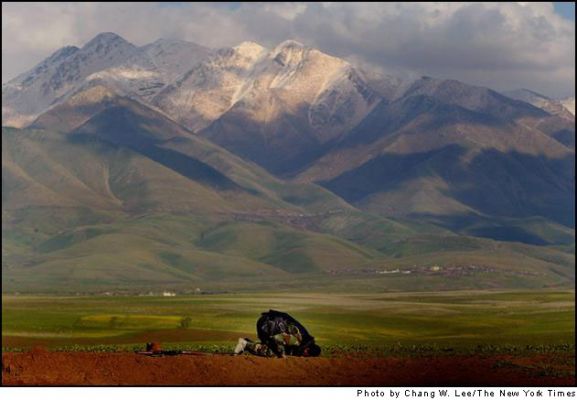
I'm 62 years old, a middle westerner, born and bred. I grew up on Chicago's North Shore and I attended both public and private grade schools there in the 1950s. Believe me, my school days had more in common with the madrassa in the picture than with the Louisiana school described in the AP story below. And I think the schools most parents send their children to around the world have more in common with the madrassa in the photo than the one in the article or to Columbine etc, etc.

Are the children in the AP article going to grow up and become the voters, the citizens and the soldiers of the only superpower... with their fingers on the atomic trigger? I don't the world is ready for that, and I don't think any amount of money spent on public diplomacy will be able to sell it. DS


Kids allegedly had sex in classroom during assembly about killing - Associated Press

Abstract: Two fifth-graders had sex on a classroom floor while two others fondled each other in the classroom, according to a teacher at Spearsville High School.(...) First-year teacher Michael Walker, who teaches fifth- through eighth-grade English, said three students were either expelled or sent to an alternative school and two others got detention. Students at the kindergarten through 12th grade school are unruly, disrespectful and rarely disciplined, Walker said. "They cuss at the teachers and throw things at them, and nothing is done," Walker said. "There was even one student who grabbed a teacher in the butt and nothing was done. The students run the school." Walker said teachers learned Wednesday about the incident, which allegedly occurred during an assembly Tuesday to talk about a 15-year-old student accused of stabbing another student to death over the weekend. The assembly was for sixth- through 12th-grade students. Fifth-grade students were not told about it, he said. But one class of about 15 fifth-grade students that routinely moves from a portable building to a main building classroom during the second hour of the school day was unattended on Tuesday. "The teacher thought it was a normal day and sent the kids to second hour," he said. "She didn't know the teacher that would normally be in there was still at the assembly." The students were alone for about 30 minutes.(...) School officials notified the Union Parish Sheriff's Office on Thursday morning and detectives questioned students. "This is one incident and everyone is making a big deal out of it," Futch said. "I never had a teacher complain to me, but I have heard them complain to each other." Sheriff Bob Buckley said charges are likely. "I have zero tolerance for drugs, violence or anything like that that goes on in school," he said. READ IT ALL

Labels: ,

Python: the killer rabbit on Iran

David Seaton's News Links
Terry Jones of Monty Python shows that there is life in the "killer rabbit" yet.

Britain and the United States have lost any "moral authority" that they might have had on the subject of human rights, which in a sense is as if the French had lost all their authority on food or the Germans on engineering. "You don't know what you've got till it's gone." DS

Terry Jones: Call that humiliation? - Guardian
Abstract: I share the outrage expressed in the British press over the treatment of our naval personnel accused by Iran of illegally entering their waters. It is a disgrace. We would never dream of treating captives like this - allowing them to smoke cigarettes, for example, even though it has been proven that smoking kills. And as for compelling poor servicewoman Faye Turney to wear a black headscarf, and then allowing the picture to be posted around the world - have the Iranians no concept of civilised behaviour? For God's sake, what's wrong with putting a bag over her head? That's what we do with the Muslims we capture: we put bags over their heads, so it's hard to breathe. Then it's perfectly acceptable to take photographs of them and circulate them to the press because the captives can't be recognised and humiliated in the way these unfortunate British service people are. It is also unacceptable that these British captives should be made to talk on television and say things that they may regret later. If the Iranians put duct tape over their mouths, like we do to our captives, they wouldn't be able to talk at all. Of course they'd probably find it even harder to breathe - especially with a bag over their head - but at least they wouldn't be humiliated.(...) And this brings me to my final point. It is clear from her TV appearance that servicewoman Turney has been put under pressure. The newspapers have persuaded behavioural psychologists to examine the footage and they all conclude that she is "unhappy and stressed". What is so appalling is the underhand way in which the Iranians have got her "unhappy and stressed". She shows no signs of electrocution or burn marks and there are no signs of beating on her face. This is unacceptable. If captives are to be put under duress, such as by forcing them into compromising sexual positions, or having electric shocks to their genitals, they should be photographed, as they were in Abu Ghraib. The photographs should then be circulated around the civilised world so that everyone can see exactly what has been going on. READ IT ALL

Labels: , , , ,

Friday, March 30, 2007

The essential Iran

"Forty-eight percent of Germans think the United States is more dangerous than Iran, a new survey shows, with only 31 percent believing the opposite.(...)(in) a Forsa opinion poll commissioned by Stern magazine. Young Germans in particular -- 57 percent of 18-to-29-year-olds, to be precise -- said they considered the United States more dangerous than the religious regime in Iran."
Der Spiegel
David Seaton's News Links
I include below an editorial from the Washington Post, which is typical of the speculation floating around the capture of the British sailors by Iran. Lots of speculation about possible divisions in Iran's leadership; speculations about the success or lack of it of the UN sanctions. Is it really all that complicated? I don't think so.

The United States is making a huge effort to isolate, pressure and intimidate Iran, this has meant an enormous calling in and of extending I.O.U.s. Most countries have been hauled kicking and screaming into this. Despite this full court press, as we can see in the quote from Der Spiegel above, world public opinion is not behind any conflict with Iran. (A similar poll in Spain would show far worse numbers).

Here is another example: Timothy Garton Ash, published an article ln The Guardian yesterday, (reprinted in the LA Times) hysterically demanding that the European Union stand shoulder to shoulder with Britain in this crisis and if they didn't, Garton-Ash demanded, "What is the EU for?". It was interesting to skim through the reader's comments in The Guardian and I suggest you follow the link and read them. Overwhelmingly the readers were opposed to Garton-Ash's arguments. "Boo, fucking, hoo!" one reader wrote in. Another, signed in as "Weeper", if less colorful, was more explicit and neatly summed up what the majority of readers opined.
"Very convenient to be "European" when it suits us while sleeping in US's bed most of the time. Why is Britain now provoking Iran on behalf of the US, hasn't it enough trouble in Afghanistan and Iraq? And the scandal of the prisoners being shown on TV! A lot worse than 650,00 deaths (probably nearer 1 million now, not counting the 1st "Gulf War" and 10 years of sanctions) Abu Ghraib, Fallujah, cluster bombs, DU, and beating Iraqi civilians as shown on UK TV and for which no one was found guilty, don't you think. I hope that the Brits learn such a lesson from Iraq, Afghanistan, and now Iran, that they never again set out on another mad imperial adventure on behalf of US/Israel." - "Weeper", commenting on T. Garton - Ash in The Guardian
Bottom line: There is practically no public opinion siding with the USA, what support there is shallow and meant more than anything else to keep up appearances, while hoping that, "something may turn up". The Arab League meeting in Riyadh didn't even mention the hostages!

By simply taking 15 British hostages (balance that cost against the US maintaining two carrier battle groups in the zone) Iran bloodlessly exposes how shallow that support is and how little the USA controls the situation. Meanwhile,the price of oil was climbing toward $70.

Also, any military threat against Iran's atomic installations would have to take into account how simple it would be for Iran to share out the hostages among those installations. That among other things, is what hostages are for. It is hard to imagine, given how thin the support for armed action is, both in the world at large... and in the USA itself, that lame ducks Bush and Blair could try anything more than a "surgical strike" if that. Iran would survive it and its victory in terms of prestige in the third world would be immense.

I don't see anything but lose/lose here for Britain/USA/Israel here. The party that began when H.M. Abdul Aziz ibn Saud of Saudi Arabia met Franklyn Delano Roosevelt on board the U.S.S. Quincy in the Great Bitter Lake of Egypt on February 14th, 1945 is drawing to a close. DS


The Results of Diplomacy - Editorial - Washington Post
(...) Administration officials were encouraged by signs of dissension in the Iranian leadership after the first of two unanimous sanctions resolutions passed the Security Council in late December. Before the second resolution was introduced, there were talks between Iranian and European officials about ways to renew negotiations. Yet the Iranian work on uranium enrichment has continued; there are signs the regime is racing to complete an industrial installation with thousands of centrifuges that it can present to the world as an accomplished fact.

Now Iran is parading captured British sailors before cameras and using their purported confessions of trespassing in Iranian waters as propaganda in a way that suggests an eagerness to escalate rather than defuse confrontation with the West. Yesterday, Britain offered evidence that its service members were captured in international waters and rightly called their treatment "completely unacceptable." Though Iran's foreign minister said a female sailor would be released "very soon," the television broadcast suggested the prisoners had been coerced.

It's widely believed that power in Iran is divided among competing factions, and it could be that hard-liners are seeking to preempt any steps by the regime to comply with the Security Council. It's impossible to predict what might come out of Tehran before the next U.N. deadline in late May. Yet what has happened so far is sobering.

Bush administration officials have been congratulating themselves on the relative speed and deftness with which the latest sanctions resolution was pushed through the Security Council. They are right, in a way: The diplomatic campaign against Iran has been pretty successful by the usual diplomatic measures. Not only has the United States worked relatively smoothly with European partners with which it differed bitterly over Iraq, but it has also been effective lately in winning support from Russia, China and nonaligned states such as South Africa.

Critics who lambasted the administration's unilateral campaign against an "axis of evil" a few years ago ought to be applauding the return to conventional diplomacy. We, too, think it's worth pursuing, especially when combined with steps short of a military attack to push back against Iranian aggression in the region. Still, two years after President Bush embraced the effort, it has to be noted: The diplomatic strategy so far has been no more successful than the previous "regime change" policy in stopping Iran's drive for a nuclear weapon.

Labels: , ,

Thursday, March 29, 2007

The essential Iraq

David Seaton's News Links
The important things to keep in mind while following the political battle over Iraq in Washington is:
  • The way the United States entered Iraq stinks
  • The way the United States has acted in Iraq stinks
  • The way the United States leaves Iraq, for sure, will... stink too. We've been through this before... The US always deserts its allies and leaves them holding the bag and then worries about its "syndrome". And Hollywood makes a lot of films about how we actually won... And people ask, "what would Jesus do?" as if Jesus would have ever gotten himself into such a mess.
The United States has destroyed its "brand" in Iraq. Nobody can take Americans seriously anymore except as shoppers.

What does that mean?


Imagine if Coca Cola had mysteriously poisoned several thousand people. "Great", you say, they go out of business.

Not so fast. What about all the jobs and the families that depend on them... Mortgages, health plans, pensions, children's education, etc, etc. As we saw with the Soviet Union, (and Enron) when a great structure collapses it is no joke. What would Coca Cola have to do to regain its lost prestige?

First, it would have to discover how the hypothetical poisoning happened, who and what was responsible. If there was criminal negligence or malice aforethought... people would have to go to jail, right up to the chairman and if the chairman's policies were responsible, especially the chairman. And then they would have to pay heavy reparations to all the victims and their families. Maybe then, only just maybe, people all over the world could hear again about how "things go better" or "the real thing" or about 'pauses that refresh' with out vomiting or running for the exits.

That is more or less where things are now. The world system ("really-existing-capitalism") depends to a great extent on America's credibility... even if we aren't in agreement with the system; like it or not we are all stakeholders and if it collapses we will suffer...

That credibility will not be restored by further martyrizing of the people of Iraq... There is no credibility to be gained in Iraq now if there ever was any to begin with. Credibility can only be restored by the USA, in the USA itself. How?

By holding public hearings, Nuremberg-type "show trials" if you will, publicly investigating how this war happened, punishing the offenders, especially Bush and Cheney... (Impeachment isn't good enough). And finally formal apologies to the people of Iraq and payments to the victims (not contracts for Halliburton to "reconstruct"). Cash they can spend any way they want, visas, scholarships, green cards, you name it. People everywhere would respect that and if they didn't respect it they could kiss our ass, because it would be the right thing to do. At least we could respect ourselves and that's a good place to start.


Is this possible? Well, America is a place where impossible things happen all the time and have been happening for hundreds of years... So, why not? The capacity to pleasantly surprise itself and others may be the only national characteristic that can save the USA now. DS

Labels: , , , , ,

Wednesday, March 28, 2007

Bloomberg's garden of verses

"Without much thought, you'd say people wouldn't want to lose their home so they'd first make the house payment,'' Risi said. ``But with a lot of the borrowers struggling to make their house payments, to get any cash, they have to get to work. And that's what they need their car for.''
David Seaton's News Links
Here, in Bloomberg's cold facts and figures is a little poem of suffering. DS


Subprime Defaults May Spread to Auto Bonds, S&P Says - Bloomberg Abstract: Bonds backed by automobile loans may be hurt by rising subprime mortgage defaults as people with poor credit struggle with their household debt, according to Standard & Poor's. Capital One Financial Corp., Wachovia Corp., Wells Fargo & Co., and other lenders have lent more funds to people with bad credit scores in the past few years to sustain growth, S&P said today in a report by analysts led by Mark Risi. The loans are also for longer terms, increasing the probability of default, the analysts said. About 68 percent of 2006 subprime auto loans were due in five years or more, Risi said. ``There could be some fallout from subprime in auto loans,'' Risi said in an interview. ``We don't have much data yet. We're still in collection mode. It's probably going to be hard to say for a while.'' The worst housing slump in 10 years is pushing down home prices, hampering owners from refinancing. Borrowers with weak or incomplete credit are also vulnerable to the resetting of mortgages at more than the teaser rates they initially paid.(...) Subprime auto borrowers who are also homeowners may have ``exposure to affordability products and the related payment shock,'' said Risi. ``But the good news is, initial data indicates that the majority of subprime auto borrowers are renters, and are therefore not subject to the vagaries of the mortgage market.'' Subprime auto bonds are showing a wide disparity in performance depending on the issuer, the analyst said. With some subprime issuers moving further down the credit spectrum and some resisting that trend, ``we are seeing some interesting results from this divergence,'' Risi said. Bondholders cannot tell which subprime auto borrowers are also homeowners, Risi said. Cumulative losses over 10 months for DaimlerChrysler AG's most recent loans is at 0.58 percent, its highest since at least 2000, S&P said. Securities originated by General Motors Acceptance Corp., that automaker's former finance arm, are showing losses of 0.18 percent, the lowest rate since 0.15 percent in 2002, according to S&P. Ford Motor Credit Co.'s loss rate is 0.25 percent, the same as in 2005. Given a choice between making a car payment or paying the mortgage, consumers react in different ways, Risi said. ``Without much thought, you'd say people wouldn't want to lose their home so they'd first make the house payment,'' Risi said. ``But with a lot of the borrowers struggling to make their house payments, to get any cash, they have to get to work. And that's what they need their car for.'' READ IT ALL

Labels: , ,

Senate vote... a merry melody?

David Seaton's News Links
The other day I had to take our lovely Persian cat of fourteen years to the vet to be put down. Literally to put her "out of her misery" from kidney failure. It was something dreadful, but it had to be done.

I only bring this personal note up because that is what the Senate is doing with its vote on the war in Iraq.

Now, I am not not for a minute comparing the obscenely criminal war of Iraq with the beautiful creature I helped to die, but rather America's image of itself as a great and generous country filled with noble ideals... because that is what the Senate is putting out of its misery. The misery of Iraq will probably continue for many years to come. DS

Senate Supports a Pullout Date in Iraq War Bill - New York Times
Abstract: The Senate went on record for the first time on Tuesday in favor of a withdrawal date from Iraq, with Democrats marshaling the votes they needed to deliver a forceful rebuke to President Bush’s war policy.(...) “When it comes to the war in Iraq, the American people have spoken, the House and Senate have spoken,” said Senator Richard J. Durbin of Illinois, the No. 2 Democrat in the Senate. “Now, we hope the president is listening.”(...) The outcome of the Senate vote took both parties by surprise. Republicans were stung by the defection of Senator Chuck Hagel of Nebraska, who has not supported a timetable for withdrawal before although he is his party’s most outspoken critic of the war in Congress. “There will not be a military solution to Iraq,” Mr. Hagel declared. “Iraq belongs to the 25 million Iraqis who live there. It doesn’t belong to the United States. Iraq is not a prize to be won or lost.” The Democrats also gained the vote of Senator Ben Nelson, a Nebraska Democrat, who voted against a withdrawal date just two weeks ago. “People want our troops home,” Mr. Nelson said.(...) “This bill should be named the Date Certain for Surrender Act,” said Senator John McCain, an Arizona Republican. “A second-year cadet at West Point could tell you that if you announce when the end will be, it’s a recipe for defeat.”(...) Senator Edward M. Kennedy, Democrat of Massachusetts and a war critic since the conflict began four years ago, said the combination of the House and Senate votes was momentous. He said it showed how far the Democratic Congress had come toward removing troops since the beginning of the year, adding that political and policy momentum was on their side. “Rather than continuing to defy the will of the American people and Congress by threatening to veto this legislation,” Mr. Kennedy said, “President Bush should put the Iraqis on notice.”(...) Three more Republicans who have expressed serious reservations about the course of the war — Senators Susan Collins of Maine, Norm Coleman of Minnesota and John W. Warner of Virginia — sided with their colleagues in trying to strip the timetable from the spending legislation. All three senators are facing tough re-election fights next year. Ms. Collins said she was more troubled by the requirement that the administration begin removing troops within 120 days of the legislation rather than the March 2008 deadline for having most of the military out. “I don’t think it is wise to have an abrupt withdrawal from Iraq,” said Ms. Collins, who said she was willing to wait until August to see if the continuing troop increase improves conditions there. “This doesn’t mean I support an unending commitment of our troops in Iraq. I don’t.”(...) Mr. Warner, who has criticized the administration’s conduct of the war, said he remained committed to changing policy in Iraq, but not by imposing Congressional timetables on American troops. “It would be the bugle of retreat,” Mr. Warner said. “It would be echoed and repeated from every minaret through Iraq: the coalition forces have decided to take the first step backward. We cannot send that message. Not at this time.” READ IT ALL

Labels: , , ,

Tuesday, March 27, 2007

What is Iran up to?

Iranian Revolutionary Guards
David Seaton's News Links
The United States is making a great effort to intimidate Iran, militarily, economically and diplomatically. Demonstrations of Bush's "resolve" have taken place in the United Nations and also militarily, as the article I include from Debka indicates.

Obviously the Iranians, by the simple and cheap expedient of capturing 15 British sailors show the world they are not intimidated. Is this a miscalculation? Should they be intimidated?

What would happen if, as the Debka article suggests, the United States finally did attack Iran? Would that be a disaster for Iran? For some Iranians, yes of course it would, but for others it may in fact be the desired result.

If Iran were attacked it would in one stroke finish off any "reform" movement and permit the hardliners to purge all dissenters. In the patriotic fervor that would follow any attack on Iran by foreigners, the faction Ahmadinejad represents would be consolidated for a generation.

What about Iran's atomic program?

An attack might set the atomic program back by several years. Wouldn't that be a major defeat for Iran? ...What if Iran's atomic bomb was nothing more than the cheese in the mousetrap?

Perhaps what is really at stake is Iran's credibility among the world's Muslim masses. Never forget that the only Arab government with any democratic legitimacy is Hamas of Palestine. The moderate Arab governments that the US considers its allies are despised by most of their subjects because of their closeness to the "Zionists and Crusaders".

Any attack on Iran that didn't result in "regime change" would be seen as ineffectual. If Iran is finally attacked by the USA and Israel and is still standing after the attack, then, just as happened with Hezbollah last summer, they will be heroes to Muslims all over the world... and not just Muslims, their prestige in all the the third world would be immense. "Moderate" Arab governments that were seen to be collaborating with the USA in clear benefit to Israel might never live it down.

So perhaps, the United States is walking into yet another trap. DS


Huge US naval maneuvers off the coast of Iran - Debka

Abstract: More than 10,000 US personnel, two aircraft carriers and 100 warplanes begin biggest simulated demonstration of force in Gulf since the 2003 invasion of Iraq(...) military sources note that the exercise was launched March 27 the day before the Arab League summit opens in Riyadh, to demonstrate the Bush administration’s determination not to let Iran block the Strait of Hormuz to oil exports from the Persian Gulf, or continue its nuclear program. Taking part are the USS Stennis and USS Eisenhower strike forces. With Iran’s Revolutionary Guards one week into their marine maneuvers, military tensions in the Gulf region are skyrocketing and boosting world oil prices. Intelligence sources in Moscow claim to have information that a US strike against Iranian nuclear installations has been scheduled for April 6 at 0040 hours. The Russian sources say the US operation, code-named “Bite,” will last no more than 12 hours and consist of missile and aerial strikes devastating enough to set Tehran’s nuclear program several years back. The maneuver also occurs four days after 14 British seamen and one crew-woman were seized by an Iranian Revolutionary Guards warship, with no sign that their release is imminent. READ IT ALL

Labels: , , ,

Howard Zinn: just like ringing a bell

We who protest the war are not politicians. We are citizens. Whatever politicians may do, let them first feel the full force of citizens who speak for what is right, not for what is winnable, in a shamefully timorous Congress. Howard Zinn

David Seaton's News Links
There is nothing I can add to this wonderful article by the author of, "A People's History of the United States," except to praise its clarity... especially its moral clarity. We are living in a potentially great moment in history... if we choose to make it great. DS


Howard Zinn: Are We Politicians or Citizens? - The Progressive

By Howard Zinn

May 2007 Issue

As I write this, Congress is debating timetables for withdrawal from Iraq. In response to the Bush Administration’s “surge” of troops, and the Republicans’ refusal to limit our occupation, the Democrats are behaving with their customary timidity, proposing withdrawal, but only after a year, or eighteen months. And it seems they expect the anti-war movement to support them.

That was suggested in a recent message from MoveOn, which polled its members on the Democrat proposal, saying that progressives in Congress, “like many of us, don’t think the bill goes far enough, but see it as the first concrete step to ending the war.”

Ironically, and shockingly, the same bill appropriates $124 billion in more funds to carry the war. It’s as if, before the Civil War, abolitionists agreed to postpone the emancipation of the slaves for a year, or two years, or five years, and coupled this with an appropriation of funds to enforce the Fugitive Slave Act.

When a social movement adopts the compromises of legislators, it has forgotten its role, which is to push and challenge the politicians, not to fall in meekly behind them.

We who protest the war are not politicians. We are citizens. Whatever politicians may do, let them first feel the full force of citizens who speak for what is right, not for what is winnable, in a shamefully timorous Congress.

Timetables for withdrawal are not only morally reprehensible in the case of a brutal occupation (would you give a thug who invaded your house, smashed everything in sight, and terrorized your children a timetable for withdrawal?) but logically nonsensical. If our troops are preventing civil war, helping people, controlling violence, then why withdraw at all? If they are in fact doing the opposite—provoking civil war, hurting people, perpetuating violence—they should withdraw as quickly as ships and planes can carry them home.

It is four years since the United States invaded Iraq with a ferocious bombardment, with “shock and awe.” That is enough time to decide if the presence of our troops is making the lives of the Iraqis better or worse. The evidence is overwhelming. Since the invasion, hundreds of thousands of Iraqis have died, and, according to the UN High Commissioner for Refugees, about two million Iraqis have left the country, and an almost equal number are internal refugees, forced out of their homes, seeking shelter elsewhere in the country.

Yes, Saddam Hussein was a brutal tyrant. But his capture and death have not made the lives of Iraqis better, as the U.S. occupation has created chaos: no clean water, rising rates of hunger, 50 percent unemployment, shortages of food, electricity, and fuel, a rise in child malnutrition and infant deaths. Has the U.S. presence diminished violence? On the contrary, by January 2007 the number of insurgent attacks has increased dramatically to 180 a day.

The response of the Bush Administration to four years of failure is to send more troops. To add more troops matches the definition of fanaticism: If you find you’re going in the wrong direction, redouble your speed. It reminds me of the physician in Europe in the early nineteenth century who decided that bloodletting would cure pneumonia. When that didn’t work, he concluded that not enough blood had been let.

The Congressional Democrats’ proposal is to give more funds to the war, and to set a timetable that will let the bloodletting go on for another year or more. It is necessary, they say, to compromise, and some anti-war people have been willing to go along. However, it is one thing to compromise when you are immediately given part of what you are demanding, if that can then be a springboard for getting more in the future. That is the situation described in the recent movie The Wind That Shakes The Barley, in which the Irish rebels against British rule are given a compromise solution—to have part of Ireland free, as the Irish Free State. In the movie, Irish brother fights against brother over whether to accept this compromise. But at least the acceptance of that compromise, however short of justice, created the Irish Free State. The withdrawal timetable proposed by the Democrats gets nothing tangible, only a promise, and leaves the fulfillment of that promise in the hands of the Bush Administration.

There have been similar dilemmas for the labor movement. Indeed, it is a common occurrence that unions, fighting for a new contract, must decide if they will accept an offer that gives them only part of what they have demanded. It’s always a difficult decision, but in almost all cases, whether the compromise can be considered a victory or a defeat, the workers have been given some thing palpable, improving their condition to some degree. If they were offered only a promise of something in the future, while continuing an unbearable situation in the present, it would not be considered a compromise, but a sellout. A union leader who said, “Take this, it’s the best we can get” (which is what the MoveOn people are saying about the Democrats’ resolution) would be hooted off the platform.

I am reminded of the situation at the 1964 Democratic National Convention in Atlantic City, when the black delegation from Mississippi asked to be seated, to represent the 40 percent black population of that state. They were offered a “compromise”—two nonvoting seats. “This is the best we can get,” some black leaders said. The Mississippians, led by Fannie Lou Hamer and Bob Moses, turned it down, and thus held on to their fighting spirit, which later brought them what they had asked for. That mantra—“the best we can get”—is a recipe for corruption.

It is not easy, in the corrupting atmosphere of Washington, D.C., to hold on firmly to the truth, to resist the temptation of capitulation that presents itself as compromise. A few manage to do so. I think of Barbara Lee, the one person in the House of Representatives who, in the hysterical atmosphere of the days following 9/11, voted against the resolution authorizing Bush to invade Afghanistan. Today, she is one of the few who refuse to fund the Iraq War, insist on a prompt end to the war, reject the dishonesty of a false compromise.

Except for the rare few, like Barbara Lee, Maxine Waters, Lynn Woolsey, and John Lewis, our representatives are politicians, and will surrender their integrity, claiming to be “realistic.”

We are not politicians, but citizens. We have no office to hold on to, only our consciences, which insist on telling the truth. That, history suggests, is the most realistic thing a citizen can do.

Howard Zinn is the author, most recently, of “A Power Governments Cannot Suppress.”

Labels: , , , ,

Khalilzad: the right to impatience

David Seaton's News Links
Some of this stuff is really getting hard to stomach.

"The American people are getting impatient with the Iraqis."
The American people are getting impatient with the Iraqis? At last count some 650,000 Iraqis have died as a result of the unprovoked invasion of their country led by the United States of America... as a result of this 3236 Americans have also died.

The foundational statement of the USA, its Declaration of Independence reads, "We hold these truths to be self evident, that all men are created equal". Now I am not very good at math, but with the help of my little Chinese adding machine, I get these figures: 650,000 divided by 3,236 equals 200.87. So if all men are created equal the Iraqis have about 200 times more right to be impatient than the Americans do. Now if that seems absurd, then so does the Declaration of Independence and if that is absurd then the Americans are just a bunch of fat people out shopping. DS


From The Guardian: The outgoing US ambassador to Iraq yesterday delivered a blunt farewell message to Iraq's leadership, saying the Bush administration's patience was wearing thin and urging them to stem the bloodshed. (...) At a final news conference in Baghdad, the Afghan-born diplomat warned of the growing pressure in the US to commit to a timetable for a withdrawal of troops. "I know that we are an impatient people, and I constantly signal to the Iraqi leaders that our patience, or the patience of the American people, is running out," said Mr Khalilzad, who has been nominated by Presdient Bush to succeed John Bolton as America's envoy to the UN.

Labels: , ,

Monday, March 26, 2007

Global Warming... changing the subject?

David Seaton's News Links
Clarification: I am not a global warming skeptic. I think it obvious that our model of development and our idea of what constitutes "prosperity" and the "good life" are unsustainable even in the medium term. If every Chinese and Indian family get a car... I believe that global warming is by far the greatest threat to our planet etc, etc.. so I am not a revisionist or anything like it.

However, having said that, I am getting a little suspicious of the political use that global warming is being put to right now. Anything Tony Blair is pushing makes me suspicious to begin with, but what makes me really suspicious is Hollywood's enormous enthusiasm for the subject. "Hollywood" is the name for the most manipulative, phony, snake oil salesmen in the history of our planet. It occurs to me that they are pumping up global warming and climate change paranoia to change the subject from America's criminal responsibility in Iraq and make American "progressives", feel good about something so they don't get so depressed they stop buying tickets.

American "progressives" have absolutely nothing to feel good about. They are with out any doubt the greatest collection of useless wankers on earth... They should feel terrible. What has been done to Iraq and to the people of Iraq is, with the possible exception of the Cambodian genocide, the most criminal episode in international affairs since WWII. American progressives have shown themselves totally ineffectual in preventing it or stopping it and now Hollywood is going to give them a "cause" that will make them feel good! They should wake up with Iraq every morning, think about Iraq all day long, every day and dream about it at night, all night, every night (if they can sleep).

If I am a fan of Al Gore's it has nothing to do with global warming. I'm a fan because he should have been president and if he had been, he wouldn't have invaded Iraq and all these people wouldn't have been killed and tortured and maimed and robbed and the archaeological treasures of Mesopotamia would not have been looted and the priceless manuscripts burned. In short until those responsible for this massive catalog of war crimes are brought to justice we are simply a criminal nation and have absolutely nothing to feel good about... ever again. DS

Labels: , , , , ,

Terror... developing a taste

Un chien andalou - Luis Buñuel, Salvador Dalí (1929)
David Seaton's News Links
I live in Spain, a country which has been living under the threat of terrorism for the last three decades, with hundreds of victims of every category, generals, admirals, soldiers, policemen, housewives, politicians and children... and that was before the March 11th, 2004 Al Qaeda attack. That attack was the bloodiest terrorist attack in European history.

Now the people of Spain hate terrorism and by extension terrorists, but there is no culture of paranoia and after the Al Qaeda bombings there was no singling out of Muslims for discrimination, there were no incidents of attacks on mosques or on Muslims... This despite the fact that there are many Moroccans living and working in Spain and the sight of women and girls wearing the hijab is a common one on Spanish streets and in Spanish public schools.

Now this is not because of some great love lost between the Spanish and the Muslims; quite the contrary, as they have been fighting each other tooth and nail off and on for over a thousand years. What doesn't exist in Spain yet is a paranoia industry similar to what Zbigniew Brzezinski describes in the article I've selected below and although there are people probably desirous of starting one, there is a great resistance in Spanish society, both high and low, up till now, against setting in motion such sinister forces.

The United States does have such a paranoia industry operating in universities, news media, the entertainment industry and it is working overtime. As
Brzezinski points out, it is destroying the country. Certainly anyone who is looking for a winning subject for a monographic blog would do well to devote themselves to investigating this paranoia in depth and providing the rest of us with a reliable road map to that swamp. Who is behind it, who profits from it and where do they take those profits? The whole world needs the answers. DS

Zbigniew Brzezinski: Terrorized by 'War on Terror'- Washington Post Abstract: The "war on terror" has created a culture of fear in America. The Bush administration's elevation of these three words into a national mantra since the horrific events of 9/11 has had a pernicious impact on American democracy, on America's psyche and on U.S. standing in the world. Using this phrase has actually undermined our ability to effectively confront the real challenges we face from fanatics who may use terrorism against us. The damage these three words have done -- a classic self-inflicted wound -- is infinitely greater than any wild dreams entertained by the fanatical perpetrators of the 9/11 attacks when they were plotting against us in distant Afghan caves. The phrase itself is meaningless. It defines neither a geographic context nor our presumed enemies. Terrorism is not an enemy but a technique of warfare -- political intimidation through the killing of unarmed non-combatants.(...) The culture of fear is like a genie that has been let out of its bottle. It acquires a life of its own -- and can become demoralizing. America today is not the self-confident and determined nation that responded to Pearl Harbor; nor is it the America that heard from its leader, at another moment of crisis, the powerful words "the only thing we have to fear is fear itself"; nor is it the calm America that waged the Cold War with quiet persistence despite the knowledge that a real war could be initiated abruptly within minutes and prompt the death of 100 million Americans within just a few hours. We are now divided, uncertain and potentially very susceptible to panic in the event of another terrorist act in the United States itself. That is the result of five years of almost continuous national brainwashing on the subject of terror, quite unlike the more muted reactions of several other nations (Britain, Spain, Italy, Germany, Japan, to mention just a few) that also have suffered painful terrorist acts. In his latest justification for his war in Iraq, President Bush even claims absurdly that he has to continue waging it lest al-Qaeda cross the Atlantic to launch a war of terror here in the United States. Such fear-mongering, reinforced by security entrepreneurs, the mass media and the entertainment industry, generates its own momentum. The terror entrepreneurs, usually described as experts on terrorism, are necessarily engaged in competition to justify their existence. Hence their task is to convince the public that it faces new threats. That puts a premium on the presentation of credible scenarios of ever-more-horrifying acts of violence, sometimes even with blueprints for their implementation. That America has become insecure and more paranoid is hardly debatable. A recent study reported that in 2003, Congress identified 160 sites as potentially important national targets for would-be terrorists. With lobbyists weighing in, by the end of that year the list had grown to 1,849; by the end of 2004, to 28,360; by 2005, to 77,769. The national database of possible targets now has some 300,000 items in it, including the Sears Tower in Chicago and an Illinois Apple and Pork Festival. Just last week, here in Washington, on my way to visit a journalistic office, I had to pass through one of the absurd "security checks" that have proliferated in almost all the privately owned office buildings in this capital -- and in New York City. A uniformed guard required me to fill out a form, show an I.D. and in this case explain in writing the purpose of my visit. Would a visiting terrorist indicate in writing that the purpose is "to blow up the building"? Would the guard be able to arrest such a self-confessing, would-be suicide bomber? To make matters more absurd, large department stores, with their crowds of shoppers, do not have any comparable procedures. Nor do concert halls or movie theaters. Yet such "security" procedures have become routine, wasting hundreds of millions of dollars and further contributing to a siege mentality.(...) The entertainment industry has also jumped into the act. Hence the TV serials and films in which the evil characters have recognizable Arab features, sometimes highlighted by religious gestures, that exploit public anxiety and stimulate Islamophobia. Arab facial stereotypes, particularly in newspaper cartoons, have at times been rendered in a manner sadly reminiscent of the Nazi anti-Semitic campaigns. Lately, even some college student organizations have become involved in such propagation, apparently oblivious to the menacing connection between the stimulation of racial and religious hatreds and the unleashing of the unprecedented crimes of the Holocaust.
The atmosphere generated by the "war on terror" has encouraged legal and political harassment of Arab Americans (generally loyal Americans) for conduct that has not been unique to them. A case in point is the reported harassment of the Council on American-Islamic Relations (CAIR) for its attempts to emulate, not very successfully, the American Israel Public Affairs Committee (AIPAC). Some House Republicans recently described CAIR members as "terrorist apologists" who should not be allowed to use a Capitol meeting room for a panel discussion. Social discrimination, for example toward Muslim air travelers, has also been its unintended byproduct. Not surprisingly, animus toward the United States even among Muslims otherwise not particularly concerned with the Middle East has intensified, while America's reputation as a leader in fostering constructive interracial and interreligious relations has suffered egregiously.The record is even more troubling in the general area of civil rights. The culture of fear has bred intolerance, suspicion of foreigners and the adoption of legal procedures that undermine fundamental notions of justice. Innocent until proven guilty has been diluted if not undone, with some -- even U.S. citizens -- incarcerated for lengthy periods of time without effective and prompt access to due process.(...) And the resentment is not limited to Muslims. A recent BBC poll of 28,000 people in 27 countries that sought respondents' assessments of the role of states in international affairs resulted in Israel, Iran and the United States being rated (in that order) as the states with "the most negative influence on the world." Alas, for some that is the new axis of evil! The events of 9/11 could have resulted in a truly global solidarity against extremism and terrorism. A global alliance of moderates, including Muslim ones, engaged in a deliberate campaign both to extirpate the specific terrorist networks and to terminate the political conflicts that spawn terrorism would have been more productive than a demagogically proclaimed and largely solitary U.S. "war on terror" against "Islamo-fascism." Only a confidently determined and reasonable America can promote genuine international security which then leaves no political space for terrorism. Where is the U.S. leader ready to say, "Enough of this hysteria, stop this paranoia"? Even in the face of future terrorist attacks, the likelihood of which cannot be denied, let us show some sense. Let us be true to our traditions. READ IT ALL

Labels: , , , , ,

Saturday, March 24, 2007

This Sunday's cartoon for faithful News Linkers

David Seaton's News Links
On Sunday, this little blogger neither sows nor reaps nor gathers into barns, I toil not, neither do I spin... That's right, sweet Fanny Adams.... However I have thoughtfully provided visitors with this Bugs Bunny cartoon to assuage their natural disappointment at not finding the usual mayhem*. Have a peaceful Sunday... if you can. DS
*Scroll down for the heavy stuff

Labels: ,

Don't it always go to show You'll never know what you got till it's gone?


"Not that which goeth into the mouth defileth a man; but that which cometh out of the mouth, this defileth a man." - Matthew 15 - 11

"For what is a man profited, if he shall gain the whole world, and lose his own soul? or what shall a man give in exchange for his soul?" - Matthew 16 - 26
David Seaton's News Links
The biblical verses quoted above are of those which define our entire tradition and tell us who we are in history and what our culture has come to mean.

They tell us that in the end, what we do can do us more harm than anything that can be done to us. That finally we decide who we are... our dignity is in that decision, only we ourselves can destroy who we are.

Will Bush and those who pull his strings never tire of defiling us? Will we never tire of being defiled? DS

Slavoj Zizek: Knight of the Living Dead - New York Times
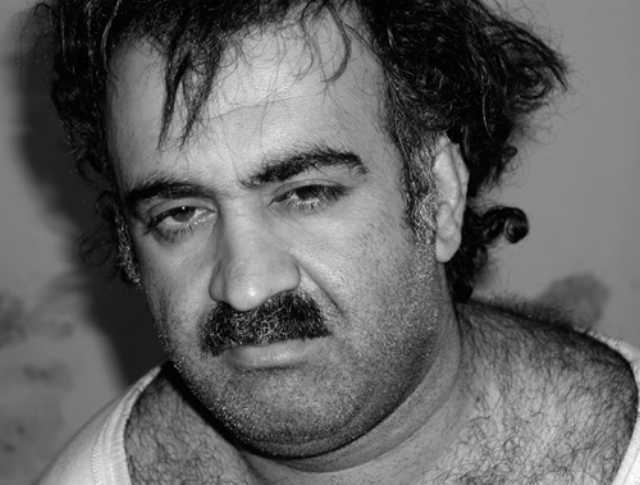
Abstract: (...)In a way, those who refuse to advocate torture outright but still accept it as a legitimate topic of debate are more dangerous than those who explicitly endorse it. Morality is never just a matter of individual conscience. It thrives only if it is sustained by what Hegel called “objective spirit,” the set of unwritten rules that form the background of every individual’s activity, telling us what is acceptable and what is unacceptable. For example, a clear sign of progress in Western society is that one does not need to argue against rape: it is “dogmatically” clear to everyone that rape is wrong. If someone were to advocate the legitimacy of rape, he would appear so ridiculous as to disqualify himself from any further consideration. And the same should hold for torture. Are we aware what lies at the end of the road opened up by the normalization of torture? A significant detail of Mr. Mohammed’s confession gives a hint. It was reported that the interrogators submitted to waterboarding and were able to endure it for less than 15 seconds on average before being ready to confess anything and everything. Mr. Mohammed, however, gained their grudging admiration by enduring it for two and a half minutes. Are we aware that the last time such things were part of public discourse was back in the late Middle Ages, when torture was still a public spectacle, an honorable way to test a captured enemy who might gain the admiration of the crowd if he bore the pain with dignity? Do we really want to return to this kind of primitive warrior ethics? This is why, in the end, the greatest victims of torture-as-usual are the rest of us, the informed public. A precious part of our collective identity has been irretrievably lost. We are in the middle of a process of moral corruption: those in power are literally trying to break a part of our ethical backbone, to dampen and undo what is arguably our civilization’s greatest achievement, the growth of our spontaneous moral sensitivity. READ IT ALL

Labels: , , ,

Friday, March 23, 2007

Will Turkey invade Iraq?

David Seaton's News Links
You can see what a Pandora's box the US opened when it invaded Iraq. The wheels are really coming off this thing.

Turkey has a very powerful army and is the former imperial power of Iraq... If the British, who took over from Turkey in Iraq and the Americans who took over from the British cannot control the situation in Iraq the Turks are not going to sit on their hands.

This in turn, has almost infinite ramifications all over the Mediterranean, if you study the reach of the Ottoman Empire you will see that as the article from Wikipedia says, "The empire was at the center of interactions between the Eastern and Western worlds for six centuries", this was and is about Turkey's size, power and location. Just when you think things can't get any worse, they get... much worse. DS
US struggles to avert Turkish intervention in northern Iraq - Guardian
Abstract: The US is scrambling to head off a "disastrous" Turkish military intervention in Kurdish-controlled northern Iraq that threatens to derail the Baghdad security surge and open up a third front in the battle to save Iraq from disintegration.(...) Fighting between security forces and Kurdish fighters seeking autonomy or independence for Kurdish-dominated areas of south-east Turkey has claimed 37,000 lives since 1984. The last big Turkish operation occurred 10 years ago, when 40,000 troops pushed deep into Iraq. But intervention in the coming weeks would be the first since the US took control of Iraq in 2003 and would risk direct confrontation between Turkish troops and Iraqi Kurdish forces and their US allies. Several other factors are adding to the tension between the Nato partners: The firm Turkish belief that the US is playing a double game in northern Iraq. Officials say the CIA is covertly funding and arming the PKK's sister organisation, the Iran-based Kurdistan Free Life party, to destabilise the Iranian government. US acquiescence in plans to hold a referendum in oil-rich Kirkuk in northern Iraq. Turkey suspects Iraqi Kurds are seeking control of Kirkuk as a prelude to the creation of an independent Kurdistan. Plans by the US Congress to vote on a resolution blaming Turkey for genocide against the Armenians in 1915. Faruk Logoglu, a former ambassador to Washington, said that if the resolution passed, relations "could take generations to recover". Record levels of Turkish anti-Americanism dating back to 2003, when Turkey refused to let US combat forces cross the Iraq border.(...) The US is already fighting Sunni insurgents and Shia militias. Analysts say a surge in violence in northern Iraq, previously the most stable region, could capsize the entire US plan. But pressure on the Turkish prime minister, Recep Tayyip Erdogan, is also growing as a result of forthcoming elections. Military intervention was narrowly avoided last summer when he said that "patience was at an end" over US prevarication. Now conservatives and nationalists are again accusing him of not standing up to Washington. "If they are killing our soldiers ... and if public pressure on the government increases, of course we will have to intervene," said Ali Riza Alaboyun, an MP for Mr Erdogan's Justice and Development party. "It is the legal right of any country to protect its people and its borders." US support for Iranian Kurds opposed to the Tehran government is adding to the agitation. "The US is trying to undermine the Iran regime, using the Kurds like it is using the MEK [the anti-Tehran People's Mujahideen]," said Dr Logoglu. "Once you begin to differentiate between 'good' and 'bad' terrorist organisations, then you lose the war on terror." But he warned that military intervention might be ineffective and could be "disastrous" in destabilising the region. A recent national security council assessment also suggested that senior Turkish commanders were cautious about the prospects of success. READ IT ALL

Labels: , ,

The video - Technology strikes back

David Seaton's News Links
The Hillary video is making such waves because it is absolutely perfect. Hillary Clinton is by far the most accomplished practitioner of pre-Internet, pre-YouTube politics, where everything is measured, controlled and predictable. The YouTube, "1984" video is a revolt against all that.

The medium for exposing the unbelievable phoniness of Hillary Clinton is perfect, the economy of means, perfect too. A jewel! DS

YouTube Revolt - Investor's Business Daily
Abstract: Politics: Candidates with big money and early leads in the polls would like nothing better than to lock up their nominations a few weeks after Christmas. But they may be done in by a few good downloads.(...) Conventional wisdom says late entrants have no chance. If you're not a Clinton, Giuliani or McCain, it suddenly looks too late to raise the zillions needed for California media buys. Campaign finance law also seems designed to help front-runners stay that way. Ever since Watergate, Congress has been making it harder for presidential hopefuls to raise large amounts of cash from small numbers of people. This hurts upstarts most — except for billionaires who are free to spend their own money. A law such as McCain-Feingold, which limits political speech by capping campaign contributions, is a boon to the well-known and well-heeled.So if all goes according to plan, the past week's little political whodunit over the Hillary Clinton-as-Big Brother video may signify nothing in the long run. But we wonder. It was so easy, and most of all cheap, to craft a parody of Apple's '1984' ad, aim it straight at the front-runner and make it available to millions.(...) Videos like this are simple to produce and a snap to distribute. It takes easily learned technical skills to do a mashup. No skill at all is needed to record a cell phone video clip and post it on YouTube, where it can embarrass a politician before the whole world. We don't know if the 'Big Brother' spot will hurt Clinton, help Obama or change the mind of even one voter. But we're sure it has added a welcome touch of randomness to politics. It boosts freedom and weakens control. And whatever our views on the candidates involved, we can't help but salute this effort to get around the rules that stifle political speech. READ IT ALL

Labels: , , , ,

Thursday, March 22, 2007

Soros on AIPAC... power shifts

David Seaton's News Links
What George Soros says, in his NYRB piece abstracted below, is what you can read in any progressive blog, or in any European, (or for that matter Israeli) newspaper.

The significance is that these home truths are being stated by George Soros in a prestigious American publication. Important people with worldwide prestige, like Soros, Judt or Carter are stepping forward to criticize AIPAC following the pioneering report by Mearsheimer and Walt. They step forward knowing full well the kind of slander and insults they are going to be subjected to. They also know that those insults and slander prove every criticism of theirs to be true.

They are doing something very brave and at the same of vital importance, because AIPAC is one of the most sinister organizations in contemporary America.

One thing that I think should be made clear, although AIPAC is Jewish, it is much more an American
phenomena than a Jewish phenomena. It has everything to do with the masculine identity crisis of middle aged, American white men of all denominations and much less about Judaism or antisemitism... The cloak of victim-hood obtained by the Jewish identity is just a convenient disguise for a type of behavior much too familiar in American life and which would not be acceptable if not for that mantle. With the Iraq war the AIPAC has gone "A Bridge Too Far". George Soros, who really knows from personal experience what true antisemitism is, knows that this is a matter that the Jewish community itself must clean up before the damage spreads. DS
George Soros: On Israel, America and AIPAC - New York Review of Books

Abstract: The Bush administration is once again in the process of committing a major policy blunder in the Middle East, one that is liable to have disastrous consequences and is not receiving the attention it should. This time it concerns the Israeli–Palestinian relationship. The Bush administration is actively supporting the Israeli government in its refusal to recognize a Palestinian unity government that includes Hamas, which the US State Department considers a terrorist organization. This precludes any progress toward a peace settlement at a time when progress on the Palestinian problem could help avert a conflagration in the greater Middle East.(...) While other problem areas of the Middle East are freely discussed, criticism of our policies toward Israel is very muted indeed. The debate in Israel about Israeli policy is much more open and vigorous than in the United States. This is all the more remarkable because Palestine is the issue that more than any other currently divides the United States from Europe. Some European governments, according to reports, would like to end the economic boycott of Hamas once a unity government is successfully established. But the US has said it would not. One explanation is to be found in the pervasive influence of the American Israel Public Affairs Committee (AIPAC), which strongly affects both the Democratic and the Republican parties.[2] AIPAC's mission is to ensure American support for Israel but in recent years it has overreached itself. It became closely allied with the neocons and was an enthusiastic supporter of the invasion of Iraq. It actively lobbied for the confirmation of John Bolton as US ambassador to the United Nations. It continues to oppose any dialogue with a Palestinian government that includes Hamas. More recently, it was among the pressure groups that prevailed upon the Democratic House leadership to drop the requirement that the President obtain congressional approval before taking military action against Iran. AIPAC under its current leadership has clearly exceeded its mission, and far from guaranteeing Israel's existence, has endangered it.(...) The pro-Israel lobby has been remarkably successful in suppressing criticism.[4] Politicians challenge it at their peril because of the lobby's ability to influence political contributions. When Howard Dean called for an evenhanded policy toward Israel in 2004, his chances of getting the nomination were badly damaged (although it was his attempt, after his defeat in Iowa, to shout above the crowd that sealed his fate). Academics had their advancement blocked and think-tank experts their funding withdrawn when they stepped too far out of line. Following his criticism of repressive Israeli policy on the West Bank, former president Jimmy Carter has suffered the loss of some of the financial backers of his center.(...) Whether the Democratic Party can liberate itself from AIPAC's influence is highly doubtful. Any politician who dares to expose AIPAC's influence would incur its wrath; so very few can be expected to do so. It is up to the American Jewish community itself to rein in the organization that claims to represent it. But this is not possible without first disposing of the most insidious argument put forward by the defenders of the current policies: that the critics of Israel's policies of occupation, control, and repression on the West Bank and in East Jerusalem and Gaza engender anti-Semitism. The opposite is the case. One of the myths propagated by the enemies of Israel is that there is an all-powerful Zionist conspiracy. That is a false accusation. Nevertheless, that AIPAC has been so successful in suppressing criticism has lent some credence to such false beliefs. Demolishing the wall of silence that has protected AIPAC would help lay them to rest. A debate within the Jewish community, instead of fomenting anti-Semitism, would only help diminish it.
READ IT ALL

Labels: , , , , ,

Salvador Dali... gone fishin'

David Seaton's News Links
My "trackers" inform me that I am getting quite a few hits from fans of Salvador Dali who stumble onto News Links while searching for images of the Catalan artist.

I published a post back in December with an image of Dali attached and for some reason it shows up on the second page of any Google Image search for the string, "salvador + dali". Googlologist will know why, the rest of must "go figure".

I heartily welcome these visitors as I believe the reason for choosing images and a shared visual taste are the solid beginnings of real affinity in many other areas too. So I hope that some of these visitors who come seeking images will stay to read the post and become regulars. Tracker statistics seem to bear this out. I would love to hear from News Links regulars who found this blog serendipitously.

Anyhow, today I decided to stick up another Dali classic, "The Persistence of Time", with the same harmless intention that one puts a worm on a hook... DS

Labels: ,

Wednesday, March 21, 2007

William Pfaff - The Triumph of Venus


"The Venus of Urbino"
Titian - Galleria degli Uffizi, Florence
David Seaton's News Links
This is by far the best piece I've read yet about the European Union's 50th birthday. It's not by chance that it is written by William Pfaff, for me the best international affairs columnist writing in English. I just can't take the chance of my readers missing such a fine article.

Certainly the values of the "West" are far better defined and defended by European Union of today than by the United States of today. Fortunately for the US the EU model is there to admire, as America seems to be losing its way and needs some fresh ideas. DS

William Pfaff - The Triumph of Venus
Next Sunday, March 25, the European Union celebrates the 50th anniversary of the signing of the Treaty of Rome, which in 1957 established a customs union, common market, and institutions of economic cooperation among six European states – now become 27.

Last Monday there was another anniversary. The United States, its coalition allies, and Iraq noted the beginning of the fifth year of combined international and internecine war in Iraq, initiated by Washington to establish peace in the Middle East.

I link the two anniversaries to make an overlooked if controversial point, suggested by a weekend in Brussels at the annual plenary meeting of the Trilateral Commission, the private North American, European, and Asian group formed in 1973 to examine international affairs and commission studies of major international issues. The European Union anniversary was prominent in the discussion. The Belgian hosts of the meeting, together with the European Commission and Parliament in Brussels, were determined to celebrate to their foreign visitors the EU’s achievements.

The “Europe” the hosts put on display is the one that in little more than 50 years has transformed a political terrain ravaged by genocidal war, totalitarian politics, torture, secret police, and a devastated human generation, into a zone of peaceful cooperation, rejection of war, political and economic progress, social advance and institutional altruism without precedent in the history of the nation-state system.

The influential Washington writer Robert Kagan, meaning to be condescending, called this Europe “Paradise” in his 2003 book, “Of Paradise and Power.” He suggested that it existed only thanks to the United States, otherwise known as Power.

Europe was “Venus,” he also said, basking in complacent peace, progress and prosperity, while “Mars,” a vigilant and self-sacrificial United States, kept these Europeans safe from what neo-conservatives like to call the Hobbesian external world, red in tooth and claw, lusting to ravish Venus. His book was meant to make Americans feel good about themselves, a manly race protecting their lessers, and to shame Europeans into doing more to help the United States in its invasions, wars, kidnappings, extra-legal assassinations, torture and secret imprisonments, directed against terrorist or rogue nations such as Iraq, Iran, and North Korea, and failed nations like Afghanistan and Somalia, as well as al Qaeda, the bearded assassins of Hamas and Hezbollah, and their fellow Islamic extremists in nations spanning the planet.

These Europeans instead had been preoccupied with training and subsidizing the states formerly under Soviet dictation in the Baltic region and in the Warsaw Pact, many of them with particularly tormented histories of foreign or national oppression, or domestic ethnic conflict, to develop the democratic institutions and progressive economies that would fit them to become members of the European Union. Today, most of them are already members of the EU of 27, and more are on the way to membership.

The year 1957 was not the real start of what became the European Union. That was the Treaty of Paris in April 1951, when at French initiative, Germany, Belgium, the Netherlands, Luxembourg, Italy and France placed their war-making industries under common control. The purpose was to make peace in Europe permanent.
Two years before, in April 1949, NATO had been formed with the same purpose, binding the United States and Canada to the West European democracies in mutually defensive military alliance.

The two institutions succeeded far beyond what most then could have imagined. By 1990 the Soviet Union was history, the Warsaw Pact states free. What did it?

Fundamentally, the EU did it. NATO proved to have been a necessary precaution – it would have been madness not to recognize in 1949 the possibility of Soviet aggression. But what we know now of the period suggests that a deliberate Soviet attack on the West was never seriously contemplated.

What destroyed the Soviet system was its moral as well as political and material decadence and decline. It was discredited politically and internationally by the European Union’s transformation of Western Europe.

The European Union, more than any other single factor, was responsible for the defeat of the Soviet Union in the cold war. It was not American arms that did it, necessary as they may have been to the Soviet Union’s intimidation, and to its eventual recognition that matching U.S. arms expenditures was impossible: that there had to be another way to go.

It could in the end turn out that the most important single event in ending the cold war was that summer, during the years of détente, spent by Mikhail Gorbachev and his wife on vacation in the south of France, witnesses of a peaceful and progressive Western Europe. That, more than the arms race, represented the competition the U.S.S.R. had already lost.

Venus won. But alas, where today is Mars?

Labels: , ,

The money heads for the doors

David Seaton's News Links
The New York Times has devoted a considerable part of its editorial page to a private equity company going public. It is very interesting and indeed troubling that the New York Times would devote an editorial to this subject. This quote is very important "if the stock market were a coal mine, Blackstone could be the canary."

As they say in the Big Apple, the New York Times is "not chopped chicken liver." The editorial itself will affect the market. It is one thing for me, modest blogger that I am, to engage in wild speculation and quite another for the New York Times. Something large and hairy is afoot. DS


Why Is Blackstone Going Public? - Editorial - News York Times Abstract: Less than three weeks after he said public markets are “overrated” and “really not worth it” to rainmakers like himself, Stephen Schwarzman, chief executive of the private equity powerhouse Blackstone Group, is reportedly working on a plan to sell a chunk of the firm to the public. The rarefied preserve of private equity — in which moguls use private money to buy shareholder-owned companies, take them private and sell them later — would be parceled out, share by humble share, to everyday investors.(...) Blackstone’s impending public offering might also offer a clue as to what could precipitate a downturn. By going public, the group is saying that it expects to need more money going forward than it is likely to be able to raise privately. That suggests that Blackstone is planning to do even bigger deals in the future — or that it foresees a credit crunch (or both). Lenders are already tightening at the bottom of the borrowing food chain, in dodgy mortgages. Easy money is also getting harder to come by as interest rates rise around the world. As pundits and policy makers debate whether credit woes will lead to weaker financial markets and a weaker economy, Blackstone may simply be trying to get ahead of its competitors, tapping funds where they’re still available. READ IT ALL

Labels: , ,

Tuesday, March 20, 2007

Patience for Iraq war waning, say congressional leaders

The patient ones
David Seaton's News Links
It is hard to read this article from "The Examiner" without wanting to scream obscenities and punch walls. These are the men and women who voted for the war talking. They have opened the gates of hell, pushed the people of Iraq through them and now they are "impatient" and would like to shut the gates and walk away. What is most sickening and unforgivable is the sanctimonious tone used... They probably say this stuff after one of those Washington "prayer breakfasts".

Of course the Americans should get out of Iraq, they should never have been there in the first place... but the United States should be paying war reparations to the people of Iraq for the next 50 years, at least, and the people who organized this war should be put on trial and imprisoned. DS


Patience for Iraq war waning, say leaders - The Examiner

Abstract: Four years into the Iraq war, all sides in the bitter debate agree that President Bush’s “troop surge” plan represents the final drop of American patience for the war. If Iraqis fail to control the violence, House Majority Leader Steny Hoyer said, “The American taxpayer has a reasonable expectation that we will bring our people home.” Senate Minority Leader Mitch McConnell, who has steadfastly supported the mission, said Republicans’ patience is nearly exhausted, too. “This is the last chance for the Iraqis,” the Kentucky Republican said in an interview with The Examiner. “The last chance for them to step up and demonstrate that they can do their part to save their country.”(...) Senate Minority Whip Trent Lott said(...) “At some point, you got to say to them, ‘Congratulations, Saddam is dead,’ ” Lott said. “We brought Baghdad under control. You folks got to decide whether you just want to kill each other forever or have a real government and peace and freedom and democracy.”(...) Anyway, Democrats say, Republicans send the same message to insurgents and Iraqis as timetables do when they say that their patience will run dry in months rather than years. “That may be,” Lott replied. “But at some point, they have to take control themselves.” READ IT ALL(barf bags not provided)

Labels: , , , , , ,

Monday, March 19, 2007

US in Iraq: Karma watch

David Seaton's News Links
The most important thing to remember about America's invasion and subsequent occupation of Iraq is that it is an unprovoked, criminal, act.

The people who perpetrated it, and especially those who ordered this slow torture and decimation of the people of Iraq are simply criminals and the citizens and institutions who supported them are no less than accessories to horrible crimes.

And unlike Hitler's Germany, no American can ever say that they didn't know all this was or is happening.... America, after all, is a "free country".

All this is not just wet, liberal, "hand wringing", it is simply an understanding of the fundamental sources of America's wealth and power and even what keeps the whole complex beast "airborne".

For unlike Hitler's Germany, one of the pillars of America's power is its commitment to habeas corpus, human rights and the rule of law. America is not an ethnic group, it is an agreement taken freely by people who have come from all over the world to live together in peace and prosperity and to materialize the ideas and hopes of the Enlightenment. Without those ideas, the United States of America is little more than a parking lot... Wal-Mart would be a more appropriate symbol of America than Abraham Lincoln.

Even Joseph Nye's insightful idea of America's "Soft Power," pales into trivial "truthiness" when speaking of presuming to be the embodiment of some of the greatest ideas of Western civilization: freedom, justice, democracy... and then gratuitously violating all those self-proclaimed standards in a "war of choice": attacking a country which had never harmed America, destroying its state, killing, torturing and humiliating the men, raping the women, terrorizing the children and scattering the priceless treasures of timeless antiquity to the winds

The only way for America to recover its prestige -- it would be pretentious to say recover its "soul" -- would be to hand
over all those responsible, beginning with Bush and Cheney, to the International War Crimes Tribunals, where they could be judged in Nuremberg fashion. Sadly, unlike Hitler's Germany, America has not been defeated by a foreign power and its alien ideology... America has defeated itself. DS

Anthony Arnove
- Billboarding the Iraqi Disaster - TomDispatch Abstract: Here is a short rundown of some of what George Bush's war and occupation has wrought: Nowhere on Earth is there a worse refugee crisis than in Iraq today. According to the United Nations High Commissioner for Refugees, some two million Iraqis have fled their country and are now scattered from Jordan, Syria, Turkey, and Iran to London and Paris. (Almost none have made it to the United States, which has done nothing to address the refugee crisis it created.) Another 1.9 million are estimated to be internally displaced persons, driven from their homes and neighborhoods by the U.S. occupation and the vicious civil war it has sparked. Add those figures up – and they're getting worse by the day – and you have close to 16% of the Iraqi population uprooted. Add the dead to the displaced, and that figure rises to nearly one in five Iraqis. Let that sink in for a moment. Basic foods and necessities, which even Saddam Hussein's brutal regime managed to provide, are now increasingly beyond the reach of ordinary Iraqis, thanks to soaring inflation unleashed by the occupation's destruction of the already shaky Iraqi economy, cuts to state subsidies encouraged by the International Monetary Fund and the Coalition Provisional Authority, and the disruption of the oil industry. Prices of vegetables, eggs, tea, cooking and heating oil, gasoline, and electricity have skyrocketed. Unemployment is regularly estimated at somewhere between 50-70%. One measure of the impact of all this has been a significant rise in child malnutrition, registered by the United Nations and other organizations.(...) In those same years, according to the best estimate available, the British medical journal The Lancet's door-to-door study of Iraqi deaths, approximately 655,000 Iraqis had died in war, occupation, and civil strife between March 2003 and June 2006. (The study offers a low-end possible figure on deaths of 392,000 and a high-end figure of 943,000.) But you could travel coast to coast without seeing the equivalents of the billboards, subway placards, full-page newspaper ads, or the like for the Iraqi dead. And you certainly won't see, as in the case of Darfur, celebrities on Good Morning America talking about their commitment to stopping "genocide" in Iraq. Why is it that we are counting and thinking about the Sudanese dead as part of a high-profile, celebrity-driven campaign to "Save Darfur," yet Iraqi deaths still go effectively uncounted, and rarely seem to provoke moral outrage, let alone public campaigns to end the killing?(....) There is a general agreement across much of the political spectrum that we can blame Iraqis for the problems they face. In a much-lauded speech to the Chicago Council on Global Affairs, Sen. Barack Obama couched his criticism of Bush administration policy in a call for "no more coddling" of the Iraqi government: The United States, he insisted, "is not going to hold together this country indefinitely." Richard Perle, one of the neoconservative architects of the invasion of Iraq, now says he "underestimated the depravity" of the Iraqis. Sen. Hillary Clinton, Democratic frontrunner in the 2008 presidential election, recently asked, "How much are we willing to sacrifice [for the Iraqis]?" As if the Iraqis asked us to invade their country and make their world a living hell and are now letting us down. This is what happens when the imperial burden gets too heavy. The natives come in for a lashing. READ IT ALL

Labels: , , , ,

Saturday, March 17, 2007

Sunday cartoons for News Linkers


David Seaton's New Links, or at least the David Seaton part of it, rests from its labors on Sunday, so this week I've decided to show my visitors cartoons instead of death and desolation.

For your viewing pleasure, I've chosen a timely, but politically incorrect, Porky Pig classic from the 1930s. If it isn't yet midnight in your area, scroll down for the death and desolation. Otherwise, have a happy and peaceful Sunday, I'll be back on Monday. DS

The brink of bad times

"You can't believe how bad it's going to get before it gets any better."
Jim Rogers - commodities investment guru
David Seaton's News Links
My perspective is political, so I look at the coming disaster with that slant. I have the good fortune to know quite a few top Spanish financial folk who have been explaining all the details of the economic situation to me patiently... over and over for years, and although I really can't claim to understand any of this stuff, from my slant I have grabbed on to one or two "hinges" upon which the situation seems to turn... Again, from my particular, political, point of view.

In the article I've clipped below, Jim Rodgers, George Soros old partner says, "This is the end of the liquidity party". He also says, "We haven't had this kind of speculative buying in U.S. history." What does this mean politically?

The world has been swimming in money (liquidity) for years now and many "middle-middle-class" people (defined as people who live from their work and whose principal asset is their family home) have been living way beyond their means and have come to acquire the social attitudes of upper middle class people, (defined as those whose patrimony is deep and layered, with mature stock portfolios, multiple inheritances, land and the "taken with mother's milk" habit of managing all those things). Under this delusion these middle-middle-class" folk, once the "salt of the earth", have come to think of themselves as "players" and have identified with characters such as Bill Gates and Warren Buffet or even Donald (ugh!) Trump, as aspirational, fantasy figures.

So, not only is there going to be a lot actual hardship, but also terrible disillusionment... the end of a dream. Because to add insult to injury, the victims in this crash are going to have salt poured into their wounded self esteem, because the system is going to treat them with all the same compassion with which it treated the stranded black people of New Orleans.

There is this idea, taken from our Christian heritage, that suffering makes people better, even holy. It would be comforting to think that this economic wasteland of broken dreams would wake the victims up and make them more compassionate and raise their consciousness... (hum a few bars of "The International" here if you wish). That like in the days of the Great Depression there would be a surge of brotherhood, (Liberty, equality, fraternity?). Unfortunately suffering can also turn quite a few people into mean spirited sons of bitches. Mean spirited sons of bitches when organized are often called "fascists".

This coming crisis is the great, "to be or not to be", challenge for progressive politics. DS

Top investor sees U.S. property crash - Reuters

Abstract: Commodities investment guru Jim Rogers stepped into the U.S. subprime fray on Wednesday, predicting a real estate crash that would trigger defaults and spread contagion to emerging markets. "You can't believe how bad it's going to get before it gets any better," the prominent U.S. fund manager told Reuters by telephone from New York. "It's going to be a disaster for many people who don't have a clue about what happens when a real estate bubble pops. "It is going to be a huge mess," said Rogers, who has put his $15 million belle epoque mansion on Manhattan's Upper West Side on the market and is planning to move to Asia. Worries about losses in the U.S. mortgage market have sent stock prices falling in Asia and Europe, with shares in financial services companies falling the most. Some investors fear the problems of lenders who make subprime loans to people with weak credit histories are spreading to mainstream financial firms and will worsen the U.S. housing slowdown. "Real estate prices will go down 40-50 percent in bubble areas. There will be massive defaults. This time it'll be worse because we haven't had this kind of speculative buying in U.S. history," Rogers said. "When markets turn from bubble to reality, a lot of people get burned." The fund manager, who co-founded the Quantum Fund with billionaire investor George Soros in the 1970s and has focused on commodities since 1998, said the crisis would spread to emerging markets which he said now faced a prolonged bear run. "When you have a financial crisis, it reverberates in other financial markets, especially in those with speculative excess," he said. "Right now, there is huge speculative excess in emerging markets around the world. There will be a lot of money coming out of emerging markets.(...) The last stock market bubble to burst was the dot-com craze which sparked a crash from March 2000 to October 2002. When the last bubble burst in Japan, said Rogers, stock prices went down 85 percent despite the country's high savings rate and huge balance of payment surplus. "This is the end of the liquidity party," said Rogers. "Some emerging markets will go down 80 percent, some will go down 50 percent. Some will most probably collapse." READ IT ALL

Labels: , , ,

Friday, March 16, 2007

Subprime crisis: from sushi to meatloaf

"The sub-prime carnage is now front page news on every possible media; soon enough it may be even become cover story on People magazine as even Britney Spears will soon be asking about it." Nouriel Roubini

David Seaton's News Links
If you are too young to to have clear memories of the cold war it will be impossible for you to imagine how all embracing it was. Bush and Cheney have been trying to "recreate" the cold war's tension in their "Great War On Terrorism" (GWOT), but they don't even come close. It went from horizon to horizon. Like living in the same room with a dangerous animal... for both sides.

So, when the Soviet Union went down there was a huge sigh of relief. Instead of thinking that if such a huge and powerful system could collapse, any system could collapse, that collapse was in the nature of huge and powerful systems, there was a sense of "victory" accompanied by euphoria.

To give you an idea of the period, in 1992, sober and reputable Francis Fukuyama published, "The End of History and the Last Man", where he wrote, "What we may be witnessing is not just the end of the Cold War, or the passing of a particular period of post-war history, but the end of history as such: that is, the end point of mankind's ideological evolution and the universalization of Western liberal democracy as the final form of human government." In real life people only say things like that when they sniff cocaine.

Meanwhile in the United States, during the 80's, while the Soviet Union was preparing to collapse, amazing things were happening in the world of finance. The definitions of money and value were revolutionized. The symbol of this revolution was the "Junk Bond" and its Lenin was Michael Milken. A new way of looking at money and the ways to use it was born.
The film that symbolized this revolution was Oliver Stone's, "Wall Street".

Simultaneously, the power of computers began its geometric increase that has become so familiar to us over twenty years later. This increase in computer power made it possible to calculate financial risk in a much more sophisticated way. So everything was in place: euphoria and new ways of creating value seemingly out of thin air.

The result was that huge amounts of money appeared in the newly deregulated world and began to move at a dizzying speed. It became easier and easier to borrow money, in increasing quantities, at lower rates and for longer times. People who had heretofore worked hard to make ends meet, to own their own home and to send their kids to school, began to feel "rich". In fact the only thing they really owned was the house they lived in, whose theoretical value was increasing daily and against whose "paper" value they contracted real debts. It looks as if the party may be over and as in the "Crash of 29" creditors may panic and call in their loans... with devastating and unpredictable knock on effects.

Politically this will mean that a lot of people, with a good education and brilliant prospects, who thought they were rich will suddenly feel that they are poor, they will make a lightning fast voyage from sushi to meatloaf.
Normally people take too much credit for their successes and often blame themselves too much for their failures. It takes a very wise man or woman to look in the mirror and to see a fool and then to shrug this vision off.

Many will feel betrayed by the very system they thought they understood and knew how to game. This declassing and sudden insecurity is often the origin of much bitterness and political agitation... normally it offers opportunities for the far-right. The left must be prepared to offer solid analysis and strong support, both moral and material to the victims of what appears to be a severe fall to earth for the "nouveau pauvre"... or risk being swept away by their rage. DS


Leap of faith? How a fiasco of easy home loans has tripped up America - Financial Times

Abstract: Victoria Wagner, credit analyst at Standard & Poor's, the ratings agency, says some subprime mortgage lenders dramatically lowered their standards amid "the so-called democratisation of credit", granting loans that contained many levels of default risk. These included a lack of income documentation and no downpayment. Ms Wagner calls this kind of risky lending "unprecedented". Now buyers (...) are falling behind or defaulting, as interest rates that started relatively low go higher and home prices in some parts of the US stop rising. So far the problem has remained largely contained within the subprime sector. It may stay there but concern is growing that difficulties could spread throughout the housing market and then, perhaps, the wider US economy. The first way the subprime decline could impact on the housing market is if a flood of foreclosed homes came up for sale and pushed down prices in areas where the supply of homes is already high because demand has dropped off. "The big question is, how quickly will housing prices adjust lower as delinquency rates rise?" says Richard Gilhooly, senior fixed income strategist at BNP Paribas. Analysts at Lehman Brothers project that mortgage defaults could reach $225bn during 2007 and 2008 and perhaps go as high as $300bn. "The risk that they impact the broad housing market and begin to weigh upon prime borrowers is very real," they say. (...) Delinquency rates for subprime adjustable-rate mortgages, the riskiest kind, hit 14.4 per cent. The numbers could get much worse because many who bought homes face "resets" in their mortgage payments; the low rates that tempted them in will revert to higher, market-determined rates. Lehman estimates that more than $900bn of mortgages will hit a reset in the next two years.(...) Still, it is far from certain that the subprime ailments will infect the broader housing market. Steven Wieting, economist at Citigroup, suggests that the problems are likely to affect financial institutions and their investors - as indeed they already have - more than consumer sentiment and the economy at large. But if the marginal buyer - someone able to buy a house only if conditions are right - is knocked back, that could at best slow a recovery in the housing market. At worst, it could lead to recession. David Rosenberg, North American economist at Merrill Lynch and a perennial bear, says: "This housing downturn is far from over and the full impact across the economy has notbeen felt . . . As with most bubbles, this one started with loosening credit guidelines, excessive price appreciation, classic performance-chasing [and] speculative fervour, and nowends in lawsuits." Whatever the impact of the subprime fiasco on the wider economy, it is already deeply painful for many Americans.(...) One way the subprime shake-out could lead to systemic problems across the capital markets is if investors who had little idea they might own such mortgages suddenly discovered that they did. These holdings would probably be through complex structures called collateralised debt obligations - packages of asset-backed bonds. Investors in CDOs - say, pension funds in Europe or Japan - may be inclined to act more quickly when they detect subprime exposure than would a group that was already well aware of the risks in their CDOs. One problem is a lack of information. CDOs are rarely traded and difficult to value. As a result, buyers are often reliant on credit ratings to know when to sell. However, credit ratings regularly lag market prices, meaning that losses can be greater than necessary when the credit rating downgrade finally comes. Josh Rosner, managing director at Graham Fisher & Co, an investment research firm, says: "Because many buyers of CDOs can only hold investment-grade assets, they may continue to hold deteriorating and increasingly illiquid assets as long as credit ratings have not been downgraded." This means that when these investors eventually sell, they may also be forced to accept large losses in a fast-moving market. The heavier the losses, the less likely investors are to want to return, a classic case of "risk aversion". Such risk aversion is already clear among the commercial and investment banks that had provided funding to subprime mortgage lenders. Those banks cut off credit lines to New Century Financial and Accredited Home Lenders, pushing both close to bankruptcy filings. With equity investors in subprime (and even prime) mortgage lenders offloading their shares - "then asking questions later", according to David Hendler, an analyst at CreditSights - some industry executives say the selling appears irrational and panic-driven, another signal of growing risk aversion. Angelo Mozilo, chief executive of Countrywide Financial, a leading mortgage lender, said on television this week that investors were dumping shares of home loan groups with little regard for a lender's actual fiscal health. "This is now becoming a liquidity crisis," he declared, adding: "It's going to get uglier." The ugliness could spread if lending standards to companies, hedge funds, private equity groups and others come under review.A broad tightening of credit requirements by lenders could have ramifications throughout the markets.(...) As well as affecting US mortgage borrowers, a credit crunch could make hedge funds that use large amounts of borrowed money cut their debt, perhaps selling assets en masse in order to do so. If that led prices to fall, the effect could feed on itself as others scrambled to limit losses. Companies, particularly weak ones, could find it hard to refinance existing debt - potentially leading to a sharply higher incidence of failure, which would further rock credit markets. The worry is that such a wave of "deleveraging" could swell, with few investors both willing and able to start buying and halt the decline in asset prices. "There is an elevated risk of a financial market crisis during the next two months," says T.J. Marta, fixed-income strategist at RBC Capital Markets. "There is a concern that as liquidity tightens, the wheels could fall off." Signs exist that investors have adjusted leverage levels in recent weeks. The yen is tending to strengthen whenever other markets show weakness, an indication that "carry trade" investors - who borrow in yen at low interest rates to finance purchases elsewhere - are at best nervous about their exposure. Steven Wieting, economist at Citigroup, points out that banks have tightened lending standards, at least for mortgages, according to the latest quarterly survey by the Federal Reserve. But he notes that the shift followed a period of easy loan availability, which continued even after mortgage delinquencies began to rise. There seem few signs of investors leaving the debt markets. The huge quantities of capital looking for a home, which have powered the ability of private equity to announce ever larger leveraged buy-outs, have not dried up. Still, analysts worry that the subprime meltdown could be the catalyst that brings the era of easy access to cheap debt to a close.(...) One area where the impact of the subprime mortgage shake-out is already clear is the equity market. Each day on Wall Street seems to bring fresh news of specialist lenders collapsing and fears about possible problems elsewhere, such as at the investment banks that have big subprime holdings. The result is dizzying volatility. Financial stocks have been down since worries over the subprime sector began in earnest in mid-February. The big equity sell-off of February 27, though in part the result of concerns about a possible economic slowdown in China, also demonstrated subprime anxieties in the US. The financial sector took among the biggest tumbles that day, with some banks down by as much as 8 per cent. The power of fear has remained visible this week. Goldman Sachs shares failed to budge even after the bank reported another quarter of stunning earnings on Tuesday - and Goldman does not even have much of a subprime business. Lehman Brothers, which does, saw its shares initially plunge 5 per cent when it reported record results on Wednesday but suggested that it was seeing some impact from problems in the subprime market.(...) "The current battle involving Wall Street firms' subprime exposure and investor perception of contagion risk rages on without any end in sight," says Michael Hecht, a Bank of America analyst. "This is occurring in spite of positive commentary from both Lehman and Goldman Sachs that the sky is not falling." One fear surrounding the investment banks is that while subprime might not be that big a problem on its own, a flight from risk could mean that other profitable Wall Street businesses - such as the packaging of prime mortgages, credit card loans, student loans and other liabilities into securities - would dry up. David Viniar, Goldman's chief financial officer, says such securitisations have been a key part of Wall Street's profit growth. But he adds that he does not think the current subprime problems will derail that growth. "The concept of securitisation, which I think of as the ability to [divide] up credit risk so you can put it in the hands of people who want it as opposed to people taking parts of risk they don't want, has been an important development over the last several years," he says. "It has been good for all of the capital markets - and I still think it will be an important financial tool that will be used, although I think the subprime market will be smaller." The wild ride played out in the larger market as well on Wednesday, as the two main schools of thought (subprime is a disaster versus subprime is no big deal) fought it out, leading to big swings in the main indices. One of the biggest fears among market watchers now is that the worriers will win, whether based on fact or fear, and push stock prices beneath levels that have held even in the face of recent heavy selling pressure. For the Dow Jones industrial average the recent bottom being watched by the market is 12,050, which was hit on March 5. If that level is breached, the theory goes, the rout could quickly turn vicious, with selling begetting more selling and reason going by the wayside. READ IT ALL

Labels: , , , , , ,

Thursday, March 15, 2007

Howard Dean: just our luck

"It is possible to be tough without filling Walter Reed with 12,000 wounded kids and then not taking care of them." Howard Dean
David Seaton's News Links
I often have nice things to say about Al Gore... I confess to a weakness for Dennis Kucinich... But I am crazy about Howard Dean.

He is really the guy the right wingers fear. How can one tell? Fascists, and the American ultra-right and neocons aren't "conservatives" or anything like that, (if you take Robert Taft or Herbert Hoover as a conservative model), they are fascists... And as Sinclair Lewis predicted they come "wrapped in the flag and bearing the cross"... When fascists are frightened of anything they ridicule it cruelly, brutally, bullying... not humorously... bestially. Howard Dean is given that treatment, but Dean not only can take it, he can dish it out.... But as the quote above shows, his is the cruelty of truth. He is as tough as a boot and as game as a Jack Russell terrier. Just what is needed at the moment most needed. Maybe America's luck hasn't run out after all.

He has all the right enemies, even in his own party. Dean is working to make the Democratic party a true expression of its voter's values and not just a way of harnessing their votes in order to carry out the agenda of the big check writers. Howard Dean is one of the greatest democratic (with a small "d" or a capital "D") assets in American politics. DS

The New Dean Political Plan - The Politico
Abstract:
When I asked him if Republicans would always be seen as tougher than Democrats when it came to national defense, he said: "It is possible to be tough without filling Walter Reed with 12,000 wounded kids and then not taking care of them." Dean went on: "Now that we have a real problem with Iran, there's not much we can do about it because of the president's incredible foolishness in running our armed forces through the gauntlet in Iraq, which wasn't necessary." He also said that having "the moral high ground" is part of defending the country. "A strong national defense depends on having well-trained troops and good weapons systems, but it also depends on having the moral high ground, and this president has given up the moral high ground around the world, and that's a disaster for the country's defense," Dean said. On the pending battle between the two parties on immigration reform, Dean said: "I think the Republicans have decided they don't want to do anything about immigration because they are scared. The best kind of immigration reform is a much better working relationship with Mexico. We will never solve immigration problems in this country without improving the Mexican economy dramatically." Dean is very concerned about world affairs and believes that after the November election in 2008, the president-elect should take a month off and travel the world to bolster America's image. "During the Cold War, we certainly had people who didn't like us, but they respected us," Dean said. "Now, unfortunately, they don't like us and they don't respect us. And that needs to be fixed. And I consider one of my informal jobs to help fix it with like-minded world leaders so we do have some relationships." Dean also said that the Bush administration's failure to cope with the aftermath of Hurricane Katrina was a turning point for the country. "It destroyed George Bush's presidency," Dean said. "Permanently. The one thing that Americans and everybody else in the world have always believed, whether you like America or not, whether you like the government or not, is that the most organized, best managers in the world are the Americans. And if anything really, really awful happens, send in the Americans. And we all saw on television around the whole world, that this just wasn't true of this president and this government. It was just ludicrous. It's still ludicrous to this day." In his famous speech to the winter meeting of the Democratic National Committee in 2003, Dean, then a presidential candidate, upbraided the party for too much timidity and too much coziness with Republicans. "That's why Democrats didn't win for a long time," Dean said Tuesday. "Harry Truman said if you run a Republican against a Democrat who behaves like a Republican, the real Republican wins every time."(...) I asked Dean if he agreed with some in his party who say that things look so good for the Democrats in 2008, they virtually can't lose. "That is what I call magical thinking, and Democrats have been very guilty of it for a long time," Dean said. "I don't admire much about Republicans, but one thing I do admire is that they don't engage in magical thinking." Dean said that the Democratic Party is busy raising money and organizing in every state and that "we have a turnout operation that we think is better than the Republicans' now." "But winning is going to be hard work," Dean said. "This race is going to be won in 2007, not 2008. It is all going to be about how well you prepare." READ IT ALL

Labels: , , ,

Afghanistan for dummies

David Seaton's News Links
Michael Scheuer (Mr. Anonymous of "Hubris") has written an article detailing the "West's" ("West" is code for "white folks") failures in Afghanistan.

As Afghanistan hasn't much to do with oil and almost nothing to do with Israel, there was little interest or resources devoted in Washington to thinking about the problem, but although it is oil-less and does not jeopardize the Jewish state, the defeat in Afghanistan may be more far-reaching in its effects than the defeat in Iraq will ever be.

NATO as a symbol of the "West", (white folks) is being broken in Afghanistan and that may have much more historic significance than "losing" Iraq. There will always be access to oil for those with ready money, but after several hundred years of pale-skinned domination, finally breaking completely the mystic of the "White Man's Burden", will be the geopolitical equivalent of Global Warming. DS

Michael Scheuer: A catalogue of errors in Afghanistan - Asia Times
Abstract: Afghanistan is again being lost to the West, even as a coalition force of more than 5,000 troops launches a major spring offensive in the south of the country. The insurgency may drag on for many months or several years, but the tide has turned. Like Alexander's Greeks, the British and the Soviets before the US-led coalition, inferior Afghan insurgents have forced far superior Western military forces on to a path that leads toward evacuation. What has caused this scenario to occur repeatedly throughout history? In the most general sense, the defeat of Western forces in Afghanistan occurs repeatedly because the West has not developed an appreciation for the Afghans' toughness, patience, resourcefulness and pride in their history. Although foreign forces in Afghanistan are always more modern and better armed and trained, they are continuously ground down by the same kinds of small-scale but unrelenting hit-and-run attacks and ambushes, as well as by the country's impenetrable topography that allows the Afghans to retreat, hide, and attack another day. The new twist to this pattern faced by the Soviets and now by the US-led coalition is the safe haven the Afghans have found in Pakistan.(...) The latest episode in this historical tradition has several distinguishing characteristics. First, Western forces - while better armed and technologically superior - are far too few in number. Today's Western force totals about 40,000 troops. After subtracting support troops and North Atlantic Treaty Organization contingents that are restricted to non-combat, reconstruction roles - building schools, digging wells, repairing irrigation systems - the actual combat force that can be fielded on any given day is far smaller, and yet has the task of controlling a country the size of Texas that is home to some of the highest mountains on Earth.(...) Western leaders in Afghanistan are also finding that many Afghans are not unhappy to see the Taliban returning. Much of the reason lies in the fact that the US-led coalition put the cart before the horse. Before the 2001 invasion, the Taliban regime was far from loved, but it was appreciated for the law-and-order regime it harshly enforced across most of Afghanistan. Although women had to stay home, few girls could go to school and the odd limb was chopped off for petty offenses, most rural Afghans could count on having security for themselves, their families and their farms and/or businesses. The coalition's victory shattered the Taliban's law-and-order regime and, instead of immediately installing a replacement - for which there were not enough troops in any event - coalition leaders moved on to elections, implementing women's rights and creating a parliament, while the bulk of rural Afghanistan returned to the anarchy of banditry and warlordism that had prevailed before the first Taliban era. Making matters worse was the fact that many of the actions the coalition did successfully undertake - especially elections and women's rights - added to the misery of rural Afghans by appearing to be attacks on millennia-old social, tribal and religious mores. As Afghans were faced with the reality of being in the thrall of criminals, and perceived their culture to be under attack, it is not surprising that the Taliban are finding at least a tepid welcome home. The third problem for the coalition is the amount of time it has spent in Afghanistan. Now in the sixth year of occupation, Western leaders are confronted not only by a stronger-than-2001 enemy, but also by the resurgent insularity and anti-foreign inclinations of the Afghan people. READ IT ALL

Labels: , ,

Wednesday, March 14, 2007

USA in Iraq: mictating windward

David Seaton's News Links
This article defines in a few words the hypocritical idiocy of the entire American position in Iraq. A masterpiece! DS

H.D.S. Greenway : 'Surge' doomed to final failure - Boston Globe
Abstract: What the president and proponents of the "surge" in Iraq have underestimated is the loathing Iraqis have of foreign troops bursting into their houses, shoot-to-kill checkpoints, and the humiliation occupation brings. Foreign troops legitimize insurgency. A photograph by Agence France-Presse reminded me why the surge is unlikely to achieve anything more than temporary success, and is doomed to ultimate failure. The photograph shows four American soldiers, dressed in full, intimidating battle gear, around the periphery of a Baghdad living room. In the center, on the carpeted floor, lies a collapsed woman in a traditional black dress. A man, identified as her son, is holding her in his arms. His feet are bare, as if he were caught by surprise. But what arrests the eye is the look of horror and terror on his face as he looks up at an armed, gesticulating soldier. Another soldier has taken the liberty of making himself at home on the sofa. The caption tells us only that the mother has fainted when her son was "questioned." The Washington Post's Joshua Partlow recently wrote about how American soldiers tried to be friendly and kind. "During their six-hour patrol they handed out Iraqi newspapers and packets of gum . . . But machine gun-toting Americans rooting through bedrooms, inspecting weapons, and demanding identification cards clearly unsettle some residents." They do more harm than unsettle. One US soldier told Partlow: "I was here the last time, in the beginning. Now that's totally changed. They don't even respect us anymore. They spit at us, they throw rocks at us. It wasn't like that before."(...) And so conquering foreign soldiers will be resisted in Iraq, as they have always been everywhere down the centuries. In early April 1775, the British governor of Boston sent John Howe out to gather intelligence in that hotbed of insurgency now called the western suburbs, but then the Anbar province of its time. Howe met an old man cleaning his rifle who looked too old to hunt game. The old man said he expected foreign soldiers -- "a flock of redcoats" -- would be arriving soon, and he thought they would make good targets. Arrive they did, and with them the American revolution that in many states degenerated into civil war. The British soldiers were mostly of the same race and religion as the people they fought, but they were by then foreigners, and eight years later they were gone. READ IT ALL

Labels: , ,

Don't Look down....

David Seaton's News Links
The article that I've clipped from today's BBC News looks like it was written by Nouriel Roubini last summer. To have some idea of where this mess is probably headed, read recent Roubini. But, if instead of just sniffing at it, you prefer to take it intravenously, read this from Prudent Bear.
What notes of good cheer do I have to add to the opinions of these well qualified purveyors of doom? I would only point out discreetly that although since WWII there have been recessions, slow-downs and scares, nothing this bad has ever loomed large under the leadership of someone the entire world considers a hopeless idiot-fool and whose measure is daily taken by every tinpot dictator and autocrat in the world.
What Bush has done and is daily doing in Iraq, combined with the lack of an effective response by America's institutions... Reelecting him, for example... The images of Katrina etc, etc, have caused many to entertain grave doubts about America's health and power: social, military... everything except the economy.
Most of the world's conservatives, horrified by Bush's deflation of America's mojo, invoke the US economy the way someone with a wasting disease might invoke Saint Jude Thaddeus. If the economy tanks too, the feeling of existing in a vacuum for those all over the world who owe their safety and prosperity to holding the American coat may be extreme, and that in turn might set off chains of events, all of them disagreeable and difficult to predict. DS

World stocks tumble on US fears – BBC News
European stocks have joined a global sell-off after concerns about the US economy and mortgage industry hurt markets in Asia and dented Wall Street. The UK's FTSE tumbled 110.4 points, or 1.8%, to 6,050.8. Earlier, Japan's Nikkei index closed 2.9% lower, and New York's Dow Jones index ended down 2%. Indexes in Hong Kong, Malaysia, India and Australia fell more than 2%. The sell-off comes as stocks were starting to recover from a sharp slump that rocked markets late last month. Analysts said that market volatility was likely to continue, and any recovery would be short-lived. Although analysts said Asia's leading economies remained fundamentally strong, markets across the region are particularly sensitive to signs of a possible economic slowdown in the US. The US economy, by far the world's biggest, is a key export market for Asian companies. This latest round of selling has been sparked by concerns over the US sub-prime mortgage market. Sub-prime lenders target consumers with poor credit histories and they have been hit by an increase in defaults and bad loans. Figures have shown that late mortgage payments and home repossessions in the US had hit their highest level since records began. New Century, the second-biggest sub-prime mortgage lender in the US, is seen by many observers to be close to bankruptcy and the fear among investors is that this will ripple out into more stable parts of the economy. "If the US sub-prime mortgage problems get worse, it could begin to hurt US consumers, and that would be very hurtful for exporters," said Kim Yung-min, a fund manager at SH Asset Management in Seoul. "This month could be very bad," he added. Wall Street's slide on Tuesday also gained momentum from a US Commerce Department report that showed retail sales rose at a lower-than-expected rate of 0.1% in February, suggesting consumer spending could be slowing down.

Labels: , , ,

Tuesday, March 13, 2007

Harry Truman: he gave us hell

David Seaton's News Links
I'd like to direct your attention to this fine article by James Carroll, deconstructing the myth of Harry Truman.

Here Carroll gets to the heart of how the gap came to be between what most Americans think the United States is -- a free and benevolent democracy -- and what it really has become, a militarized empire with many of the characteristics of a totalitarian state, a fearful giant, which takes paranoia as the guiding faith and central doctrine of the nation.

Truman lives on: here we are, sixty years later, with Bush, returning to the tired cold war mechanisms like a dog to its vomit. Certainly the times we are living through today may well lead us to deconstruct Harry Truman's "shining" legacy. DS

James Carroll: Truman Doctrine, 60 years of faulty logic - The Boston Globe

Abstract: Sixty years ago Monday, Harry Truman went before a joint session of Congress to announce what became known as the Truman Doctrine. "At the present moment in world history, nearly every nation must choose between alternative ways of life." With that, an era of bipolarity was inaugurated, dividing the world between forces of good and evil. The speech amounted, as one of Truman's advisers characterized it, to a declaration of religious war. In the transcendent struggle between Moscow and Washington, "nonalignment" was not an option. Truman declared that the United States would actively support "free" people anywhere who were resisting either internal or external threats to that freedom. The "free world" was born, but so, eventually, were disastrous wars in Korea and Vietnam.(...) Bush's failures are prompting important shifts, both by his critics and advisers. But no one is asking basic questions about the assumptions on which U.S. policies have been based for 60 years. More than adjustments in tactics and strategy are needed. What must be criticized, and even dismantled, is nothing less than the national security state that Truman inaugurated in 1947. The habits of mind that defined American attitudes during the Cold War still provide consoling and profitable structures of meaning, even as dread of Communism has been replaced by fear of terrorism. Thus, Truman's "every nation must choose" became Bush's "You are with us or against us." America's political paranoia still projects its worst fears onto the enemy, paradoxically strengthening its most paranoid elements. The monstrous dynamic feeds itself. READ IT ALL

Labels: , , , ,

Monday, March 12, 2007

Shamans clean up after Bush

Cakchiquel Capital City of IXIMCHE
David Seaton's News Links
I think a flying squad of Native-American shamans should be flown everywhere in the world that Bush visits hereafter in order to perform these cleansing ceremonies.

In might be a good thing to station a permanent detail of Shamans in Washington to follow Bush's motorcades (at a discreet distance, of course) and keep cleansing those vibrations. It can't hurt and it might save the planet, who knows?

This is definitely an idea whose time has come. DS

Ruins to Be Cleansed Following Bush Visit - Der Spiegel
Abstract: A site close to the hearts of the indigenous Maya people of Guatemala is to be spiritually de-contaminated after a visit by US president George Bush. Mayan Indian priests in Guatemala have vowed to hold a cleansing ceremony following a Monday visit by US president George W. Bush to sacred ancient ruins. As part of his stopover in the tiny, Central American nation during a five-nation-tour of Latin America, Bush's itinerary has him visiting the Mayan ruins of Iximiche, some 50 kilometers west of Guatemala City. Native dances and a welcoming ceremony will greet the president when he arrives at the ruins of the former capital of the Kaqchikel Maya people. But after he leaves, Mayan leaders say that a special cleansing ceremony to restore peace and harmony will be necessary to remove negative energy left by Bush's visit. "We will burn incense, place flowers and water in the area where Bush has walked to clean out the bad energy," said Jorge Morales Toj, a Guatamalan youth leader. He added that Bush's visit to Iximiche treats the Mayan people as little more than a tourist attraction. Resentment in Guatemala against the United States remains high due to CIA support for the overthrow of a democratically-elected socialist government in 1954 and US support for Guatemalan military governments during the country's 1960-96 civil war -- a conflict that left about a quarter million people dead or missing. A scorched earth counter-insurgency campaign at the peak of the war saw US-backed troops destroy entire Mayan villages. READ IT ALL

Labels: , , , ,

The age of Paris

David Seaton's News Links
I'm reading "think pieces" about Paris Hilton.... (???).

There is really nothing much to think about here. If we take Oscar Wilde's definition of "celebrity" as "someone who is famous for being famous": as apt, then Ms. Hilton is a perfect celebrity.

She is reasonably pretty, but nothing that some bleach, a little silicon and a bit of dieting couldn't produce in almost any supermarket checkout lady. So her look is achievable or at least aspirational for most girls. She is seriously rich, which means she can have anything (anyone) that money can buy. So she works as an object of fantasy.

What does she do that people could fantasise about? As far as I can see, her activities are limited to acting like a jerk and balling a lot. Those are things that most people never do as much of as they would like to. She appears to be talentless and stupid. I say appears, because if she were intelligent, she would be smart to hide it. Any visible talent or intelligence would reduce her possibilities as a blank, fantasy sheet, ready to be scrawled upon by all and sundry.

Scarlett Johansson, for example, is truly an unforgettable beauty, possessed of obvious intelligence and a formidable talent: most of humanity, if they ever even dreamed of getting it on with Ms. Johansson would wake up and apologize. But it just might be possible for a patient onanist to imagine that Paris Hilton could wake up some afternoon and say to herself, "today I've just got to do it with an overweight, out of shape, pimply, high school dropout!". A perfect fantasy object... a truly humantiarian gift to all too human humanity.

Then of course the media finds that she provides them with content that isn't drenched in blood and hate, and that she allows a reasonably literate person, who reads things written to be read to feel superior. And that of course, for all of the above, Paris Hilton draws readers. She is a perfect example of the Taoist ideal of "Wu Wei", not doing anything, all is done.

Full disclosure: this post itself is an experiment. I'm interested in following it in my trackers and seeing if the tags draw more that normal hits on a slow Monday. Testing the "Paris Hilton effect" its called. I've tried to make the experiment as entertaining as I could. I hope faithful readers of the blog aren't horribly offended. DS

Labels: , , ,

Saturday, March 10, 2007

Osama's vote in 2008


David Seaton's News Links
Many people seem to think that the Democrats are a shoo-in to win the the US presidency in 2008, but I'm not so sure.

Neither Hillary or Obama are in any way Swift Boat proof and any of the gentlemen pictured (except the one with the beard) could easily end up occupying the White House. Impossible you say? Following Bush, unthinkable that a Republican could win? Think about it a little more.

The one with the beard, Osama bin Laden, has been doing very well with Republicans. Surely he would prefer another ugly, national security Republican as an adversary. He once told Robert Fisk that his main objective was to leave the United States "a shadow of itself"... The Republicans have done everything possible to oblige him, and in effect, the United States is now a shadow of its former self. Why would Osama, of all people, want to change?

With a simple video appearance he won the last election for Bush. This time it probably would take a bit more.

Imagine that either Giuliani or McCain were running against either Hillary or Obama and Al Qaeda pulled off another "big one" in the USA. I would be amazed if either of the above named Democrats could survive that, which is a very good reason to believe that Osama would choose that moment to attack.

Here in Madrid we have lived though exactly the same dynamic. Bin Laden saw that a few bombs at the right place and the right time would have the maximum effect and it did: the government fell and the Spanish troops were withdrawn from Iraq. Because this "alignment of the planets" has long been visible on the horizon, I would imagine that whatever Bin Laden has in mind has been long in preparation, at least three, perhaps more years. Its elements are already in place and simply "sleeping" waiting for the moment... which logically would come late in the presidential campaign... second half of October, I would imagine.

I think this is, if not a sure thing, extremely probable. The only Democrat that could possibly survive this would be Al Gore, and I'm not sure even he could. So all the the Democrats that think the presidency is like a ripe fruit ready to fall into their laps should think again. DS

Labels: , , ,

Friday, March 09, 2007

"Chavez of Arabia"

David Seaton's News Links
I went to school with a lot of South American kids, I enjoyed the Cubans and the Venezuelans most. Until you have partied with Caribbean folk, you can have no idea of what partying is. There is sense of energy, juissance, bonhomie and humor that are hard to find is such doses anywhere else.

Even when they are serious and they can be very, very (say deadly) serious, believe me, this pleasure at life and playful, self-regard infects everything. Spanish people are always exasperated by their Caribbean cousins lack of gravitas. Aggressive, funny and assertive.

There is an element of all of this is Chavez. What I enjoy most about his antics is that he is a surprise. I confess that I don't surprise very easily any more. DS

Iran, Venezuela and Hamas lay diplomatic minefield for Bush - Debka
Abstract: During the Bush tour, the Venezuelan government and Hamas plan to ceremonially open a Hamas Office in Caracas, licensed to handle the affairs of the substantial and affluent South American Palestinian colonies. The largest are in Chile and Nicaragua. Meshaal and his entire Damascus-based political bureau will be invited for a formal visit to Caracas. Hugo Chavez, whose nickname is a “Fidel Castro with $50m dollars,“ will extend the Palestinian terrorist leader a welcome befitting a head of state.(...) Caracas is placing its vast cash resources at the disposal of a Tehran-sponsored Palestinian terrorist militia, thereby lining up with the Islamic Republic against the United States and Israel on a new world front.(...) Venezuela is helping Iran break the economic and financial embargo the United States, Europe and Israel have clamped down on the Hamas government. Its ministers will no longer need to bring suitcases full of banknotes through the Rafah crossing into Gaza. The transfers will be wired from Venezuelan banks to institutions in the Gulf.(...) Venezuela is helping Iran break the economic and financial embargo the United States, Europe and Israel have clamped down on the Hamas government. Its ministers will no longer need to bring suitcases full of banknotes through the Rafah crossing into Gaza. The transfers will be wired from Venezuelan banks to institutions in the Gulf.(...) Hamas’ hand in power-sharing negotiations with Fatah has been strengthened. The blacklisted Hamas will no longer need the services of the internationally- recognized Palestinian Authority chairman Mahmoud Abbas and his connections with Washington to finance Palestinian government operations. The cash will flow without the Hamas government being subjected to the conditions laid down by the Middle East Quartet to recognize Israel, renounce violence and honor previous accords with the Jewish state. READ IT ALL

Labels: , ,

Brecht on Bush

You have the law books and the rulings
You have the prisons and the fortresses...
You have the prison-guards and the judges
Who are well paid and ready to do anything.
What for?...
Just before you disappear - and that will happen soon -
You will notice that all this was of no use to you.

You have your newspapers and printing houses
In order to fight against us and keep us quiet...
You have priests and professors
Who are well paid and ready to do anything.
What for?
Do you really have to be so afraid of the truth?

You have tanks and guns
Tommy guns and hand-grenades...
You have policemen and soldiers
Who are well paid and ready to do anything.
What for?
Do you really have such mighty enemies?...
Someday - and that will come soon -
You will see that all this is of no use to you.

"To Sing in the Prison" - Bertold Brecht - "Die Mutter"

Labels:

Chomsky sketches the wounded beast

David Seaton's News Links
Chomsky gives a wonderfully, "all meat, no fat" outline of America's strategic failure in the Middle East. It would be impertinent of me to add much to it.
I would only venture to say that it would be hypocritical for those of us, who consider that US imperial foreign policy is the greatest danger to world peace, to shed too many tears at its reverses or even its collapse.
However there is a Spanish saying that explains perfectly any qualms we might have: "mejor lo malo conocido que lo bueno por conocer", which translates as, "better the known evil than the good to come". DS
Noam Chomsky: A predator becomes more dangerous when wounded - Guardian
Abstract: For the US, the primary issue in the Middle East has been, and remains, effective control of its unparalleled energy resources. Access is a secondary matter. Once the oil is on the seas it goes anywhere. Control is understood to be an instrument of global dominance. Iranian influence in the "crescent" challenges US control. By an accident of geography, the world's major oil resources are in largely Shia areas of the Middle East: southern Iraq, adjacent regions of Saudi Arabia and Iran, with some of the major reserves of natural gas as well. Washington's worst nightmare would be a loose Shia alliance controlling most of the world's oil and independent of the US. Such a bloc, if it emerges, might even join the Asian Energy Security Grid based in China. Iran could be a lynchpin. If the Bush planners bring that about, they will have seriously undermined the US position of power in the world. To Washington, Tehran's principal offence has been its defiance, going back to the overthrow of the Shah in 1979 and the hostage crisis at the US embassy. In retribution, Washington turned to support Saddam Hussein's aggression against Iran, which left hundreds of thousands dead. Then came murderous sanctions and, under Bush, rejection of Iranian diplomatic efforts. Last July, Israel invaded Lebanon, the fifth invasion since 1978. As before, US support was a critical factor, the pretexts quickly collapse on inspection, and the consequences for the people of Lebanon are severe. Among the reasons for the US-Israel invasion is that Hizbullah's rockets could be a deterrent to a US-Israeli attack on Iran. Despite the sabre-rattling it is, I suspect, unlikely that the Bush administration will attack Iran. Public opinion in the US and around the world is overwhelmingly opposed. It appears that the US military and intelligence community is also opposed. Iran cannot defend itself against US attack, but it can respond in other ways, among them by inciting even more havoc in Iraq. Some issue warnings that are far more grave, among them the British military historian Corelli Barnett, who writes that "an attack on Iran would effectively launch world war three". Then again, a predator becomes even more dangerous, and less predictable, when wounded. In desperation to salvage something, the administration might risk even greater disasters. The Bush administration has created an unimaginable catastrophe in Iraq. It has been unable to establish a reliable client state within, and cannot withdraw without facing the possible loss of control of the Middle East's energy resources. READ IT ALL

Labels: , , ,

Thursday, March 08, 2007

Eric Hobsbawm defines the 21rst century in 146 words

"None of the major problems facing humanity in the 21st century can be solved by the principles that still dominate the developed countries of the west: unlimited economic growth and technical progress, the ideal of individual autonomy, freedom of choice, electoral democracy. As is evident in the case of the environmental crisis, facing these problems will require in practice regulation by institutions, in theory a revision of both the current political rhetoric and even the more reputable intellectual constructions of liberalism. The question is can this be done within the framework of the rationalist, secularist and civilised tradition of the Enlightenment. As for left vs right, it will plainly remain central in an era which is increasing the gap between haves and have-nots. However, today the danger is that this struggle is being subsumed in the irrationalist mobilisations of ethnic or religious or other group identity."
Eric Hobsbawm, historian - Prospect Magazine - March, 2007
I can't begin to express how much the writing and thinking of Eric Hobsbawm has meant to me. If any reader of this blog has not heard of him or read him yet, it thrills me to have the privilege of introducing him to anyone trying to understand the world we live in. If this is your case, congratulations, this is a fortunate day for you, indeed. And for me, I repeat, a privilege.

His "Age of.." series, explaining the history of the world from 1789 to 1991 in four volumes is breathtaking in its scope and clarity. From 1789 (the French Revolution) to 1914 (
the beginning of the First World War), Hobsbawm calls the Long 19th Century and from 1914 to 1991,( the Fall of the Berlin Wall) he calls the "Short 20th Century". I can't think of any set of history books that have helped me "find my feet" in understanding the affairs of the world as much as these.

Hobsbawm has defined the 19th and 20th century brilliantly. Now,
in the quote from Prospect Magazine that opens this post, Hobsbawm, at the age of 90 lays out what will surely be the history of the 21rst century, with the same clarity and good sense.

Please read it carefully. Read it again. You will see that it is an outline for dozens of books, thousands of articles, millions of blog postings and for major political strategies and programs. In these 146 words is a touch stone to return to again and again to keep our times in focus. DS

Labels: ,

"The Wizard of Ooze" - Steve Bell - Guardian

"If a President can be impeached for lying about a blow job then by God a Vice President should be impeached for setting in motion the forces that destroyed an intelligence network during a time of war." Larry Johnson - TPM Cafe

Labels: , , ,

Wednesday, March 07, 2007

Harold Meyerson hits a home run


David Seaton's News Links
Harold Meyerson has exposed one of what Marxists like to call the "contradictions" of the right: talking up the sanctity of the family while simultaneously destroying it.

Certainly the stability of the family is at the center of any traditional conservative's value system... everything else radiates from it. And that family system is also the center of patriarchal repression and the model for all dictatorships
and the obedience school for the citizens of such dictatorships.

Therefore a person of the left might be happy to see those bonds loosened. However the individual thus "freed" must find a replacement for the practical support that a traditional family or clan gives its members. That is where the welfare state comes in. Free child care, nurseries, subsidies, generous old age pensions etc. Anything else is social disintegration like we saw in Katrina.

American "conservatives" have created the worst of both worlds. They have destroyed the family and put nothing in its place. Katrina was only a color coded metaphor for America's working poor and how they are viewed by the de-cerebrated radicals that call themselves conservatives in the USA. DS


Meyerson: 'Family Values' Chutzpah - Washington Post
Abstract: As conservatives tell the tale, the decline of the American family, the rise in divorce rates, the number of children born out of wedlock all can be traced to the pernicious influence of one decade in American history: the '60s. The conservatives are right that one decade, at least in its metaphoric significance, can encapsulate the causes for the family's decline. But they've misidentified the decade. It's not the permissive '60s. It's the Reagan '80s. In Saturday's Post, reporter Blaine Harden took a hard look at the erosion of what we have long taken to be the model American family -- married couples with children -- and discovered that while this decline hasn't really afflicted college-educated professionals, it is the curse of the working class. The percentage of households that are married couples with children has hit an all-time low (at least, the lowest since the Census Bureau started measuring such things): 23.7 percent. That's about half the level that marrieds-with-children constituted at the end of the Ozzie-and-Harriet '50s.(...) the Ozzie and Harriet family -- modified by feminism, since Harriet now holds down a job, too -- still rolls along within the upper-middle class but has become much harder to find in working-class America, where cohabitation without marriage has increasingly become the norm. Taking into account all households, married couples with children are twice as likely to be in the top 20 percent of incomes, Harden reported. Their incomes have increased 59 percent over the past 30 years, while households overall have experienced just a 44 percent increase. To be sure, the '60s, with its assaults on traditional authority, played some role in weakening the traditional family. But its message was sounded loudest and clearest on elite college campuses, whose graduates were nonetheless the group most likely to have stable marriages. Then again, they were also the group most likely to have stable careers. They enjoyed financial stability; they could plan for the future. Such was not the case for working-class Americans. Over the past 35 years, the massive changes in the U.S. economy have largely condemned American workers to lives of economic insecurity. No longer can the worker count on a steady job for a single employer who provides a paycheck and health and retirement benefits, too. Over the past three decades, workers' individual annual income fluctuations have consistently increased, while their aggregate income has stagnated. In the brave new economy of outsourced jobs and short-term gigs and on-again, off-again health coverage, American workers cannot rationally plan their economic futures. And with each passing year, as their level of economic security declines, so does their entry into marriage. Yet the very conservatives who marvel at the efficiency of our new, more mobile economy and extol the "flexibility" of our workforce decry the flexibility of the personal lives of American workers. The right-wing ideologues who have championed outsourcing, offshoring and union-busting, who have celebrated the same changes that have condemned American workers to lives of financial instability, piously lament the decline of family stability that has followed these economic changes as the night the day. American conservatism is a house divided against itself. It applauds the radicalism of the economic changes of the past four decades -- the dismantling, say, of the American steel industry (and the job and income security that it once provided) in the cause of greater efficiency. It decries the decline of social and familial stability over that time -- the traditional, married working-class families, say, that once filled all those churches in the hills and hollows in what is now the smaller, post-working-class Pittsburgh. READ IT ALL

Labels: , ,

Tuesday, March 06, 2007

Teach a man to fish...

"Give a man a fish and you feed him for a day. Teach a man to fish and you feed him for a lifetime."
Chinese Proverb
David Seaton's News Links
Once when writing about Afghan opium I quoted Billie Holiday singing, ""Papa may have and mama may have, but God bless the child that's got his own." Self-sufficiency: being able to "earn" your own living, is an essential ingredient for freedom, independence and legitimate self-esteem. What is certainly true of individuals may also be true of peoples.

Sometimes the most difficult thing to see is what is right in front of your nose. And looking at Afghanistan and trying unsentimentally to imagine any future for that country one thing stands out: The only thing of value the Afghans can grow themselves that is in great demand all over the world, both legally and illegally is opium. The key to Afghan self-sufficiency, autonomy and prosperity is opium.

Opium, is the essential ingredient in the medical control of pain. Even opium's dark daughter, heroin, under the name "Diamorphine," is a perfectly legal prescription drug in the UK, routinely used in treating severe pain. Diamorphine is especially useful as a palliative for the agonies of the terminally ill, where the danger of addiction is obviously irrelevant. Relieving pain is humane, noble and good and opium is essential in relieving pain. Therefore opium, when properly controlled and regulated, (like the printing of money), is a good, valuable, legitimate commodity and its production a useful activity.

So there we have it, Afghanistan, with traditional technology, and little foreign investment, is able to supply the entire world's needs of a valuable commodity, that although dangerous when misused, is essential to modern medicine. A clear opportunity for a traditional society to attain prosperity. It stands to reason then, that any solution to Afghanistan's unhappy situation will, of necessity, pass through legalizing, regulating and channeling what "comes naturally" to Afghans, which is growing the opium poppy. That would certainly be a project to "win hearts and minds".

Of course, there are many good reasons and practical arguments why this cannot ever be done, however they are all good reasons why the "west" will "fail" in Afghanistan. DS


UN fears Afghan opium 'explosion' - BBC News
The United Nations says it fears that Afghanistan may grow even more poppies in 2007 - at a time when current levels are already running at record output.

Poppy production rose 25% in 2006, according to the US State Department.

The UN says although production of poppies, used to make heroin, has fallen in the north and centre, a sharp rise is likely in the lawless south.

It also cites a dramatic increase in cannabis growing, which it describes as a new and disturbing trend.

In a report published on Monday, the UN office on drugs and crime said it was clear that the increased production in the south was a security issue.

Many southern regions have no government presence, while opium farmers were protected by the Taleban which uses drugs money to fund its insurgency, it said.

"It is clear that the insurgents are deriving an income, which they use to pay salaries for their foot soldiers (and) to buy weapons," said Antonio Maria Costa, the UN department's executive director.

"All of this has created quite a cancer of insurgency and illicit drug cultivation that has to be cut through in the years to come," he said.

He said the eradication effort needed to be increased to be effective. Last year, about 10% of the crop was eradicated, but Mr Costa said the figure should rise to 30%.

Four years after the US and its British allies began combating poppy production, Afghanistan still accounts for 90% of the world's opium trade.

Labels: , , ,

Monday, March 05, 2007

Hamas's Underground Fortress in Gaza


David Seaton's News Links
When the Israeli settlers withdrew from Gaza, Israel destroyed the entire Gush Katif complex, a luxurious "gated community" in the middle of one of the most miserable places on earth, reduced it to rubble so that in wouldn't fall into the hands of the Palestinians.

Now Hamas has apparently taken that rubble and used it to construct an impregnable fortress of nearly 50sq Kms designed by Hezbollah and Syrian engineers and similar to the fortifications that Hezbollah used to stop Israeli armor dead in its tracks last summer.

The bottom line is that the next time the IDF sends an armored column into Gaza to bulldoze some homes, they may get a very bloody nose.

Like something out of a children's story, the moral of the tale is that, if instead of trashing the settlement in dog-in-manger fashion, the Israelis had given the keys to the luxurious homes of Gush Katif to the Hamas leadership, by now instead of getting into such terrible mischief, they would probably all be worrying about crab grass and cleaning the filter in the pool. DS

Hamas's Underground Fortress in Gaza - Debka
Beneath the Rafah-Philadelphi border region between Gaza and Egyptian Sinai, the Palestinian Hamas has built a vast underground stronghold. A separate series of secret tunnels snakes under another Gaza border into western Israel.

Senior Israeli military sources describe the Rafah-Philadelphi warren as spreading over 50 sq. km. It consists of a net of multipurpose, well-furnished tunnels, designed by Syrian and Hizballah army engineers for combat against tanks and armored infantry and equipped with thousands of the latest anti-tank missiles. It takes Hamas two and a half weeks to excavate one kilometer under ground.

“They should never have been allowed to build this fortress. We should have stopped it long ago,” said one high officer.

DEBKAfile’s military sources disclose that Israel’s heads of government and military knew what was going on, but did not raise a finger to stop the construction of Hamas’ buried stronghold. Neither did any responsible official or officer question Prime Minister Ehud Olmert’s decision to abstain from military action to knock it out before its completion.

Rather than feeding the Palestinian population, Hamas is sinking every incoming cent in its war preparations.

“We are no longer looking at dirt trenches that cave in but military bunkers in every sense, modeled on the ones used by Hizballah in southern Lebanon last summer. Destroying this monster facility or putting it out of action at this point will mean heavy casualties.”

Composed of narrow subterranean tunnels that link the broader passages connecting Gaza and Sinai, the Hamas facility provides passage for troop reinforcements and ordnance supplies. Their walls are made of reinforced concrete that can withstand shelling and bombs. Ceilings and walls are lined with concrete debris taken from the ruins of Gush Katif, the Israeli community whose homes the Israeli army tore down during the pullback from the Gaza Strip in 2005.

Hundreds of laborers employed by Hamas have hauled 30,000 blocks and chunks of concrete from the rubble of Ganei Tal for lining the walls of their bunkers. The Hamas fortress has installed the water pipe system of Netzarim and Netzer Sereni.

Labels: , , , ,

Iran/Israel: the war of nerves

"It's startling to talk to people who say they are actually losing sleep over when the Iranians will attack," says one Israeli businessman. In a country constantly attuned to the emergence of threats, the intention of Iran's President Mahmoud Ahmadi-Nejad to "wipe Israel off the map" - whether or not his comments have been mistranslated or misinterpreted, as Tehran claims - are not easily dismissed.
David Seaton's News Links
The paragraph above, taken from the Financial Times, sums up neatly what is really going on. Iran is "psyching" Israel out: Ahmadinejad is talking trash and the Israelis are beginning to freak out. As Jacques Chirac said (before he backtracked) the chances of an Iranian atomic first-strike on Israel are negligible. Given Israel's second strike capability, the Iranians are not about to commit suicide. What has the Israelis sweating bullets is the idea that the Iranians themselves would have a second strike capability. This is not really about Israel's physical survival, it is about Israel's nerve. Can the Israelis live with the idea that a hostile power exists in striking distance from them, that cannot be intimidated beyond a certain point?

News Links readers will be familiar with my idea that Israel has become a country whose prosperity overly depends on small group of engineers and scientists who are the backbone (and the ribs and the hands and the feet) of the "New", science based, economy. These people and their jobs are by definition relocatable and outsource-able. If the kitchen gets too hot, none of these people would have any problem leaving. They could all have new jobs in hours, anywhere on earth. If that happened the Israeli economy would simply collapse. The social tensions would be unbearable.

By basing Israel's economy on these scientists and engineers, and the volatile venture capital that pays for their projects, the Israelis have potentially recreated a class of human being that Zionism was intended to specifically eliminate: the "Der Vanderner Yid" or Wandering Jew. Israel may turn out to be the world's biggest victim of the New Economy. DS

America and Israel wary as war drums beat - Financial Times
Abstract: Although a large number of military analysts in the US argue that strikes against Iran's scattered, buried and hidden nuclear facilities do not make sense and would most likely result in serious retaliation, they also concede that this might not stop President George W. Bush. "The 'making sense' filter was not applied for over four years for Iraq and it is unlikely to be applied in evaluating whether to attack Iran," Sam Gardiner, a retired Air Force colonel and planning expert, wrote for the Century Foundation, a think-tank. In fact, he says, military operations have already begun, citing reports that US and Israeli commandos started penetrating Iran in 2004 and that covert aid has been supplied to anti-regime militants.That Iran heads up Washington's list of international threats is due in part to Israel's relentless diplomacy on the issue. The Islamic Republic has been at the top of Israel's strategic agenda since long before the war in Iraq. In recent months, however, the spectre of a nuclear Iran has turned these long-standing concerns into a national obsession. "It's startling to talk to people who say they are actually losing sleep over when the Iranians will attack," says one Israeli businessman. In a country constantly attuned to the emergence of threats, the intention of Iran's President Mahmoud Ahmadi-Nejad to "wipe Israel off the map" - whether or not his comments have been mistranslated or misinterpreted, as Tehran claims - are not easily dismissed. As the threat posed by the Palestinian uprising has receded, Israelis have turned their attention to external dangers, particularly after a Lebanon war that delivered a smarting blow to the concept of Israeli deterrence. READ IT ALL

Labels: , , , ,

Saturday, March 03, 2007

Millions to lose their homes

David Seaton's News Links
The infinite number of human tragedies that occur when millions of people lose their homes are bad enough, but if you look at them as merely symptoms of an inhuman system, your heart might break, because this may be only the opening chapter of a story none of us want to read. DS


Foreclosures rising among high-risk US mortgages - The Christian Science Monitor
Abstract: One of the great legacies of the housing boom of the past six years is that almost everyone – even people with questionable credit – has access to a mortgage. But now, some housing advocates contend, all that easy credit is on the verge of creating the worst mortgage crisis since the 1980s. The reason: A rising number of homeowners are shouldering mortgages they can no longer afford.(...) Across the nation, foreclosures and defaults are rising as mortgages that were once affordable are now expensive albatrosses as the introductory "teaser rates" that made the loan possible end and higher interest rates kick in. Some housing specialists worry that the mortgage industry – with more than 20 companies already in bankruptcy – will raise its lending standards so high that would-be homeowners with less-than-perfect credit will be frozen out. There is even some concern that the pullback in lending will extend the slump in the nation's housing market. "It's the most serious threat to the economy," says Mark Zandi of Moody's Economy.com. "It has the potential to set the housing market back another big notch since there could be a whole class of people who can't get credit." At issue is a class of mortgages that lenders call "subprime" because they do not qualify for the lowest or prime interest rate. These are designed for high-risk borrowers, those with fixed incomes, or those who have had credit problems in the past. Since 1998, more than 6 million Americans have borrowed in this way, according to the Center for Responsible Lending (CRL). The majority of these loans are adjustable-rate mortgages (ARM) that are tied to changes in interest rates. That's a dramatic increase in only a decade. In 1995, subprime mortgages represented a niche market: less than 5 percent of mortgages originated. Today, Wall Street analysts estimate they make up from 18 percent to 24 percent.(...) Deregulation has allowed the mortgage industry to create products like the no-down-payment mortgage and the even riskier "no documentation" loan where all borrowers have to do is state their income without providing proof of their ability to repay the loan. "There was a real rush to make these loans and make as many loans as they could," says Jordan Ash, director of the ACORN Financial Justice Center in Minneapolis, a national low-income housing advocacy organization. "That's because the mortgage companies could sell them off right away" to Wall Street investors. Investors profited from the high interest rates that consumers were paying. "Wall Street wanted the mortgage brokers to keep making loans even though they were riskier and riskier," says Ira Rheingold, executive director of the National Association of Consumer Advocates in Washington, D.C. "They didn't care that ... people were getting loans they couldn't afford because there was so much money to be made." Abuses got so bad that some lenders were making loans to borrowers who ended up defaulting on their very first payment, according to housing experts.(...) now that the housing market is in a tailspin in some areas, as many as 2.2 million people could end up losing their homes, worth a total of $164 billion, according to CRL. Another report, by Lehman Brothers, concluded that as many as 30 percent of people who obtained subprime loans in 2006 may end up defaulting on them. READ IT ALL

Labels: , ,

How Africa 419s itself

David Seaton's News Links
Nigeria could be one of the richest, most advanced countries in the world: floating in oil with a large, lively, hardworking and intelligent population (as all the people all over the world who have fallen for a "419" can testify), however they live in the most miserable, chaotic squalor. The article below gives the full flavor of the contradictions involved.

Why, with all the resources, natural and human is Africa a metaphor for misery? The best analysis of Africa's maladies that I know of was that of a recent documentary, "Darwin's Nightmare", which I strongly urge all of my readers to locate, rent or purchase and view. I would even suggest pooling together to buy the DVD and to showing it to groups of friends, in schools or even church basements, whatever.

"Darwin's Nightmare" is a must see for anyone concerned, distressed and horrified by the misery of Africa. It gives the beginning of a deeper understanding than facts and figures can transmit. The film takes place on the other side of Africa in Kenya, but it contains allegories and insights that illuminate the entire "dark" continent. DS

Lights out in Nigeria, African oil giant - Business Week
Abstract:(...) With corruption and mismanagement leaving Africa's oil giant chronically short of electricity, businesses and walled residential compounds run diesel generators that clatter around the clock, spewing dirty fumes skyward.For the vast majority of Nigeria's 140 million people who don't have the means to provide their own juice, that means added din and filth and lives in near-perpetual gloom, illuminated only when the power grid flickers on.(...) In the markets of Lagos, Africa's biggest city with a population of 14 million, people are getting along as well as they can.Tailors hunch over foot-pedaled sewing machines, their knees pistoning as their fingers ease fabric beneath a flashing needle. Knives are sharpened on hand-spun grinding stones. Children study near open windows, while inside concrete hovels, wicks smoke in pots of kerosene. The power failures -- called "lights out" -- come frequently and unpredictably. Even jobs that don't need electricity can be onerous, without fans or air conditioners in noontime temperatures nearing 100 degrees. Despite low labor costs, Nigeria has little manufacturing due to the high price of energy, among other factors. Across Lagos, Nigerians blame their notoriously corrupt government for the electricity problems, saying their leaders steal funds earmarked for the country's generators.(...) In 1979, Nigeria had 79 generating stations. Twenty years later, after a series of ruinous military governments, only 15 were working, producing 1,500 megawatts of power. The government hopes to increase that nearly 100-fold within 25 years.(...) Across the energy sector in Nigeria, which produces some 2 million barrels of crude oil per day, shortages are common. Nigerians say this is emblematic of their country's defining paradox: Such great potential riches, such extensive poverty. After years of neglect, many Nigerian oil refineries are rusting hulks, with little refining capacity. One of the world's biggest oil producers must import most of its gasoline, which is sold at a deeply subsidized price. But demand frequently outstrips supply, leaving motorists parked in fuel lines that can last all day. Unscrupulous gas station owners buy subsidized gasoline and ship it to other countries, where it's sold for huge profits. Attempts to end the subsidies -- which Nigerians view as one of the only benefits derived from a government that fails to provide clean water, decent health care, streetlights and many other public services -- have caused riots. Nigerians, in the end, are forced fend for themselves. And the lack of electricity is particularly rankling for many, for without it they say they're living a preindustrial existence. "Light is a general thing. It makes jobs and when it's not there, we're useless," says Alfred Elegbe, a television repairman in a Lagos slum. The 35-year-old father of three estimates he could earn about $200 per month fixing televisions and DVD players if there was reliable electricity. He now clears only about $30. At night, Nigerians say, their children must study by candle or kerosene-lamp light. The heat and motionless air makes it difficult to sleep. Without electricity, water can't be pumped through taps. Meat spoils in refrigerators. There's little entertainment. "When the lights go, everything becomes so quiet," says Elegbe. "It's so boring." READ IT ALL

Labels: , ,

Friday, March 02, 2007

Waiting for the other shoe to drop: a slow day

Daubentonia madagascariensis
David Seaton's News Links
I'm glad I don't have to meet any deadlines today. I have been patrolling the net, making my daily tour d' horizon/fishing trip, looking for interesting articles and I have come up dry as a bone.

Everything, from global warming through a stock market crash to a war with Iran is about to happen... but hasn't happened just yet. And there isn't even a new thing just about to happen that hasn't happened yet... yet... Not even a juicy "think piece". Everybody seems to have done there thinking yesterday or are planning on thinking tomorrow.

You may be wondering why I have featured a photograph of this hideous little lemur called the "Aye-Aye", which like so many of us, is in danger of extinction, in order to illustrate this post. I can only answer your curiosity with the following story:
___________________________________
A non-denominational, whitebread, shit kicking, Christian Zionist, neocon, über-Goy, from way down home, was visiting Jerusalem, hoping that the world would come to an end, and he happened to wander into the ultra-orthodox, Mea Sharim neighborhood.

In case the "end of days" didn't come first, the rustic Republican was looking at his watch, just to make sure he'd be back at his hotel in time for lunch, when he discovered that the battery of his watch had gone dead. Naturally he looked around for somewhere to get a new battery, but since all of the signs were in Yiddish written in Hebrew letters he was at a loss as to what to do. Then he saw a dusty, old shop window with many different clocks and watches of all sizes and shapes hanging in it, so he went in.

There was an old man with a long, white, beard sitting behind the counter reading a newspaper from right to left. He was decked out in full Hassidic regalia, complete with fur Shtreimel and full-length, black caftan. Our tourist cleared his throat and asked him, "Could y'all fix my watch for me, please?" Without looking up from his newspaper, the ancient Hassid replied "I don't fix watches. I'm a moile; I perform circumcisions." So the rube asked him, "Then why do y'all have all those clocks and watches hanging in your window?" The moile finally looked up from his newspaper, sighed and asked in turn, "So what you want I should hang in my window?" DS

Labels: , , , ,

Thursday, March 01, 2007

Israel: staring into the abyss

David Seaton's News Links
The social conditions and political values described in this article about poverty, inequality and social exclusion in Israel from the Jewish Telegraphic Agency, JTA, will sound depressingly familiar to American readers.

However, it is one thing to have these conditions in a country of 300m people, rich in natural resources and "surrounded" by Canada and Mexico and quite another thing to have them in Israel: without natural resources, hated and feared by all its neighbors and dependent for its economic survival on a tiny, portable, easily fugitive, group of scientists, engineers and financiers and on the volatile, venture capital at the heart of the new economy.

This instability brought on by social failure is at the heart of all of Israel's policies and is a major factor in evaluating the tensions of the Middle East. Such a failed society in a tiny country would have trouble surviving even in a quiet part of the world, in an area where its physical survival has always been in dispute, Israel is truly staring into the abyss. This angst is transmitted directly to its most committed American supporters as a toothache in a tiny tooth absorbs the total attention of entire body and ... as the narrators in old newsreels used to solemnly intone, "the rest is history"... History which we shall all have the privilege of living through. DS
Poverty in Israel: The great divide - JTA
Abstract: Once idealized as a socialist paradise, the Jewish state is increasingly becoming a country of two classes — those who have soared in the increasingly capitalist economy and those who have stumbled in its wake. Despite its much mythologized egalitarian image, Israel has always experienced economic gaps. But now the divide between haves and have-nots has grown to alarming proportions. If economic policies and other factors have spawned a privileged class, they also have produced a deeply entrenched underclass populated by the elderly, Holocaust survivors, Arabs, immigrants, fervently Orthodox Jews, single parents — even two-income families.(...) Poverty rates in Israel reached a new peak in 2005, although they leveled off in 2006, according to statistics by the National Insurance Institute. According to institute findings, one of every four Israelis lives below the poverty line — that’s 1.6 million people. Thirty-five percent of children are living in poverty, leaving Israel with this unhappy distinction: It ranks among Western countries with the greatest percentage of poor children, according to the insurance institute. “Children who grow up in poverty are more than likely to live in poverty as adults,” said John Gal, an economist at the Hebrew University. “They won’t have the capacity, human capital and capabilities to be able to get out of poverty, to be mobile in society.”(...) As evidence that at least one sector is thriving, consider that the number of Israeli millionaires per capita is twice the world average, according to the 2005 World Wealth Report. Some 7,400 Israelis are worth at least $1 million, the report said, including 84 who have at least $30 million. The total liquid assets of Israel’s upper echelon grew by 25 percent, to $30 billion, between 2004 and 2005, according to the report. Those designated by the report as the nine richest Israelis made their fortunes in everything from diamonds to real estate to communications to entertainment.(...) Although the general standard of living in Israel has risen in recent years, the lower socioeconomic classes have seen their situation plummet, largely due to massive cuts in government social spending that began in 2002. The budget cuts reflect an ideological and policy trend that is reordering the country’s class structure, according to Uri Ram, a sociologist at Ben-Gurion University of the Negev, and the author of the upcoming book “The Globalization of Israel: McWorld in Tel Aviv, Jihad in Jerusalem.” Even the Labor Party, which typically is associated with generous social welfare spending, has gone back on its founding values, said Ram, to become a part “of this process of transforming Israel from a welfare society into this kind of free-market, corporate-dominated society.”(...) Some say the current economic disequilibrium in Israel can be traced to the neo-conservative fiscal policies of the Likud Party acting at the behest of then-Finance Minister Benjamin Netanyahu, who believed that Israel’s economy had become too bloated and bureaucratic to compete in the global market. Netanyahu’s remedy: Cut spending, reduce dependence on government services and reduce inflation. While Netanyahu is no longer the finance minister, the same approach remains in place today. The resultant budget cuts that began in 2002 included the elimination of food subsidies, a decrease in child allowances, increasingly stringent eligibility standards for welfare, the elimination of many social programs for the elderly and a reduction in welfare benefits. The cuts effectively shredded the social safety net, leaving many families unprepared for the misery that would follow, social policy activists say. But since the early 1990s, with the mass arrival of immigrants from the former Soviet Union and the growth of the high-tech sector, Israel has seen itself become an increasingly capitalist society, a society where the economically strong survive and those in the middle and lower rungs have had some trouble adjusting.(...)In contemporary Israel, minimum-wage salaries — about $12,800 per year for a couple with two children — are insufficient to pull a family out of poverty. As a result, even many dual-income earners find themselves setting stark spending priorities for themselves and their families. They sometimes have to choose between buying food or medicine or paying the rent.(...) Among the impoverished elderly are many Holocaust survivors. In fact, Noah Flug, who heads an umbrella group of Holocaust survivor organizations in Israel estimated that about one-quarter of Israel’s 250,000 survivors are living in poverty. “There is lots of focus in Israel on those killed in the Holocaust, but those who lived through it are forgotten,” said Flug.(...) Ironically, though, the war highlighted the chasm in Israeli society between haves and have-nots. Those who could afford to leave the North did so. The poor, however, were left behind to fend for themselves in bomb shelters. READ IT ALL

Labels: , , ,