Sunday, October 07, 2007

Burma: what we don't know we don't know

David Seaton's News Links
One of the principal problems we have commenting on Burma is that none of us have much idea what we are talking about. This article from the Los Angeles Times is about the best I've read so far on the subject.

It seems to me that the guiding principal would be, with a seller's market in place, that countries. agreeable and disagreeable alike, which possess valuable natural resources tend to exercise their sovereignty. DS


Don't blame China for Myanmar - Los Angeles Times
Abstract: These are supposed to be humbling times for foreign policy analysts -- chaos in Iraq having made it harder to cast the United States as omnipotent, omniscient and self-actualizing. But judging by the reactions to the recent protests in Myanmar, also known as Burma, the commentariat hasn't stopped ascribing otherworldly powers to ambitious governments. It's just that they're choosing different governments. The "shame and misery of the Burmese junta," claimed Christopher Hitchens in Slate, will endure just "as long as the embrace of China persists." Hitchens isn't the only pundit casting China as puppeteer to the junta. "China must use its 'special relationship' with the junta," explained Nobel Peace Prize winner Jody Williams in the Wall Street Journal, "to arrange the release of Ms. [Aung San] Suu Kyi and hundreds -- if not thousands -- of other political prisoners." Sen. John Kerry (D-Mass.) has expressed similar sentiments, and various human rights groups are calling for the United States and Europe to boycott the Summer Olympics in Beijing. But how much sway do Chinese leaders actually hold over Myanmar's famously intransigent, xenophobic military? "They actually have very limited leverage, as all foreigners do," said William Overholt, who advised the pro-democracy coalition of 21 tribal groups that created the Provisional Revolutionary Government in Burma in 1989 and is now director of Rand's Center for Asia Pacific Policy. "The whole theory of this government is to cut itself off from the world so no one can influence it." That certainly comes through in the propaganda, which I saw much of during the year and a half I spent living and working in Yangon. Under Burmese law, all printed material must contain a government statement of Burmese nationalist principles under the heading "people's desire." Principle No. 1? "Oppose those relying on external elements, acting as stooges, holding negative views." That message applies to China too: Stooges come in many stripes.(...) The truth is that no one really understands what makes Myanmar tick. It is an information vacuum, characterized by a surreptitious, paranoid political culture suspicious of all things foreign. The world is watching footage of Myanmar's protests in a way that would have been impossible in 1988, but it's not as if C-SPAN can set up shop in the Ministry of Home Affairs. The generals' decision-making process remains a mystery, and pundits fill the void with their a priori commitments. Exiles push sanctions; isolationists advocate restraint; China hawks blame China. But China is not the cause of Myanmar's backwardness. It may not even be much of an accomplice. In the late 1960s, China began openly supporting the Communist Party of Burma, contributing to a long and bloody civil war. "Burmese generals remember the bitter civil war, with China on the other side, and China doesn't really trust those erratic guys," said Bertil Lintner, a former correspondent for the Far Eastern Economic Review and a Myanmar expert who has been blacklisted by the government. "They are new allies."(...) China is not Myanmar's biggest trading partner; Thailand is. "You keep seeing these references to Chinese oil and gas assets in Burma," Overholt said. "The reality is that they're trivial. China's attitude toward Burmese gas is that the Thais have already signed up for most of it and the Indians want the rest." China is building an oil and gas pipeline -- but the gas it will carry will flow to the Middle East. This is weak stuff to hang a boycott on; Overholt calls the idea "nutty." So why all the focus on Beijing? The West has been repeatedly frustrated in its attempts to influence a small group of secretive generals; a decade of sanctions has not brought Myanmar closer to democracy. It may be that leaning on China -- a country we expect to respond rationally to incentives -- channels the need to "do something" in the same way embassy protests, candlelight vigils and online petitions do. It may also be that China is a locus of negativity already, ripe for scapegoating. Western companies with valuable oil holdings in Myanmar have attracted less attention than has China. The point isn't that wealthy nations have no role to play in coaxing Myanmar forward, or that applying pressure is futile. But casting the world in terms of all-powerful actors and weak client states is no more likely to lead to smart policymaking than casting it in terms of good and evil. READ IT ALL

Thursday, October 04, 2007

God's country and how we blew it

David Seaton's News Links
The United States has always been a dream country, with its easily defensible borders, its navigable rivers, its fertile agriculture, its natural resources of every kind, its large, energetic and relatively well educated population.... You name it. As Chuck Berry sang, "Anything you want, we got right here in the U.S.A.".

So, what's the problem?

The problem is political. The people themselves know what to do, but the system cannot do it. And the system cannot deliver because of the way politics is financed.

William Pfaff, in the article below, gives the key; the problem is that the
"Supreme Court-imposed doctrine that money spent on television political advertising is constitutionally protected free speech, has created a presidential election industry concerned totally with profit and virtually nothing with principle."
As I like to say, future Chinese historians will find this fatal flaw a fascinating subject to study, a sure fire doctoral thesis, like learning that the Roman Empire collapsed because the lead pipe plumbing made the Roman matrons infertile and thus decimated the patrician class.

It reads a helluva lot better than it plays though. DS


William Pfaff: Dehumanizing America's Presidential Candidates
Abstract: Americans will soon near the end of the first year of the 2008 presidential campaign, which actually began before the congressional mid-term election of 2006. The candidates of both parties have already lost much if not most of their human recognizability and have increasingly come to resemble synthetic creatures uttering programmed opinions that relate to a virtual rather than real national and international society.(...) It is as if they might already be experiencing near-death out-of-body episodes, floating above the audiences or television studios and incredulously witnessing themselves answering the same meaningless questions for the millionth time, with a million more times to come before the campaign ends a year from November, and already near madness. The presidential campaign is an ordeal we should not inflict on sentient beings, even laboratory rats. It is a phenomenon of what Marx would not have recognized as post-modern capitalism, since this degree of dehumanization of individuals would have been unimaginable in a nineteenth century economic or political system. But today, the United States, under the Supreme Court-imposed doctrine that money spent on television political advertising is constitutionally protected free speech, has created a presidential election industry concerned totally with profit and virtually nothing with principle.(...) The process takes groups of originally diverse and intelligent individuals, imprudent or courageous enough to wish to become the Democratic candidate for the United States presidency (to take that party example), intending to represent an electorate that voted overwhelmingly in 2004 to end the Iraq war and withdrew from that country, and thereafter cease to meddle in the affairs of distant countries, and it remakes them. All these individuals at the start had individual convictions about how to accomplish such goals. The election industry with all but unvarying success turns them into people who say exactly the same things about everything,(...) On Iraq, each of those candidates whom the Washington press, and national editorialists, have (already) selected as electable, now says that the U.S. must stay in Iraq or the surrounding region with large military forces, not just after the 2008 election, but that of 2016 – beyond two more presidential terms – so as to “prevent chaos,” prevent Iraq from becoming “a terrorist hotbed and training ground,” foster democratic government, centralize (or decentralize) Iraq (the apparent disagreement on this is unimportant because it is a matter the Iraqis will eventually decide for themselves), foster the regional stability that the United States destroyed by invading Iraq, preserve America’s interests in Arab oil, and protect Israel from Iran, Syria, and perhaps eventually from the Palestinians. This is largely indistinguishable from the Bush administration program (probably leaving out the Bush people’s commitment to torture) because it is the consensus view of the American foreign policy community in Washington, and any deviation from this consensus is considered by the presidential election industry as disqualifying the candidate. The dissident will have revealed himself or herself as less than a strong leader, a policy irresponsible, and not presidential material. The problem in American foreign policy today is that an ideological orthodoxy has emerged within the intellectual and political community concerned with foreign relations, and this orthodoxy now is imposed upon everyone who wishes to shape national policy at the Washington political and media level. READ IT ALL

Wednesday, October 03, 2007

Osama bin Laden and Fritz

David Seaton's News Links
Fritz G is a whitebread German who converted to Islam and was planning to plant a bomb. Here is the number one western security nightmare: suicide bombers who are not subject to "racial profiling".

Islam, like any other of the great world religions is in conflict with the values of capitalism: individualism and greed, and there is no reason that brown skin goes invariably with the Shahadah.

Where else could alienated and disaffected young people turn today if they are looking for a revolution? DS

Among the Believers - Die Zeit - Wall Street Journal
Abstract: It had to be Fritz. A name can't get much more German than that. And of all places it had to happen in Sauerland, a remote region in Germany that invokes about as much the specter of a "parallel society" as a gardening club. The amount of explosives 28-year-old Fritz G., 22-year-old Daniel S. and Adem Y., a 28-year-old Turkish-German, had prepared in an inconspicuous vacation home would have been many times more destructive than the Madrid and London bombs.(...) In comparison to Great Britain, Spain or France, Germany thought itself comparatively safe. First, because it was not involved in the Iraq war, it hoped al Qaeda would grant the country some sort of bonus. Second, because most of the roughly three million Muslims in Germany come from Turkey, where the separation of religion and politics is state doctrine. They were thus thought to be more or less inoculated against extremism. How different, one thought, from the U.K., where the majority of Muslims come from Pakistan, a country founded in religious conflict and an exporter of fundamentalism. Or France, which made its Muslims citoyens but whose Algeria war still preoccupies the minds of the present immigrant generation. Given the alarming fact that a son of Turkish immigrants was involved in the Sauerland plot, the inoculation can no longer be considered absolute. What's more, it looks as though the home-grown phenomenon has not only reached Germany, but has even skipped a developmental stage. Fritz G. and Daniel S. did not become extremists through cultural Islam. They took the direct route to political Islam. The phenomenon of extremist converts should worry us for it shows that Islam can be decoupled from its native religious and cultural background. Al Qaedism is becoming a universal, radical ideology of protest. Young Westerners in search for the most brutal anti-Western position find Osama bin Laden's ideas seductive because they are ethically hermetic.(...) (bin Landen) has very consciously begun fishing for supporters who share the backward concept of Islamism for non-religious reasons. The secular religions of climate rescue and globalization criticism meet bin Laden's doctrine of divine salvation. Disillusioned of the world, unite! "Wherever the believer happens to be, he is part of a virtual society, with which he shares the same set of norms," writes the French Islam expert Olivier Roy about the attraction of Islamism. "Only two radical protest movements in the West still claim to be internationalist: the anti-globalization movement and radical Islamists.... Al Qaeda has clearly occupied an existing space of anti-imperialism and protest.... Al-Qaeda is a successor to the ultra-left and third-world movements." READ IT ALL

Tuesday, October 02, 2007

Is our children lost their mojo?

David Seaton's News Links
A major part of US charisma has always been its cheerful air of "can do" competence. With Iraq, this has gone with the wind.

Today's American narrative would have Neal Armstrong step out of the Apollo and fall flat on his face. Henry Ford would have to recall all the Model Ts. Cole Porter would write like Bush speaks... You catch my drift. I find this directly attacks my self-image as an American... I resent it like hell.

This is not only a loss for the United States, it is a loss for the world similar to a child losing its belief in Santa Claus. For the rest of your life there is what Sartre would call "a Santa Claus shaped hole" in your life. The world won't miss American imperialism, but it will sure miss the cheerful, confident and competent, "can do", American. I miss me already. DS

Applebaum: Would You Follow the Country That Bungled Iraq? - Washington Post
Abstract: Why don't they like us as much as they used to? "They" in this latter question are our very, very closest allies. By this I don't mean France, or even Canada,(...) No, the more interesting question is why support for American leadership has declined among our traditional friends: Britain, Poland, Germany, Italy, the Netherlands. And it has declined -- drastically. Since 2002, according to the latest German Marshall Fund " transatlantic trends" survey, support for "U.S. leadership in world affairs" -- that's whether they want to follow our political lead, not whether they think we're nice -- has plunged by 30 percentage points in Germany, 26 points in Italy, 24 points in Poland, 23 points in the Netherlands and 22 points in Britain. More generally, support for U.S. leadership, which was at 64 percent across Europe in 2002, is now at 36 percent (though that figure includes the touchier countries).(...) Europeans worry about global warming than Americans, but the difference (85 percent vs. 70 percent) is not as great as one might think. And we all worry about everything else -- international terrorism, a nuclear Iran, global epidemics -- in almost equal measure. This last point strikes me as most interesting: For in fact, it indicates that what our closest friends really dislike is not our traditional pushiness, our violent movies or even our current president (though they don't like him much) but our incompetence. A full third blame the perceived decline of the transatlantic alliance on the "mismanagement of Iraq." Not the invasion of Iraq, the "mismanagement" of Iraq. Which makes sense: If you're really worried about Iran, do you want to put your faith in the United States, the country that bungled Iraq? If you really care about Islamic fundamentalism, do you want to be led by the country that, distracted by Iraq, failed to predict the return of the Taliban in Pakistan and Afghanistan?(...) Countries that would once have supported American foreign policy on principle, simply out of solidarity or friendship, will now have to be cajoled, or paid, to join us. Count that -- along with the lives of soldiers and civilians, the dollars and equipment -- as another cost of the war. No one wants to be on the losing team. READ IT ALL

Monday, October 01, 2007

China's aging population

David Seaton's News Links
An aging population is a problem, but it is also a sign of other more positive factors: it show that less children are needed because infant mortality is low and fewer need be born in order to reach adulthood and that women are educated and can thus control how many babies they have. It shows that general health and medical services are good and thus people live longer.

It is safe to infer that good health and education services are the product of an educated and energetic populace.

A low birthrate and a large number of older people shows a society where there has been a great improvement in health and educational services in only a few generations.
Obviously, if fewer babies are born in developed countries, in only a few generations the problem will have solved itself. The old people will gradually die off and there will be fewer younger people to replace them, but better educated and more productive.

In the article I quote below, Niall Ferguson gives India's 46% population increase by 2050 as a plus for India. Really? What sort of education will they have? How healthy and energetic will they be? What kind of contribution will they be able to make?

No matter how much it "shrinks", China, where education is not confined only to the upper castes as in India, will surely have a huge mass of literate people by 2050.
As one observer put it, "if you are one in a million in China, there are a thousand like you". There are more "honor students" in China than normal students in the USA. The most probable outcome will be that by 2050 there will be a lot of young Africans and Indians doing unskilled jobs in China and paying into the Chinese social system. I wouldn't count the Chinese out, not just yet. DS

Niall Ferguson: Will an aging population defang China? - Los Angeles Times
Abstract: The rise of China is the single most important historical phenomenon of our time. A fifth of humanity is on the march -- or, rather, behind the wheel. Yet there is a need to look closely at Chinese power before concluding that it is all over for the West and our dreams of a free world with a stable climate. A few weeks ago, I wrote about the environmental damage China is inflicting on itself in the breakneck dash for industrialized wealth. Now let's consider the demographic side of the story. On close inspection, China's population of 1.3 billion may not be as big a source of power as many commentators assume. According to U.N. projections, the world population will increase from 6.5 billion to 9.2 billion between now and 2050. But China will account for just 4% of that increase. The most rapid growth will be elsewhere. In sub-Saharan Africa and the Muslim world, the population will more than double; India's will be up 46%; and the United States, up by more than a third. India's population will overtake that of China around 2025. As well as ceasing to be the world's most populous country, China will become almost as elderly a society as Europe. Today, less than 8% of China's population is 65 or older. By 2050, that proportion could rise to as high as 24%. The equivalent figure for Europe is 28%, and for the U.S., 21%. In sub-Saharan Africa, by contrast, the proportion will rise from 3% to less than 6%. READ IT ALL

Sunday, September 30, 2007

Bush has a plan: Sy Hersh in the New Yorker

"We will be stuck in a regional war for twenty years."
Zbigniew Brzezinski

David Seaton's News Links
Seymour Hersh, America's foremost investigative reporter with his amazing sources and impeccable attitude, has brought out another of his meticulously researched articles that will be invaluable aids to future Chinese historians investigating the decline and fall of the United States of America.

Now, when I say the United State will "fall", I must add that I know (believe) it will get right back up again.

Look at Russia. Huge countries with enormous natural resources and a gifted, hard working population, don't just lie there, but, as we have observed with Russia, its a painful journey from up to down and back and I am not at all confident that America's democracy or whatever is left of it, will survive the trip. DS

Seymour M. Hersh: The Administration’s plan for Iran. - New Yorker
Abstract:(...) “They’re moving everybody to the Iran desk,” one recently retired C.I.A. official said. “They’re dragging in a lot of analysts and ramping up everything. It’s just like the fall of 2002”—the months before the invasion of Iraq, when the Iraqi Operations Group became the most important in the agency. He added, “The guys now running the Iranian program have limited direct experience with Iran. In the event of an attack, how will the Iranians react? They will react, and the Administration has not thought it all the way through.” That theme was echoed by Zbigniew Brzezinski, the former national-security adviser, who said that he had heard discussions of the White House’s more limited bombing plans for Iran. Brzezinski said that Iran would likely react to an American attack “by intensifying the conflict in Iraq and also in Afghanistan, their neighbors, and that could draw in Pakistan. We will be stuck in a regional war for twenty years.”(...) The Iranian leadership is feeling the pressure. In the press conference after his U.N. speech, Ahmadinejad was asked about a possible attack. “They want to hurt us,” he said, “but, with the will of God, they won’t be able to do it.” According to a former State Department adviser on Iran, the Iranians complained, in diplomatic meetings in Baghdad with Ambassador Crocker, about a refusal by the Bush Administration to take advantage of their knowledge of the Iraqi political scene. The former adviser said, “They’ve been trying to convey to the United States that ‘We can help you in Iraq. Nobody knows Iraq better than us.’ ” Instead, the Iranians are preparing for an American attack. The adviser said that he had heard from a source in Iran that the Revolutionary Guards have been telling religious leaders that they can stand up to an American attack. “The Guards are claiming that they can infiltrate American security,” the adviser said. “They are bragging that they have spray-painted an American warship—to signal the Americans that they can get close to them.” (I was told by the former senior intelligence official that there was an unexplained incident, this spring, in which an American warship was spray-painted with a bull’s-eye while docked in Qatar, which may have been the source of the boasts.) “Do you think those crazies in Tehran are going to say, ‘Uncle Sam is here! We’d better stand down’? ” the former senior intelligence official said. “The reality is an attack will make things ten times warmer.” READ IT ALL

Friday, September 28, 2007

The simplest test of hypocrisy

David Seaton's News Links
So much of what is said in defense of Israel centers around the Holocaust. Lets talk about it a little.

First let me say that I have no doubts at all that it happened just the way it is portrayed (Raul Hilberg version at least).

Furthermore when I was only seven, the aged lady doctor with a heavy accent who walked several miles through a Midwestern blizzard to give me a lifesaving penicillin shot when I had gone into coma from double pneumonia, after my own pediatrician had refused to make the house call, had one of the tattoos on her arm. The next day, when I had awakened, I asked her about the numbers on her arm and my mother told me to shut up. So I am not a negationist. I loved that old lady and I owe my life to her.

So it strikes me as incongruous that with so much concern about the Holocaust that:
"an umbrella group of Holocaust survivor organizations in Israel estimated that about one-quarter of Israel’s 250,000 survivors are living in poverty."
according to the Jewish Telegraph Agency.

With billions of dollars of American aid going to Israel every year, and all the endless hoohah about the Shoa: the monuments and memorials, the TV programs, the university endowments, the books etcetera... that these poor, old people who are actually all that is humanly left of the Holocaust are lacking in even simple comforts makes me want to puke.

I would think until those that brandish the Holocaust at every turn, to justify Israel, actually do something to help these survivors live tranquilly and in comfort for the little time they have left, they should shut up.

They are fakes, the Shoa was real, but they are fakes and everything they are selling is fake.

The next thing you are going to hear - mark my words - is that Ahmadinejad and Hugo Chavez are making a fund to help these old people. I'm not joking. DS

Thursday, September 27, 2007

Hiding behind the charge of antisemitism

David Seaton's News Links
Probably the most grotesque and malignant antisemitic fabrication of all time is the ancient, "Blood Libel", which briefly put, accuses the Jews of using the blood of Christian children to make Passover matzo. Of course it isn't true, but it is about the worst lie ever made up about the Jews. It is considered the height of antisemitic poison.

How does this grotesque falsehood compare with reality?

For many years the entire world has been watching Israeli soldiers shooting small boys who have been tossing rocks at them. The world doesn't approve. Those who protest loudly are labeled antisemitic.

How do a few nonexistent matzos compare with all those dead, little rock throwing Palestinian boys?

That is what Pipes and Dershowitz are trying to cover up when they hide behind the accusation of antisemitism. DS

Wednesday, September 26, 2007

Meet Rudy's Middle East advisor

Daniel Pipes
David Seaton's News Links
Meet Daniel Pipe. Look at his face. This is his official photograph BTW, this is not some shot that somebody took of him in a off moment. No sir, this how he wants to look! Look at the expression in his eyes. I mean Osama bin Laden himself looks like a rather distinguished, well balanced, "regular" sort of guy alongside Pipes.

Look at him carefully, because this man is whispering advice about America's role in the Middle East into the ear of Rudy Giuliani, who may very well be the next president of the United States... especially if he gets to run against Hillary Clinton.

Some people say (to use a bushism) that he is an "extremist", but Daniel Pipes is not just an "extremist", he is a wild eyed fascist, and to think that Rudy Giuliani who may be the next president of the USA, is taking "advice" from someone as sinister as Pipes confirms my belief that things can get much worse in the future than they are with Bush today, much, much worse... much, much, much worse.

Inter feces profundis sumus, as the Romans would have put it.

It can be said in Pipes' favor, however that rarely do evil people ever look as evil as they are, but if Pipes were cast as the villain in old silent, melodrama as Simon Legree, tying the farmers daughter to the railroad track, Victorians would probably have thought the casting over the top or the makeup rather too crude. DS


Ken Silverstein. Pipes Joins Up With Giuliani - Harpers
Add another neoconservative adviser on the Middle East to an already impressive roster–Daniel Pipes signed on with Rudy Giuliani’s campaign today. I’d heard Pipes was advising Giuliani and asked him about it yesterday. He told me by e-mail that he had “close relations with several people in the campaign,” but said that he did not have “official connection to it.” He e-mailed back just now to say that, as of today (August 28, 2007), he has officially signed up with the campaign.

I think it’s fair to say that Pipes is even further out ideologically than Norman Podhoretz, another Giuliani adviser. Readers unfamiliar with Pipes can check out his profile at Wikipedia. For a representative sampling of his work, consider a 2006 article he wrote in the Jerusalem Post (not available online):
Iraq’s plight is neither a coalition responsibility nor a particular danger to the West. Fixing Iraq is neither the coalition’s responsibility, nor its burden. When Sunni terrorists target Shi’ites and vice versa, non-Muslims are less likely to be hurt. Civil war in Iraq, in short, would be a humanitarian tragedy, but not a strategic one.

Tuesday, September 25, 2007

The monks march up, the monks march down, the monks march around and around...

David Seaton's News Links
The monks march up, the monks march down, the monks march around and around... What does it all mean?

Condoleezza Rice is scandalized by the lack of democracy in Burma, Bush is pushing for sanctions. That alone should put us on our guard.


As we saw in pre-war Iraq, international sanctions only hurt the ordinary people of the country sanctioned, the leaders of such countries are hardly inconvenienced at all. I agree with this reading of the Burmese situation from the German business daily Handelsblatt:
"The sanctions, demanded by human rights activists and increased gradually over the last two decades by the West, have proven themselves to be largely useless. They merely crippled the economy and hurt ordinary people. For those in power, the sanctions have been like water off a duck's back; they continue to flog Burma's oil, gas, gemstones and rain forests off on China. Beijing expresses its gratitude with weapons and with vetoes against threatening UN resolutions. Out of fear that its neighbor will turn into a Chinese protectorate, India has also been courting the junta instead of supporting the opposition as it used to do. Thailand and Russia are likewise eagerly trading with the pariah state."

"It is naïve to hope that all countries might join in an effective embargo. But especially now that internal opposition is raising its head, the world should take the opposite tack and integrate the isolated country into world trade and into the processes of globalization. Western countries wouldn't just be able to help minimize poverty. They would also provide a better example than the Chinese when it comes to fair treatment of workers and the environmentally sustainable exploitation of resources. But Western democracies score more points on the home front with permeable embargoes than with politically motivated trade agreements. But trade has, on the long term, more promise of success -- and will cause less damage to the innocent. For the moment, in any case, Burma is so poor and so isolated from the global economy that its dictators have little to lose from sanctions."
Some think that with the Beijing Olympics just around the corner the Chinese will discourage a brutal response from the Burmese regime. I think that the exact opposite could very well be true. A great part of recent Chinese geopolitical success is due to their willingness to trade with countries the United States and the European Union sanction for their human rights abuses, such as Iran, Sudan and Zimbabwe. Supporting the Burmese junta through thick and thin would send a message to commodity-rich authoritarians that they can always count on China in a pinch and since unfortunately many of the countries of the world most endowed with natural resources are cursed with nasty regimes this could be an immensely profitable stance. DS

Monday, September 24, 2007

US will stand down 'cause they can't stand us

"Contractors shall not be subject to Iraqi laws or regulations in matters relating to the terms and conditions of their contracts… Contractors shall be immune from Iraqi legal processes with respect to acts performed by them pursuant to the terms and conditions of a Contract or any sub-contract thereto… Certification by the Sending State that its Contractor acted pursuant to the terms and conditions of the Contract shall, in any Iraqi legal process, be conclusive evidence of the facts so certified…" CPA Order 17, dated June 27, 2004
David Seaton's News Links
The Blackwater story makes clear that the entire American invasion and occupation of Iraq is not only illegal and immoral, but also futile and absurd because Iraq will finally only be reunited by its desire to expel the Americans. Hundreds of thousands, perhaps over a million, human beings have died, been mutilated or lost their homes to come to this. As the Spanish ask, "did we need so much luggage for such a short trip?" DS

Blackwater Shooting Crisis Rallies Baghdad - Wall Street Journal
Abstract: An escalating controversy over the alleged shooting of Iraqi civilians by a U.S. security firm has triggered the strongest challenge yet to legal immunity for some foreigners in Iraq, while providing a rare rallying cry for the country's polarized factions. But the government of Prime Minister Nouri al-Maliki has managed to galvanize broad-based opposition to an order issued in the waning days of direct American rule in Iraq that lays out broad immunity from criminal prosecution for U.S. diplomats, troops and private contractors operating in Iraq. It is known as Order 17, issued by the U.S. Coalition Provisional Authority in 2004. Iraqi officials have long chafed at the law, viewing it as an encroachment on Iraqi sovereignty. But until now, no serious effort has been made to revise it. The central government, unpopular on the streets and worried about being marginalized, appears to be using the Blackwater crisis to counter U.S. criticism that it is ineffective and to show ordinary Iraqis that it can stand up to Washington.(...) the shooting has brought together Iraq's three biggest and mostly hostile factions -- Sunni Muslim Arabs, Shiite Muslim Arabs and ethnic Kurds. This is a very good point on which everyone agrees," says Mahmoud Othman, a Kurdish member of Iraq's Parliament. "We cannot continue to have the Iraqi-American relationship solely on the basis of Order 17," says Mithal al-Alusi, a Sunni member of Parliament. The united front is a surprising turnabout.(...) Iraqis have long been outraged by what they often say is a heavy hand used by security outfits such as Blackwater, and the firms' seeming immunity against repercussions for their actions. "This is really an unfortunate situation, but it happened many times before," says Zuhair Hummadi, an adviser to Iraqi Vice President Adel Abdul-Mahdi. "This time it got out of hand." In December, a Blackwater employee shot and killed one of the vice president's guards without provocation, Iraqi officials say. The employee left Iraq and no longer works for Blackwater. Mr. Maliki himself cited six incidents involving Blackwater before the Sept. 16 shooting. "Order 17 supercedes the Iraqi law," Mr. Hummadi says. "What we need now is a new treaty." READ IT ALL

Sunday, September 23, 2007

Out of the fryingpanstan and into Waziristan

People you don't want to fuck with
David Seaton's News Links
You could argue that now things are much worse with Al Qaida safe in Pakistan than they were with Al Qaida safe in Taliban Afghanistan. The Taliban didn't have the atomic bomb and NATO could have bombed and raided Al Qaida camps in Afghanistan on a piecemeal, case by case basis for years and thus have interrupted and contained Al Qaida... Now Al Qaida cannot be touched without violating Pakistan's sovereignty, which is something that might stimulate Islamist generals (there are said to quite a few) to conspire (if they aren't conspiring already). DS

Pakistan backs off Al Qaeda pursuit - Los Angeles Times
Abstract: Political turmoil and a spate of brazen attacks by Taliban fighters are forcing Pakistan's president to scale back his government's pursuit of Al Qaeda, according to U.S. intelligence officials who fear that the terrorist network will be able to accelerate its efforts to rebuild and plot new attacks. The development threatens a pillar of U.S. counter-terrorism strategy, which has depended on Pakistan to play a lead role in keeping Al Qaeda under pressure to reduce its ability to coordinate strikes. President Pervez Musharraf, facing a potentially fateful election next month and confronting calls to yield power after years of autocratic rule, appears too vulnerable to pursue aggressive counter-terrorism operations at the behest of the United States, the intelligence officials said. At the same time, the Pakistani military has suffered a series of embarrassing setbacks at the hands of militants in tribal areas bordering Afghanistan where Osama bin Laden and other Al Qaeda figures are believed to be hiding. U.S. intelligence officials said the conditions that have allowed Al Qaeda to regain strength are likely to persist, enabling it to continue training foreign fighters and plot new attacks.(...) "In the next few days, we're probably going to see a withdrawal of forces that the Pakistanis put there," the intelligence official said, adding that the move could solidify a "safe haven, where the [Al Qaeda] leadership is secure, operational planners can do their business, and foreigners can come in and be trained and redeploy to the West." Meanwhile, Bin Laden declared war on Musharraf in a new audiotape released last week, a message that experts said was timed to take advantage of the political turmoil.(...) The unfolding situation has put Washington in the conflicted position of either pressing for democratic reforms in a nation where doing so is likely to undermine efforts to apprehend Bin Laden, or pushing to shut down terrorist camps linked to a series of plots against Western targets. Polls in Pakistan suggest that Bin Laden is more popular than many of the Muslim nation's politicians, and analysts say it is extremely difficult for the beleaguered Musharraf to remain aligned with the U.S. "From a domestic politics perspective, sustained Pakistani action against Al Qaeda in [the tribal areas] would be suicidal," said Seth Jones, an expert on terrorism and Pakistan at Rand Corp. "It would only increase hatred against his regime at the precise moment when he is politically weakest."(...) Authorities in Germany who disrupted an alleged bombing plot this month said at least five of the suspects had traveled to the tribal regions of Waziristan to receive training in the use of chemical explosives and detonators. The suspected German cell was rolled up in part because U.S. intelligence had intercepted suspicious communications between Pakistan and the German city of Stuttgart. READ IT ALL

Friday, September 21, 2007

Globalization versus Islam: the unspeakable versus the inedible

David Seaton's News Links
There is a movement afoot in the world's Muslim community, sometimes violent, sometimes democratic, at its center it is "anti-imperialist".

"Imperialism" here is taken to mean the domination of non-Christian, non-European peoples, by European or Euro-American-Christians (since roughly the 1950s the Jewish people of the United States under the neologism, "Judeo-Christian" have been given the status of "honorary Christians", in much the same way that the Japanese were considered "honorary whites" under the former apartheid regime of South Africa). Certainly for the inhabitants of Muslim countries the distinction between Zionists (read Jews) and "crusaders" (read Christians) has become rather blurred over time.

At first the political tools used by "third world" countries to resist this domination were nationalism (emphasizing local sovereignty, UN seat, nationalized-socialized economy, etc.) and in many cases simultaneous alignment with the Soviet block in "national liberation struggles". In order to weaken the allure of left-wing nationalism the United States and her allies often encouraged Islamic fundamentalism and encouraged the growth of movements such as the Taliban, Hamas and Hizbullah. With the fall of the Soviet Union and the advent of globalization, secular nationalism and socialism lost practically all their usefulness as tools for loosening the grip of aliens on the economies, lives and customs of non-"European" peoples.

However, by now, many Muslims have discovered that, for better or worse, Islam is the one idea, culture and "way of life" that cannot be dissolved or co-opted by the omnivorous powers of synthesis and the economic and military hegemony of the "New World Order". Thus, as day follows night, with nowhere else to turn, "Islam is the Answer" has now become the default slogan of anti-imperialism among Muslims and may, who knows, begin to resonate among
disaffected, heretofore non-Muslims, that find themselves helpless victims of American-led globalization. DS

Democracy, not terror, is the engine of political Islam - Guardian

Abstract: Six years after 9/11, throughout the Muslim world political Islam is on the march; the surprise is that its rise is happening democratically - not through the bomb, but the ballot box. Democracy is not the antidote to the Islamists the neocons once fondly believed it would be. Since the US invaded Afghanistan and Iraq, there has been a consistent response from voters wherever Muslims have had the right to vote. In Lebanon, Iran, Iraq, Palestine, Pakistan, Egypt, Turkey and Algeria they have voted en masse for religious parties in a way they have never done before. Where governments have been most closely linked to the US, political Islam's rise has been most marked.(...) in concentrating on the violent jihadi fringe, we may have missed the main story. For if the imminent Islamist takeover of western Europe is a myth, the same cannot be said for the Islamic world. Clumsy and brutal US policies in the Middle East have generated revolutionary changes, radicalising even the most moderate opinion, with the result that the status quo in place since the 1950s has been broken. Egypt is typical: at the last election in 2005 members of the nominally banned Muslim Brotherhood, standing as independents, saw their representation rise from 17 seats to 88 in the 444-seat people's assembly - a five-fold increase, despite reports of vote-rigging by President Mubarak's ruling National Democratic Alliance. The Brothers, who have long abjured violence, are now the main opposition. The figures in Pakistan are strikingly similar. Traditionally, the religious parties there have won only a fraction of the vote. That began to change after the US invasion of Afghanistan. In October 2002 a rightwing alliance of religious parties - the Muttahida Majlis Amal or MMA - won 11.6% of the vote, more than doubling its share, and sweeping the polls in the two provinces bordering Afghanistan - Baluchistan and the North West Frontier Province - where it formed ultra-conservative and pro-Islamist provincial governments. If the last election turned the MMA into a serious electoral force, there are now fears that it could yet be the principle beneficiary of the current standoff in Pakistan. The Bush administration proclaimed in 2004 that the promotion of democracy in the Middle East would be a major foreign policy theme in its second term. It has been widely perceived, not least in Washington, that this policy has failed. Yet in many ways US foreign policy has succeeded in turning Muslim opinion against the corrupt monarchies and decaying nationalist parties who have ruled the region for 50 years. The irony is that rather than turning to liberal secular parties, as the neocons assumed, Muslims have lined up behind parties most clearly seen to stand up against aggressive US intervention.(...) the religious parties tend to be seen by the poor, rightly or wrongly, as representing justice, integrity and equitable distribution of resources. Hence the strong showing, for example, of Hamas against the blatantly corrupt Fatah in the 2006 elections in Palestine. Equally, the dramatic rise of Hizbullah in Lebanon has not been because of a sudden fondness for sharia law, but because of the status of Hassan Nasrallah, Hizbullah's leader, as the man who gave the Israelis a bloody nose, and who provides medical and social services for the people of South Lebanon, just as Hamas does in Gaza. READ IT

Wednesday, September 19, 2007

Osama bin Laden, poste restante, Pakistan

Man with a plan
David Seaton's News Links
Pakistan is one of world’s eight nuclear powers and as Arnaud de Borchgrave reported for the United Press agency, “Pakistan is in the throes of a national upheaval that dwarfs both Iraq and Afghanistan as threats to regional peace and stability.” Fact: Osama bin Laden, the world’s most famous terrorist lives and works in Pakistan. The former CIA agent in charge of the bin Laden file, Michael Scheuer, now of the Jamestown foundation, wrote of bin Laden’s last video, “bin Laden achieved a major purpose of his speech before he said a word: he clearly showed Muslims and Americans that he was still alive, that he was healthy and not at death's door, that he spoke from secure surroundings unthreatened by the U.S.-led coalition in Afghanistan, and that he, al-Qaeda and their allies were ready to continue the war.”

One of the difficulties in trying to get a focus on Al Qaeda is concentrating attention exclusively on their identity as terrorists and not giving enough to their existence as a movement with clear objectives which are being patiently and methodically pursued. A subversive movement with a social base, even a small one, can resist decades of the most intense pressure, both military and political. Al Qaeda has a growing social base in a world-wide community of 1.3 billion people. As de Borchgrave writes, polls show that, “almost half of Pakistan approves of Bin Laden and al-Qaida while Bush and Musharraf are in the single digits.” The London-based International Institute for Strategic Studies was quoted in the Guardian, "Al Qaida’s ideology appears to have taken root to such a degree that it will require decades to eradicate."

Michael Scheuer writes of bin Laden’s aims, “It is imperative, from bin Laden's perspective, that Muslims worldwide see U.S. disaster in Iraq and Afghanistan as Allah-granted victories for Islam and faithful Muslims. This perspective of "God's victory" will further erode defeatism in the Muslim world and galvanize far more support for the jihad.” As in Pakistan, in many Muslim countries Osama bin Laden is more popular than the local chief of state. Terrorism, pales in significance to the mobilization of masses for which terrorist activity is merely an advertising campaign. Once a movement is constituted it can be used for many things and like a fat lady in a little boat, when an activated mass moves in any direction, the "boat" tips. It is the movement of that mass, more than the terrorist actions committed to arouse them, that will give the west its most serious problems in the future. DS

Tuesday, September 18, 2007

Sharon/Iraq: for want of a nail

"In the 1920s, Zionist leader Vladimir Jabotinsky called for Israel to rule “from the Nile to the Euphrates,” as the famous slogan went, by smashing the fragile mosaic of its Arab neighbors into ethnic fragments, then seizing the oil riches of Arabia. So Israel’s far Right and its American neocon fellow travelers are perfectly happy to see Iraq divided de facto into its three component ethnic parts: Shia, Sunni Arab, and Kurd. Better a feeble Iraq broken into weak cantons, like post-1975 Lebanon, than a nation united, even under a U.S.-run regime." Eric S. Margolis (hat to Christoher Guida)
David Seaton's News Links
Over the last couple of days Norman Finkelstein, who I admire very much, and Alan Greenspan who I don't, have both voiced the opinion that Israel was not behind the American invasion of Iraq.

I could hardly ever disagree with Norman Finkelstein, who is one of the bravest of American intellectuals about anything, but on the causes of the invasion of Iraq, I regretfully have to differ with him.

It is/was all about Israel, because Israel really is in a desperate situation. The entire flow of world affairs is going against Israel and the Israelis and the "friends of Israel" are pulling out all the stops trying to remake the Middle East in their favor while America is still the hegemon.

I am of the opinion that the destruction of Iraq as a functioning state -- its being broken up into separate, nonthreatening (for Israel,) mini-states -- as is happening now, was not an unforeseen eventuality. It was in fact one of the primary objectives of the war.

For Israel, Kurdistan, bordering hostile Iran, Syria and Turkey and totally dependent on American and Israeli support for its existence, is an enormous strategic asset.

The next step after the "shock and awe" was to move directly on a supposedly terrified Iran and provoke regime change in that country... Iran was always the objective -- Iraq was a stepping stone to that objective. "Anybody can go to Baghdad, real men go to Tehran". With both Iraq and Iran neutralized Israel would be free to deal with the rest of the Muslim world as it wished, ad infinitum.

From the Israeli point of view all this makes sense. It is from the American point of view that things don't add up.

What none of the perps suspected is how wrong it would all go, or that the Republican Guard would just take off their uniforms and start effective guerrilla warfare.

I believe that the brains behind all of this were Ariel Sharon's. He is/was the only person in this story with enough strategic vision and Gordian Knot decisiveness to have come up with something as "game changing" as this debacle. We are looking at an evolution of such daring concepts as his crossing the Suez Canal in 1973, which saved Israel from defeat, his invasion of Lebanon in 1982 to obliterate Arafat and the OLP, or his creating today's Palestinian Bantustans behind walls and calling it peace. Only Sharon always looks to deliver the one punch knockout in every round. He is/was always on the brink of disaster, always tightrope walking out.

Unfortunately for the game plan, if not the world at large, Sharon's brain is now in never-never land and none of the clods left behind in Jerusalem or Washington can fill his shoes, much less his suits. There is no one left with enough of his evil moxie to sort this mess out.
"For want of a nail the shoe was lost.

For want of a shoe the horse was lost.

For want of a horse the rider was lost.

For want of a rider the battle was lost.

For want of a battle the kingdom was lost.

And all for the want of a nail."
DS

One man's Mao is another man's Washington

David Seaton's News Links
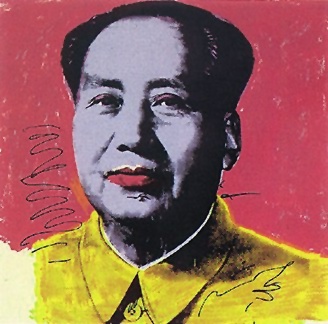
It is interesting that in Russia, both Lenin and even Stalin are still revered and that in China Mao Tse-Tung remains the symbol of the nation, its power and its unity.

Book after book has appeared in the west, year after year denouncing Lenin, Stalin and Mao: their crimes, sexual perversions and even in Mao's case the subject of his personal hygiene (the "great helmsman" was apparently allergic to soap and water), but still the people that suffered them most still revere their memory.

Americans refer to other nation's patriotism as "nationalism" and see that as a bad thing. Great American patriots and founders of the nation like Washington and Jefferson owned slaves and Jefferson's only descendants are black because he sexually exploited the slave girls at his mercy. Revisionist historians are now trying to prove that Abraham Lincoln was gay. Still Americans revere them for the same reason this article in the Los Angeles Times says that the Chinese revere Mao: because "he won the civil war and united China" and "he is remembered for uniting China and setting it on a course for prosperity". The lesson would be that, if you treasure your identity, with a little imagination you will understand that others treasure theirs too... even Iraqis. DS


Mao marches on - Los Angeles Times

Abstract: During a recent visit to Beijing, I was looking at the sky on a clear night when I was startled to see the ghost of Mao Tse-tung staring down at me. The legendary tyrant's mellow, moon-like visage sparkled above a spanking-new shopping center while a hidden PA system amplified his high-pitched Hunan accent: "The Chinese people have stood up!"(...) Mao's space at The Place is both ironic and dead serious. Mao, who branded China with a sharp and cutting anti-capitalist philosophy, is now a brand name in his own right, bestowed with the pride of place in an opulent urban mall, occupying center stage in a slick piece of visual propaganda drawn from archival footage. The Mao show, exalting the lineage of China's Communist Party leadership as an important party congress approaches, is sure to stir a flutter of reflexive pride in the casual passerby, well-heeled shopper and barefoot rag-picker alike. Deng Xiaoping, the late strongman who overturned Mao's legacy and put the workers' paradise on the road to being a shoppers' paradise, is conspicuous by his absence.(...) By and large, the Mao statues that were once so ubiquitous in Beijing are gone, but Mao never really went away. In fact, one can hardly make a purchase in China without seeing his dreamy visage, especially on the 100-yuan bill, the bill of all bills at a time when making money is truly the lifeblood of China.(...) There have been periodic bouts of nostalgia for Mao before, none more potent than the spontaneous popular uprising at Tiananmen in 1989. The demonstrators, despite their media-pleasing democratic rhetoric, had a decidedly Maoist cast. No one understood this better than Deng, the man who ordered the crackdown in fear of being deposed in a second Cultural Revolution. Both Jiang Zemin and Hu Jintao, though anointed by Deng for succession, have done much to stabilize and secure Mao's reputation, in no small part to bolster their own communistic legitimacy while freeing themselves from the Dengist straitjacket. Mao might have been a tyrant, as aloof as an emperor, but he won the civil war and united China, not unlike a ruthless predecessor he was said to admire. China's founding emperor, Qin Shihuangdi, was not a nice man by any reckoning, but he is remembered for uniting China and setting it on a course for prosperity. Every time we utter the word China -- "land of Qin" -- we inadvertently invoke the tyrant's legacy. And so too will Mao's legacy be invoked again and again, rough edges gradually smoothed out over time, reduced to a rounded pebble in a turbulent, ever-changing stream. READ IT ALL

Washington: Life among the tweedles

"After a debacle such as Iraq, you might expect some of the fundamental assumptions underpinning American foreign policy to be questioned. On the evidence of the presidential election, you would be disappointed." Gideon Rachman
David Seaton's News Links
For me, finding American democracy a hollow shell is the most disturbing aspect of the war and its aftermath. "Political autism" is the name I give it. It is as if the American political system had set out to illustrate the theories of Herbert Marcuse.

The only positive aspect of the war has been the awakening it is bringing about. The system has been failing the people it is supposed to represent in every area imaginable. Only a micro-financed, grassroots movement that converted the citizens into a pressure group -- which in fact is what democracy is supposed to be -- can ever correct this rot. DS


Gideon Rachman: Many contenders but just one voice - Financial Times
Abstract: On a whole range of issues that remain very controversial even among close American allies in Europe and Asia, there is a broad American consensus. This spans Barack Obama, Hillary Clinton and John Edwards on the Democratic side to Rudolph Giuliani, Mitt Romney, John McCain and Fred Thompson among the Republicans. All of the main candidates want to build up the American military rather than shrink it. (Senator Clinton wants to add 80,000 troops to the army). They all agree that the US has the right to take pre-emptive military action in the “war on terror”. They all still argue that the US should be promoting democracy around the world. None would accept the idea that the UN could ever constrain America, if vital national interests were at stake. They are all strong supporters of Israel. And they are all talking tough on Iran.Even on Iraq – despite the bitter rhetoric – the mainstream Democratic and Republican positions are closer than either side would care to acknowledge. President George W. Bush announced last week that troops will start withdrawing later this year. The “surge” is over. But none of the main Democratic candidates endorses the anti-war left’s call for an immediate and complete pull-out. So the debate comes down to an argument about the scale and pace of troop withdrawals. This is not an insignificant question. The answers range from Senator Obama’s ambition to get most American troops out by the end of 2008 while retaining a “residual force” to attack al-Qaeda, to Senator McCain’s suggestion that some US troops may stay in a pacified Iraq for decades. But all the candidates are responding to the public desire to wind the war down, in as “responsible” a fashion as possible. The fact that the candidates’ rhetoric and positions are converging does not, however, mean they would govern identically. While everybody says it is unacceptable for Iran to acquire nuclear weapons, the candidates have different instincts. All of the Democrats and Mr Romney on the Republican side are disinclined to bomb; but Messrs Giuliani and McCain might well seek to “take out” Iranian nuclear facilities, if Mr Bush has not got there first. And despite the many areas of bipartisan consensus, there are a few important differences between Republicans and Democrats. All of the Democrats talk a lot about global warming. The Republicans – with the exception of Mr McCain – do not seem too bothered. And while all of the candidates have to sound sceptical of the UN, the Republicans are much warier of international institutions and treaties. But, as an outsider, it is still the broad agreement among the candidates that is more striking than their disagreements. After a debacle such as Iraq, you might expect some of the fundamental assumptions underpinning American foreign policy to be questioned. On the evidence of the presidential election, you would be disappointed. READ IT ALL

Monday, September 17, 2007

Greenspan redefines "cleaning up"

David Seaton's News Links
To understand where Alan Greenspan is coming from, it's important to know that as a young man he was one of Ayn Rand's most favored disciples and that her magnum opus, "Atlas Shrugged" could be said to be his "bible". Outside of the parameters of human relations affirmed by all major faiths, it is a book whose philosophy Gore Vidal described as “nearly perfect in its immorality.”

To make a long story short, Greenspan's years at the Fed have not been about the economy, which is now beginning to unravel: these years have been about Greenspan, who is now about to make a lot of money writing and speaking. And if what he writes or what he says about current affairs destabilizes that economy... hard cheese (that's British for tough shit). DS


Greenspan: His Fault - Portfolio.com
Abstract: Greenspan’s book will make headlines over the next few weeks, in part because of his surprisingly downbeat assessment of the economy and financial markets. But even though he left the Fed more than a year and a half ago, his recollections aren’t of merely historical interest. The current turmoil on Wall Street is largely a result of policy decisions he made during his final years. By keeping interest rates too low for too long, he encouraged a borrowing-fueled speculative binge, which has now given way to a credit squeeze. By failing to crack down on the mortgage industry, he allowed subprime hucksters to peddle dubious loans, which the financial industry’s math whizzes packaged for investors. Coming on top of his role in creating the internet-stock mania a decade ago, the mistakes Greenspan made—now playing out in home foreclosures and hedge fund collapses—will surely color historians’ views of his long tenure, if not his own account of it.(...) Since leaving the Fed, he has continued to make news, if not always in ways he would like. Within weeks, he started making off-the-record appearances before select audiences: hedge fund managers, investment bankers, and the like. Inevitably, some of his remarks slipped out, causing disruptions in the markets. In February, he said a recession was possible before the end of 2007—a comment that contributed to a 416-point fall in the Dow. In May, he put the chances of a recession at one in three. Two weeks later, he rattled international bourses by saying that a bubble had developed in the Chinese stock market and a “dramatic contraction” was inevitable. When Greenspan was chairman of the Fed, his public statements were famously delphic. While he is entitled to make a living—he reportedly charges $150,000 a speech and received an $8.5 million advance for the book—there is something jarring about his late-life discovery of clear, declaratory English. His predecessor, Paul Volcker, was barely heard from for years after he retired, and Greenspan’s failure to follow that example has perplexed some of his former colleagues.(...) Citing fears (which proved to be misplaced) of Japanese-style deflation spreading to the United States, he kept the federal funds rate at 1 percent until June 2004, by which point the economy had been growing steadily for more than two years. By failing to tighten monetary policy, Greenspan created an apparently limitless supply of cheap credit. After adjusting for inflation, the cost of cash was close to zero. Investment banks, hedge funds, and other financial operators were able to obtain money at minimal cost and use it to finance risky investments. To a lesser extent, so could ordinary Americans. In a feat of levitation almost without precedent, the prices of nearly all speculative assets moved in the same direction: U.S. stocks went up; foreign stocks went up; residential real estate went up; commercial real estate went up; oil went up; gold went up; sugar went up; coffee went up; Treasury bonds went up; junk bonds went up. To make money, all you had to do was suit up, buy something, and sit back and watch it grow.(...) Greenspan has come up with a new argument. “These adverse periods are very painful, but they’re inevitable if we choose to maintain a system in which people are free to take risks,” he said in August. Because of his Randian view of the world, there is no reason to doubt that Greenspan believes what he said, but it raises the question of whether he was ever a suitable choice for Fed chairman, given his understanding of the job. The reason the Fed was set up, in 1913, was to preserve financial stability—to break the historical pattern of ruinous boom-and-bust cycles. Central banks maintain stability by limiting the types of risks people can take, either by raising the cost of borrowed money or by enforcing regulations. If all else fails and panic breaks out, they inject liquidity into the system by acting as a bank of last resort, which is what the Fed and other central banks were forced to do over the summer. Given Greenspan’s inaction during his final years in office, our current crunch was pretty much inevitable. In addition to reducing interest rates to 1 percent, he rejected calls for more vigorous oversight of the mortgage industry. Instead of outlawing such dubious practices as the provision of “2-28” loans—which lure borrowers by offering them cheap rates for two years and then sock them with enormous increases in their monthly payments—the Fed issued vague “guidance” letters that most lenders ignored.(...) Greenspan did get one thing right, though: his retirement date. Were he still at the Fed, he would be responsible for cleaning up the mess he helped create. While his successor, Ben Bernanke, watches anxiously to see who the next casualty of the credit squeeze will be—a Wall Street investment bank? a big hedge fund? a private equity firm?—Greenspan will be busy signing autographs at Borders and Barnes & Noble. If you want to question him about all of this, get there early. The lines will be long.
READ IT ALL

Bill Gates out a billion bucks!

Ouch!
David Seaton's News Links
A 19th century Spanish political boss, the count of Romanones once said, "let others write the laws, leave the regulations to me."

While the USA goes around invading countries and killing people and other such he-manly activities. The European Union does all the girly-man stuff like socking it to Microsoft.

I suppose its just the crumminess of human nature that keeps so many of us from feeling Bill Gates's pain. DS

European Court Rejects Microsoft Antitrust Appeal - New York Times
Abstract:In a stinging rebuke to the world’s largest software maker, the second-highest European court rejected today a request by Microsoft to overturn a 2004 European Commission antitrust ruling that the company had abused its dominance in computer operating systems. The European Court of First Instance, in a starkly worded summary read to a courtroom of about 150 journalists and lawyers here, ordered Microsoft to obey a March 2004 commission order and upheld the €497.2 million, or $689.4 million, fine against the company. The court’s presiding judge, Bo Vesterdorf, reading a summary of the decision on his final day in office, said, “The court finds the commission did not err in assessing the gravity and duration of the infringement and did not err in setting the amount of the fine. Since the abuse of a dominant position is confirmed by the court, the amount of the fine remains unchanged.” “The court said the commission wins on virtually everything,” said Thomas Vinje, a partner at the law firm Clifford Chance and part of the legal team for the European Committee for Interoperable Systems, a coalition that includes Microsoft opponents like I.B.M. “The court has spoken. The commission was right.” In a one-line statement this morning, the European Commission said it welcomed the ruling on Microsoft, without giving any further details.(...) Microsoft has already been forced to pay nearly €1 billion in fines in the nine-year-old legal case, which has pitted the software maker based in Redmond, Wash., against the commission and a host of competitors, including I.B.M., Sun Microsystems, RealNetworks and Novell. READ IT All

Sunday, September 16, 2007

Al Qaeda: missing the point

David Seaton's News Links
One of the difficulties in trying to get a focus on Al Qaeda is concentrating on their identity as terrorists (which, of course, they are) and not giving enough thought to their being a movement with clear objectives which are being patiently and methodically pursued.

A group such as GRAPO, which is simply a terrorist organization without being a movement with an ample social base, for example, can be closed down with (relative) ease. But if a group has a social base and constitutes a movement, even if that base is small and its ideology simply a mishmash of local ethnic myths laced with some warmed over Marxism (for example ETA), it can resist decades of the most intense pressure, both military and political, and still stay active.

Al Qaeda has a growing social base in a world-wide community of 1.3 billion people. In many Muslim countries Osama bin Laden is more popular than the local chief of state.

Terrorism, while very important, pales in significance to the mobilization of masses for which terrorist activity is merely an advertising campaign. Once a movement is constituted it can be used for many things: like a fat person in a rowboat, when an activated mass moves in any direction, the "boat" tips. It is the movement of that mass, more than the terrorist actions committed to arouse them that will give the west the most serious problems in the future. DS


Al Qaeda 'co-opts' new affiliates - Los Angeles Times
Abstract: Secure in its haven in northwestern Pakistan, a resurgent Al Qaeda is trying to expand its network, in some cases by executing corporate-style takeovers of regional Islamic extremist groups, according to U.S. intelligence officials and counter-terrorism experts. Though not always successful, these moves indicate a shift in strategy by the terrorist network as it seeks to broaden its reach and renew its ability to strike Western targets, including the United States, officials and experts say.(...) Bruce Riedel, a senior CIA counter-terrorism official until late last year, said Al Qaeda "central" stands to gain hundreds or even thousands of foot soldiers, many of whom already have been radicalized, carry European passports and don't require a visa to travel to the United States. "I think what we are seeing is the reconstitution of their capabilities to strike targets in Western Europe and ultimately North America on a scale identical or bigger than Sept. 11," said Riedel, a senior fellow at the Brookings Institution. "Absolutely, we should be alarmed about this. They are creating franchises and buying franchises, offering expertise, networks, money." From northwest Pakistan, these current and former officials say, Al Qaeda leaders have rebuilt a network of field commanders that was largely decimated in the post-Sept. 11 attacks on its bases in Afghanistan.(...) The most clear-cut example is that of Al Qaeda in the Islamic Maghreb, an extremist group previously known as the Salafist Group for Call and Combat, known by the French acronym GSPC. The earlier group consisted mostly of Algerians bent on overthrowing their own government.(...) "They had people but they had no arms, no training and no money. By pledging allegiance, they got all of those," one recently departed State Department counter-terrorism official said. In return, Al Qaeda "got more juice" in the form of frequent attacks on Western targets that raised its visibility, the official said.(...) U.S. intelligence officials are convinced that the alliance is not so much a merger but a takeover of the GSPC, which Riedel said came only after "many, many months of discussions about what the terms and conditions would be" between Zawahiri and Bin Laden and GSPC leader Abdelmalek Droudkel. The group now is active throughout much of North Africa and the sub-Saharan Sahel region.Al Qaeda leaders in Pakistan are using the network's contacts and foot soldiers in North Africa and in Spain and other parts of Europe. In many parts of Europe, they can disappear into large North African communities to recruit operatives, raise money and plot attacks. READ IT ALL

Friday, September 14, 2007

Bush, the king Midas of death

A high-profile Sunni Arab sheik who collaborated with the American military in the fight against jihadist militants in western Iraq was killed in a bomb attack on Thursday near his desert compound. The attack appeared to be a precisely planned assassination meant to undermine one of the Bush administration’s trumpeted achievements in the war.
New York Times

Thursday, September 13, 2007

Afghanistan: love us or we'll kill you

David Seaton's News Links
Afghanistan is also a failure. It means a failure for the USA, but also for NATO and the EU... the West. Future historians, probably future Chinese historians, will mark these times.

There is a simple lesson here, you cannot invade a country and stay there and then expect the people to love you and appreciate you. My basic text for knowing this is what the Spanish call their "War of Independence", the fight against Napoleon. Here is what Wikipedia has to say:
"Spain's liberation struggle marked one of the first national wars and was among the first modern, large-scale guerrilla conflicts, from which the English language borrowed the word Its success was in part decided by the exploits of Spanish guerrillas and the inability of Napoleon Bonaparte's large armies to pacify the people of Spain: French units in Spain, forced to guard their vulnerable supply lines, were always in danger of being cut off and overwhelmed by the partisans, and proved unable to stamp out the Spanish army."
In many ways this was a tragedy for Spain, because Napoleon brought with him the modernizing ideas of the Enlightenment, which paved the way for the scientific and industrial revolutions. In Italy, for example, where Napoleon ruled, is today's modern, industrial north and where he didn't rule -- like the ring on a bathtub -- is the backward Mezzogiorno.

Because they were the ideas of the foreign invader, the Spanish people came to hate those ideas and clinging to their version of the ancien regime set the scene for a disastrous 19th and early 20th century.

This what is happening in Iraq and Afghanistan. DS

We're losing in Afghanistan too - Los Angeles Times
Abstract: In reality, Afghanistan -- former Taliban stronghold, Al Qaeda haven and warlord-cum-heroin-smuggler finishing school -- feels more and more like Sept. 10, 2001, than a victory in the U.S. war on terrorism. The country is, plain and simple, a mess. Al Qaeda and its Taliban allies have quietly regained territory, rendering wide swaths of the country off-limits to U.S. and Afghan forces, international aid workers and even journalists. Violent attacks against Western interests are routine. Even Kabul, which the White House has held up as a postcard for what is possible in Afghanistan, has become so dangerous that foreign embassies are in states of lockdown, diplomats do not leave their offices, and venturing beyond security perimeters requires daylight-only travel, armored vehicles, Kevlar and armed escorts.(...) Consider that an American Embassy staffer going to the U.S. Agency for International Development office across the street is required to use an underground tunnel that links the two compounds. Even though the street is closed to all traffic other than official U.S. or U.N. vehicles and is patrolled and guarded by armored personnel carriers, tanks and Kalashnikov-carrying security personnel with a safety perimeter of several blocks, the risk from snipers, mortars or grenades is ever present.(...) By some measures, Afghanistan should be a feel-good story by now -- the Taliban is, officially at least, out of power, Al Qaeda has been chased to the wilds of the Afghan-Pakistani border and U.S. forces are on hand to consolidate and solidify a peaceful new order. But the truth is very different. By any measure, this remains a "hot" war with a well-armed, motivated and organized enemy. Village by village, tribe by tribe and province by province, Al Qaeda is coming back, enforcing a form of Islamic life and faith rooted in the 12th century, intimidating reformers, exacting revenge and funding itself with dollars from massive poppy cultivation and heroin smuggling. As Al Qaeda reestablishes itself, Osama bin Laden remains free to send video messages and serve as an ideological beacon to jihadis worldwide. READ IT ALL