Wednesday, December 06, 2006

Litvinenko meets Sherlock Holmes - Chapter - 2, the plot thickens... and why not?

David Seaton's News Links
As we learned in the previous episode, Sherlock Holmes and Doctor Watson, after knocking back a celestial English breakfast in a foggy corner of paradise, have been visited by the Archangel Gabriel on urgent business from his "employer" who is puzzled by the "Litvinenko affair". DS
As we rejoin them, Watson is reloading his pipe and Holmes is serving Gabriel with another smoked kipper. At this moment their faithful but ghostly housekeeper, Mrs. Hudson hands him a note.
On reading it, the great detective's aquiline face barely conceals his evident excitement, "How perfectly extraordinary!" Holmes exclaims as he leaps to his feet, "Listen to this item that Mrs. Hudson just heard on the BBC" "Small traces of a radioactive substance have been found at the British embassy in Moscow following a precautionary check, the UK Foreign Office has said. " My dear Gabriel, to put my mind at ease, do please, confirm that Professor Moriarty is in fact in residence on the lower floors. This embassy business has his touch, if anything ever did."
To be continued

On Iraq polls show: all the ducks in a row, except the lame duck

David Seaton's News Links
Rarely, if ever have American's been both so well informed and so much in common accord about any issue as they are today about what is to be done with Iraq. We have an elite group of "gray beards", the Baker-Hamilton Commission, and on the other, the vast majority of Mr. and Mrs. John Q. Public; in this case, all are pulling in the same direction. The verdict: get out quick and organize a huge regional peace conference to cover the retreat by settling all the major issues outstanding. A general peace in the Middle East, means a peace that saves the "moderate" regimes allied with Washington and that means solving the Israel/Palestine conundrum in such a way as to salvage the prestige of those moderates with the "Arab street". That means Israel returning to its 1967 borders and turning Jerusalem into an international city and all of this without much real guarantee that Iran will forsake its nuclear programs. This is the total defeat of the neocon, hard-wilsonian project. So now we are finally going to see if AIPAC is really as powerful as it is supposed to be. This is their big test. Do they have the influence to overcome such a consensus? DS
Abstract (tip of the hat to TomDispatch): A new poll by WorldPublicOpinion.org finds that three out of four Americans believe that in order to stabilize Iraq the United States should enter into talks with Iran and Syria, and eight in ten support an international conference on Iraq. A majority also opposes keeping U.S. forces in Iraq indefinitely and instead supports committing to a timetable for their withdrawal within two years or less.(...) 75 percent say that the United States should have talks with Iran and the exact same number say that the United States should have talks with Syria. This diplomatic approach is endorsed overwhelmingly by both parties: eight in ten Democrats and seven in ten Republicans endorse talking with both Iran and Syria. There is also strong bipartisan support for calling a major international conference where diplomats from the United States, Europe, the United Nations and the Arab world could meet Iraqi leaders to discuss how to stabilize Iraq and encourage economic growth there. Seventy-nine percent (Republicans 79%, Democrats 80%) say they support such a conference; only 18 percent believe that instead foreign leaders should “stay out of Iraq’s affairs.” On the issue of how long U.S. troops should remain in Iraq, a majority of Americans reject the current policy of keeping troops in the country indefinitely. Fifty-eight percent say troops should be withdrawn according to a timetable, while 38 percent say that U.S.-led forces should only be reduced “as the security situation improves.” There is substantial variation in the length of the timetable preferred: 18 percent prefer six months, 25 percent one year and 15 percent two years. There are partisan differences on this issue, however. While most Democrats (78%) think U.S. forces should be out within two-years or less, including 61 percent who favor a one-year or less, a majority of Republicans (64%) believe forces should be withdrawn only as security improves. Fifty-six percent of Independents also support withdrawal within two years. Support for withdrawal according to a timetable becomes stronger “if the majority of the Iraqi people say they want the U.S. to commit to withdraw U.S. forces according to a timeline of no more than a year.” Seventy-three percent say the United States should withdraw in a year or less if most Iraqis want them to, including 67 percent of Republicans and 82 percent of Democrats. Fifty-eight percent also believe that the majority of the Iraqi people want the US to commit to one-year timeline. A poll of the Iraqi public conducted by WorldPublicOpinion.org in September 2006 found that 71 percent want U.S.-led forces to commit to withdraw within a year.(...) This desire for a commitment to pull U.S. troops out within a year appears to arise from doubts about whether the U.S. presence helps or hurts stability in Iraq. Six in ten Americans (60%) believe that the United States’ military presence in Iraq is provoking more conflict than it is preventing. Only 35 percent believe U.S. troops are stabilizing the country. The belief that U.S. forces are provoking conflict has risen 5 points since March 2006 and 9 points since October 2004. READ THE ENTIRE POLL

Falling dollar, a field of sunflowers

David Seaton's News Links
Have you ever watched a field of sunflowers on a summer's day as they turn their thousands of heads simultaneously to follow the sun as it moves across the sky? An interesting way of thinking about what appears to be happening to the dollar right now is to compare the behavior of currency traders, great and small to those sunflowers. Each sunflower is an individual, not connected to the other sunflowers, but they react as one to the same stimulus. You could even say that sunflowers are more individualistic than financiers, as, unlike the currency traders, the sunflowers don't talk to each other. Just like the sunflowers the traders are moved by a common stimuli: the flowers moved by the sun, the traders moved by profit. The sun of course is much more dependable than profit. Therein the calm of the flowers and the agitation of the traders. The traders are torn between two "suns": one sun is the hope that the dollar will not crash and destroy huge chunks of wealth in the form of dollar valued assets and the other sun is the desire not to be the last one out of door if the dollar does begin to fall sharply. The traders will all stand firm as one to defend value and all rush for the door as one to avoid losing their shirts. The movement will be much brusquer than the stately sway of the sunflowers on a summer's day. We'll have to switch our metaphor to lemmings then. DS
When the Dollar Talks Back - Editorial - New York Times
Abstract: Growth and relatively high rates — if they came to pass — would be a good combination for the dollar. But as of yesterday, the dollar hadn’t moved up much from its recent lows against other major currencies. Investors remain largely focused on economic weakness in the United States and gathering strength in Europe — which portend a weaker dollar, no matter what anyone says. A weaker currency is inevitable for a country as indebted as the United States is. During the Bush years, deficits have mushroomed — in the federal budget and in trade. Anything that affects foreign investors’ willingness to finance enormous deficits pushes the dollar down — including better investment opportunities elsewhere, as there are now. The great unknowables are the timing and steepness of a sustained dollar decline. Over the past few years, investors who bet on a weakening dollar have lost money. But the current swoon is a reminder that no nation, even the United States, can borrow forever without facing up to economic consequences. The government has been assuming — correctly, so far — that the United States is too big to fail. Administration officials seem confident that the Chinese, in particular, will continue to finance the nation’s deficits, because doing so helps their exports. They also assume that China and other countries won’t sell off chunks of their huge dollar holdings, lest they drive the dollar down, and with it, the value of their remaining dollar-based assets. That’s more like a standoff than stability, and it puts way too much of the nation’s well being in the hands of foreign central bankers. But it’s the best the Bush crowd has had to offer, because true stability in global finance is grounded in fiscal responsibility at home, something the administration lacks. READ IT ALL

Segolene and "the Lobby"

David Seaton's News Links
For an American politician Segolene Royal's treatment of France's powerful Jewish lobby must seem like science fiction. In fact it is very simple. Imagine if say, the entire African-American community in the United States were militantly pro-Palestinian and decided their vote mainly on that issue. How would a Democratic politician play that? Lose media support and financing or lose a solid 18% of the popular vote on an issue that is not decisive for the rest of the electorate? The price of elitist politics is that when issues become so simple and self-evident that "you don't need a weatherman to tell which way the wind blows," then the media's "gate-keeper" function ceases to exist and numerically small, but powerful groups being able to control the behavior of the elites no longer guarantees their achieving desired outcomes. DS
A snub from Segolene Royal - Haaretz
Abstract: It was a very embarrassing moment. The scene: the lobby of the King David Hotel in Jerusalem. The players: Segolene Royal's spokesman Julian Dray and a representative of CRIF, the umbrella organization of the Jewish community in France. "I have nothing to talk to you about!" said Dray heatedly to the astonished Jewish representative. "You have sold your soul to the other side; you have nothing to look for with us. Go back to your friend Nicolas Sarkozy; he's your landlord." The CRIF representative tried with all his might to convince Dray that his organization is taking an absolutely objective position with regard to the presidential race in France. But Dray stuck to his guns. "You are going to pay dearly for your one-sided mustering," he went on to shout. "Segolene will be president, and you will have to pray for her to receive you for a discussion."(...) It is an open secret that the Jews as an organized body have sworn allegiance to the candidate of the right, Sarkozy. At every opportunity, he meets with them and consults with them. At every opportunity they evince enthusiasm for him that is intended to convey the impression they are supporting him in his race for the presidency. This is the reason Royal did not accept an invitation to meet with the heads of the organization in recent months. This is also the reason she ignored their existence when she decided at the last minute to pop over to Israel and the reason the party spokesman related to the representative of the organization as though he were a leper.(...) recently they have been attacked by an acute desire to resemble the American Israel Public Affairs Committee (AIPAC). For years, the American lobby has been standing up as a defensive wall behind the hawkish views in Israel. The heads of the right have been greeted as heroes at its conferences, whereas the heads of the left have pleaded in vain for similar treatment. The heads of CRIF took a step and learned it came with a price. "It has never yet happened to us that we have not had a connection with any key person in a candidate's headquarters," admitted a senior figure in the organization.(...) It is no wonder, then, that the first to make accusations against Royal in the wake of her visit to Israel have been the heads of CRIF.(...) When the alliance between the Jews and the presidential candidate of the right becomes a consolidated fact, the voters from Muslim backgrounds will flock to the Socialist candidate to serve as a counterweight to the Jews. To the extent that the Jews will expect a return for their support of Sarkozy, the Muslims will expect a similar return for their support of Royal. If this happens, the distance between the two communities, which are embroiled in any case, is liable to grow even larger. READ IT ALL

Tuesday, December 05, 2006

Richest 2% own 'half the wealth' - World Institute of Development Economics Research

David Seaton's News Links
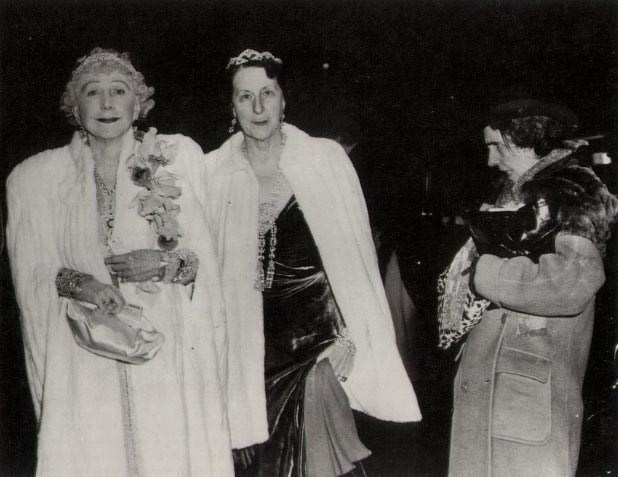
The classic Weegee photo is from the 1930s, but the news item is today's. Plus ca change, plus c'est la meme chose. Jesus wept. DS
Abstract from BBC News: The richest 2% of adults in the world own more than half of all household wealth, according to a new study by a United Nations research institute. The report, from the World Institute of Development Economics Research at the UN University, says that the poorer half of the world's population own barely 1% of global wealth. There have of course been many studies of worldwide inequality. But what is new about this report, the authors say, is its coverage. It deals with all countries in the world - either actual data or estimates based on statistical analysis - and it deals with wealth, where most previous research has looked at income. What they mean by wealth in this study is what people own, less what they owe - their debts. The assets include land, buildings, animals and financial assets. READ IT ALL

Bush 41: a father's tears

David Seaton's News Links
I don't have any children, but it must be terrible when one goes bad. DS

Gallup poll shows: after six years of Bush the American people are finally wising up

David Seaton's News Links
This Gallup poll shows that after six years of George W. Bush, Americans are wising up, they finally realize that the menu of US presidential candidates they are being offered is similar in quality to the McDonald's menu in "Super Size Me". Certainly the "people's choice", that great American, "Don't Know," is good news, a sign that "vox populi, vox dei" may still be in force. DS
Abstract from Editor and Publisher: The frontrunner for winning the White House in 2008 is a true dark horse: Don't Know. A new Gallup survey, which offers a twist on its usual preference poll. includes "Don't Know" as an option. It now wins with 38%, trailed by Sen. Hillary Clinton at 15% an Sen. John McCain at 11%. Gallup Poll director Frank Newport sums it up this way today: "Many Americans cannot spontaneously think of the name of a person they would like to see elected president in 2008. While this lack of firm conviction about presidential candidates over a year before the first 2008 primaries is not necessarily unusual, it underscores the certainty of change as various politicians announce their candidacies and jockey for position in the months ahead." Sen. Barack Obama already is in the #3 slot, at 6%. Five other possible candidates are picked by between 2% and 5%: former New York City Mayor Rudy Giuliani, former Sen. John Edwards, Sec. of State Condoleezza Rice, former Speaker of the House Newt Gingrich, and former Vice President Al Gore. This "top-of-mind" survey was taken Nov. 27-29. McCain leads Clinton among Independents by a narrow margin.

Lance Corporal Daniel Smith: of rapists and empires


David Seaton's News Links

The case of convicted rapist, US Marine Lance Corporal, Daniel Smith, has important strategic ramifications for the far flung empire of US military bases around the world. Sentenced by a Manila court to life imprisonment for raping a 22 year old Filipino woman, Suzette Nicolas with what the court described as "chilling, naked sadism", reports say he showed "no emotion" while being led away. He is now in a Philippine jail awaiting appeal. You may ask, what is so important about a rapist being in jail? The problem would be if the rapist were not in jail, no? Well, not quite, because Lance Corporal Smith as a US Marine has special privileges in the Philippines under the "Visiting Forces Agreement". Here is how Wikipedia describes the agreement, "The primary effect of the Agreement is that it allows the U.S. government to retain jurisdiction over U.S. military personnel accused of committing crimes in the Philippines, unless the crimes are of "particular" importance to the Philippines. This means that for crimes without this significance, the U.S. can refuse to detain or arrest accused personnel, or may instead prosecute them under U.S. jurisdiction. The Agreement also exempts U.S. military personnel from visa and passport regulations in the Philippines." This sort of agreement is being questioned all over the world and there have been many ugly incidents recently in South Korea and Okinawa. These agreements are viewed as extremely humiliating wherever they are in effect and the popular pressure to rescind them is growing stronger by the day. To understand the potentially enormous significance of the Smith case and other cases like it, I strongly suggest reading Chalmers Johnson's ground breaking book, "The Sorrows of Empire". To end this post, I'll include this quote from an article in today's Financial Times, "The question of custody over L. Cpl Smith could develop into a sore point and weaken US-Philippine military co-operation against terrorism, analysts said. A legislative panel overseeing the visiting forces agreement voted to terminate the arrangement and stop all joint military exercises for the duration of the rape trial after the US refused Manila's request to take custody of the four servicemen after they were arraigned in February. Lawmakers were likely to revive moves to scrap the agreement if Manila gave up custody of L. Cpl Smith and allowed him to be confined at the US embassy again, said Theodore Te, a law professor." And to follow the updates to this important story as it develops, here is a link to Google News. DS

Middle Eastern crash and burn - Zbigniew Brzezinski

David Seaton's News Links
Before going any farther it is important to warn readers that Zbigniew Brzezinski was one of the prime intellects behind arming Wahabi extremists to fight the Soviet Union in Afghanistan. However, errors when meditated upon are the best of teachers and It looks like Mr. Brzezinski has got it straight this time. Certainly the issues in the Middle East are being defined clearly for the first time and even the US relationship with Israel is being timidly questioned. A beginning? Again, errors when meditated on are the best of teachers. DS
Abstract from the Financial Times: In Iraq (except for Kurdistan) real power is not in the hands of the Iraqi politicians resident in the US-protected Green Zone in Baghdad, any political solution must engage the Shia theocracy, with its militias; and that the longer the American occupation continues, the already declining US influence in the Middle East will give way to regional extremism and instability, especially if continuing indecision over the basic strategic choices in Iraq continue to be matched by US unwillingness to address the negative regional consequences of Israel’s prolonged and increasingly repressive occupation of the Palestinians. The combination of the two has already elevated Iran’s geopolitical power in the region. Hence the need of the moment is not for tactical tinkering or long consensus reports. Can one imagine Charles de Gaulle in the late 1950s waiting weeks for a long study by French public figures on how to end the Algerian war that was damaging France’s national unity and international reputation? Leadership derived from a sense of history requires sometimes the cutting of Gordian knots, not tying oneself up in knots. The president, and America’s political leadership, must recognise that the US role in the world is being gravely undermined by the policies launched more than three years ago. The destructive war in Iraq, the hypocritical indifference to the human dimensions of the stalemate in Israeli- Palestinian relations, the lack of diplomatic initiative in dealing with Iran and the frequent use of Islamophobic rhetoric are setting in motion forces that threaten to push America out of the Middle East, with dire consequences for itself and its friends in Egypt, Israel, Jordan and Saudi Arabia. READ IT ALL

US base on the Moon... Sandino, where are you, now that we need you?

David Seaton's News Links
The old Nicaraguan Sandinista fighting song, refers to confronting the "yanqui, enemigo de la humanidad". The first time I heard it, I felt hurt and offended, excluded and discriminated against... As years past and by the well-worn method, of "walking a mile in another man's shoes," I got an inkling of what they were talking about. In Iraq and the Middle East, it doesn't take much imagination to answer the question, "Why do they hate us?". But, until today, I really didn't feel fully part of the "humanidad" that the "yanqui" is an "enemigo" of. If we are "yanquis", and want to be part of the "humanidad" and not some aliens from outer space set on world conquest, then we must locate and identify these "über-yanquis" from outer space in our midst, so that once identified we can exorcise them and join our brothers and sisters of the human race. Because I can see, by looking in the mirror, (try it) that this is my birthright too. DS
US plans permanent base on Moon - BBC News
US space agency Nasa has said it plans to start work on a permanently-occupied base on the Moon after astronauts begin flying back there in 2020. The base is likely to be built on one of the Moon's poles and will serve as a science centre and possible stepping stone for manned missions to Mars. The US has already said it plans to build a new lunar spacecraft to succeed the last Apollo mission in 1972. Funds will be moved from space shuttle flights, due to be scrapped in 2010. The structure of the base and the exact duties of the astronauts stationed there have not been decided. READ IT ALL

Monday, December 04, 2006

Tipping point: Coming to grips with failure in the Middle East

David Seaton's News Links
Today, UN Secretary General Kofi Annan said, "If I were an average Iraqi, obviously I would make the same comparison, that they had a dictator who was brutal but they had their streets, they could go out, their kids could go to school and come back home without a mother or father worrying: 'Am I going to see my child again?' The society needs security and a secure environment for it to get on. Without security, not much can be done - not recovery or reconstruction." There is a moment when failure becomes 'official', a moment when Paul Krugman asks, "How do you ask a man to be the last to die for a bully’s ego?" This moment is called the "tipping point", when people start running for the doors. Many Americans have trouble realizing how bad things really are at this moment; the American managerial class, mostly lives cocooned in the comfortable banality of the suburbs, . But in the Middle East, where rich and poor... they are all of them staring death and chaos straight in the face, every day... for them, all this is all very real. At bottom I think both Americans and the people of the Middle East thought the USA was much more powerful than it really is. All of us still lived with the image of the omnipotent America of the 1950s and 1960 in our heads and together we are having to face the truth. Only facing that truth is a much more serious business in the Middle East than in an American suburb. DS
Mideast allies near a state of panic - Los Angeles Times
Abstract: Instead of flaunting stronger ties and steadfast American influence, the president's journey found friends both old and new near a state of panic. Mideast leaders expressed soaring concern over upheavals across the region that the United States helped ignite through its invasion of Iraq and push for democracy — and fear that the Bush administration may make things worse. President Bush's summit in Jordan with the Iraqi prime minister proved an awkward encounter that deepened doubts about the relationship. Vice President Dick Cheney's stop in Riyadh, the Saudi capital, yielded a blunt warning from the kingdom's leaders. And Secretary of State Condoleezza Rice's swing through the West Bank and Israel, intended to build Arab support by showing a new U.S. push for peace, found little to work with. In all, visits designed to show the American team in charge ended instead in diplomatic embarrassment and disappointment, with U.S. leaders rebuked and lectured by Arab counterparts. The trips demonstrated that U.S. allies in the region were struggling to understand what to make of the difficult relationship, and to figure whether, with a new Democratic majority taking over Congress, Bush even had control over his nation's Mideast policy. Arabs are "trying to figure out what the Americans are going to do, and trying develop their own plans," said Sen. Jack Reed (D-R.I.), one of his party's point men on Iraq. "They're trying to figure out their Plan B." The allies' predicament was described by Jordan's King Abdullah II last week, before Bush arrived in Amman, the capital. Abdullah, one of America's steadiest friends in the region, warned that the Mideast faced the threat of three simultaneous civil wars — in Iraq, Lebanon and the Palestinian territories. And he made clear that the burden of dealing with it rested largely with the United States. "Something dramatic" needed to come out of Bush's meetings with Iraqi Prime Minister Nouri Maliki to defuse the three-way threat, Abdullah said, because "I don't think we're in a position where we can come back and visit the problem in early 2007."(...) Expressing deeper unhappiness with the United States, leaders from Jordan, Egypt and Persian Gulf countries told Rice during her trip to an economic development conference in Jordan on Friday that the U.S. had a responsibility to solve the Israeli-Palestinian conflict, which they and many analysts viewed as the key to regional stability. Amr Moussa, secretary-general of the Arab League, urged greater U.S. action, warning that the Middle East was becoming "an abyss…. The region is facing real failure." READ IT ALL

Litvinenko meets Sherlock Holmes

David Seaton's News Links
In a particularly foggy corner of literary paradise, the specters of Sherlock Holmes and Doctor Watson puff contentedly upon their pipes and survey the glorious ruins of a huge, celestial English breakfast with a half a dozen crumpled newspapers scattered about them. Suddenly, with a light knock on the door, the ghost of their faithful housekeeper, Mrs. Hudson, ushers a mysterious visitor into their presence.

The visitor, though visibly agitated, is yet an imposing figure, over seven feet tall, with a massive mane of glowing, blond ringlets and covered with a flowing cape that, hastily donned, fails to disguise the massive wings upon his shoulders. "Do sit down Gabriel and tell us what business brings you here," Holmes enjoins the magnificent apparition, a faint smile playing on his thin lips "... You know who I am?" replies the startled archangel. "Elementary my dear Gabriel, now please proceed.”


A bit flustered the heavenly messenger begins, "I come at the request of my employer, whose name I am forbidden to pronounce." Holmes raises his hand saying, "Be assured of Doctor Watson's and my total discretion." "Well, you see," the Angel, thus encouraged, continues, "It’s this Litvinenko affair," "Ah yes!" says the great detective rubbing his hands together, "I've been following it in the papers". "Well despite his omniscience and omnipotence it has my employer completely puzzled and we rather hoped you'd help us out. Saint Peter is frantic, don't you know, as he doesn’t really know what to do with this Litvinenko chap and the fellow is playing his cards very close to his chest and is saying nothing... hoping to stay up here, I should imagine!"


"A most curious case,” the great detective begins, “if I didn't know that he was safely in residence a few floors below, I'd swear all this was the work of professor Moriarty, especially the bizarre appearance of a flock of radioactive airplanes sowing panic around Europe. That has his masterful touch. But with Moriarty, er… um, deceased and that being impossible, eliminating that, what ever else is left, however improbable must be the truth... It can't be the professor."


"Now several things strike one straight off the bat, the method employed for example, I imagine that London still offers the murderer as infinite a number of discreet ways to carry out his task as it did in my day: pushing people under those wonderful double-decker buses is a perennial favorite. Why use something so baroque as polonium? Obviously the reason was to keep the story in the papers. Why ever would Putin want to do that?” I have trouble then believing it was Putin, quite the contrary, it must have been one or several of his enemies, he has quite a few, I believe. Every time the fellow goes off to summit or some such one of his critics manages to get killed in spectacular and embarrassing fashion. No, it really can’t have been Putin."


The great detective pauses, sighs and takes a long thoughtful draw upon his pipe and clearing his throat, continues, “To catch our villain, we should examine carefully what he has been doing and what enemies he has made.” Doctor Watson interjects, “Well Holmes, he seems to be rather down of democracy, don’t you think? Giving democrats a hard time and all that?” Holmes looks at his bluff, steady old friend with one of his inimitable looks, simultaneously both of affection and contempt. “My dear Watson, don’t be a child, do you really think that any of the people who actually run the world to their benefit care a fig for ‘democracy? For them it's only another tool. This is a struggle over power and money.” Watson flushes and stammers, Holmes to save his friend more embarrassment, calls out, “Mrs. Hudson bring some more tea for Watson and myself, if you please, and see what our angelic friend is having!”
To be continued

Bush the great surrealist - Niall Ferguson - Los Angeles Times

premonitions of civil war - Salvador Dali

David Seaton's News Links
Niall Ferguson is an unapologetic imperialist and certainly very conservative, closer to a 'vieux-con' than a neocon. He is however a man of interesting insights such as the following, "The great category error of our time is to equate radical Islamism with fascism. If you actually read what Osama bin Laden says, it's clearly Lenin plus the Koran. It's internationalist, revolutionary, and anticapitalist-rhetoric far more of the left than of the right. And radical Islamism is good at recruiting within our society, within western society generally. In western Europe, to an extent people underestimate here, the appeal of radical Islamism extends beyond Muslim communities.", which is one of the most intelligent things I've ever read about bin Laden and Islam's future in the west. For his unabashed advocation of imperialism, Ferguson, a professor at Harvard and Cambridge, was once a favorite of the neocons. One can see in this article from the Los Angeles Times, that he is washing his hands of them and all who sail in them. He also takes the lead in discovering the Surrealist vein of Bush.The idea is beginning to take hold that Bush like Captain Queeg in "The Caine Mutiny" is not in his right mind, is a danger to the ship and must be relieved of command. Those Americans who have always laughed patronizingly at Latin America's military coups are in a position to finally understand how their seeds take root when systemic, political, decadence reigns. DS
Abstract: In Kurt Vonnegut's "Slaughterhouse-Five," the hero has a hallucination — or, perhaps, a vision. A veteran of the strategic bombing of Germany, he turns on his television to be confronted by the uncanny spectacle of history played in reverse. American planes fly backward over Germany, sucking the bombs upward and miraculously extinguishing the flames sweeping through Dresden.(...) I wonder if a similar vision has flickered tantalizingly through the mind of the Iraq Study Group's James A. Baker III: a vision of the Iraq war in reverse. American soldiers, some dead, some maimed, would pick themselves up from the dust of Mesopotamia. Iraqi insurgents would suck the rocket-propelled grenades out of the American Humvees and allow them to reverse all the way back to their bases. Saddam Hussein would be freed from jail, then taken to a hole in the ground where his beard would withdraw back into his chin. After a while, all the Americans would gather in Baghdad and cheer as a statue of Hussein was put back on a plinth. Symbolically, a Stars and Stripes flag would be used to unveil it. As a parting act of philanthropy, U.S. planes would suck dangerous explosives out of Iraqi power stations, ridding the country of the only weapons of mass destruction that were ever there. Unfortunately, time's arrow travels in only one direction, though its precise arc can never be predicted. We are where we are, and there is no going back.(...) On Thursday, Bush struck again. "This business about graceful exit," he told reporters, "just simply has no realism to it at all." Yes, to hell with realism. As for talking to the Iranians (another study group priority). to hell with that too. "Iraqis are plenty capable of running their own business," the president declared, "and they don't need foreign interference from neighbors that will be destabilizing the country." Just in case Baker missed that, the president threatened Tehran with "isolation" if it does not abandon its nuclear program. Only one man in the world can outdo Bush when he is in this kind of Dali-esque form — Iranian President Mahmoud Ahmadinejad. Connoisseurs of his surrealist style were given a treat last week in the form of a letter from Ahmadinejad "To the American People."(...) When confronted with such master practitioners of the politics of surrealism, it's hard to know how far back you'd have to go to sort this whole mess out. To find a credible Iraqi prime minister, I'd say you'd need to rewind the tape to 2004, when the opportunity was missed to crush Sadr's Mahdi army. To get to the last credible American president, you'd need to get to 2000. and give the election to Gore. But to find an Iranian leader who wasn't a dangerous fanatic? All the way back to 1979, before the revolution, I fear. Yes, it's been a pretty long road to this slaughterhouse. But, as Vonnegut says, so it goes. READ IT ALL

Litvinenko and the neocons

David Seaton's News Links
In the absence of a 'smoking gun. it is beginning to look more and more as if the people behind the Litvinenko murder are those with most to lose if Putin is successful in rebuilding Russia's national sovereignty. Certainly it is hard to imagine that Putin would shoot himself in the foot this way. For me it also significant that all this comes at a time when Russia is delivering the Tor anti-aircraft system to Iran, which would effectively take the option of an Israeli/American attack off the bargaining table. As I said a few posts ago, it is instructive to get the license number of those who are quickest to implicate Putin and to check that against their first positions on the invasion of Iraq. As the following article in The Guardian states, "In the absence of genuine evidence of Russian state involvement in the killings of Litvinenko and Politkovskaya, we should be wary about jumping on a bandwagon orchestrated by the people who bought death and destruction to the streets of Baghdad, and whose aim is to neuter any counterweight to the most powerful empire ever seen." DS
Abstract: Three weeks on, we are still no closer to knowing who was responsible for the death of the former Russian agent Alexander Litvinenko. The use of polonium 210 as a murder weapon could point in entirely opposite directions. It might suggest that the killing was carried out on behalf of the Russian security service as a public warning to others who might think of betraying it. But it could also be read as an attempt by President Putin's rich and powerful enemies to discredit the Russian government internationally. Whatever the truth, it has been seized upon across Europe and the US to fuel a growing anti-Russian campaign.(...) those on the centre-left who have joined the current wave of Putin-bashing ought to consider whose cause they are serving. Long before the deaths of Litvinenko and the campaigning journalist Anna Politkovskaya, Russophobes in the US and their allies in Britain were doing all they could to discredit Putin's administration. These rightwing hawks are gunning for Putin not because of concern for human rights but because an independent Russia stands in the way of their plans for global hegemony. The neoconservative grand strategy was recorded in the leaked Wolfowitz memorandum, a secret 1990s Pentagon document that targeted Russia as the biggest future threat to US geostrategic ambitions and projected a US-Russian confrontation over Nato expansion. Even though Putin has acquiesced in the expansion of American influence in former Soviet republics, the limited steps the Russian president has taken to defend his country's interests have proved too much for Washington's empire builders. In 2003, Bruce P Jackson, the director of the Project for a New American Century, wrote that Putin's partial renationalisation of energy companies threatened the west's "democratic objectives" - and claimed Putin had established a "de facto cold war administration". Jackson's prognosis was simple: a new "soft war" against the Kremlin, a call to arms that has been enthusiastically followed in both the US and Britain.(...) As part of their strategy, Washington's hawks have been busy promoting Chechen separatism in furtherance of their anti-Putin campaign, as well as championing some of Russia's most notorious oligarchs. In the absence of genuine evidence of Russian state involvement in the killings of Litvinenko and Politkovskaya, we should be wary about jumping on a bandwagon orchestrated by the people who bought death and destruction to the streets of Baghdad, and whose aim is to neuter any counterweight to the most powerful empire ever seen. READ IT ALL

Sunday, December 03, 2006

Exploding grannies and Segolene Royal


David Seaton's News Links
Ségolène Royal is running for president of France, she is a very smart lady who knows how to read polls and to gauge public opinion. She may not be a big expert on the Middle East, but she has French public opinion cold. Haaretz put the photo of Royal above as an illustration of an article, entitled, "Islamic Jihad threatens to attack Israel 'in the coming hours'. That is a message. France has the largest Muslim population in western Europe, estimated at 5 million, it also has the largest Jewish minority of any country of the diaspora after the United States, a community which is very assimilated and influential. Ségolène knows what is waiting for her and she is willing to pay the price. As to the article below from The Observer, the way you interpret it may have a lot to do with your age. No matter what your politics, if you are combing gray hair, it will touch you. DS
Abstract from The Observer: In the centre of Beit Hanoun, there is nothing left of the 800-year-old mosque but the minaret. It looks like a lighthouse stranded in a sea of rubble. People whose homes were demolished during the latest Israeli army incursion sit on plastic chairs around bonfires. At night they bunk down with the neighbours. One of them is Watfa Kafarna. 'I saw the Israeli soldiers eye-to-eye,' she said. 'They took my four-year-old grandson, Mahadi, who has Down's syndrome. They shook him and yelled: "Where are the guns?" Now he is traumatised and wets the bed every night.'(...) Not his own bed - the Kafarna family is homeless, living off the charity of friends. Tears run from Watfa's eyes as she looks at her son, daughter-in-law and grandchild huddled around a brazier. Her husband, Diab, shuffles across the ruins towards his wife. 'Bossa!' he says, 'A kiss!' In a highly unconventional move, Diab kisses his wife on the mouth. 'She is my heart, my eyes, my light. We have lost our house but not each other.' During the incursion, Israeli soldiers detained all men aged 16-40, including Watfa and Diab's sons and grandsons. The army targeted the mosque, attempting to arrest militants hiding there. The women put up their own resistance, gathering as human shields around the mosque to help the militants escape. 'I am 72, says Watfa, 'but by doing this I felt 20, young and useful and ready to act.'(...) Two women were killed by the Israeli Defence Force that day. Watfa was bruised, as was 70-year-old Fatma Najar, hit by a bulldozer. Three weeks later, Najar blew herself up near Israeli soldiers, wounding two. In Gaza she is seen as a heroine. 'If the Israelis came to my house to gun down my children and I had a belt, I would do the same,' says Watfa. 'The woman is the biggest loser here,' says Khola, a neighbour, standing on the remains of a kitchen where flour is mixed with pulverised masonry. Two hundred homes were destroyed in Beit Hanoun. 'Fatma Najar, an old woman, did what many people don't have the guts to do. If you go back and research Fatma,' says Khola, 'you will see her home was destroyed on top of her head, her sons jailed, her grandson killed.' 'We want to believe in peace, but how can we when the warplanes still fly over our heads every night,' asks Watfa, 'making our grandchildren cry and wet themselves? When there are still tank movements on the border? I can't believe there will be peace.' Najar's family heard of her attack on the radio. 'We thought it must be another Fatma Najar,' said her son, Jihad, 35. 'It never occurred to us it could have been my mother. Then the crowds started to arrive and we knew it was true. We had mixed feelings, sadness at her irreplaceable loss. But pride too.' There is a huge shaheed - 'martyr' - poster of Najar on her house. It is shocking to see an old woman carrying an M16. Some of her 70 grandchildren and great-grandchildren play beneath the picture. Israa, six, wears a pink top with 'Happy Childhood' embroidered on it. 'My grandmother's gone to heaven. Because she shot the Israelis,' she says.(...) 'I think the final straw was the Beit Hanoun massacre [a family of 17 killed at dawn when Israeli shells hit their house]. Mother went to the family's home and asked the women: "Why leave it to your sons to die? If Allah allows, I will become a martyr." They said: "You think they will take an old lady like you?"' A fortnight later she was a suicide bomber, injuring two Israelis, decapitating herself.(...) It was only after her death, her family discovered she had been working for Hamas: 'They told us she had carried food, water, ammunition to the resistance at the front line. We had no idea.' The night before her suicide operation, Najar went to visit all of her children and grandchildren. She brought clothes and sweets. 'But she was always so good to us,' says Inam. 'As she left me for the last time, she looked back in a way that made me wonder, but then she was gone.'(...)'I know at least 20 of us who want to put on the belt,' said Fatma Naouk, 65. 'Now is the time of the women. Now the old women have found a use for themselves.' READ IT ALL

Is Bush the worst US president ever... or are we the worst voters?


David Seaton's News Links
There are quite a lot of former presidents at the starting gate for the "worst president in history race": let's see, there are Pierce and Buchanan, Polk and Andrew Johnson, Coolidge and Harding, even Nixon (for general creepiness). But I would have to give George W. Bush poll position in this event. Why? In today's Washington Post, Douglas Brinkley compares Bush to Herbert Hoover. I would say that this was exactly wrong. Bush is the "anti-Hoover". Hoover failed, this is true and Bush is failing too, but that is about the only thing that unites them. Maybe before we go on, you might like to have a look at Hoover's biography to refresh your memory. A cursory reading will quickly reveal a brilliant student, a self-made man, a distinguished humanitarian, who criticized, for aiding communism when organizing famine relief to revolutionary Russia in 1921, replied "Twenty million people are starving. Whatever their politics, they shall be fed!". Doesn't sound like our boy Dubya, does it? The point is that Herbert Hoover was an exceptionally fine man, someone who people voted for because they wanted an exceptionally fine man in the White House, not "somebody they could drink a beer with". Fine a man as Hoover was he was overwhelmed by the Great Depression, he applied classic remedies to a new situation and failed miserably and he was ridiculed and rejected for failing. "Democracy is a harsh employer", he was heard to say. His last word on the Great Depression might have been when he said, "The only trouble with capitalism is capitalists - they are too damn greedy." In fact with Bush nobody has a right to be disappointed, nobody 'misunderestimated' him, what we saw was what we got. A mediocrity, who all his life had failed at everything he ever did and when he didn't fail outright, his chestnuts were pulled out of the fire by his father or by his father's friends... and to top it off he was/is an alcoholic. All of this was public record. He was a classic third rater. The real question is how somebody so lacking in merit was considered qualified for the highest office in a country of 300M people, with the highest percentage of university graduates in the world? How was he selected? How did they have the nerve, the chutzpah to brazenly foist off such defective goods on the public...? But then comes the question that is the most painful one, one that puts modern American democracy itself in doubt: why did anyone vote for him? And then even more painfully, why did they reelect him? I think it's a waste of time to handicap Dubya in a race with Coolidge and Harding, Pierce and Polk. What is beyond question is that the US citizens who elected him are far and away the "worst voters" in US history. In two years, Bush will have gone. If he were the real problem, it would end there. However, the same selection process will be in place and the same voters will be waiting to choose again and that is what we and the whole world will have to live with. DS

Saturday, December 02, 2006

Waiting for the Democrats - Editorial - The Jewish Daily Forward

David Seaton's News Links
The American Jewish community has always led the liberal causes that I have admired and supported since I was a child. Indeed, it is impossible for me to imagine the "left" without Jewish people. For that reason one has felt especially disappointed... (betrayed?) when the lead balloon of Zionist chauvinism pulled significant numbers of Jewish people to the racist, far right; causing them to combine opportunistically with even "last days" evangelical fascists. The Forward, where Bashevis first published his stories, is one of the oldest progressive newspapers in the United States and as this editorial shows, its antennae are still finely tuned .. things are moving. DS

Abstract: Many of the movers and shakers who make it their business to speak truth to power in the name of the Jewish community are jittery these days. They’ve been watching the Democrats in Washington get ready to take over the reins of Congress, and trying to figure out what it will mean for the interests and values that they and their community hold dear. They sense that there’s a lot at stake in the months ahead, and they’re not sure what the new Democratic majority has in mind. That alone should tell you quite a bit about the way things are today. When Jews are afraid of Democrats, something has changed.(...) The Democrats, out of power and leaderless for years, return to power chastened and convinced they need to do things differently. Just how differently, no one knows, but the buzzword on everyone’s lips is economic populism.(...) The Democrats seem to be aiming now to push their minority-rights agenda toward the background and emphasize their old New Deal-labor platform of economic egalitarianism, promising a better deal for society’s have-nots. This is a double-whammy for the Jewish community’s traditional leadership. For one thing, they’ve carved out a political space for themselves in the past generation on a platform of defending Jews as a minority. For another, they’ve built a well-oiled machine that’s mostly dependent — though they don’t like to discuss it — on the donations of society’s haves. Naturally they’re nervous. Then there’s the matter of Israel. There’s no real difference between Democratic and Republican elected officials on questions of Israeli security, but their grass-roots constituencies are a different story. Public opinion surveys show that self-identified Democrats are markedly less sympathetic to Israel than self-identified Republicans. The Democrats have some noisy constituencies on the left that identify openly with the Palestinians. Most party leaders don’t pay much attention to those groups, but some do. Jewish activists have noticed this. Many Jewish activists, for their part, have responded by rallying behind President Bush. They call him the greatest friend Israel has ever had, a title that’s passed to nearly every president on entering the White House. What they really mean, though, is that he’s the strongest proponent in memory of a strong-arm approach to extremism in the Muslim world. That’s won him strong, vocal support from some very visible elements in the Jewish community, while most of the rest of the country tears its hair out. Democratic leaders don’t like to talk about this, but they have noticed.(...) Republicans who have made life difficult for pleaders who tried to remain friends with Democrats. So there hasn’t been much communication in a while. The best-known Jewish agencies have narrowed their action agendas in the past few years to items they could hope to achieve — lots of Middle East and counter-terrorism stuff, not so much social gospel. One could read that as a hijacking of the Jewish communal agenda by the rich and conservative. And indeed, there’s something odd in Jewish advocacy agencies and representative bodies acting nervous at the triumph of a party that won the votes of nearly seven out of every eight Jews.(...) We can remember that Jews live in the world — indeed, we’re commanded to protect it — and that there’s an opportunity now to get serious about saving the planet from the environmental catastrophe threatening it. We can look at the Democrats’ economic agenda as an opportunity to make society right and to give back, as the saying goes. That could go a long way toward repairing the social fabric and reducing the hate we so fear. In short, we can start thinking about our values as well as our interests. As for our representative bodies, they might start by taking time off to do some deep thinking about what it means to represent. READ IT ALL

Holistic solutions in the Middle East

David Seaton's News Links
If there is one thing that the Israelis really don't want it is a "global solution" to the Middle East. Well, that's not exactly true, the "Global War On Terrorism" (GWOT) and the invasion of Iraq as a prelude to the invasion of Syria and then the invasion of Iran, "real men go to Tehran", was the Israeli right's and their neocon Washington operative's first choice, but that isn't working out is it? If a global conference takes place, the Israelis will have to give up all the land they took in 1967, including Jerusalem. Now, there are many Israelis and even more American Jewish people who would be more than glad to sign that to get some peace, but as Americans have cause to know, right wing crazies often carry the day against all reason. Any "making nice" by the Olmert government at this point has to be taken with total skepticism: they are simply playing for time. This is not dumb: things are deteriorating so fast and Bush is so crazy, that they may finally escape from a peace conference without taking the blame for its failure. DS
Abstract - Middle East hot spots merging - Christian Science Monitor: After sitting down with President Bush and Iraqi Prime Minister Nouri al-Maliki in Jordan Thursday to seek solutions to Iraq's agony, Secretary of State Condoleezza Rice waded into the other conflict spreading bitterness throughout the region. Hoping to keep the Israeli-Palestinian cease-fire momentum alive, Ms. Rice went to the West Bank and Jerusalem Thursday to nudge the two sides toward concerted peacemaking. The two events underscore the gradually eroding boundaries between Middle East flash points - from Baghdad to Beirut to Gaza. Indeed, the Bush administration's visits come amid growing discussion about the need to find holistic solutions. A growing number of observers - most notably British Prime Minister Tony Blair and Jordan's King Abdullah - have advocated that solving the Israeli-Palestinian conflict would boost stability. But others say the rise of radical Islam, Iran's push to become a nuclear and regional power, and the US initiative to promote democracy have created a complex web of forces that contribute to conflicts around the Middle East. "Progress between Israel and Palestinians is good for efforts to deal with other conflicts in the Middle East. Undoubtedly they're all interlocked," says Yossi Alpher, the coeditor of the online Middle East journal Bitterlemons.org. "But I'm very wary of arguments which we increasingly hear, that the Israeli-Palestinian conflict is the key to everything. Nothing could be further from the truth. There are very extensive linkages that you didn't have in the past, but it goes both ways."(...) In September, Philip Zelikow, a senior adviser to Rice, called the Israeli-Palestinian problem "the essential glue that binds a lot of these problems together." Mohammed Dejani, a political science professor at Al Quds University, described the conflict as a "historic issue" in the Arab world. "A lot of the anger and resentment that's taking place regarding the policies of the US has been because of its stand on this issue," he says. "All radical regimes and movements are using this issue because among the masses in the Arab world there is a lot of sympathy regarding the suffering of the Palestinians."(...) The regional linkages are increasingly being recognized in Israel, which in the past has preferred bilateral negotiations as the only means to solving the conflicts with its neighbors. In his speech this week, Olmert said he planned to reach out to moderate Arab states to help advance the peace process and even praised a four-year-old Saudi Arabian peace plan. READ IT ALL

In Afghan Fields the Poppies blow...


David Seaton's News Links
Billie Holiday used to sing in her heroin ravaged voice, "Papa may have and mama may have, but God bless the child that's got his own." Afghans are proverbially obsessed with independence and drugs are providing Afghanistan with the liquidity that makes them independent of the strings attached to the "donations" of the "international community"... The drug business, capos, warlords, sicarios, pushers and junkies: now there is a real "international community"! Of course the United States besides consuming astronomical quantities of the stuff, is at "war" with drugs and would like to eradicate the opium poppy, however the soldiers on the ground urge caution. The military who are up to their necks in the shoit (that's Irish for shit) trying frantically to keep the wheels from falling off the entire contraption, fear that reducing the Afghans to total indingency would handicap Nato in its struggle for the Afghan's "hearts and minds" The Afghans with a fine eye for the main chance are naturally now beginning to make their own security arrangements. DS
Abstract from WP: Opium production in Afghanistan, which provides more than 90 percent of the world's heroin, broke all records in 2006, reaching a historic high despite ongoing U.S.-sponsored eradication efforts, the Bush administration reported yesterday. In addition to a 26 percent production increase over past year -- for a total of 5,644 metric tons -- the amount of land under cultivation in opium poppies grew by 61 percent. Cultivation in the two main production provinces, Helmand in the southwest and Oruzgan in central Afghanistan, was up by 132 percent. White House drug policy chief John Walters called the news "disappointing."(...) "They have their own capability to inflict damage, to make sure that the roads and the passages stay open and they get to where they want to go, whether it's through Pakistan, Iran, up through Russia and all the known trade routes. So this is a very violent cartel," Jones said. "They are buying their protection by funding other organizations, from criminal gangs to tribes, to inciting any kind of resistance to keep the government off of their back." Any disruption of the drug trade has enormous implications for Afghanistan's economic and political stability. Although its relative strength in the overall economy has diminished as other sectors have expanded in recent years, narcotics is a $2.6 billion-a-year industry that this year provided more than a third of the country's gross domestic product. Farmers who cultivate opium poppies receive only a small percentage of the profits, but U.S. officials estimate the crop provides up to 12 times as much income per acre as conventional farming, and there is violent local resistance to eradication. "It's almost the devil's own problem," CIA Director Michael V. Hayden told Congress last month. "Right now the issue is stability. . . . Going in there in itself and attacking the drug trade actually feeds the instability that you want to overcome." "Attacking the problem directly in terms of the drug trade . . . would undermine the attempt to gain popular support in the region," agreed Lt. Gen. Michael D. Maples, director of the Defense Intelligence Agency. "There's a real conflict, I think." READ IT ALL

Friday, December 01, 2006

"Lessons? Vietnam, Indonesia, and Iraq" - Immanuel Wallerstein

David Seaton's News Links
Immanuel Wallerstein, (follow the link), if you don't know him already, is too huge to explain here. The professor has written this meditation on Bush's latest jaunt to Vietnam and Indonesia and how those countries experienced American intervention in their lives and how that could show us what to expect in Iraq. It's a bit of a masterpiece, I thought I'd share some of it with you. Someday, somehow, we might learn from experience. DS
Abstract: The ostensible reason the United States fought in Vietnam was to oppose Communism and to make sure that there was no "domino effect" of Communism in Southeast Asia. Well, the Communist Party still rules Vietnam today, and they are actually friendly to the United States. And there was no domino effect. So, why did the United States sacrifice all those lives and financial resources? Maybe it would have made more sense not to have gotten involved in the first place. President Bush proceeded to Indonesia, where he spent a few hours, holed up in a government palace. No motorcades - too dangerous; no staying even one night - too dangerous. So let us review U.S. policy in Indonesia. There, unlike Vietnam, the U.S. intervention was "successful." The CIA helped arrange the overthrow of Sukarno, a leader of the world's "non-aligned" powers - someone the United States felt was too friendly to the Soviet Union. In his place, a rightwing general, Suharto, became the ruler. He promptly engaged in a mass slaughter of the Indonesian Communist Party, the largest in the world outside the states where the Communist Party was the government. Indonesia is also the state with the largest Muslim population in the world. Indonesian Islam has been, by world standards, of a quite "moderate" variety. But after the fall of the secular government of Sukarno, the Indonesian government has felt the need to take account of the political views of Muslim parties. And in Indonesia there has been the "domino" effect that never occurred in Vietnam. Only the domino effect came from the U.S. policy in Iraq. The United States is seen these days by many, possibly most, Indonesian Muslims as an enemy of Islam, and they are very angry. Had there been a motorcade in Jakarta, it probably would have been stoned. So the Secret Service nixed it. So, what lessons should we draw? In 2006, one of the world's few remaining Communist governments is a friend, relatively speaking, of the United States. And the country where we arranged to wipe out the Communist Party is a country in which it is physically dangerous for the U.S. president to set foot. Will the U.S. president who visits Iraq in twenty years get the kind of reception George W. Bush got in Vietnam, or the kind Bush got in Indonesia? READ IT ALL

Patsy Kline was "Crazy", not Ahmadinejad

David Seaton's News Links
I've had a complaint from one of my far flung readers because I referred to Iran's letter writing President Mahmoud Ahmadinejad as "crazy". What I meant, dear reader, was that if an American politician were to say something as perfectly reasonable as, "Would it not be more beneficial to bring the US officers and soldiers home, and to spend the astronomical US military expenditures in Iraq for the welfare and prosperity of the American people? As you know very well, many victims of Katrina continue to suffer, and countless Americans continue to live in poverty and homelessness," everybody would surely think he was nuts and his political career would be terminated forthwith. So, what's sauce for the goose is sauce for the gander, and that makes Ahmadinejad nuts. Sorry. DS

The delicate dollar

David Seaton's News Links
If the general political situation of the United States of America were good, a drop in the dollar based on "fundamentals", what is euphoniously known as a "adjustment", wouldn't be so bad, but with the political situation in the Middle East imploding the way it is, a sharp dollar fall could be read differently and lead to a general panic. There are lots of possible vicious circles and sinister synergies when things go very, very wrong in any situation and I don't think most people understand fully how bad things are now. To compare Iraq and Vietnam is very frivolous. Vietnam was stupid and tragic and part of the tragedy was how meaningless it was. But invading Iraq was both crossing the Rubicon and opening the very gates of hell. If the dollar comes to symbolize that, and it would be reasonable if it did, because it is a great symbol in itself, then its slide will burn a lot of people very badly. DS
Abstract from WSJ: The dollar's continued slide against the euro and British pound highlights the delicate task faced by Treasury Secretary Henry Paulson: allowing the U.S. currency to weaken slowly against other currencies without sending it into a plunge that would damage the nation's economy. Mr. Paulson has chosen to follow in the footsteps of his predecessor, John Snow, by acquiescing as markets pull the dollar lower. Yesterday, the dollar hit a 20-month low against the euro and a 14-year low against the pound. Over the past year, it has dropped 6.7% against a Federal Reserve index of seven major currencies.(...) Despite a call by French Finance Minister Thierry Breton for collective vigilance on the exchange-rate front, markets see little sign that global governments intend to intervene to arrest the dollar's slide. "To date there hasn't been any unified protest over the weakness of the dollar," says David Gilmore at Foreign Exchange Analytics, a consulting firm. "That is a green light to dollar sellers. Joseph Quinlan, chief market strategist at Bank of America Corp., says a weaker dollar wouldn't be welcome everywhere. "Such a move would undercut the primary source of growth of many nations: exports" to the U.S, he wrote in a recent report to clients. "The world just isn't ready for a weaker U.S. dollar." Seasonal factors may be contributing to dollar weakness, perhaps as European companies and investors sell dollars to repatriate profits. A research note from Barclays Capital says the dollar has fallen against the euro in the first two weeks of December every year since the euro's birth in 1999. READ IT ALL (subscription, sorry)

You can't make this stuff up: U.S. Considers Ending Outreach to Insurgents - Washington Post

David Seaton's News Links
"There is a real sense of urgency, but there is not a sense of panic," Hadley told reporters on board Air Force One. "I think probably it's going to be weeks rather than months. It's going to be when the president is comfortable." Now if I understand this marvelous quote correctly, our beloved leader will retire to his ranch in Crawford Texas and cut a little brush and stuff and then when he is comfortable, he will decide if the United States of America, although probably unable at this stage to prevent an ethnic cleansing in Iraq, will finally participate actively in said ethnic cleansing by commission and omission. DS
Abstract from the Washington Post: The Bush administration is deliberating whether to abandon U.S. reconciliation efforts with Sunni insurgents and instead give priority to Shiites and Kurds, who won elections and now dominate the government, according to U.S. officials. The proposal, put forward by the State Department as part of a crash White House review of Iraq policy, follows an assessment that the ambitious U.S. outreach to Sunni dissidents has failed. U.S. officials are increasingly concerned that their reconciliation efforts may even have backfired, alienating the Shiite majority and leaving the United States vulnerable to having no allies in Iraq, according to sources familiar with the State Department proposal. Some insiders call the proposal the "80 percent" solution, a term that makes other parties to the White House policy review cringe. Sunni Arabs make up about 20 percent of Iraq's 26 million people.(...) Opponents of the proposal cite three dangers. Without reconciliation, military commanders fear that U.S. troops would be fighting the symptoms of Sunni insurgency without any prospect of getting at the causes behind it -- notably the marginalization of the once-powerful minority. U.S. troops would be left fighting in a political vacuum, not a formula for either long-term stabilization or reducing attacks on American targets. A second danger is that the United States could appear to be taking sides in the escalating sectarian strife. The proposal would encourage Iraqis to continue reconciliation efforts. But without U.S. urging, outreach could easily stall or even atrophy, deepening sectarian tensions, U.S. sources say. A decision to step back from reconciliation efforts would also be highly controversial among America's closest allies in the region, which are all Sunni governments. Sunni leaders in Jordan, Saudi Arabia and the Persian Gulf sheikdoms have been pressuring the United States to ensure that their brethren are included in Iraq's power structure and economy.(...) The policy review team briefed President Bush on Sunday evening with a 15-page slide presentation of its incomplete findings. Although differences have not yet been sorted out, the presentation coalesced heavily around a tilt to the Shiites, sources said. The White House review was then put on hold for Bush's summit with Iraqi Prime Minister Nouri al-Maliki. The administration had initially hoped to pull together its review about the time the Iraq Study Group released its report, but en route home from the Bush-Maliki summit in Jordan, national security adviser Stephen J. Hadley said changes to U.S. strategy may still be weeks away. "There is a real sense of urgency, but there is not a sense of panic," Hadley told reporters on board Air Force One. "I think probably it's going to be weeks rather than months. It's going to be when the president is comfortable." (emphasis added) READ IT ALL

The Sorcerer's Apprentice - Blaming Maliki

David Seaton's News Links
I had missed this excellent article by Justin Logan in the Examiner, maybe you did too, so I'm featuring it. It sums up very neatly most of the absurdities being shopped around by an entire establishment: government, military, intelligence, legislative branch, justice, media, think tanks, pundits, obscenely trying to escape the blame for having caused the death and mutilation of hundreds of thousands of human beings, to date, and all the countless tragedies to come. DS
Abstract - Justin Logan - Examiner: The emerging consensus on Iraq is that Prime Minister Nouri al-Maliki is to blame for failing to produce a political outcome that would reduce the violence. In fact, Maliki is only the latest in a long string of scapegoats that the Bush administration, its supporters in Congress and pro-war pundits have used to mask the truth in Iraq: that the war was a bad idea to begin with, and that it unleashed forces we can't control.(...) remember the fate of Ibrahim al-Jaafari, Mr. Maliki's predecessor as prime minister? After U.S. Ambassador Zalmay Khalilzad warned him that President Bush "doesn't want, doesn't support, doesn't accept" his leadership, Jaafari was unceremoniously dumped and replaced by Maliki. Jaafari's sin, in the eyes of the Bush administration, was his failure to stop the sectarian violence and disarm Shiite militias. Now the problems that contributed to Jaafari's downfall have been passed on to Maliki. Columnist Charles Krauthammer has argued that "the Maliki government is a failure," and the Weekly Standard's Fred Barnes chimed in to agree that "the fundamental problem is the Iraqi government." Meanwhile, Reuters has reported that the Bush administration and the Pentagon have begun pressuring Maliki to disarm Muqtada al-Sadr's Mahdi Army, even though, as Reuters admits, "Maliki's political fortunes depend on the support he gets from Muqtada's group in parliament."(...) The real problem in Iraq is not Iran or Syria, it wasn't Ibrahim al-Jaafari, and it isn't Nuri al-Maliki. It isn't the case that a few external actors are undermining an otherwise sound strategy. Bush's ideology-as-strategy model is the problem.(....) If the Bush administration had properly predicted the difficulty of the mission in Iraq, it probably wouldn't have gone in the first place. As ridiculous as it now seems, the original war plan had the U.S. drawing down its military presence in Iraq to 30,000 troops by September 2003. READ IT ALL

Krugman on the coming recession - NYT

David Seaton's News Links
The bursting of the housing bubble has an objective effect on the economy, of course, but I'm more interested in the subjective effects of the loss of value of the only thing most Americans possess that is of any real value. What is the subjective cost of the loss of the "wealth effect": the idea that one is rich because of the sharp rise in the paper value of one's dwelling? As the disaster in the Middle East gathers speed and steam and its complex knock-on effects make themselves evident, we could be looking at the sinister synergies of a massive "feel bad" movement. If a war went sour with everybody feeling rich it would be different from losing a war when people are feeling recently impoverished... There is a good chance that we'll soon be looking at a "perfect storm" of pessimism. DS
Abstract: The last time things were this confused was early in 2001, when most economists failed to realize that the United States was sliding into recession. If that sounds ominous, it should: the bond market, which has a pretty good record of forecasting recessions, is pointing toward a serious economic slowdown next year. Before I explain what the bond market is telling us, let’s talk about why the economy may be at a turning point. Between mid-2003 and mid-2006, economic growth in the United States was fueled mainly by a huge housing boom... That housing boom has now gone bust. But the optimists and pessimists disagree both about how bad the bust will get and about how much damage the housing slump will do to the economy... Most, though not all, of the ... economic numbers that came out this week were ... substantially weaker than expected. Pessimists feel vindicated by the downbeat data. Nouriel Roubini..., who has been forecasting a housing-led recession for some time, ... predicts zero growth for the current quarter. Economists at Deutsche Bank say the same thing.(...) most forecasters are still telling us not to worry. So whom should you listen to? And how can you avoid believing what you want to believe? Maybe the best answer is to look at what the financial markets say. Not the stock market, which is a notoriously bad indicator of the economy’s direction, but the bond market. (Paul Samuelson, the Nobel Prize-winning ... economist, famously quipped that the stock market had predicted nine of the last five recessions). Since last summer, when the housing bust became unmistakable, interest rates on long-term bonds have fallen sharply. They’re now yielding much less than short-term bonds. The fact that investors are willing to buy those long-term bonds anyway tells us that these investors expect interest rates to fall. And that will happen only if the economy weakens, forcing the Federal Reserve to cut rates. So bond buyers are, in effect, betting on a future economic slowdown. How serious a slump is the bond market predicting? Pretty serious. Right now, statistical models ... give roughly even odds that we’re about to experience a formal recession. And since even a slowdown that doesn’t formally qualify as a recession can lead to a sharp rise in unemployment, the odds are very good — maybe 2 to 1 — that 2007 will be a very tough year. Luckily, we’ve got good leadership for the coming economic storm: the White House is occupied by a man who’s ideologically flexible, listens to a wide variety of views, and understands that policy has to be based on careful analysis, not gut instincts. Oh, wait. READ IT ALL (bootleg)