Sunday, July 15, 2007

Islam versus Marxist-Leninism


David Seaton's News Links
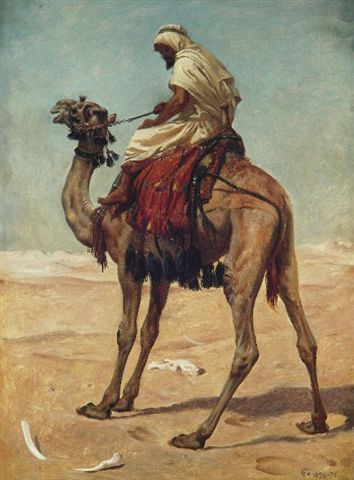
What makes the situation today more explosive than the cold war in the difference in ideological potency between Islam and Marxist-Leninism. Marxist-Leninism had a great attraction for young, nationalist intellectual elites in the third world and gave them an organizational structure, international connections and financing for forming a revolutionary vanguard and cadres.

However Marxism never had much attraction in itself for the masses in Muslim countries (or any other for that matter) and neither did proletarian internationalism. A traditional "ultra-nationalist-international" is a contradiction in terms. But, Islam squares that circle: Islam works on the level of the most militant, nationalist chauvinism, while at the same time being totally international constantly searching for common denominators among Muslims everywhere.

In the cold war equation there was no wild card factor like Israel, which at the same time stimulates nationalist and internationalist feelings among the masses and elites alike in Muslim countries. This is what makes political Islam so revolutionary... Really, all that was necessary was to add modern communications (Internet and Satellite TV) and the Israel/Palestinian/Iraq conflict to the waiting Umma to get critical mass. DS

Thursday, July 12, 2007

"Peak Oil" goes mainstream

David Seaton's News Links
I've selected an excellent article from the Telegraph to illustrate the idea that "Peak Oil" has gone mainstream. It is no longer an idea sneered at by "hard nosed realists" as "flaky" or the province of people who go around hugging trees.

The Telegraph is a conservative newspaper of the moldiest sort, not at all "touchy feely", so that any tendency they might have to sympathize with anything like a granolist world view can be readily discounted.

This, then is an article you can show without fear to any skeptical, curmudgeonly relative without fear of being scoffed to scorn. DS


Tom Stevenson: Expensive oil is here to stay, so let's explore what that means - Telegraph

Abstract: The latest report from the International Energy Agency makes scary reading. You don't have to be a "peak oil" doom-monger to believe the world faces an energy crunch. Investors, and everyone else for that matter, need to think through the implications of a significantly higher oil price.(...) You can argue about when the gap between our thirst for oil and our ability to find more of it becomes a major problem, but few now claim that it isn't an issue. There are two sides to the energy squeeze, neither of which looks good. On demand, we all know that energy use is rising but it is questionable whether we have really taken on board the scale of the increase. Population growth is part of the problem, with a rise from six billion people to perhaps nine billion, made worse by rising levels of prosperity. More people are using more energy per head. As Van der Veer says: "China and India are entering the energy-intensive phase of their development. This is the point when people buy their first television or car, or board a plane for the first time. Most people in China and India have never boarded a plane yet." The modern industrial world does not just use a lot of oil, it is fair to say that current western civilisation would not be possible without it. Oil gets us from A to B, it heats us, it fertilises our food, it keeps us clean, it is a constituent of pretty much every man-made thing we touch. Given the developed world's addiction to oil, what is surprising is not that China's oil demand is doubling every 10 years but that it is not growing even faster. The other side of the energy conundrum is supply. Here the harsh truth is that the easy oil has already been tapped. We have already used up the oil and gas that is easy to extract. So while the International Energy Agency thinks there might be as much as 20,000 billion barrels of oil and gas hidden under the earth - as much as 400 years' supply - most of it will never see the light of day. There are also serious doubts about how much oil is really left. Saudi Arabia, for example, has reported reserves of 260 billion barrels every year for the past 15 years, despite having produced about 100 billion barrels over that period. It is no coincidence that Opec production quotas are determined by claimed reserves.(...) What is worrying is that the oil price is at record levels when we have not yet had the first hurricane of the year (expect a big one in 2007, the experts say) or any serious upheavals in the Middle East.(...) Longer-term, the higher cost of conventional energy is good news for alternative energy producers. Wind power, solar energy and biofuels all become more viable as the oil price heads into uncharted territory. Looking a generation and more ahead, I think the unspoken truth about the looming oil crisis is that the so-far inexorable march of globalisation should not be taken for granted. In the great sweep of history, the 200-year oil age may be seen as a blip before a return to a more sustainable, more local economic system. I'm just not betting my pension on that brave new world arriving any time soon. READ IT ALL

Wednesday, July 11, 2007

Larry and the Pharisees (what a name for a band!)

David Seaton's News Links
One of America's most amusing blood sports is the outing of pharisees. One of America's most useful citizens is Larry Flynt. DS

Flynt, Palfrey target D.C. 'hypocrisy' - The Politico
Abstract: Hustler publisher Larry Flynt, already on a hunt for Washington sex scandals, has teamed up with a powerful new ally: "D.C. Madam" Deborah Jeane Palfrey. It's an alignment born from coincidental interests: Flynt wants to expose Washington hypocrites, and Palfrey has a long list of people who probably qualify. Sen. David Vitter (R-La.) became their first victim when a Flynt investigator linked his name and honorable title to an old telephone number on Palfrey's client list. Vitter's exposure on Tuesday should put any other conservative Republican with sexy skeletons on notice: Start practicing your mea culpa. It's déjà vu for many on Capitol Hill who lived through Flynt's first, successful 1998 sex-scandal bounty hunt, conducted at the height of the sex-driven impeachment drive against President Bill Clinton. With a promise of millions but a payout of less, Flynt managed to expose the sexual promiscuity of former House Judiciary Chairman Henry Hyde of Illinois, former impeachment prosecutor Bob Barr and -- his biggest catch of all -- the almost-Speaker Bob Livingston, another Louisianan, who confessed to adultery and resigned from Congress when he was on the brink of succeeding Speaker Newt Gingrich. (Gingrich's affair was not exposed by Flynt; that came later.) Most folks on Capitol Hill, for now, are hoping Vitter is an isolated incident. READ IT ALL

Tuesday, July 10, 2007

Hamas' stand - Los Angeles Times

The right to exist: I kill, therefore I am
David Seaton's News Links
This article makes an interesting read. By taking control of Gaza, Hamas has gained an international audience for its message. Alexander Haig of unhappy memory had this to say in The Wall Street Journal, "Let us not delude ourselves. The recent Hamas conquest of Gaza is a signal defeat for the United States that goes well beyond the particulars of the Israeli-Palestinian conflict. We have sought to deny the Islamic terrorists a territorial base in Afghanistan, Iraq, Somalia and elsewhere. Now they have won one on the Mediterranean."

And Haig neglected the worst part about Hamas... They are strictly Palestinian nationalists and have nothing to do with Al Qaeda and its agenda, an "inconvenient truth" that degrades the neocon, "Islamofascism" narrative. Hamas are converting Gaza into a laboratory for their future role in a Palestinian state and a loudspeaker for their agenda, which, as this article from the Los Angeles Times proves, strikes many sympathetic notes to western ears. DS


Hamas' stand - Los Angeles Times
Abstract: The writings of Israel's "founders" — from Herzl to Jabotinsky to Ben Gurion — make repeated calls for the destruction of Palestine's non-Jewish inhabitants: "We must expel the Arabs and take their places." A number of political parties today control blocs in the Israeli Knesset, while advocating for the expulsion of Arab citizens from Israel and the rest of Palestine, envisioning a single Jewish state from the Jordan to the sea. Yet I hear no clamor in the international community for Israel to repudiate these words as a necessary precondition for any discourse whatsoever. The double standard, as always, is in effect for Palestinians. I, for one, do not trouble myself over "recognizing" Israel's right to exist — this is not, after all, an epistemological problem; Israel does exist, as any Rafah boy in a hospital bed, with IDF shrapnel in his torso, can tell you. This dance of mutual rejection is a mere distraction when so many are dying or have lived as prisoners for two generations in refugee camps. As I write these words, Israeli forays into Gaza have killed another 15 people, including a child. Who but a Jacobin dares to discuss the "rights" of nations in the face of such relentless state violence against an occupied population? I look forward to the day when Israel can say to me, and millions of other Palestinians: "Here, here is your family's house by the sea, here are your lemon trees, the olive grove your father tended: Come home and be whole again." Then we can speak of a future together. READ IT ALL

Monday, July 09, 2007

From Lost into the River

The Seventh Seal - Bergman
David Seaton's News Links
The Spanish expression, "de perdidos al río" (from lost into the river) means that a situation bad enough on its own count, (being lost) is further aggravated (by falling into the river). It means, of course, "from bad to worse", but I think you'll agree with me that it's a whole lot juicier.

Those were the words that leaped into my mind on reading this article from The Wall Street Journal, de perdidos al río. With the oil supply tightening terminally... what a time for the USA to get its butt royally kicked in the Middle East. DS
IEA Warns of Impending Crunch in Gas Supply - Wall Street Journal
Abstract: In a dire forecast, the Paris-based International Energy Agency is warning of an impending crunch in the supply of oil and natural gas needed to power world economic growth in coming years. The IEA is the energy watchdog of the world's 26 most-advanced economies, and its pessimistic assessment is contained in its latest annual medium-term forecast to 2012, which was released Monday. The agency expects oil supply to be tighter in coming years than it had previously forecast, with little prospect of relief except a possible easing should world economic growth falter.(...) The IEA now forecasts that the Organization of Petroleum Exporting Countries will have precious little spare capacity left to pump extra oil by 2012. It also expects supply increases from non-OPEC oil producers and biofuel producers to start flagging after 2009. Natural-gas markets will also be tight because of inadequate supply increases, limiting the ability of consumers to switch between oil and natural gas. Still, demand for oil and gas is expected to grow at a brisk pace in the years to 2012.(...) OPEC spare capacity, the safety cushion in the world system, is expected to remain constrained until 2010, then shrink to minimal levels by 2012, when the exporters collectively will only be able to pump a paltry extra amount -- the equivalent of 1.6% of world demand. While the IEA didn't say so, the shrinking of OPEC's spare capacity in the past decade has made the oil market skittish about any development that could conceivably threaten supply, resulting in volatile markets and prices.
READ IT ALL

Sunday, July 08, 2007

The New York Times pulls the chain on Iraq

David Seaton's News Links
This is how the New York Times, who had a great deal to do with promoting the war in Iraq, advocates "cutting and running".

Now, I am in favor of the US withdrawing immediately from Iraq, but I think two thing have to be done first. The first is relatively easy and the second nearly impossible.
  • First: A regional peace conference under the auspices of the UN Security Council with an agreement leading to Iraq becoming a ward of the UN. Neighboring countries would supply troops and administrators during a transition period to restored autonomy. The object then would be a general Middle East peace conference on all questions including the Israel/Palestine question.
  • Second: Impeachment, arrest and extradition of all those responsible for the war to an international tribunal specially formed in the Hague; again under UN auspices.
If the United States led this process, especially the second point, it might recover some of its capacity to give moral leadership, something which Americans find fundamental for their self-esteem. It is no exaggeration to say that the future of globalization hangs on both these points. DS

The Road Home - Editorial - New York Times
Abstract: It is time for the United States to leave Iraq, without any more delay than the Pentagon needs to organize an orderly exit.(...) Continuing to sacrifice the lives and limbs of American soldiers is wrong. The war is sapping the strength of the nation’s alliances and its military forces. It is a dangerous diversion from the life-and-death struggle against terrorists. It is an increasing burden on American taxpayers, and it is a betrayal of a world that needs the wise application of American power and principles. A majority of Americans reached these conclusions months ago. Even in politically polarized Washington, positions on the war no longer divide entirely on party lines. When Congress returns this week, extricating American troops from the war should be at the top of its agenda. That conversation must be candid and focused. Americans must be clear that Iraq, and the region around it, could be even bloodier and more chaotic after Americans leave. There could be reprisals against those who worked with American forces, further ethnic cleansing, even genocide. Potentially destabilizing refugee flows could hit Jordan and Syria. Iran and Turkey could be tempted to make power grabs. Perhaps most important, the invasion has created a new stronghold from which terrorist activity could proliferate. The administration, the Democratic-controlled Congress, the United Nations and America’s allies must try to mitigate those outcomes — and they may fail. But Americans must be equally honest about the fact that keeping troops in Iraq will only make things worse.(...) This country faces a choice. We can go on allowing Mr. Bush to drag out this war without end or purpose. Or we can insist that American troops are withdrawn as quickly and safely as we can manage — with as much effort as possible to stop the chaos from spreading. READ IT ALL

Thursday, July 05, 2007

Islam and the new technologies

David Seaton's News Links
For me nothing is more fascinating than to see how Islam, a religion usually associated with traditional societies, has been empowered and propelled into action more than any other ideology by the new technologies.

I think it is a huge mistake not to accept that this Islamic "awakening" is a huge, worldwide movement of historic and irreversible proportions and not to positively engage those Islamists who are not exclusively engaged in violence. Putting all these people into one sack is idiotic. DS


From frontline attack to terror by franchise - Financial times
Abstract: In late 2004, a 1,600-page treatise outlining a vision of a new al-Qaeda was posted on jihadi websites. Entitled The Call for a Global Islamic Resistance, it was drafted by Abu Musab al-Suri, a Syrian mechanical engineer who had fought alongside Osama bin Laden in Afghanistan and who has long been considered a leading ideologue for al-Qaeda. Its central theme was that al-Qaeda should be less of an organisation and more of an order, in which a central base would provide primarily ideological guidance to semi-autonomous cells around the world, loosely tied to each other.(...) Whether by coincidence or design, his vision of the post-September 11 al-Qaeda has become a reality. Six years after terrorists struck New York and Washington, al-Qaeda as an organisation has been severely undermined, its haven in Afghanistan destroyed and many of its leaders captured or killed. But the violent fanaticism promoted by al-Qaeda has not only survived, it has proliferated – helped, many experts say, by the conduct of the US-led “war on terror”. The al-Qaeda order indeed appears to be thriving, with new footholds emerging just as old ones are being suppressed. While crackdowns in Saudi Arabia and Indonesia, for example, seem to have reduced the jihadi threat for now, frontlines are expanding in North Africa and Lebanon. Attacks by al-Qaeda-inspired militants have not reached the spectacular scale of September 11 but they have multiplied in numbers and diversified in geographic reach. Arab security officials say self-recruitment, largely through the internet, is replacing the radicalisation that once took place in mosques and religious schools.(...) Iraq has established itself as the most important new frontier. It plays the role of Afghanistan in the 1980s, a magnet for Arab militants looking for jihad, or holy war. The US invasion and continued military presence, meanwhile, have provided a new powerful narrative for recruiting jihadis in the Middle East and in Europe. Even more alarmingly, according to counter-terrorism officials, al-Qaeda in Iraq is aspiring to act as a regional base, sending militants to wage attacks abroad – including against tourist resorts, for example, in India. “Strategically Iraq is the new source of manpower, a platform to operate against the west and a source of high-level expertise from former Iraqi army officers,” says a western official.(...) “Algeria is one example that illustrates that there’s a correlation between home-grown Islamists and those coming back with skills and techniques learned in Iraq. And how does that apply to Europe? Well it’s right on Europe’s back door,” says a senior US military officer. In all this, it hardly matters, many experts say, whether Osama bin Laden is dead or alive. Christopher Heffelfinger, a senior analyst at West Point in the US, says: “I actually think he may be dead. But it’s irrelevant. His ambition was to set up an Islamic awakening. I think he’s done that.” READ IT ALL

Wednesday, July 04, 2007

Hamas: a partner for "truce", not peace

David Seaton's News Links
In the end the Israelis -- and the "international community" they lead by the nose -- will prefer dealing with Hamas, because if they agree to a "truce", they will keep it themselves and will enforce it on the other factions. No Palestinian body who recognizes Israel's conquest of Palestine will ever be able to do as much. DS

Hamas's latest coup - Guardian
Abstract: Hamas received early rewards. Richard Makepeace, the British consul general in Jerusalem, became the first Western diplomat to meet Ismail Haniyeh, the prime minister. British officials insisted the only reason for the meeting was to discuss the fate of Alan, but the precedent was set and the recognition was granted. As one British official remarked when Alan's release first appeared imminent: "If they do free him, what do we have to do in return?" This meeting between Makepeace and Haniyeh partly explains the determination of Hamas to free Alan. If they could achieve his freedom, they would demonstrate an ability and a credibility that was lacking in Fatah - despite its international recognition. But Alan's case was just a symbol of a broader message that Hamas wants to send out to the international community and Israel. This is that they can impose peace and security and be trusted to carry out their commitments if they are addressed directly. Although there is no doubt that Alan's position as the only full-time western correspondent in Gaza meant he was well-known and respected by the Hamas leadership, this alone would have counted for little. His plight was a test of their ability to govern. Their success in securing the release puts into sharp focus the failure of their Fatah counterparts to have any effect on the kidnappers. In a telling comment, Alan described how his kidnappers were "comfortable and secure" until Hamas took control. Then they became "very nervous", and he felt for the first time there was light at the end of the tunnel. The effectiveness of Hamas has long been recognised by the highest echelons of the Israeli army. Senior officers have commented in private that they would trust Hamas to live up to any deals that were made between them. However, dealing with Hamas is a political step the Israeli government is not yet ready to take. READ IT ALL

Tuesday, July 03, 2007

Any color you want as long as it's Islamic

David Seaton's News Links
The "west's" (includes Japan) biggest mistake in the Muslim world has been to attempt to maintain a colonial dominance of these countries through proxy regimes denominated "moderate": corrupt, authoritarian regimes who maintain simultaneously a subservience to "western" interests and a cruel, police state apparatus to keep their fellow citizens in check. Naturally these regimes have little or no credit, either inside or outside their borders. The people of the Muslim countries seem to have come to the conclusion that the only ideology or identity that the "empire" cannot engulf and devour is Islam and they are increasingly desirous of some form of Islamic government. The "west" can only choose finally between "practical" (fight, preach, feed and teach) Islamism such as the Egyptian Muslim Brotherhood, Hezbollah and Hamas or nihilist terror of the Al Qaeda and Salafist variety. DS

Our second biggest mistake in the Middle East - London Review of Books
Abstract: The problem for Hamas is that its constituency – the rank and file – and the wider Islamist movement have now embarked on a period of introspection. What is apparent – and this can be ascertained on any number of Islamist websites – is that the mainstream Islamist strategy of pursuing an electoral path to reform is now being questioned. This will have an impact well beyond Palestine – most obviously in Egypt and Jordan. Three events have triggered this reassessment: the sanctions imposed on the Hamas government; last summer’s US-backed war to destroy Hizbullah in Lebanon; and the repression of the Muslim Brotherhood in Egypt, which raises not a peep of protest from Europeans. Continued Western hostility towards all Islamists, however moderate their policies, has also frustrated the grass-roots. At a conference held in Beirut in April, the senior Hamas official present, Usamah Hamadan, was strongly criticised by Fathi Yakan, the leader of Jamaat Islamiyah in Lebanon, for having embarked on the electoral route in the first place. Yakan pointed to the failure – experienced by all Islamists without exception – of those who have participated in their national parliaments. No MP or deputy, from Islamabad to Cairo, or anywhere in between, has succeeded in bringing any significant change to their society. At the same time, young Egyptians in the Muslim Brotherhood have been debating whether their eighty-year-old movement has lost its way. Commentators have been arguing that for it to sit in parliament – while its leaders are being interned, its economic base is being attacked, and legislation is being passed aimed at excluding movements with a religious basis from elections – undermines its credibility and invites derision. The movement, it’s suggested, is too big, rigid and ungainly, and needs to be rethought – and perhaps broken up. At issue in these discussions is whether moderate Islamist groups such as Hamas and Hizbullah will manage to retain their influence over this process of radicalisation; and whether they will survive as a cohesive, disciplined political bloc. Sunni Islamist movements are increasingly concerned at the spread of small Salafist groups that verge on the nihilistic in their disdain for political ideology and in their belief that to set fire to the remnants of colonial power is in itself enough to raise the revolutionary consciousness they hope for. Salafist groups are beginning to make inroads in Gaza, as they have already done in Iraq, Lebanon and North Africa.(...) Over the middle term it is possible to predict that a greater number of Palestinian citizens of Israel will become radicalised, as well as members of the Palestinian population as a whole. Israel’s ‘moderate’ friends among Arab leaders may disappear. It may also encounter Islamists not only in the Palestinian government, but at the Jordanian and Egyptian frontiers; and conflict with Iran, were it to occur, might finish up by sweeping away many of the region’s landmarks. This prospect may not disturb the slumbers of the Europeans, who will dismiss it as alarmist, even if their record of reading events in the area has been less than inspired. But these are the scenarios that are being taken seriously by thoughtful Islamists in the region. We should hope – that may be all we can now do – that moderate Islamist movements manage to navigate these turbulent times, in spite of European attempts to prevent Islamism, which is clearly now the dominant regional current, from reshaping Middle Eastern societies. These attempts are opening space, not for the moderate pro-Western secularists whom Europeans seek to empower, but for those who believe that to build a new society you must first burn down the old one. READ IT ALL

Monday, July 02, 2007

Russians in Israel: easy come, easy go?

Russian immigrants to Israel - 1992
David Seaton's News Links
Probably nothing changed the face and the character of Israel as much as the massive migration of Russians who could prove any Jewish origin to Israel during the collapse of the Soviet Union and the subsequent chaos and poverty of the Yeltsin era. There were very few committed Zionists among them; the "aliyah" to Israel was seen as a way to escape the Russian catastrophe and to obtain a western passport and prosperity. Israel saw this huge jump in their population made up of highly educated and cultured "Europeans", in contrast to the Moroccan, Yemenite and Ethiopian Jews, as an enormous blessing. The blessing turns out to be quite mixed. Now, while Israel is in constant danger and Russia's economy is beginning to prosper, many are having second thoughts. It could be highly demoralizing to Israeli society in general if the Russians start to return to Russia in sizable numbers: a negation of the whole myth of return. DS

45% of former USSR immigrant students do not see future in Israel - Haaretz
Abstract: Some 45 percent of high school students who immigrated from the former Soviet Union do not believe they have a future in Israel, according to the preliminary results of a new study due to be published in a few months. Only 65 percent would define themselves as Israeli, the study found. However, 88 percent would accept a hyphenated definition, such as Israeli-Russian.(...) Some 30 percent of the respondents said Israelis could teach them nothing, while 40 percent saw no need to study Jewish tradition or the Bible. Some 82 percent saw nothing worth learning from in Israeli culture, and 90 percent felt similarly about Israeli behavior. The study also found that the longer they were in Israel, the more likely the students were to define themselves as mehagrim (migrants) rather than olim (immigrants, but with the connotation of "to a better place"). Thus, after three years here, 68.6 percent defined themselves as olim, while after six years, only 23.6 percent did so. READ IT ALL

The conundrum of America’s economy - Economist

"The market was so leveraged, and the instruments so complicated, that no one seemed understand what would happen if it all began to unwind." - Economist
David Seaton's News Links
That is the key phrase, everything.... and I mean EVERYTHING, revolves around things that nobody understands. DS

The conundrum of America’s economy - Economist

Abstract: There are plenty of ominous signs. The housing market, long the mainstay of America’s economic boom, is sagging. Defaults in the subprime lending market grow ever more worrisome. The core inflation rate, which excludes food and energy, is not exactly subdued: consumer prices were up by 2.2% in May from a year ago. Add in the tepid GDP growth and the mix is making consumers nervous.(...) As vexing a concern is the effect that a slowing housing market will have on the mountain of debt and debt-related instruments that were issued to finance the boom. The most frightening aspect of the problems at two hedge funds run by Bear Stearns, both heavily exposed to the subprime-mortgage market, was not that a big bank had been plunging into risky assets; it was the revelation of how little anyone knew about the risks involved. The market was so leveraged, and the instruments so complicated, that no one seemed understand what would happen if it all began to unwind.
READ IT ALL

The link with Iraq - Leader - Guardian

David Seaton's News Links
Opening Pandora's Box or the Gates of Hell, feel free to choose your metaphor. What is beyond argument is that due to the criminal idiocy of Bush, Blair and friends we are all in for a world of pain... Well as Rumsfeld said, "stuff happens". DS

The link with Iraq - Leader - Guardian
Abstract: When it argued for the invasion of Iraq, the British government placed the national interest at the centre of its case. Not only would the invasion contribute to international order, Tony Blair said, but it would cut off at its roots the threat of terrorism in the UK. Many disputed the link between al-Qaida and Saddam Hussein and pointed out that war and occupation might assist extremist organisations recruiting British Muslims, giving terrorism a spurious (but, to the wrong-headed, compelling) moral justification.(...) Can it be denied that the invasion encouraged a growth in al-Qaida's threat and influence? It is time for a new prime minister to revisit these arguments. The daily carnage in Iraq is perhaps hard to acknowledge for members of the cabinet involved in the chain of events that led finally to this hellish instability. Each and every day ordinary Iraqis are victims of the sort of mayhem planned for London and Glasgow last week. Most civilian deaths in Iraq and Afghanistan are at the hands of non-western forces, yet it is still the west that gets the blame - and, indeed, it has some responsibility for the context in which they happen. That techniques from Iraq - petrol and gas canisters placed in cars - seem to have been exported to the UK is more than symbolic. It is not proof of a direct link with al-Qaida, nor should it absolve the would-be bombers from condemnation. Yet it is wrong to claim there is no link to Iraq. Indeed, this past weekend there appeared to be some striking, if grotesque, parallels.(...) Gordon Brown's new government has to find a form of words that acknowledges Britain's role in creating - unintentionally - the conditions for instability, civil war and mayhem. It has to find not just the will to disengage over time (such a will already exists) but the language to convince listeners that this is now the government's settled purpose.(...) After Suez, Britain's friends in the world held faith with a confidence that decent parts of our public life never wavered in their opposition to the ill-fated adventure, and represented another side of the British character. As a new prime minister seeks to rebuild Britain's international reputation, an early signal that this tendency is winning the argument, and shall prevail, would be both right and in our national interest. READ IT ALL

Sunday, July 01, 2007

Thought for the Day... Robespierre

Robespierre's Death Mask
David Seaton's News Links
Here is a little Sunday thought for the day from somebody who actually put his ideas into to action and took the consequences. DS
"Now, what morals can a people have when its laws seem designed to encourage furious activity in the thirst for riches? And what more certain means of exacerbating that passion can the laws take, then to stigmatize honorable poverty, and reserve all the honors and the power for wealth?" Robespierre - April 1791

Thursday, June 28, 2007

Ask Not For Whom The Bell Tolls...

"The Seventh Seal" - Ingmar Bergman
David Seaton's News Links
Dong...... Dong...... Dong...... Dong...... Dong...... Dong...... Dong........ Dong.... DS

Does it all add up? - Financial Times
Abstract: When Wall Street creditors last week threatened fire sales of CDOs seized from the stricken Bear Stearns funds, thus creating a market price for them for the first time, they also threatened to create a wider shock for the system. Fire sales rarely realise anything close to the previously expected value of assets. But if these deals went ahead, they would provide a legitimate trading level that would challenge current portfolio valuations. In the event, Bear Stearns' creditors sold only a fraction of the assets put up for auction. Market participants suggest that this was in part because bids fell far below expectations, with traders increasingly reluctant to take on CDOs tainted with subprime exposure. But the crisis at Bear's funds has left investors, brokers and regulators asking an uncomfortable question: can the pricing models that have provided the foundations for this new financial edifice really be trusted? Or will valuations turn out to be over-optimistic and result in further investor losses?(...) Christian Stracke, analyst at CreditSights, a research company, says: "With so little truly relevant historical data on the behaviour of subprime mortgages, and with such massive structural changes having occurred in the mortgage landscape in recent years, any time-series analysis approach is little more than a not-so-educated guess."(...) That means that on the rare occasions that instruments are traded, a large gap can suddenly emerge between the market price and its book value. This week Queen's Walk Fund, a London hedge fund, admitted it had been forced to write down the value of its US subprime securities by almost 50 per cent in just a few months. That was because when it was forced to sell them, the price achieved was far lower than the value created with the models the fund had previously used - which had been supplemented with brokers' quotes.(...) Some bankers and policymakers argue that this is simply a teething problem that will fade as structured finance becomes more mature. History suggests that most opaque, illiquid markets eventually become more transparent when they grow large enough - and behind the scenes, the Bear Stearns hedge fund problems are prompting bankers and investment managers to re-examine their valuation techniques. "We are getting a lot of calls from worried people," says one third-party data provider. However, history also shows that large-scale structural dislocations - such as a serious mispricing of assets - are rarely corrected in an orderly manner. Thus the big risk now is that if thousands of banks and investment groups suddenly have to slash the value of the securities they hold, the wave of accounting losses might at best leave investors wary of purchasing all manner of complex financial instruments. At worst, it could trigger more distressed sales and a broader repricing of financial assets, not just in the subprime sector but in other illiquid markets too. "If every CDO [manager] was forced to mark to market their subprime holdings, it would be - well, I can't think of a strong enough word to describe what it would be," confesses a US policymaker. READ IT ALL

Wednesday, June 27, 2007

Tony Blair: Autism as a Political Philosophy

David Seaton's News Links
Autism could be defined as “an abnormal absorption with the self, marked by the inability to treat others as people.” How is autism expressed politically? On June 23rd, Tony Blair, who Bush has chosen to be the "International Community's" special peace envoy to the Middle East, had an audience with Pope Benedict XVI. According to the Guardian, "Mr. Blair's talks in Rome were largely centered on his strategy to secure a reconciliation between Islam and Christianity.” However, on the 16th June, Blair had already recommended novelist Salman Rushdie for a knighthood, an honor which appears to have set back the reconciliation between Islam and Christianity considerably. As you probably remember, in the future Sir Salman’s 1988 book, “The Satanic Verses”, the wives of the Prophet Mohammad were portrayed as prostitutes and it seems that the world’s 1.3 billion Muslims, who still take these things seriously, have taken permanent offense at this artistic liberty. Agence France-Presse quoted Egypt's parliament "To honor someone who has become famous because of his hostility to Islam is a rejection of all diplomatic principles and respect for religions". Certainly, with the death of an estimated 650,000 Iraqis already partially on his shoulders, knighting Rushdie as the opening of a diplomatic mission to the Muslim Middle East might just qualify as autistic. DS

The Media Transparency Web site

Septic tank
David Seaton's News Links
I just received the note below from cursor.org informing about their mega-exposé of the "tanks" and I thought I should pass it on to my readers. It seems a very worthwhile effort. The "Think Tank" industry has totally debased America's political thought. As a simple test of this assertion, try to imagine Benjamin Franklin, William James, John Dewey or Ralph Waldo Emerson working for a think tank to realize how far we have fallen and how decadent we have become. DS

David
I thought you might enjoy these pages that we've put together to promote our Media Transparency Web site, which tracks the billions of dollars doled out by conservative philanthropies.

Neo-Conning the Media

Fox's Rich Heritage
http://www.mediatransparency.org/foxrichheritage.php
In the Tanks
http://www.mediatransparency.org/inthetanks.php

Where the Money Leads

We could really use your help to spread the word. To that end we've also created twenty graphics that can be used as blog posts, public service ads, or just to ridicule nefarious characters like Richard Perle and Sean Hannity and a host of others...

Promo Page Promo
http://www.mediatransparency.org/wherethemoneyleads.php

Any assistance, including forwarding this e-mail, would be greatly appreciated.

Mike Tronnes
Editor/Cursor.org

Monday, June 25, 2007

Social Democracy: just waiting to happen

This nifty montage is from The Center for American Progress and dates from 2003, some of the names may change, but the story remains the same.

David Seaton's News Links
Poll after poll shows that the majority of Americans line up with European social democrats on most major issues. Why is this not reflected in America's policies? Obviously because, although nominally a democracy -- the world's oldest -- the United States of America is in fact run by and for special interest groups. Public opinion is simply ignored. Sometime in the future, perhaps quite soon, some intrepid politician is going to ride this tiger to power. DS

Will the Progressive Majority Emerge? - The Nation
Abstract: Trends in Political Values and Core Attitudes: 1987-2007, a massive twenty-year roundup of public opinion from the Pew Research Center for the People and the Press, tells the story. Is it the responsibility of government to care for those who can't take care of themselves? In 1994, the year conservative Republicans captured Congress, 57 percent of those polled thought so. Now, says Pew, it's 69 percent. (Even 58 percent of Republicans agree. Would that some of them were in Congress.) The proportion of Americans who believe government should guarantee every citizen enough to eat and a place to sleep is 69 percent, too--the highest since 1991. Even 69 percent of self-identified Republicans--and 75 percent of small-business owners!--favor raising the minimum wage by more than $2. The Pew study was not just asking about do-good, something-for-nothing abstractions. It asked about trade-offs. A majority, 54 percent, think "government should help the needy even if it means greater debt" (it was only 41 percent in 1994). Two-thirds want the government to guarantee health insurance for all citizens. Even among those who otherwise say they would prefer a smaller government, it's 57 percent--the same as the percentage of Americans making more than $75,000 a year who believe "labor unions are necessary to protect the working person." It's not just Pew. In the authoritative National Election Studies (NES) survey, more than twice as many Americans want "government to provide many more services even if it means an increase in spending" as want fewer services "in order to reduce spending." According to Gallup, a majority say they generally side with labor in disputes and only 34 percent with companies; 53 percent think unions help the economy and only 36 percent think they hurt. A 2005 NBC News/Wall Street Journal poll found that 53 percent of Americans thought the Bush tax cuts were "not worth it because they have increased the deficit and caused cuts in government programs." CNN/Opinion Research Corp. found that only 25 percent want to see Roe v. Wade overturned; NPR/Kaiser Family Foundation/Harvard found the public rejecting government-funded abstinence-only sex education in favor of "more comprehensive sex education programs that include information on how to obtain and use condoms and other contraceptives" by 67 percent to 30 percent. Public Agenda/Foreign Affairs discovered that 67 percent of Americans favor "diplomatic and economic efforts over military efforts in fighting terrorism." Want hot-button issues? The public is in love with rehabilitation over incarceration for youth offenders. Zogby/National council on Crime and Delinquency found that 89 percent think it reduces crime and 80 percent that it saves money over the long run. "Amnesty"? Sixty-two percent told CBS/New York Times surveyors that undocumented immigrants should be allowed to "keep their jobs and eventually apply for legal status." And the gap between the clichés about what Americans believe about gun control and what they actually believe is startling: NBC News/Wall Street Journal found 58 percent favoring "tougher gun control laws," and Annenberg found that only 10 percent want laws controlling firearms to be less strict, a finding reproduced by the NES survey in 2004 and Gallup in 2006. READ IT ALL

Back to class war

The worst is yet to come for the U.S. housing market.(...) The national median home price is poised for its first annual decline since the Great Depression(...) ``It's a blood bath,'' said Mark Kiesel, executive vice president of Pacific Investment Management Co. ``We're talking about a two- to three-year downturn that will take a whole host of characters with it, from job creation to consumer confidence. Eventually it will take the stock market and corporate profit.''(...) ``It's not just a housing recession anymore, it looks more and more like an economic recession,'' said Nouriel Roubini(...) ``When all these people see their mortgage payment and it's up 40 or 50 percent, they're going to say, `We can't stay in this house,''' Pimco's Kiesel said. ``And there are millions of people in this situation.'' Bloomberg
David Seaton's News Links
I can think of no more wrenching yet predictable political trend on the horizon than a general souring on the super rich. There is nothing especially new about it, quite the contrary, but like all the other "end of history" myths, the supposed end of "class struggle" is also about to hit the fan and after a long absence, the tensions that brought the social-democracy movement on stage in the first place, are eagerly waiting in the wings.

As interest rates rise and lending restrictions are put into place, millions of middle-middle class people who have been living in a dream world, thinking that were somehow part of the same universe as Bill Gates, are going to have to make drastic decisions about allocating their resources if they are not to lose their homes. They are going to re-discover why there was
ever a universal demand for good, free public schools and universities or (in the countries lucky enough to have gotten that far) first class, free public health care in the first place. They will rediscover the nearness of the abyss of destitution and humiliation that terrified their parents and grandparents who lived through the Great Depression.

As much as an economic and political readjustment, it will be a cultural change, for never before in history have so many "normal" people identified with the wealthy and considered them harmless or even benevolent. DS

The rich must be penalised - Guardian
Abstract: (...) Equality is not a penalty-free condition. It increases rather than reduces the sum of freedom - giving millions more men and women the ability and the right to exercise the choices of a free society. But it reduces the purchasing power of the top earners, whose taxes are increased to pay for the improved pensions and health care. Every great leap forward towards redistribution has been accompanied by a frank acceptance of the price that the wealthy must pay, usually accompanied by an attack on their reluctance to meet the bill.

A hundred years ago, David Lloyd George - fearful that the House of Lords would reject his budget because of the introduction of a land tax to finance "provision for the aged and deserving poor" - mounted an attack on landlords in general and landowning dukes in particular. He told of a visit to a Welsh coalmine - "three-quarters of a mile of rock and shale above us" - to illustrate the infamy of the coal-owning classes.

"The prime minister and I knock on the doors of these great landlords and say to them, 'You know these poor fellows ... Some of them are old, they have survived the perils of the trade, they are broken and they can earn no more. Won't you give something towards keeping them out of the workhouse ...?' They retort, 'You thieves ...!' If this is the view taken by these great landlords of their responsibilities to the people who, at risk of life, create their wealth, the day of reckoning is at hand."

The rhetoric is as old-fashioned as the overt class antagonism, but the essential point remains. Lloyd George was not advising the coal owners to subscribe towards the cost of a pension in order to improve productivity. He was saying to the world that security in old age is a moral necessity and has to be financed by the wealthy. Politicians who run away from the underlying principle that greater economic equality penalises the rich will never have the nerve necessary to bring about economic equality. READ IT ALL

Saturday, June 23, 2007

Walt Disney's "Adolph Eichmann"

The toothpaste smile of the all-American, "girl next door"
David Seaton's News Links
This article by William Pfaff is a "must read". This subject has gotten me rereading Hannah Arendt's "Eichmann in Jerusalem", whose subtitle, "A Report on the Banality of Evil", perfectly describes the system that has been created and which, for want of a better name, we call "Bush". DS

The American Enthusiasm for Torture - William Pfaff
Abstract: Probably the most disturbing – to an American – of the developments in the United States since 2001 has been the manner-of-fact way in which torture has been adopted by the United States as a normal aspect of its military and intelligence operations. At the beginning there was very little protest, and indeed very little discussion, in Congress and the mainstream media at the adoption by the United States of what a few years before had been Nazi wartime SS and Gestapo methods.(...) The first serious public protest followed the Abu Ghraib prison revelations, and the main objection articulated was that they made the United States look bad. They were passed over in military reports as merely the clumsy brutalities of untrained “hillbilly” National Guardsmen, and an NCO was sent to prison. In fact he and the others had been ordered to “soften up” the victims before the real torturers arrived. The same absence of protest was largely true throughout the American military services, supposedly committed to an ethic of “honor” (remember the West Point oath, to “duty, honor, country”?), and legally bound by international treaty, national law, and military regulations to eschew torture. Still more significant was the apparent indifference (or political intimidation) of the public and politicians, again reflected in the press. At the end of May of this year, the Bush administration was reportedly reviewing its methods of torture, in order to ban or limit some methods that, when revealed, had eventually stirred public expressions of disapproval, such as simulated drowning or “waterboarding,” while at the same time enlarging or intensifying the permitted use of other methods as yet secret. This review continues to be reported in the same manner-of-fact way as discussion of farm subsidies, trade talks, or tax legislation.(...) We are also encouraged to feel concern for America’s patriotic torturers and give them our support. An article in The Washington Post early in June wrote of the “tortured lives” of the torturers themselves.(...) Only amateurs think that ever-increasing pain produces accurate and useful information, although this seems from the beginning to have been the conviction of the President and his legal advisor, now America’s attorney general. Allied interrogators during world war II, who knew the language and culture of the peoples they were dealing with, used widely-known non-coercive techniques, including those employed with consistent success by intelligence and criminal police interrogators the world over (including the FBI men who visited Iraq and sent scandalized reports back to Washington, to be ignored). The president’s terminology concerning the still-secret “enhanced interrogation techniques” that he insists are “crucial” to American success, according to the conservative writer Andrew Sullivan of The Atlantic magazine was originally Nazi. It was used to describe SS and Gestapo practices that in 1948 were determined to have been war crimes subject to the death penalty. Current discussion, such as it is, still mainly concerns the legality of these practices. Philip Zelikow, executive director of the 9/11 commission and a former advisor to Condoleezza Rice, stated the vital point when he recently said that a concern to established the legal frontier “obscures the core of the issue....My own view is that the cool, carefully considered, methodical, prolonged, and repeated subjection of captives to physical torment, and the accompanying psychological terror, is immoral. I offer no opinion as to whether such conduct is a federal crime, merely that it is immoral.” READ IT ALL

Thursday, June 21, 2007

Fred Thompson? Don't wake me up till October

Not a pretty sight
David Seaton's News Links
This endless campaign has me really stumped. As a long term expatriate I feel completely lost. Fred Thompson, who I seem to remember seeing on TV in a Lawyer thing, dubbed into Spanish, playing in the background in a friend's house one evening while we waited for the wives to powder their noses before we all went out to dinner, is now the leading Republican candidate for the person who gets to solve the Iraq mess.

What a weird country! The only two people that might actually make reasonably good presidents, Al Gore and Michael Bloomberg, are on everyone's lips, but officially aren't running... I think I'm gonna do a Rip Van Winkle on this story till about October... Maybe when I "wake up" it will make some sense. DS


National Poll: Thompson 28% Giuliani 27% - Rasmussen
There’s change at the top in the race for the Republican Presidential nomination. The latest Rasmussen Reports national telephone survey finds former Tennessee Senator Fred Thompson earning support from 28% of Likely Republican Primary Voters. Former New York City Mayor Rudy Giuliani attracts support from 27%. While Thompson’s one-point edge is statistically insignificant, it is the first time all year that anybody but Giuliani has been on top in Rasmussen Reports polling. A week ago, Thompson and Giuliani were tied at 24%. READ IT ALL

Wednesday, June 20, 2007

Fatah's corruption is the origin of Hamas's power

David Seaton's News Links
In contemplating the Hamas takeover of Gaza, observers seem to be missing something obvious: Hamas has just produced a de facto "two state solution"… history's first example of a "free Palestine". Gaza is now governed by the winner of what international observers considered at the time a "model" democratic election and they are untainted in Arab eyes by subservience to Washington. At the same time, on the West Bank, the "other" Palestine, is still effectively controlled by the Israelis and their “separation wall”, private roads, checkpoints and growing settlements, all of which makes president, Mohammed Abbas look like little more than an American puppet charged with protecting Israeli lives and property. In Gaza, as Tony Karon, a senior editor of Time Magazine and expert on Middle Eastern affairs wrote, “Having trounced Fatah on the polls, Hamas now moved to trounce them on the streets,” using what Jimmy Carter called Hamas’s, "superior skills and discipline."

It wasn’t Palestinian religious fervor that opened the doors for Hamas, it was Hamas's honesty and Fatah's corruption. The strategy the "west" has decided to follow now is to strangle Hamas and fatten Fatah. This is difficult because Hamas needs very little to get by and Fatah's proven capacity to engulf donor's money uselessly is limitless. A basic principal is at work here that explains the fall of Fatah and the rise of Hamas: when public servants are honest and hardworking it is surprising how much can be done with little money, but crooked politicians are a literally a bottomless pit. If the United States, Israel and the hapless European Union, were intelligent they would shower money on Hamas, hoping to corrupt them in the same way they did Fatah during the "Peace Process".>Hamas’s strategy is simple, as Ahmed Yousef the political adviser to the democratically elected Palestinian prime minister Ismail Haniya, explained in the New York Times, "We have begun disarming the drug dealers and the armed gangs and we hope to restore a sense of security and safety to the citizens of Gaza. We want to get children back to school, get basic services functioning again. (...) Our sole focus is Palestinian rights and good governance."

The "international community", by encouraging the Palestinian split, are giving Hamas and Fatah each their separate, universally publicized, chemically pure showcase: one for Hamas to demonstrate disciplined sacrifice and another for Fatah to demonstrate feckless larceny. This may have the unintended result of publicizing the Muslim Brotherhood style of government all over the endemically corrupt Middle East: something that could destabilize the west's "moderate" allies in the region. DS

The scene of Fatahland flowering as Hamastan wilts is sheer fantasy - Freedland - Guardian
Abstract: It sounds logical enough. Nurture a flowering Fatahland while pariah Hamastan withers away. But it is surely a delusion. The first and most obvious danger is that the more generous the west is to Abbas, the more his credibility will be destroyed. Every dollar or euro he takes will confirm him as the lackey of foreign powers, casting him alongside Hamid Karzai of Afghanistan, Nuri al-Maliki of Iraq and Fuad Siniora of Lebanon as a mere western proxy. Each bouquet from Israel will tarnish him further, establishing him as the servant of the enemy. Already the Arab press is comparing Abbas with Antoine Lahad, the strongman whose hated South Lebanon Army served as Israel's policeman. As has happened so often before, in seeking to boost "moderates," the west only hugs them to death. Besides, the whole idea rests on a series of faulty assumptions. First, it assumes that Israel will indeed come through with the goodies it promises. On this, the record is not encouraging. Ehud Olmert has repeatedly met Abbas and promised the release of tax funds or greater freedom of movement, only to do nothing. Second, even if Israel does hand over the cash, there is no guarantee that Abbas's Fatah-dominated administration could translate that into improvements on the ground. Again, past experience is not encouraging. Put crudely, Fatah has shown itself to be either corrupt or incompetent or both. But let's be optimistic and imagine the new approach did indeed bear fruit on the West Bank. Do we imagine that Hamas would calmly sit by, watching itself being pushed out of the Palestinian future? Veteran Palestinian analyst and negotiator Ahmad Khalidi asks, "What incentive is there for Hamas to play along and not spoil it?" We all know how easy it would be to wreck any rapprochement between Fatahland and Israel: a simple terror attack on Israeli civilians and it would all be over. Hamas could be clever about it and ensure the attack came not from Gaza but from the West Bank, say in the Hamas stronghold of Nablus. That would undermine Abbas instantly. The dangers are multiple. If the West Bank is lavished with money but much of it stays in Fatah's gilded circle, thereby creating a class of haves and have-nots, there would be a surge of precisely the resentment that led to Hamas's election victory in January 2006. Who knows, Hamas could even end up taking over the West Bank too - after all, they had the edge over Fatah in elections there. Precedent makes clear that shunning the movement only makes it stronger. Ostracised for the last 18 months, they are more powerful than ever. READ IT ALL

Tuesday, June 19, 2007

Gaza: making an example or creating a model?

David Seaton's News Links
Most of the analysis that I am reading about the Gaza situation seems to ignore what for me the major fact: Gaza is not under Israeli control nor under the control of anyone who bows their head to Washington. That is a revolution.

Washington and Jerusalem would like to starve Gaza into submission, but in today's news environment that is not an option, so there will be bread and lentils. Gaza is not Beverly Hills, the Gazans are tough as boots.

The next idea is to shower beneficence on the West Bank to create support for Fatah, but experience tells us that the Fatah's leaders will steal most of it... That's why the party of Yassir Arafat lost the elections to Hamas in the first place. Fatah is divided and corrupt, that is why despite better weapons they were so easily routed by Hamas in the Gaza fighting.

Prediction: In Gaza, the first thing that Hamas
will do is install Sharia, which means orderly life in chaotic societies. They will clean up the streets, literally and figuratively. They will shoot the drug dealers and end price gouging in the markets. They will run the schools and the hospitals without stealing and before long the people of the West Bank will be longing to live like in Gaza, with honest leaders and no Israeli checkpoints or settlers. DS

World moves to support West Bank - BBC News Abstract: Hamas was and is boycotted because it does not accept the Quartet's conditions for engagement - recognition of Israel, renunciation of violence and acceptance of previous peace agreements. The aim is to revive the fortunes of President Abbas and Fatah (the main element in the PLO and once the arch-enemy of Israel but now seen as its negotiating partner) in the hope that he will be able to show that moderation is a better way forward for the Palestinians than extremism. The problem with this scenario is that it has been tried so often before and has failed because it has not delivered the state the Palestinians desire. The Israelis used to predict that moderate pro-Jordanian factions on the West Bank, the old families that prospered under King Hussein's rule there, would see off the radicals of Fatah. Now Fatah, rejected by Palestinian voters in January 2006 as corrupt and inefficient, is seen as the moderate grouping and the effort is on to push Hamas into a corner. The possibility now is that the West Bank will be favoured and Gaza be left to wither. At some stage, though, there will have to be new elections. These should show if the Western approach bears fruit.(...) Mouin Rabbani, senior analyst for the International Crisis Group, told Reuters: "My suspicion is that Gaza is going to come under an even stronger siege than before. "What the international community will try and do now is turn Gaza into hell while helping the West Bank, to show what you get when you elect people we like."(...) Israel itself has nearly $600m it owes the Palestinians from tax revenues and Prime Minister Ehud Olmert, who is in Washington for talks with President George W Bush on Tuesday, says this will be released. Israel, he said, would "empower the moderates". The moderates will want more than direct cash aid. Mr Abbas wants greater freedom of movement on the West Bank, the release of Palestinian prisoners, especially the leading Fatah figure Marwan Baghouti, and beyond that, a new effort to get peace talks going. How far Israel goes in that direction remains to be seen.(...) Internationally there might be a policy divergence between the EU and the US. Washington might see in this the chance of trying to crush Hamas, and through that, to diminish one of its supporters, Iran.(...) But an EU official said: "The question is whether it is positive to distinguish between the good guys on one side, and the bad guys on the other. We want to avoid partition." Russia takes the same view. READ IT ALL

Saturday, June 16, 2007

Hamas puts a cat among the pigeons

David Seaton's News Links
Most observers seem oblivious to the most obvious fact that is staring them right in the face: Hamas controlled Gaza is the first example in all history of a "free Palestine"... and it has a democratically elected government.

In fact by expelling American and Israeli dominated Fatah from Gaza we now have a de facto "two state solution". Israelis have always called this sort of thing, "creating facts on the ground"... They are now being paid in their own coin.


The West Bank is still effectively occupied by the Israelis, which makes Abu Mazen little more than a puppet president. The only power in Gaza is Palestinian, Hamas was freely elected to govern the Palestinian Authority in elections that
international observers considered "model" and is uncompromised and untainted in Arab eyes by subservience to Washington.

Surrounded by Israel on three sides, "Hamasitan" has one open frontier to Egypt. For them to be starved into submission, Israel and the USA would need the active, open and admitted collaboration of Egypt, the shame of which the Egyptian population, duly informed by satellite TV and the Internet, might not be prepared to tolerate.

It will now be possible for Hamas governed Palestine to declare its "independence" and be recognized by Iran, Syria, Cuba, Venezuela etc, and hundreds of assorted NGOs. Any Israeli attempt to crush "independent" Gaza militarily, if it lasted more than a few days, would have an electrifying effect on the entire Middle East and on the European left as well. If the defense of Gaza lasted too long and caused too many casualties, it might even destabilize the Jordanian monarchy. We are looking at a brilliant, revolutionary stroke. DS


Hamas capture priceless Palestinian Authority intelligence archives - Debka
Abstract: The Fatah-led general intelligence and security services caved in too fast to shred, wipe or burn documents, computer disks and archives. The entire collection fell into Hamas’ hands when they seized Palestinian Preventive Intelligence HQ at Tel Awa (henceforth Tel al-Islam) and the Palestinian General Intelligence center near Gaza port. DEBKAfile’s intelligence sources say: Never before has a bonanza of Western intelligence secrets on this scale ever reached an implacably hostile Islamist terrorist gang. The US, British and Israeli intelligence services may have suffered their greatest debacle in the war on Islamist terror. It will take them many years to recover. Hamas has taken possession of hundreds of thousands of documents cataloguing the clandestine operations of Western intelligence services in the Middle East, including Saudi Arabia and the oil emirates. It is now the owner of complete archives of Palestinian undercover links with foreign intelligence services going back decades, with names of spies, political collaborators and double agents. The documentation covers the secret ties Palestinian intelligence maintained from the 1970s, when Yasser Arafat was based in Lebanon, with the Americans, the British, the French, the Israelis and many others. Most intelligence experts say Israel should have bombed the two buildings and destroyed their contents rather than letting them fall into the hands of an organization and country dedicated to its eclipse.(...) For Hamas, this booty is priceless – and not only as the repository of bombs for planting under Mahmoud Abbas and his cohorts. The Palestinian group’s Syrian and Iranian sponsors will pay a king’s ransom for this unique collection of explosive secrets hidden by many a Western intelligence agency and government. Damascus and Tehran will be hugely empowered with the means to stay a jump ahead of American moves in the region and tools to sabotage US policies at any time. They will have a store of national secrets and compromising information to hold over the heads of Western leaders and officials, lists of undercover agents, and records of covert operations carried out by the Israeli Mossad, Shin Bet and Military Intelligence, CIA, British MI6 and other Western agencies. Iran, Syria and Hamas will know the names of politicians, including Israelis, who worked secretly with Palestinians and their shady deals. One intelligence expert said that the Gaza hoard left in enemy hands by Abbas and Mohammed Dahlan are the crown jewels compared with the Saddam Hussein’s intelligence archives. READ IT ALL

Thursday, June 14, 2007

Witless in Gaza


David Seaton's News Links
Nowhere, not even in Iraq, are the miseries and failings of American foreign policy as evident as in the Gaza strip. Nowhere has the distance between the rhetoric and the reality so painfully, so obscenely evident.

And nowhere has Israel acted more stupidly... The two state solution is dead and short of ethnic cleansing on a huge scale or an atomic war against all comers... or both, Israel's future consists of facing eternally a people who fight them by day and make babies by night. DS

Few Good Options for U.S. on Palestinian Violence - New York Times
Abstract: For two years, the United States has tried to choke off Hamas, the militant Islamic group that has been ascendant in Gaza and the West Bank, while throwing limited aid and support to Fatah, its more moderate Palestinian rival. Now, with Fatah, the party of the Palestinian president, Mahmoud Abbas, on the verge of collapse in Gaza, Washington is facing a shrinking menu of alternatives. “We have limited options, and most of them are bad,” said Martin S. Indyk, the former United States ambassador to Israel. America’s options are limited in part because its role has been limited, with the Bush administration pursuing what for the most part has been a hands-off policy toward the Palestinians. In public comments on Wednesday, Tony Snow, the White House spokesman, said that the hope of averting a wider civil war remained largely in the Palestinians’ hands.(,,,) “There are a lot of people now who are angry and are saying, ‘Let Hamas govern Gaza, let Gaza go to hell,’ ” said Ghaith al-Omari, a former foreign policy adviser to Mr. Abbas who is now a fellow at the New America Foundation, a public-policy institute in Washington. But that is a prospect that Israel and the United States fear could lead to a situation in which Gaza becomes a breeding ground for terrorists. “There appears to be a near-total takeover of Gaza by Hamas, which could create a major danger because it would result in an Iranian-backed terrorist state on our doorsteps, between us and Egypt,” Sallai Meridor, Israel’s ambassador to the United States, said in an interview. “We are watching the developments very seriously.” Mr. Indyk, who is head of the Brookings Institution’s Saban Center for Middle East Policy, argued that such a development could have consequences far beyond the carnage of a civil war between rival Palestinian factions. “What would happen is that Hamas would take over and Gaza will be a full terrorist state, right on the fault line of the Western world,” Mr. Indyk said. “We should all understand what the stakes are here. It will be a haven for all the bad guys — Hezbollah, Islamic Jihad.”(...) Israeli and some Fatah officials have appealed for an international force — possibly under the auspices of the United Nations — to try to restore order in Gaza. But Middle East experts say that few countries are willing to send troops into the increasingly lawless territory, and Bush administration officials expressed little interest on Wednesday in supporting such a force. READ IT ALL

Tuesday, June 12, 2007

Sarko blotto?

David Seaton's News Links
Here is the video of Sarkozy apparently (obviously?) drunk at a press conference at the G8. It is one of the big hits on francophone YouTube.

I find it interesting for two reasons. First, that he allows himself to be seen drunk and second, the sort of drunk he seems to be... a weak, silly, (girlish?) drunk. Not Yeltsin class at all. Not even Dubya class.

It confirms for me the impression that I have had that victory has caused some sort of strange metamorphosis in Sarkozy. From the very first day as president of France he seems physically different. I noticed the change even in his first official photograph. It is something I can't quite put my finger on yet and I won't indulge in psychobabble trying to analyze that difference, I only invite readers to keep their eyes peeled and see if they notice what I do and help me define it.

There is a saying in Spanish, "si quieres conocer a Dieguillo, dale un carguillo". Which translates roughly as, "if you want to know what somebody's really like, put them in charge of something." Below I have included Charlie Chaplin's classic "globe dance" from "The Great Dictator"... maybe it's relevant. DS

Monday, June 11, 2007

Throwing the book(s) at Hillary

David Seaton's News Links
Full disclosure: personally I think Hillary Clinton could be an even worse president than George W. Bush, but let not this be considered an anti-feminist position on my part. In my opinion her being a woman is one of her few redeeming features. I think she is simply a crummy example of our species. Her ego and ineptitude have caused millions of Americans to live without health care since the 1980s and thus she has caused or hastened the death of many of them and caused untold suffering to millions of her fellow citizens. I don't think even Bush has caused as much actual harm to Americans as she has... and she was only the president's wife! It would be insane to elect someone with her record. DS

Hillary Clinton: The Lady Vanishes - New Yorker
Abstract: The repeated failure to get at the “real” Hillary can itself be variously interpreted. It can be taken as a reason to abandon the project or, alternatively, to rethink the question. On the face of it, one would be hard pressed to maintain that the public doesn’t yet know enough of the relevant facts. By now, even those who have been only half paying attention possess more information—much of it intimate—about Hillary Clinton than they do about their neighbors, their co-workers, and, quite possibly, their parents. If many Americans, including many of Clinton’s biographers, still feel that they don’t know the real Hillary, then surely that must say something about who Hillary really is.(...) Bernstein makes several things clear about the health-care debacle, one of which is that it didn’t have to happen. As he reports the story, the first critical misstep was Bill’s. Many of the new President’s advisers, including Lloyd Bentsen, the Treasury Secretary, and Donna Shalala, the Secretary of Health and Human Services, opposed the choice of Hillary to lead what was formally known as the President’s Task Force on National Health Care Reform. They doubted her qualifications and advised the President to keep his distance. Shalala tells Bernstein that she warned the President, “You can’t run a major policy like this out of the White House. You’ve got to have some insulation from it, in case it falls on its face.” But he wouldn’t—or couldn’t—listen. As an anonymous deputy explains to Bernstein, it was a matter of politics in the most domestic sense. Hillary had “stood by him in the Gennifer Flowers mess. And he had to pay her back. This is what she wanted.”(...) Clinton’s biggest blunder, as Bernstein tells it, was to offend the very legislators whose support she needed most. At a retreat for Democratic senators in the spring of 1993, Clinton was asked whether it was realistic to pursue such an ambitious health-care program, given her husband’s many other legislative initiatives. She responded that the Administration was prepared to “demonize” those who opposed the task force’s recommendations. “That was it for me in terms of Hillary Clinton,” Senator Bill Bradley, of New Jersey, told Bernstein. “You don’t tell members of the Senate you are going to demonize them. It was obviously so basic to who she is. The arrogance. The assumption that people with questions are enemies. The disdain. The hypocrisy.”(...) “I find her to be among the most self-righteous people I’ve ever known in my life,” Bob Boorstin, the task force’s deputy for media relations, told Bernstein. “And it’s her great flaw, it’s what killed health care.” READ IT ALL